
How to Become An Interior Designer Without Degree or Experience: No Fluff, Real Steps

"I love home interior design, but I have no skills, no degree, no clients, and even no professional experience."
If that thought has also stopped you from taking the first step to become an interior designer, you are not alone. Many people are drawn to interiors because they naturally notice color, layout, lighting, furniture, and atmosphere, but they assume the career is closed unless they went back to design school again.
However, the truth is more encouraging. Learning how to become an interior designer without experience or degree is absolutely possible if you build the right skills, create a strong portfolio, understand your limits, and start with beginner-friendly services.
This ultimate guide for 2026 walks you through the process step by step, from learning design fundamentals to building your first portfolio, finding clients, and growing into a more confident interior design professional.
While learning the basic of interior design, also go try our free interior design AI tool to practice and improve your interior design skills with ease.
Design any room, shop or space with DecAI in less 30 seconds! It's free!
What Is Interior Design?
Interior design is the art and science of improving the interior of a space to make it more functional, comfortable, safe, and visually appealing. It involves much more than choosing furniture or decorating a room. Interior design combines space planning, color selection, lighting design, furniture layout, materials, finishes, and user needs to create spaces that support the way people live, work, and interact.
Whether it's a home, office, restaurant, hotel, or retail store, good interior design aims to balance functionality and aesthetics while reflecting the personality, goals, and lifestyle of the people using the space.

What Is an Interior Designer?
An interior designer is a professional who plans, designs, and transforms interior spaces to improve both their appearance and functionality. They help clients make decisions about layouts, furniture, colors, lighting, materials, and decorations while ensuring the space meets practical needs and design goals.
Depending on their experience and specialization, interior designers may:
- Plan room layouts and optimize space usage
- Select furniture, lighting, colors, and materials
- Create mood boards, floor plans, and 3D visualizations
- Coordinate with contractors, architects, and suppliers
- Manage budgets and project timelines
- Help clients turn ideas into realistic and achievable designs
Contrary to popular belief, interior designers do much more than make rooms look beautiful. Their primary job is to solve problems and create spaces that are both functional and enjoyable to use. A successful interior designer combines creativity, technical knowledge, communication skills, and practical problem-solving to deliver the best possible outcome for each project.
Can You Really Become an Interior Designer Without Experience or a Degree?
Yes, it is possible to enter the interior design field without a formal degree, especially if you start with residential decorating, styling, home staging, e-design, showroom work, or assistant roles.
But there is an important difference between possible and easy.
Interior design is not only about choosing beautiful furniture or matching colors. According to the U.S. Bureau of Labor Statistics, interior designers often work with space planning, materials, lighting, building codes, accessibility, blueprints, budgets, and project timelines. Many employers still prefer candidates with a bachelor’s degree, especially for commercial or technical design roles.
So the more accurate answer is this:
You can start without a degree, but you need to build credibility in another way.
That credibility can come from:
- A strong beginner portfolio
- Practical training or short courses
- Assistant or internship experience
- Clear design process documentation
- Good communication skills
- Knowledge of tools and visual presentation
- A realistic understanding of what you can and cannot offer
If your goal is to decorate homes, create room concepts, style spaces, or offer virtual design packages, the no-degree path is more accessible. If your goal is commercial interior design, regulated professional practice, or NCIDQ certification, you may need formal education, verified work experience, or jurisdiction-specific requirements.
Interior Designer vs Interior Decorator: Know the Difference First
Before you build your career path, you need to understand what kind of work you are trying to do.
- An interior decorator usually focuses on the visual and decorative parts of a room. This may include furniture, color palettes, window treatments, rugs, accessories, artwork, styling, and the overall mood of the space.
- An interior designer may go deeper into function, space planning, safety, materials, building systems, construction documents, contractor coordination, accessibility, and local code considerations. In many projects, interior designers work with architects, builders, engineers, and tradespeople.
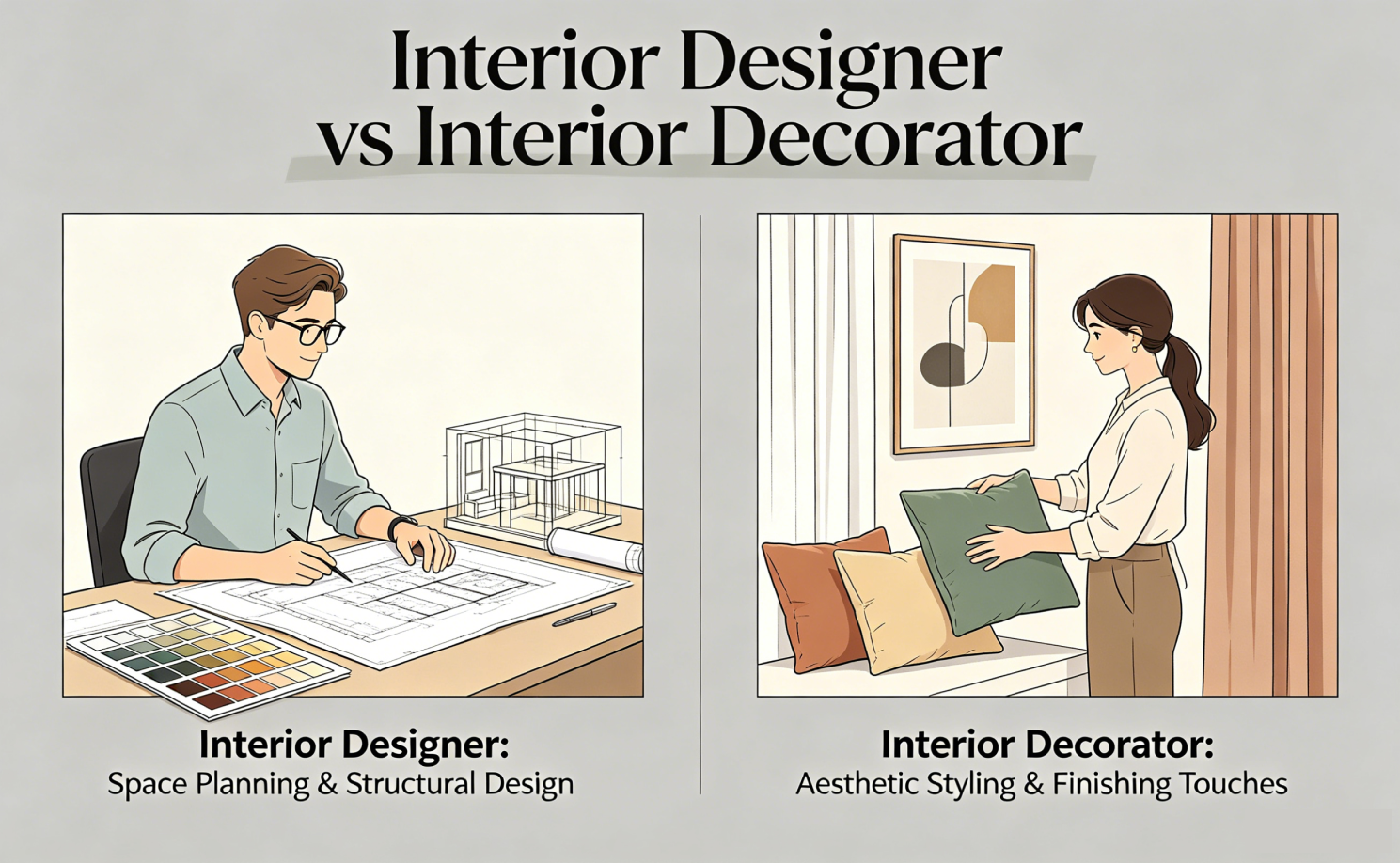
This distinction matters because many beginners say they want to become interior designers, but their first realistic services may actually be closer to decorating, styling, or e-design.
That is not a bad thing.
In fact, for someone with no degree and no experience, interior decorating can be a smart starting point. It lets you build a portfolio, learn client communication, understand how rooms work, and gain confidence before moving into more technical design work.
The key is to be honest about your scope. Do not promise structural changes, permit guidance, electrical layouts, plumbing decisions, or code compliance if you are not qualified. Start with what you can do responsibly, then grow from there.
Step-by-Step Guide to Becoming an Interior Designer Without Experience or Degree
Step 1: Decide Which Interior Design Path You Actually Want
“Interior design” is a broad field. If you try to enter it without choosing a direction, you may waste time learning skills that do not match your first opportunity.
Start by choosing one beginner-friendly path.
- You might focus on residential decorating if you enjoy helping people improve living rooms, bedrooms, dining rooms, and small apartments. This path is usually easier to enter without formal credentials because the work often centers on style, furniture, color, and layout improvement.
- You might choose home staging if you like preparing properties for sale or rental. This path can connect you with real estate agents, landlords, short-term rental hosts, and property managers.
- You might choose e-design or virtual room concepts if you want to work online. In this model, you usually provide mood boards, shopping lists, layout suggestions, and visual concepts without managing physical installation.
- You might start as a design assistant if your long-term goal is to work in a studio. This is one of the best ways to learn how professional designers handle clients, vendors, budgets, sourcing, deadlines, and project documentation.
- You might also start in furniture sales, kitchen and bath showrooms, lighting showrooms, tile stores, or home decor retail. These roles may not sound glamorous, but they teach product knowledge, customer needs, measurements, materials, and real buying behavior.
Your first path does not have to be your final path. The goal is to pick a realistic entry point.
Step 2: Learn the Basics & Skills Interior Designers Should Master
To become an interior designer smoothly, the first serious step is learning the basics. You do not need to master every advanced topic immediately, but you do need a strong foundation. Here are the core skills that you should have and master:
- Start with design principles and aesthetics. Learn balance, proportion, scale, rhythm, contrast, emphasis, and harmony. These principles explain why some rooms feel calm and complete while others feel awkward or unfinished. For example, scale helps you choose furniture that fits the room, while balance helps distribute visual weight evenly. Contrast adds interest and prevents a space from feeling flat or boring.
- Next, study color theory and psychology. Learn how warm and cool colors affect mood, how undertones work, and why the same paint color can look different in daylight, warm artificial light, or a north-facing room. Color is one of the fastest ways to change a room, but it is also one of the easiest things to get wrong without practice.
- Learn space and furniture layout and planning. This is one of the most fundamental skills in interior design. It involves understanding traffic flow, focal points, conversation areas, furniture placement, rug sizing, dining clearances, and the relationship between furniture and architectural elements. A well-designed space should not only look beautiful but also function comfortably for everyday living. Even the most stylish room can feel frustrating and impractical if people cannot move through it easily or use the space efficiently.
- Do not forget lighting design. Lighting is one of the most powerful tools in interior design. Learn the three main layers of lighting: ambient, task, and accent lighting. Understand how natural and artificial light influence colors, textures, and the overall atmosphere of a room. Great lighting can make an average design look exceptional.
- Materials and finishes matter too. Study common flooring materials, countertop options, wall treatments, upholstery fabrics, wood tones, metals, tiles, and hardware finishes. You do not need to become a contractor, but you should understand basic durability, maintenance, and visual impact.
- Develop 3D visualization and rendering skills. Modern clients often expect to see designs before making decisions. These days, many design tools can help you create floor plans, 3D models, realistic renderings, and virtual walkthroughs that communicate your ideas clearly. So, you might try to choose and master similar tools.
- Develop presentation and communication skills. Clients need to understand your ideas. Learn how to create mood boards, simple floor plans, shopping lists, and clear explanations. A good designer does not only have good ideas. A good designer can help other people see those ideas clearly.
- Learn budgeting and cost estimation. Interior design is not only about creativity. You should understand furniture costs, material pricing, labor expenses, and project budgeting. Being able to design within a client's budget is one of the most valuable professional skills you can develop.
- Strengthen your problem-solving abilities. Every project comes with challenges, whether it is a small room, an awkward layout, structural limitations, budget restrictions, or changing client requirements. Great interior designers are skilled problem-solvers who can find practical and attractive solutions while balancing functionality, aesthetics, and cost.
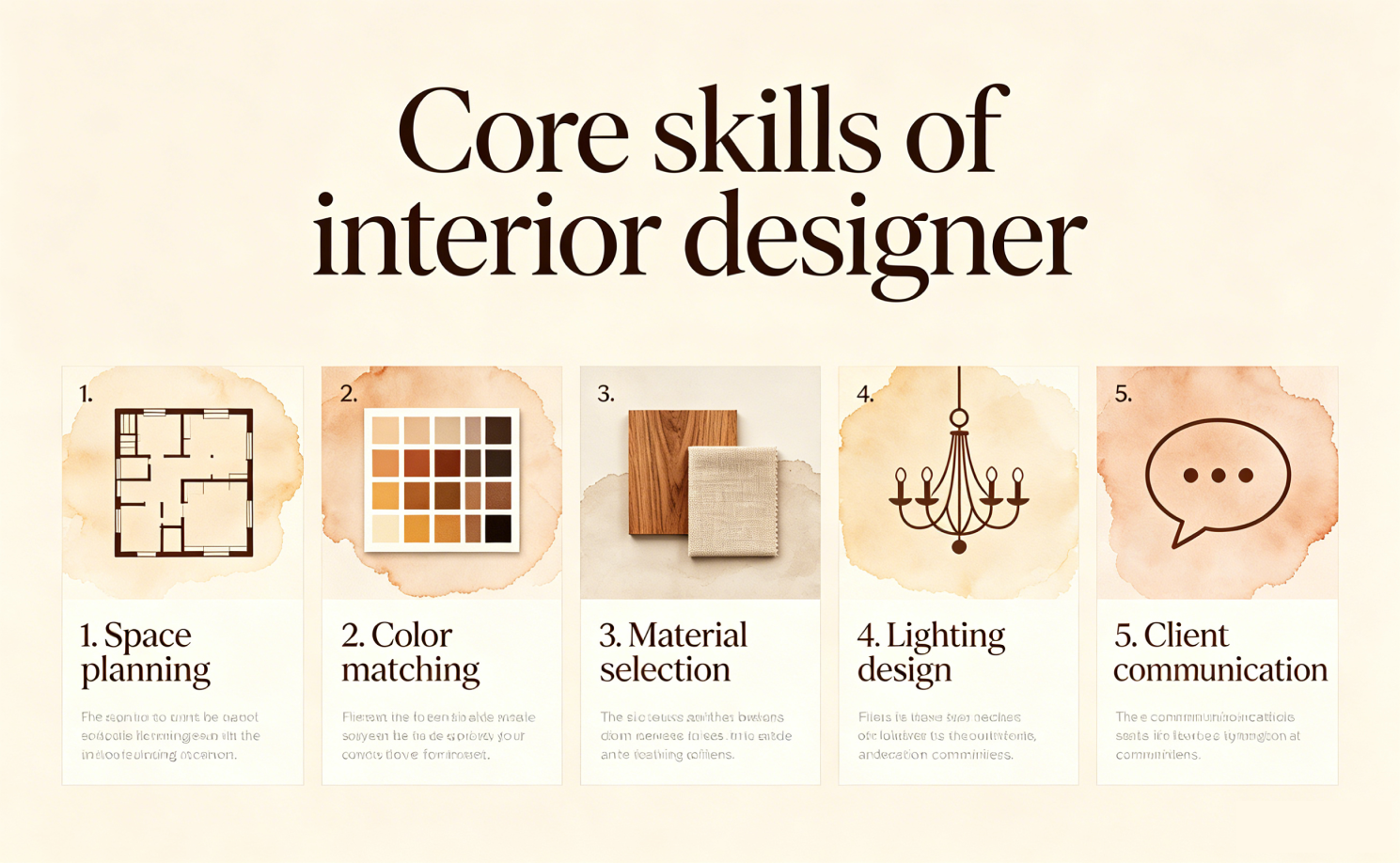
Mastering these core skills will provide a solid foundation for your future career. As you gain experience, you can continue building advanced knowledge in specialized areas such as sustainable design, commercial interiors, smart home technology, project management, and AI-assisted design workflows.
Step 3: Choose The Right Tools You Should Master
Interior design is kind of visual designing thing. Even if you have good taste, you need tools that help you quickly visualize and test your ideas clearly. So, you should firstly build your tool stack. Here are several types of tools you should try:
1.Mood board makers or collectors
Use a mood board tool to collect colors, furniture, textures, inspiration images, and style references. Canva, Milanote, Pinterest boards, or similar tools can help you organize visual direction.
2.Floor or layout planning tools
Use a floor plan or layout tool to practice space planning. You can start with simple drag-and-drop planners before learning more technical software. If you want to work in firms later, research job posts in your area and notice which tools they ask for. AutoCAD, SketchUp, Revit, Chief Architect, and similar tools may appear depending on the role.
3.Free AI visualization tools
Use AI visualization tools for fast concept exploration. For example, DecAI™, which is a rapid free AI interior design tool, can be useful for beginners because it lets you upload a real room photo, choose a style, and generate visual interior design concepts quickly. It provides over 30 design styles and 15 space styles for you to quickly visualize your interior, exterior, garden, floor or wall ideas, or even quickly transfer between different design styles in just seoncds.
It provides web, iOS, and Android versions for you to design eve on the go and offers a Free-forever plan for you to quickly evaluate.
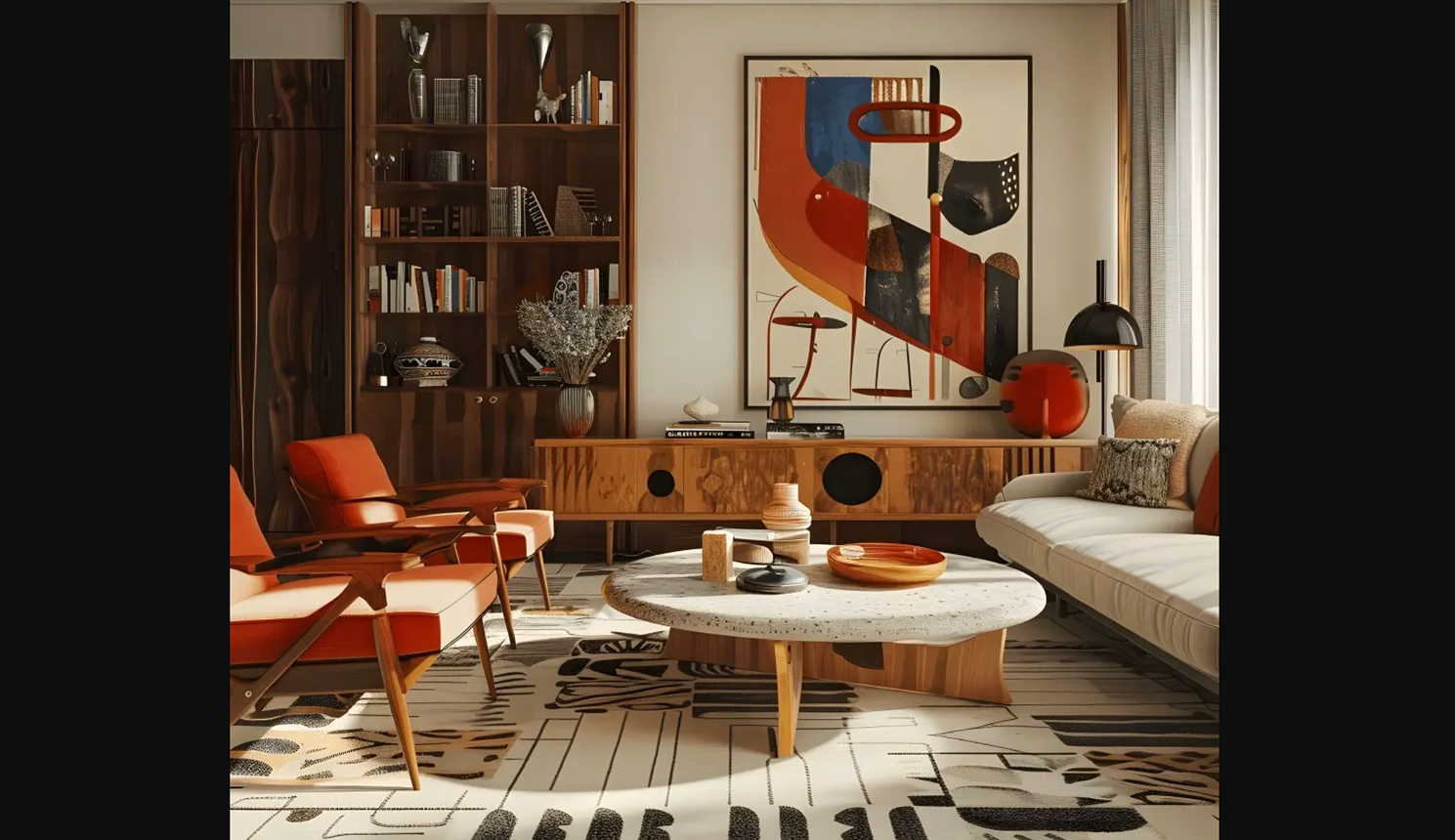
Living room interior design made by DecAI™
This kind of tool can help you compare styles, create early visual directions, and explain possibilities to a friend, practice client, or future customer.
You can try far more 18 free AI tools that you should use for interior design, which are fully tested and work impressively to streamine your whole interior design workflow.
Step 4: Practice With Real Spaces Before You Have Clients
Practice is where your learning becomes useful. If you have no experience, do not wait for a paying client to appear before you start designing. Create your own practice projects.
Here are several clues that you should try:
- Begin with your own home or room. Redesign a bedroom corner, entryway, desk area, living room wall, or rental balcony. Take before photos, define the problem, create a plan, choose products, and document the result. Even a small project can become a portfolio piece if you explain your thinking clearly.
- You can also help friends or family. Offer a limited project, such as a mood board, furniture layout, paint palette, or shopping list. Make the scope simple so you can finish well. A completed small project is better than an ambitious project that becomes confusing.
- Fictional briefs are another useful exercise. Create a sample client in your mind: a young couple in a small apartment, a renter who needs a home office, a family that wants a durable living room, or an Airbnb host who needs a stylish guest bedroom. Then design a solution for that imaginary client. This lets you practice real design thinking even before you have real clients.
- You can also use technology to speed up experimentation. For example, some AI home design tools can help beginners visualize style directions quickly. DecAI™ is useful in this stage because it lets users upload a photo and generate interior design ideas in seconds, with support for interior design, exterior design, garden design, wall design, floor design, furniture replacement, and furniture cleanup. When you are new, seeing multiple style directions on a real room photo can help you understand what works, what feels off, and how design choices change the mood of a space.
The goal is not to let AI replace your judgment. The goal is to practice faster. Use AI outputs as visual drafts, then evaluate them like a designer.
In short, you should try all possible ways to practice all skills and theories you've learned.
Step 5. Find A Tutor If Possible
Design any room, shop or space with DecAI in less 30 seconds! It's free!

Self-learning can be quite difficult if you have never ever tutored by a real interior designers and followedd the whole design workflow of interior design. That's why finding a mentor, tutor, or experienced designer to learn from can significantly accelerate your growth. You might try the following ways to find a tutor:
1.Follow interior design experts on social media
Many professional interior designers regularly share project breakdowns, design tips, material recommendations, and behind-the-scenes insights on platforms like Instagram, YouTube, LinkedIn, and TikTok. So, also find some experts and follow them to keep pace with the latest design skills, practices, projects and trends, etc.
Here are 5 interior design experts you should check:
- Kelly Wearstler — Known for bold luxury interiors and creative use of color, texture, and materials.
- Nate Berkus — Shares practical home design advice, styling ideas, and real project inspiration.
- Bobby Berk — Offers modern interior design tips, home makeovers, and design education content.
- Studio McGee (Shea McGee) — Great for learning modern, timeless, and highly commercial residential design.
- Emily Henderson — Shares interior styling advice, room transformations, and beginner-friendly design knowledge.
2.Take an interior design course, either online or locally
Structured courses can help you build a solid foundation faster than learning entirely on your own. Whether it's an online certification program, a local workshop, or a community college course, formal training often provides valuable feedback, assignments, and opportunities to learn from experienced instructors.
To allow you choose the best fit, we've gathered 3 online course websites for you:
- Coursera - Provides the latest online learning courses, including the interior design basics, 3D interior design, interior design layout and far more. Some are for free, and others need to be paid. Always choose the one that fits your needs best.
- Udemy - Offers many professional interior design courses for you to learn from scratch, such as SketchUp for interior design, home interior design and decorating, interior design styles and details, and more. And most of the courses are paid ones, you are supposed to consider about your budget.
- The Interior Design Institute - a dedicated interior design online institute that can customize the course based on your needs.
3.Join dedicated interior design communities, forms and blogs
Interior design communities, forums, blogs, and online groups are excellent places to ask questions, share your work, receive feedback, and connect with professionals. Engaging with other designers can expose you to different design approaches, tools, resources, and real-world experiences that help you improve more quickly.
So, you might check the following to learn, ask questions, and connect with other designers:
- Houzz Discussions- the discussion part of the well-known Houzz blog. You cannot ask questions in this discussion bub and also follow its blog to learn more about the latest interior design insights, tools and practices, etc.
- Reddit r/InteriorDesign- the channel of well-known Reddit community. A lot of experts and designers at different levels share their latest design projects, skills and more here.
- Reddit r/HomeDecorating- another channel of Reddit community, and focuse on home decorating, which would also be an important part of interior design.
- Apartment Therapy - one of the most well-known interior design and home improvement blogs. It publishes home tours, decorating tips, organization ideas, product recommendations, and trend reports that are especially useful for beginners looking to develop their design eye.
- Design Milk- a leading design publication covering interior design, architecture, furniture, decor, and emerging design trends. Following Design Milk can help you stay informed about innovative design concepts, new products, and industry developments.
If these resources are not enough, you can also follow another 20 interior design blogs for the latest design inspiration, trends and free resources.
Step 6: Create Portfolio Without Paid Clients
For the clients, when searching for an interior designer online, a well-designed portfolio always works better than a resume. Your portfolio, which showcases all your best projects, skills and talent, is more important than your resume when you are starting out.
And if you do not have paid projects yet, you can still create a beginner interior design portfolio with sample work, personal projects, and practice concepts.
1.The basic parts you should include in your portfolio
A strong beginner portfolio should include the following parts:
- mood boards
- color palettes
- furniture boards
- simple floor plans
- before-and-after room refreshes
- AI-assisted concept visuals
- product sourcing boards
- personal home projects
- fictional client case studies
- your basic informations, contacts and more
The key is to present each project as a case study, not just a collection of pretty images. A case study makes your thinking visible.
2.The simplest structure you should follow
If you really don't know how to start this, also try the simplest structure: Project goal, client or user, design direction, key decisions, and final result. Start by explaining what problem needed to be solved. Then describe who the room is for, what style and mood you chose, which layout, colors, materials, or furniture choices matter most, and what changed in the final result.
For example, instead of showing a mood board titled "Modern Bedroom," write a short case study for "Calm Rental Bedroom Refresh for a Small Apartment." Explain that the goal was to make the space feel larger, warmer, and more organized without permanent changes. Then show the color palette, furniture choices, lighting plan, and styling direction.
This approach makes you look more professional because it shows that you solve problems, not just decorate surfaces.
Anyway, keep your portfolio simple at first. A clean PDF, Notion page, website, or Canva presentation is enough. You do not need a complicated brand identity before you have work to show. Focus on clarity, taste, and process.
Step 7: Find a part-time job first, if possible
Once you have built some basic knowledge and a small portfolio, try to gain real-world experience through a part-time job, internship, or assistant position. While courses and self-learning can teach you design principles, nothing replaces working on actual projects with real clients, budgets, deadlines, and constraints.
Even if the role is not a full interior designer position, it can still provide valuable industry exposure.
You can find opportunities by trying the following:
- Interior design studios and firms – Many small and medium-sized design firms hire interns, assistants, or junior designers to support ongoing projects.
- Furniture and home decor retailers – Companies such as furniture showrooms, kitchen and bath retailers, and home improvement stores often hire design consultants or design assistants.
- Freelance designers – Independent designers frequently need help with research, sourcing, drafting, rendering, or administrative tasks.
- Online freelance platforms – Websites like Upwork, Fiverr, and Freelancer occasionally offer beginner-friendly interior design projects that can help you build experience and client relationships.
- Your local network – Friends, family members, contractors, real estate agents, and homeowners may have small projects that allow you to practice your skills and start building a portfolio.
Remember, your first design-related job does not need to be perfect. The goal is to gain practical experience, learn professional workflows, and start building credibility in the industry. Many successful interior designers began by assisting others before taking on projects independently.
These are the common steps you can follow to build a solid foundation in interior design and gradually become an interior designer. Of course, you can adapt them based on your goals, experience level, and personal circumstances.
6 Tips to Become a Better Interior Designer
Becoming an interior designer is one thing. Becoming a great interior designer requires continuous learning, practice, and improvement.
Here are six practical tips that can help you grow faster and stand out from other designers:
1. Study great designs every day
Train your design eye by regularly analyzing professional projects. Pay attention to layouts, color palettes, lighting choices, furniture selections, and material combinations. Platforms like Pinterest, Houzz, Design Milk, and Apartment Therapy are excellent sources of inspiration.
2. Practice designing real spaces and projects
Theory alone is not enough. Challenge yourself to redesign your own room, a friend's apartment, or spaces you find online. The more projects you complete, the more confident you'll become in making design decisions and solving real-world problems.
3. Learn new tools and technologies
Interior design tools continue to evolve. Stay updated with software such as SketchUp, AutoCAD, Revit, and AI-powered design tools. Learning modern technologies can help you work faster, communicate ideas more clearly, and remain competitive in the industry.
4. Develop strong communication skills
Great design is only valuable if clients understand and trust your vision. Practice presenting concepts, explaining design decisions, listening to feedback, and communicating professionally with clients, contractors, and suppliers.
5. Build a habit of seeking feedback
Don't work in isolation. Share your designs with mentors, experienced designers, online communities, and even potential users. Constructive feedback can help you identify weaknesses, discover new perspectives, and improve much faster than working alone.
6. Never stop learning and practice
Design trends, materials, technologies, and client expectations are constantly changing. Read books, follow industry blogs, attend workshops, take courses, and stay curious. The best interior designers are lifelong learners who continuously refine their skills and knowledge.
FAQs
1.What qualifications do you need to be an interior designer?
There is no single qualification required to become an interior designer. While some professionals earn degrees in interior design, architecture, or related fields, many successful designers are self-taught or learn through online courses, certifications, and hands-on projects. What matters most is developing strong design skills, understanding space planning and design principles, and building a portfolio that showcases your work and creativity.
2.Is an interior designer well paid?
Interior designer salaries vary depending on location, experience, specialization, and whether you work independently or for a company. According to industry reports from payscale survey, the average salary for interior designers in the United States typically earn between $61,000 and $72,8000 per year, while entry-level designers often start around $45,000 to $55,000 per year. Experienced designers, senior designers, design directors, and successful independent consultants can earn $100,000+ annually, particularly in high-end residential, luxury hospitality, commercial, or specialized design sectors.
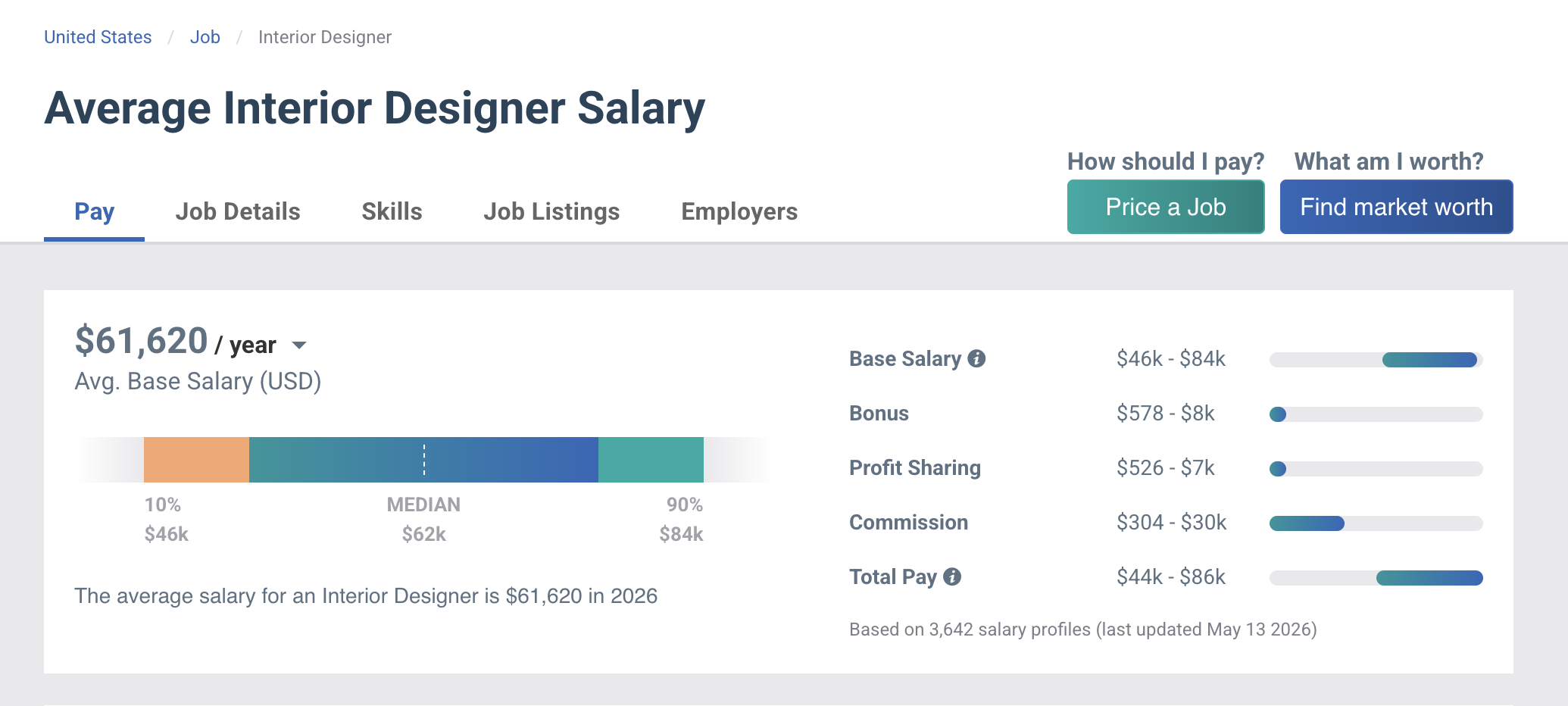
The average salary screenshot of interior design from payscale survey
3.Will AI replace interior designers?
No, AI is unlikely to replace interior designers completely. AI tools can help generate design concepts, create mood boards, visualize room makeovers, and speed up repetitive tasks. However, they cannot fully replace human creativity, client communication, problem-solving, project management, or the ability to understand unique lifestyles and emotional preferences. Instead, AI is becoming a powerful assistant that helps designers work faster and explore more ideas.
4.Is interior design declining?
No. Interior design continues to grow as homeowners, businesses, real estate professionals, and hospitality brands increasingly invest in better spaces and experiences. In fact, demand for interior design services is expanding alongside trends such as remote work, home renovation, sustainable design, smart homes, and AI-powered design tools. While technology is changing how designers work, the need for well-designed functional spaces remains strong. The high average salary for interior designer shared above also proves that.
5.What is the fastest way to start interior design?
The fastest realistic path is to start with small residential decorating or e-design services while learning fundamentals. Build three strong portfolio projects, offer a clear one-room package, and look for assistant work near experienced designers.
6.Do I need certification to work in interior design?
Not always. Certification requirements vary by location and career goal. Decorating, styling, home staging, and some residential services may not require certification. Commercial or regulated design paths may require more formal qualifications.
7.Is interior decorating easier to start than interior design?
Usually, yes. Interior decorating focuses more on furniture, style, color, and visual improvement, while interior design can involve technical planning, safety, construction, and code-related knowledge. Many beginners start with decorating and gradually build toward deeper design work.
8.Can AI tools help me become an interior designer?
Yes, if you use them correctly. AI tools can help you explore styles, visualize room concepts, and communicate ideas. For example, DecAI™ can generate interior design concepts from room photos quickly. But AI should support your design process, not replace your knowledge of measurements, function, budget, and real-world feasibility.
9.How long does it take to become an interior designer?
It depends. Well, you can learn the basics and create a beginner portfolio within a few months if you study and practice consistently. Becoming highly skilled and confident usually takes years of real projects, feedback, and continued learning.
10.Is interior design a good career for self-taught beginners?
Interior design can be a good career for self-taught beginners who are creative, organized, practical, and willing to keep learning. Success depends on skill, portfolio quality, client communication, and the ability to solve real design problems.
--------------------------------------
If you believe that any material on this site infringes your intellectual property rights, please contact the author at decaiwebteam@outlook.com with details of your claim.
Redesign any home interior, exterior & garden in seconds
Share this Post:
'%3e%3cpath%20d='M17.9995%2035.999C17.0317%2035.999%2016.0619%2035.9219%2015.1161%2035.7696C10.9414%2035.0973%207.11524%2032.9513%204.34408%2029.7273C1.54287%2026.4683%200%2022.3035%200%2017.9995C0%208.07403%208.07503%200%2017.9995%200C27.924%200%2036%208.07503%2036%2017.9995C36%2022.3696%2034.4151%2026.5835%2031.5357%2029.8646C28.6844%2033.1156%2024.7671%2035.2326%2020.5052%2035.8267C19.6806%2035.9419%2018.8371%2036%2017.9995%2036V35.999ZM17.9995%201.20123C8.73726%201.20123%201.20224%208.73626%201.20224%2017.9985C1.20224%2026.2919%207.13427%2033.2659%2015.3075%2034.5814C16.9546%2034.8469%2018.6808%2034.8659%2020.3389%2034.6345C28.5812%2033.4863%2034.7968%2026.334%2034.7968%2017.9985C34.7968%208.73626%2027.2617%201.20123%2017.9985%201.20123H17.9995Z'%20fill='%23FF0209'/%3e%3cpath%20d='M29.0557%2014.3621C28.9184%2013.0276%2028.6208%2011.5539%2027.5268%2010.7784C26.6782%2010.1773%2025.5642%2010.1553%2024.5242%2010.1563C22.3251%2010.1583%2020.126%2010.1603%2017.9269%2010.1623C15.812%2010.1643%2013.6971%2010.1663%2011.5821%2010.1683C10.6985%2010.1683%209.8399%2010.1002%209.01937%2010.4819C8.31406%2010.8105%207.76303%2011.4347%207.43241%2012.1289C6.97156%2013.0957%206.87438%2014.1898%206.81927%2015.2588C6.71708%2017.2044%206.7281%2019.156%206.85133%2021.0996C6.9405%2022.5193%207.16792%2024.0872%208.26496%2024.9919C9.23777%2025.7934%2010.6103%2025.8325%2011.8707%2025.8335C15.8741%2025.8365%2019.8776%2025.8395%2023.881%2025.8435C24.394%2025.8435%2024.93%2025.8345%2025.453%2025.7774C26.4829%2025.6661%2027.4637%2025.3716%2028.1249%2024.6092C28.7922%2023.8407%2028.9635%2022.7698%2029.0657%2021.7569C29.3121%2019.3003%2029.3091%2016.8177%2029.0557%2014.3621ZM15.6116%2021.4453V14.5545L21.5797%2017.9999L15.6116%2021.4453Z'%20fill='%23FF0209'/%3e%3c/g%3e%3cdefs%3e%3cclipPath%20id='clip0_13816_41422'%3e%3crect%20width='36'%20height='36'%20fill='white'/%3e%3c/clipPath%3e%3c/defs%3e%3c/svg%3e)
'%3e%3cpath%20d='M17.9995%2036C17.0327%2036%2016.0619%2035.9229%2015.1161%2035.7696C10.9414%2035.0973%207.11524%2032.9513%204.34408%2029.7273C1.54287%2026.4683%200%2022.3035%200%2017.9995C0%208.07403%208.07503%200%2017.9995%200C27.924%200%2036%208.07503%2036%2017.9995C36%2022.3696%2034.4151%2026.5835%2031.5357%2029.8646C28.6844%2033.1156%2024.7671%2035.2326%2020.5052%2035.8267C19.6806%2035.9419%2018.8371%2036%2017.9995%2036ZM17.9995%201.20224C8.73726%201.20224%201.20224%208.73726%201.20224%2017.9995C1.20224%2026.2919%207.13427%2033.2669%2015.3075%2034.5824C16.9556%2034.8479%2018.6808%2034.8669%2020.3389%2034.6355C28.5812%2033.4873%2034.7968%2026.335%2034.7968%2017.9995C34.7968%208.73726%2027.2617%201.20224%2017.9985%201.20224H17.9995Z'%20fill='url(%23paint0_linear_13816_41436)'/%3e%3cpath%20d='M23.4463%207.55469H12.549C9.53841%207.55469%207.08984%2010.0032%207.08984%2013.0138V22.9834C7.08984%2025.994%209.53841%2028.4426%2012.549%2028.4426H23.4463C26.4569%2028.4426%2028.9054%2025.994%2028.9054%2022.9834V13.0138C28.9054%2010.0032%2026.4569%207.55469%2023.4463%207.55469ZM9.01543%2013.0138C9.01543%2011.0652%2010.6004%209.48027%2012.549%209.48027H23.4463C25.3949%209.48027%2026.9799%2011.0652%2026.9799%2013.0138V22.9834C26.9799%2024.932%2025.3949%2026.517%2023.4463%2026.517H12.549C10.6004%2026.517%209.01543%2024.932%209.01543%2022.9834V13.0138Z'%20fill='url(%23paint1_linear_13816_41436)'/%3e%3cpath%20d='M17.9964%2023.0749C20.7966%2023.0749%2023.0749%2020.7966%2023.0749%2017.9964C23.0749%2015.1962%2020.7966%2012.918%2017.9964%2012.918C15.1962%2012.918%2012.918%2015.1962%2012.918%2017.9964C12.918%2020.7966%2015.1962%2023.0749%2017.9964%2023.0749ZM17.9964%2014.8446C19.7346%2014.8446%2021.1483%2016.2582%2021.1483%2017.9964C21.1483%2019.7347%2019.7346%2021.1483%2017.9964%2021.1483C16.2582%2021.1483%2014.8446%2019.7347%2014.8446%2017.9964C14.8446%2016.2582%2016.2582%2014.8446%2017.9964%2014.8446Z'%20fill='url(%23paint2_linear_13816_41436)'/%3e%3cpath%20d='M23.5482%2013.741C24.3026%2013.741%2024.9168%2013.1269%2024.9168%2012.3725C24.9168%2011.618%2024.3026%2011.0039%2023.5482%2011.0039C22.7938%2011.0039%2022.1797%2011.618%2022.1797%2012.3725C22.1797%2013.1269%2022.7938%2013.741%2023.5482%2013.741Z'%20fill='url(%23paint3_linear_13816_41436)'/%3e%3c/g%3e%3cdefs%3e%3clinearGradient%20id='paint0_linear_13816_41436'%20x1='5.27482'%20y1='30.7312'%20x2='30.7242'%20y2='5.28083'%20gradientUnits='userSpaceOnUse'%3e%3cstop%20stop-color='%23FAAD4F'/%3e%3cstop%20offset='0.35'%20stop-color='%23DD2A7B'/%3e%3cstop%20offset='0.62'%20stop-color='%239537B0'/%3e%3cstop%20offset='1'%20stop-color='%23515BD4'/%3e%3c/linearGradient%3e%3clinearGradient%20id='paint1_linear_13816_41436'%20x1='8.92225'%20y1='27.074'%20x2='27.073'%20y2='8.92324'%20gradientUnits='userSpaceOnUse'%3e%3cstop%20stop-color='%23FAAD4F'/%3e%3cstop%20offset='0.35'%20stop-color='%23DD2A7B'/%3e%3cstop%20offset='0.62'%20stop-color='%239537B0'/%3e%3cstop%20offset='1'%20stop-color='%23515BD4'/%3e%3c/linearGradient%3e%3clinearGradient%20id='paint2_linear_13816_41436'%20x1='14.4077'%20y1='21.5861'%20x2='21.5861'%20y2='14.4077'%20gradientUnits='userSpaceOnUse'%3e%3cstop%20stop-color='%23FAAD4F'/%3e%3cstop%20offset='0.35'%20stop-color='%23DD2A7B'/%3e%3cstop%20offset='0.62'%20stop-color='%239537B0'/%3e%3cstop%20offset='1'%20stop-color='%23515BD4'/%3e%3c/linearGradient%3e%3clinearGradient%20id='paint3_linear_13816_41436'%20x1='22.5814'%20y1='13.3393'%20x2='24.515'%20y2='11.4057'%20gradientUnits='userSpaceOnUse'%3e%3cstop%20stop-color='%23FAAD4F'/%3e%3cstop%20offset='0.35'%20stop-color='%23DD2A7B'/%3e%3cstop%20offset='0.62'%20stop-color='%239537B0'/%3e%3cstop%20offset='1'%20stop-color='%23515BD4'/%3e%3c/linearGradient%3e%3cclipPath%20id='clip0_13816_41436'%3e%3crect%20width='36'%20height='36'%20fill='white'/%3e%3c/clipPath%3e%3c/defs%3e%3c/svg%3e)
'%3e%3cpath%20d='M17.9995%2035.999C17.0317%2035.999%2016.0619%2035.9219%2015.1161%2035.7696C10.9414%2035.0973%207.11524%2032.9513%204.34408%2029.7273C1.54287%2026.4683%200%2022.3035%200%2017.9995C0%208.07403%208.07502%200%2017.9995%200C27.924%200%2036%208.07503%2036%2017.9995C36%2022.3696%2034.415%2026.5835%2031.5357%2029.8646C28.6844%2033.1156%2024.7671%2035.2326%2020.5052%2035.8267C19.6806%2035.9419%2018.8371%2036%2017.9995%2036V35.999ZM17.9995%201.20123C8.73725%201.20123%201.20224%208.73626%201.20224%2017.9985C1.20224%2026.2919%207.13427%2033.2659%2015.3075%2034.5814C16.9545%2034.8469%2018.6808%2034.8659%2020.3388%2034.6345C28.5812%2033.4863%2034.7968%2026.334%2034.7968%2017.9985C34.7968%208.73626%2027.2617%201.20123%2017.9985%201.20123H17.9995Z'%20fill='%23007EBB'/%3e%3cpath%20d='M9.06639%2012.124C8.60253%2011.6932%208.37109%2011.1602%208.37109%2010.526C8.37109%209.89184%208.60253%209.33481%209.06639%208.90401C9.53026%208.47321%2010.1274%208.25781%2010.8587%208.25781C11.5901%208.25781%2012.1642%208.47321%2012.627%208.90401C13.0909%209.33481%2013.3223%209.87581%2013.3223%2010.526C13.3223%2011.1762%2013.0909%2011.6932%2012.627%2012.124C12.1631%2012.5548%2011.5741%2012.7702%2010.8587%2012.7702C10.1434%2012.7702%209.52926%2012.5548%209.06639%2012.124ZM12.9326%2014.5946V27.7962H8.76182V14.5946H12.9326Z'%20fill='%23007EBB'/%3e%3cpath%20d='M26.8196%2015.9006C27.7283%2016.8875%2028.1832%2018.243%2028.1832%2019.9682V27.5663H24.2208V20.5042C24.2208%2019.6346%2023.9954%2018.9583%2023.5445%2018.4764C23.0937%2017.9945%2022.4876%2017.7541%2021.7262%2017.7541C20.9647%2017.7541%2020.3586%2017.9955%2019.9078%2018.4764C19.4569%2018.9583%2019.2315%2019.6346%2019.2315%2020.5042V27.5663H15.2461V14.5611H19.2315V16.2863C19.6353%2015.7113%2020.1793%2015.2574%2020.8636%2014.9228C21.5468%2014.5892%2022.3163%2014.4219%2023.1708%2014.4219C24.6937%2014.4219%2025.9099%2014.9158%2026.8186%2015.9016L26.8196%2015.9006Z'%20fill='%23007EBB'/%3e%3c/g%3e%3cdefs%3e%3cclipPath%20id='clip0_13816_41425'%3e%3crect%20width='36'%20height='36'%20fill='white'/%3e%3c/clipPath%3e%3c/defs%3e%3c/svg%3e)
'%3e%3cpath%20d='M18%2035.999C17.0322%2035.999%2016.0623%2035.9219%2015.1166%2035.7696C10.9417%2035.0973%207.11544%2032.9513%204.3442%2029.7273C1.54291%2026.4683%200%2022.3035%200%2017.9995C0%208.07403%208.07526%200%2018%200C27.9248%200%2036%208.07503%2036%2017.9995C36%2022.3696%2034.415%2026.5835%2031.5356%2029.8646C28.6842%2033.1156%2024.7668%2035.2326%2020.5047%2035.8267C19.6802%2035.9419%2018.8366%2036%2017.999%2036L18%2035.999ZM18%201.20123C8.73751%201.20123%201.20227%208.73626%201.20227%2017.9985C1.20227%2026.2919%207.13448%2033.2659%2015.3079%2034.5814C16.955%2034.8469%2018.6813%2034.8659%2020.3394%2034.6345C28.582%2033.4863%2034.7977%2026.334%2034.7977%2017.9985C34.7977%208.73626%2027.2625%201.20123%2018%201.20123Z'%20fill='black'/%3e%3cpath%20d='M7%208.09163H13.5067L19.521%2016.1816L27.0073%207.90625L28.786%207.93715L20.4078%2017.3454L29%2028.901H22.4959L16.8193%2021.362L9.8847%2029.0864H8.13428L15.9583%2020.26L7%208.09163ZM12.8931%209.28633H9.45676L23.2048%2027.6754H26.5793L12.8931%209.28633Z'%20fill='black'/%3e%3c/g%3e%3cdefs%3e%3cclipPath%20id='clip0_13886_43848'%3e%3crect%20width='36'%20height='36'%20fill='white'/%3e%3c/clipPath%3e%3c/defs%3e%3c/svg%3e)
'%3e%3cpath%20d='M17.9995%2035.999C17.0327%2035.999%2016.0619%2035.9219%2015.1161%2035.7686C10.9414%2035.0963%207.11524%2032.9503%204.34408%2029.7263C1.54287%2026.4673%200%2022.3025%200%2017.9995C0%208.07403%208.07503%200%2017.9995%200C27.924%200%2036%208.07503%2036%2017.9995C36%2022.3696%2034.415%2026.5835%2031.5357%2029.8646C28.6844%2033.1156%2024.7671%2035.2326%2020.5052%2035.8267C19.6806%2035.9419%2018.8371%2036%2017.9995%2036V35.999ZM17.9995%201.20123C8.73726%201.20123%201.20224%208.73626%201.20224%2017.9985C1.20224%2026.2909%207.13428%2033.2659%2015.3075%2034.5814C16.9556%2034.8469%2018.6808%2034.8659%2020.3389%2034.6345C28.5812%2033.4863%2034.7968%2026.334%2034.7968%2017.9985C34.7968%208.73626%2027.2617%201.20123%2017.9985%201.20123H17.9995Z'%20fill='%231877F7'/%3e%3cpath%20d='M20.5337%2014.9635V18.7536H25.2225L24.4801%2023.8601H20.5337V35.624C19.7423%2035.7342%2018.9328%2035.7913%2018.1112%2035.7913C17.1625%2035.7913%2016.2317%2035.7151%2015.324%2035.5689V23.8601H11V18.7536H15.324V14.1169C15.324%2011.2396%2017.6564%208.90625%2020.5347%208.90625V8.90926C20.5428%208.90926%2020.5508%208.90625%2020.5588%208.90625H25.2235V13.3215H22.1758C21.2691%2013.3215%2020.5347%2014.0558%2020.5347%2014.9625L20.5337%2014.9635Z'%20fill='%231877F7'/%3e%3c/g%3e%3cdefs%3e%3cclipPath%20id='clip0_13816_41433'%3e%3crect%20width='36'%20height='36'%20fill='white'/%3e%3c/clipPath%3e%3c/defs%3e%3c/svg%3e)
'%3e%3cpath%20d='M17.9995%2035.999C17.0327%2035.999%2016.0619%2035.9219%2015.1161%2035.7686C10.9414%2035.0963%207.11524%2032.9503%204.34408%2029.7263C1.54287%2026.4673%200%2022.3025%200%2017.9995C0%208.07403%208.07503%200%2017.9995%200C27.924%200%2036%208.07503%2036%2017.9995C36%2022.3696%2034.415%2026.5835%2031.5357%2029.8646C28.6844%2033.1156%2024.7671%2035.2326%2020.5052%2035.8267C19.6806%2035.9419%2018.8371%2036%2017.9995%2036V35.999ZM17.9995%201.20123C8.73726%201.20123%201.20224%208.73626%201.20224%2017.9985C1.20224%2026.2909%207.13428%2033.2659%2015.3075%2034.5814C16.9556%2034.8469%2018.6808%2034.8659%2020.3389%2034.6345C28.5812%2033.4863%2034.7968%2026.334%2034.7968%2017.9985C34.7968%208.73626%2027.2617%201.20123%2017.9985%201.20123H17.9995Z'%20fill='%232A91F7'/%3e%3cg%20clip-path='url(%23clip1_13816_41442)'%3e%3cpath%20d='M16.3345%2018.834C16.6924%2019.3124%2017.149%2019.7083%2017.6733%2019.9947C18.1976%2020.2812%2018.7774%2020.4516%2019.3734%2020.4942C19.9693%2020.5369%2020.5675%2020.4509%2021.1273%2020.2421C21.6871%2020.0333%2022.1954%2019.7065%2022.6178%2019.284L25.1178%2016.784C25.8768%2015.9981%2026.2968%2014.9456%2026.2873%2013.8531C26.2778%2012.7606%2025.8396%2011.7156%2025.0671%2010.943C24.2946%2010.1705%2023.2495%209.73231%2022.157%209.72281C21.0645%209.71332%2020.012%2010.1333%2019.2262%2010.8923L17.7928%2012.3173M19.6678%2017.1673C19.3099%2016.6889%2018.8533%2016.293%2018.329%2016.0065C17.8047%2015.7201%2017.2249%2015.5497%2016.6289%2015.507C16.033%2015.4643%2015.4348%2015.5503%2014.875%2015.7592C14.3152%2015.968%2013.8069%2016.2947%2013.3845%2016.7173L10.8845%2019.2173C10.1255%2020.0031%209.70551%2021.0557%209.715%2022.1481C9.72449%2023.2406%2010.1627%2024.2857%2010.9352%2025.0582C11.7078%2025.8307%2012.7528%2026.269%2013.8453%2026.2784C14.9378%2026.2879%2015.9903%2025.868%2016.7761%2025.109L18.2011%2023.684'%20stroke='%232A91F7'%20stroke-width='1.66667'%20stroke-linecap='round'%20stroke-linejoin='round'/%3e%3c/g%3e%3c/g%3e%3cdefs%3e%3cclipPath%20id='clip0_13816_41442'%3e%3crect%20width='36'%20height='36'%20fill='white'/%3e%3c/clipPath%3e%3cclipPath%20id='clip1_13816_41442'%3e%3crect%20width='20'%20height='20'%20fill='white'%20transform='translate(8%208)'/%3e%3c/clipPath%3e%3c/defs%3e%3c/svg%3e)
Redesign any home interior, exterior & garden in seconds