
Warm Minimalism Interior Design: A Complete Guide to Creating a Cozy, Clutter-Free Home

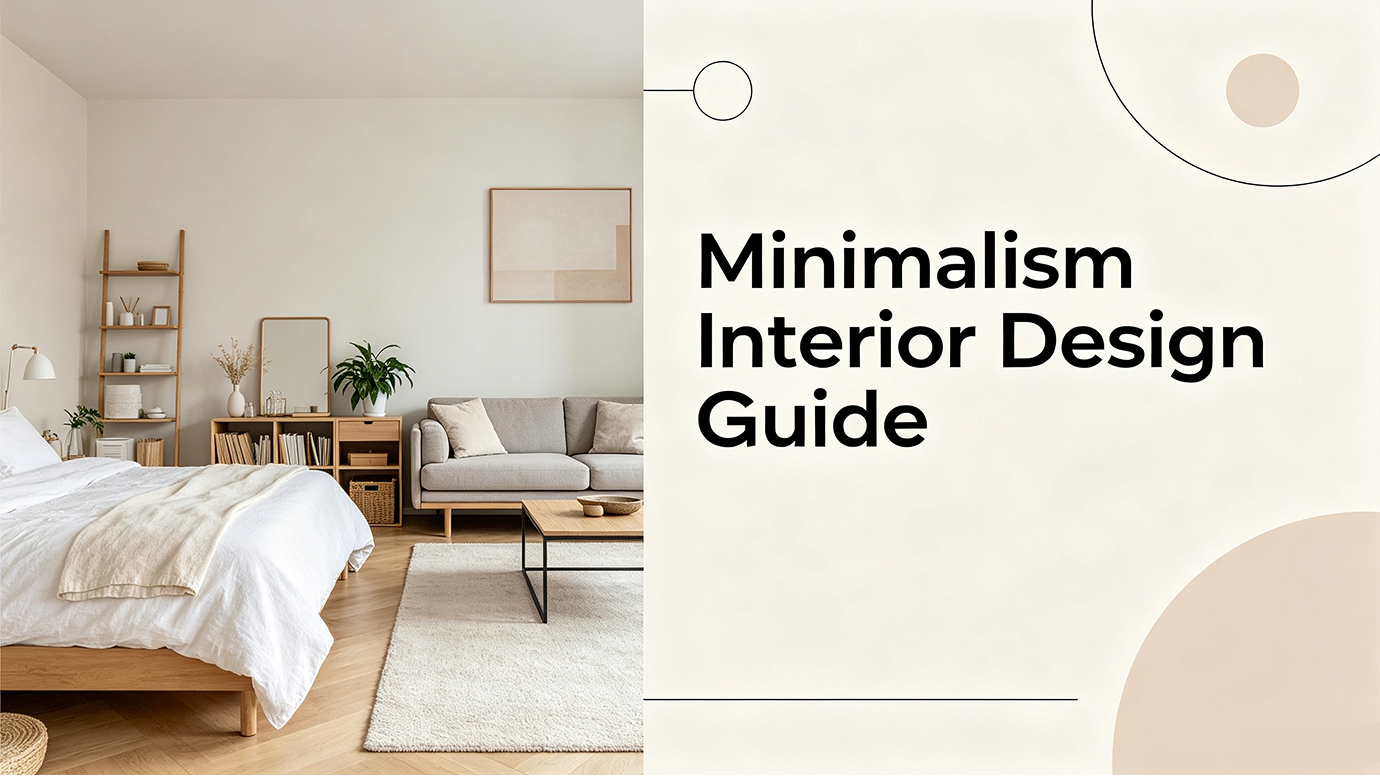
Curious about the popular warm minimalism trend but not sure how to bring it into your own home or design project? Don't worry— you now come to the right place.
This complete beginner's guide covers everything you need to know, from its core principles and color palettes to materials, décor, practical design tips, and inspiring examples.
As you explore the style, you can also use our free AI home interior design tool to instantly visualize your ideas, experiment with different looks, and see what works best for your space.
Design any room, shop or space with DecAI in less 30 seconds! It's free!
What Is Warm Minimalism in Interior Design?
Warm minimalism is a modern, human-centered interior design style that merges the simplicity and order of classic minimalism with the warmth, texture, and comfort of organic, lived-in design.
Unlike rigid traditional minimalism that prioritizes austerity, warm minimalism prioritizes intentional simplicity—it strips away useless clutter and excess decor but retains every element that brings warmth, function, or joy to a space.
The core vibe of warm minimalism is calm, unhurried, and inviting. It features clean architectural lines, uncluttered surfaces, and curated decor, while leaning into natural materials, soft lighting, and warm neutral hues to avoid a barren or sterile look.
It is not a “blank canvas” style; it is a thoughtful, balanced aesthetic that proves minimalism does not have to feel cold or empty.
This versatile style is perfect for beginners, families, small space dwellers, and long-term homeowners alike. It’s low-maintenance, timeless enough to avoid trendy burnout, flexible enough to adapt to different home layouts, and ideal for anyone who wants a tidy home that still feels cozy and personal.

Warm Minimalism vs. Traditional Minimalism
Many design beginners confuse warm minimalism with classic minimalism, but the two styles have stark differences in tone, materials, lighting, and overall mood.
Classic minimalism focuses purely on reduction and uniformity, while warm minimalism focuses on balance between simplicity and comfort.
Below is a detailed breakdown of their core differeces:
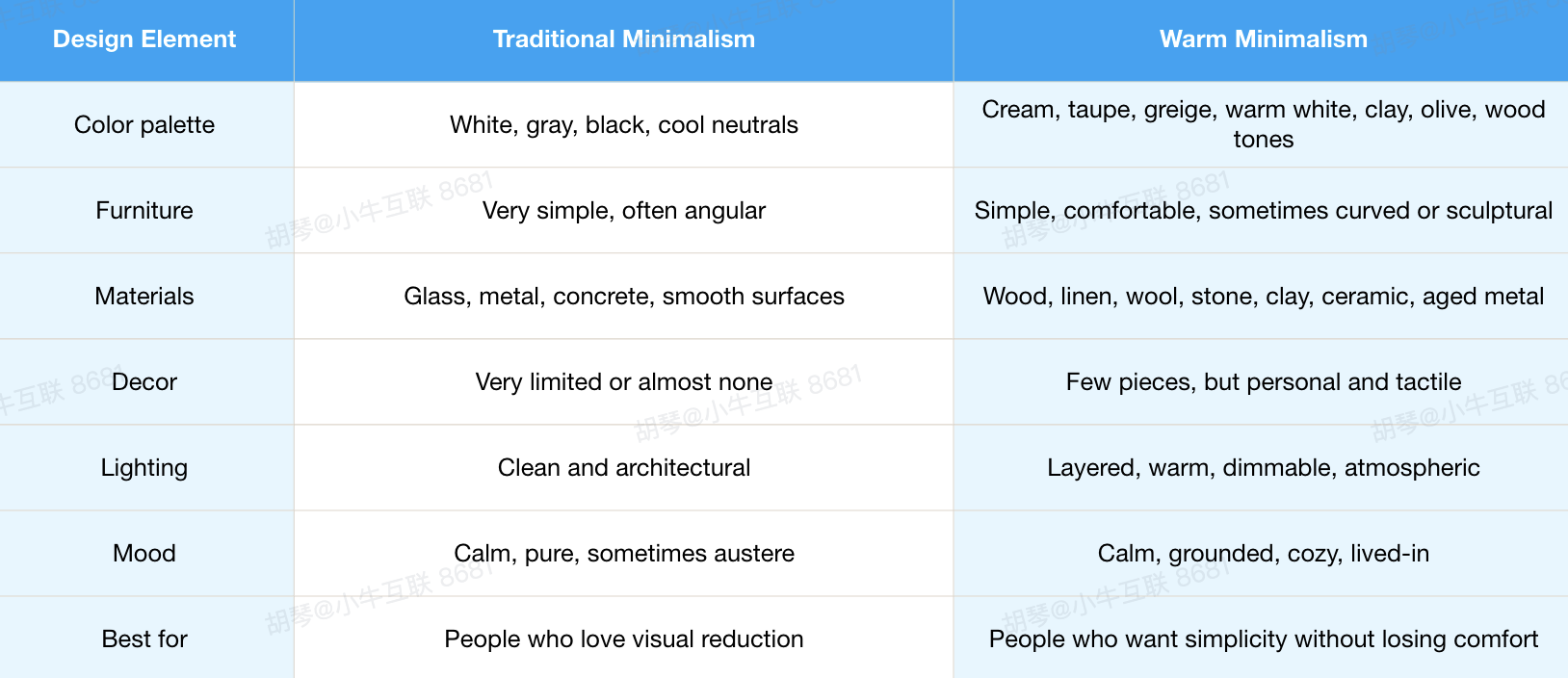
In short, traditional minimalism edits for visual simplicity. Warm minimalism edits for simplicity, then deliberately adds back warmth through texture and material choice, without adding back clutter.
7 Key Principles of Warm Minimalism Interior Design: What Beginners Must Know
To nail warm minimalism without veering into cold minimalism or cluttered farmhouse styles, stick to these 7 key principles:
1.Start with function before decoration
Before choosing colors, furniture, or decor, ask what the room needs to do. A living room may need movie nights, reading, storage, guest seating, and a place for coffee. A bedroom may need better sleep, clothing storage, soft lighting, and a calming routine. A kitchen may need clear counters, easy movement, and practical storage.
Warm minimalism works only when the room supports real life. If a space looks perfect but does not help you live better, it is not successful.
2.Every piece should have a purpose or a story
Rather than filling shelves with generic décor, warm minimalist homes tend to feature a handful of meaningful, well-made objects — a ceramic bowl from a trip, a single piece of art, a well-worn wooden bench — rather than many small decorative items.
3.Layer texture, not color
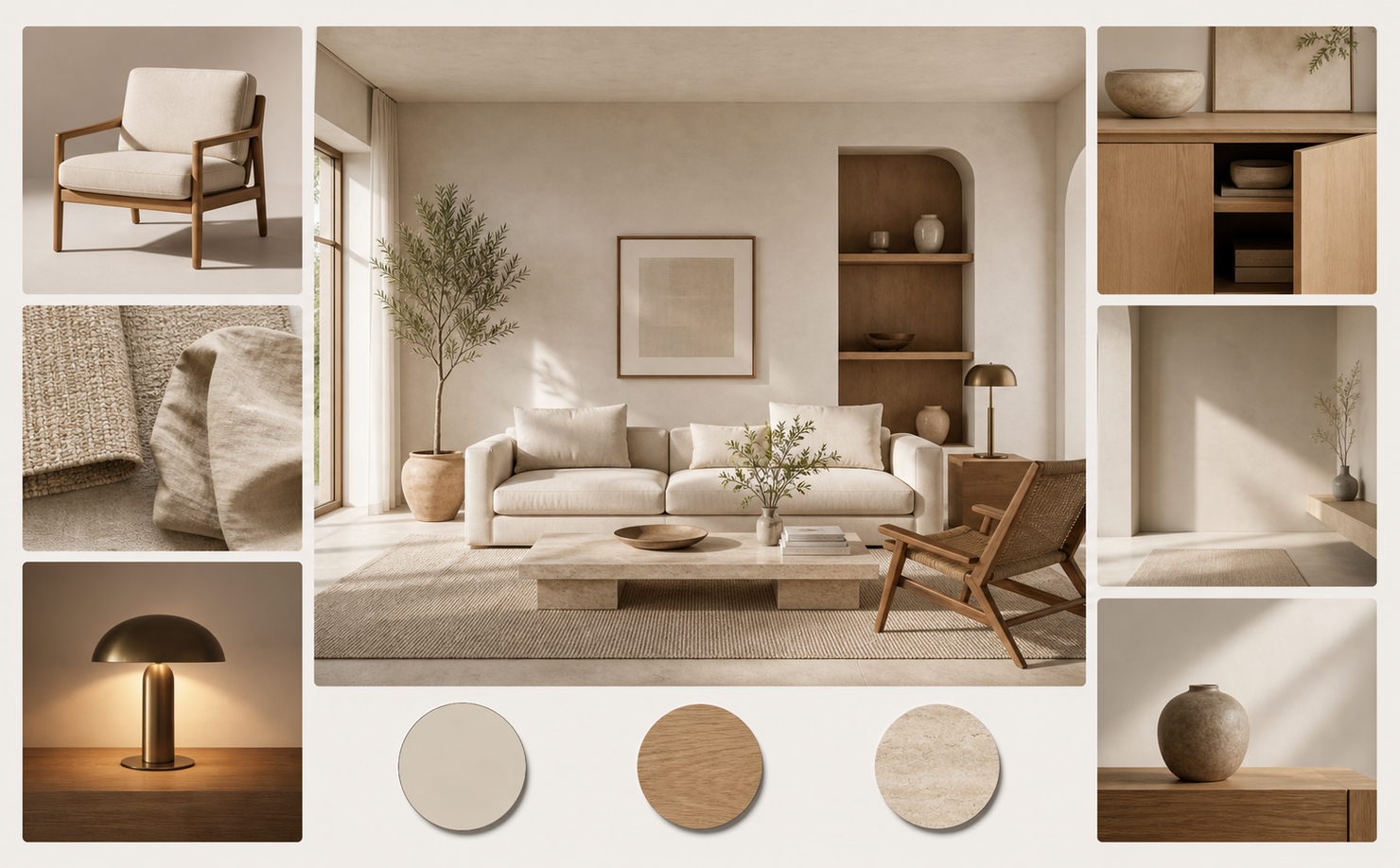
Since the palette stays fairly neutral, warmth and visual interest come from mixing materials: a linen throw over a wool sofa, a jute rug under wooden furniture, a plaster wall behind a rattan chair. Texture is doing the job that bold color would do in a maximalist room.
4.Build warmth through lighting
Lighting can make or break warm minimalism. A room with warm wood and beautiful textiles can still feel cold under harsh overhead lighting. Use layered lighting instead: ceiling light, floor lamp, table lamp, wall sconce, under-cabinet light, or dimmable accent light.
Warm white bulbs, often around 2700K, usually feel better for cozy living spaces than bright cool bulbs. In kitchens and bathrooms, you may need brighter task lighting, but the light should still feel comfortable rather than clinical.
5.Match your palette to your room's actual light
A room with strong natural light can handle cooler warm-neutrals like sand or greige. A north-facing room with limited direct sun usually needs a richer, deeper neutral like oatmeal or camel — otherwise the "warm" palette can still read flat and cold in low light.
6.Keep furniture count low but quality high
Warm minimalism tends to favor fewer, better pieces over a fully furnished room. A well-made wood dining table with simple lines does more for the space than three smaller, lower-quality pieces.
7.Add personality with restraint
Warm minimalism does not mean hiding every sign of life. It means being selective. One vintage chair, one handmade bowl, one family photo, one sculptural lamp, or one travel object can give a room soul. Ten unrelated accessories can make the same room feel cluttered.
The goal is not generic perfection. It is quiet identity.
6 Most Popular Warm Minimalism Color Palettes

Color is the foundation of warm minimalism. The right palette creates a space that feels calm, cozy, and inviting without looking dull. Warm minimalism typically features soft, earthy neutrals with warm undertones while avoiding overly cool or highly saturated colors.
And the below are 6 beginner-friendly warm minimalism color palettes:
1.Warm white, oak, and linen
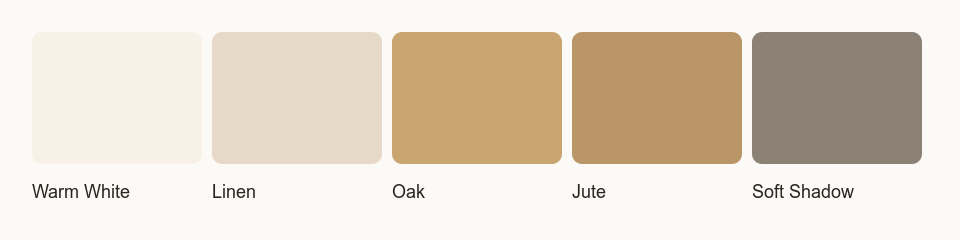
Palette formula:
Warm white walls, linen upholstery, oak furniture, jute or wool texture, and one soft shadow tone for definition.
This is one of the safest beginner palettes. Use warm white walls, oak furniture, linen curtains, and a natural fiber rug. It works well in living rooms, bedrooms, dining rooms, and small apartments because it feels bright without becoming stark.
When to use:
Use it if your home gets good natural light and you want a clean, airy look.
2.Cream, taupe, and walnut
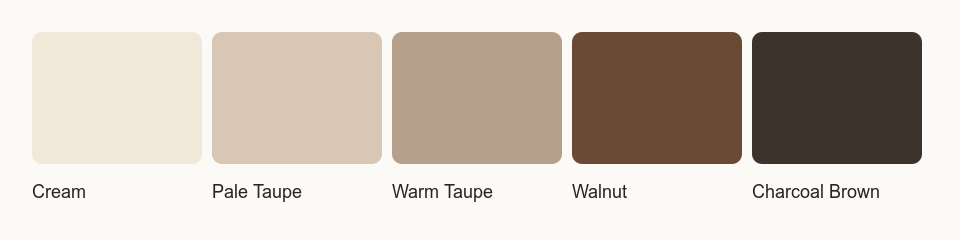
Palette formula:
Cream walls or upholstery, pale taupe textiles, warm taupe rug or curtains, walnut furniture, and charcoal brown accents.
Cream and taupe create a softer base than pure white and gray. Walnut adds contrast and maturity. This palette works especially well in bedrooms, home offices, and living rooms where you want calm but not blandness.
When to use:
Use it if your current room feels too pale or lacks visual weight.
3.Greige, clay, and black accents
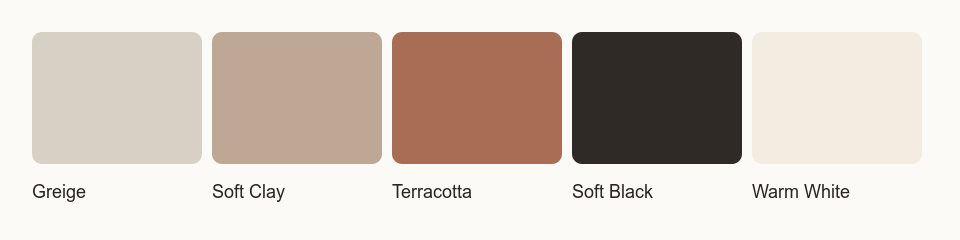
Palette formula:
Greige base, soft clay upholstery or tile, terracotta accents, soft black details, and warm white balance.
Greige is a balanced neutral between gray and beige. Clay adds warmth, while black gives structure. This palette is useful when a warm minimalist room starts to feel too soft or undefined.
When to use:
Use black sparingly: curtain rods, picture frames, table legs, cabinet pulls, or a slim floor lamp are often enough.
4.Mushroom, stone, and soft olive
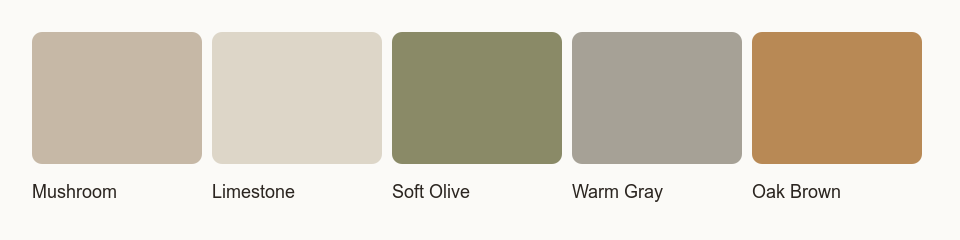
Palette formula:
Mushroom walls or cabinets, limestone or warm stone, soft olive accents, warm gray upholstery, and oak brown.
Mushroom tones feel earthy without becoming heavy. Soft olive adds a natural note, and stone keeps the palette grounded. This combination works well in kitchens, bathrooms, and rooms with indoor plants.
When to use:
Use it if you want a more organic warm minimalist home.
5.Sand, terracotta, and natural rattan
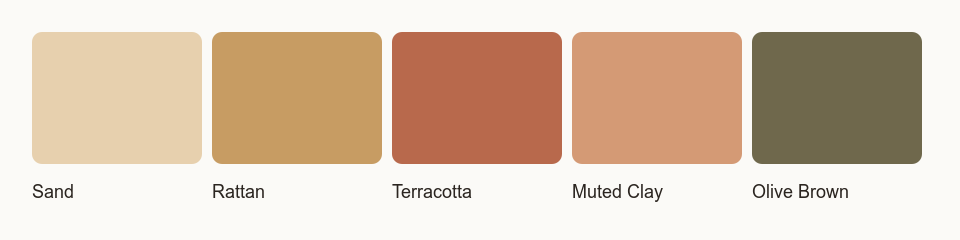
Palette formula:
Sand walls or rug, rattan or cane texture, terracotta accent seating or tile, muted clay textiles, and olive-brown grounding.
This palette feels sunnier and more relaxed. Sand tones keep the room calm, terracotta adds warmth, and rattan or woven textures prevent the space from feeling flat.
When to use:
Use it carefully in small rooms. Too much terracotta can become visually heavy, so treat it as an accent rather than the whole palette.
6.Bone white, travertine, and brushed brass
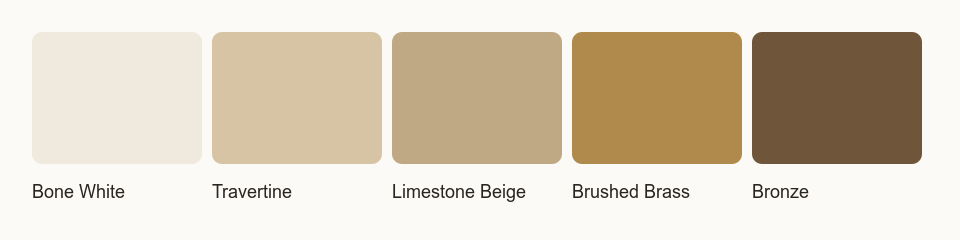
Palette formula:
Bone white walls, travertine or limestone beige, brushed brass hardware, bronze lighting, and warm stone undertones.
This palette leans more refined. Bone white is softer than pure white, travertine adds quiet pattern, and brushed brass brings warmth without needing bold color.
When to use:
Use it in bathrooms, kitchens, entryways, or dining rooms where hard surfaces need warmth.
One thing you'll probably notice is that none of these palettes use pure white, true gray, or jet black. Instead, warm minimalism leans toward neutrals with subtle warm undertones. Even a small shift toward cream, greige, taupe, or warm charcoal can make a space feel noticeably warmer, softer, and more inviting.
Best Furniture, Textures & Materials for Warm Minimalism Homes
Beyond color, furniture, textures, and materials play an equally important role in creating a warm minimalist home. Here are some of the best options to help make your space feel cozy, inviting, and effortlessly stylish.
1.Furniture that works best
Choose furniture with clean lines, comfortable proportions, and a clear purpose.
Sofas should be simple but inviting, not stiff. Coffee tables can be wood, stone, or rounded in shape to soften straight lines. Storage pieces should hide visual clutter while still fitting the room's style.
Good furniture choices include:
- A low-profile sofa with soft upholstery
- A rounded wood or stone coffee table
- A simple dining table with visible grain
- Closed cabinets or sideboards
- Upholstered dining chairs with clean silhouettes
- A platform bed or simple upholstered headboard
- Slim nightstands with drawers
- Built-in benches or storage where possible
And also avoid furniture that is minimal only in appearance. A beautiful chair that no one wants to sit in does not belong in a warm minimalist home.
2.Textures that add warmth
Texture is where the room becomes livable. Use textiles and surfaces that create quiet variation, such as:
- Linen curtains
- Wool rugs
- Cotton bedding
- Boucle or nubby upholstery
- Jute or sisal rugs
- Woven baskets used sparingly
- Plaster, limewash, or matte painted walls
- Textured lampshades
- Handmade ceramics
And the texture should be layered, not scattered. A wool rug, linen curtain, and ceramic lamp usually feel calmer than many small textured accessories.
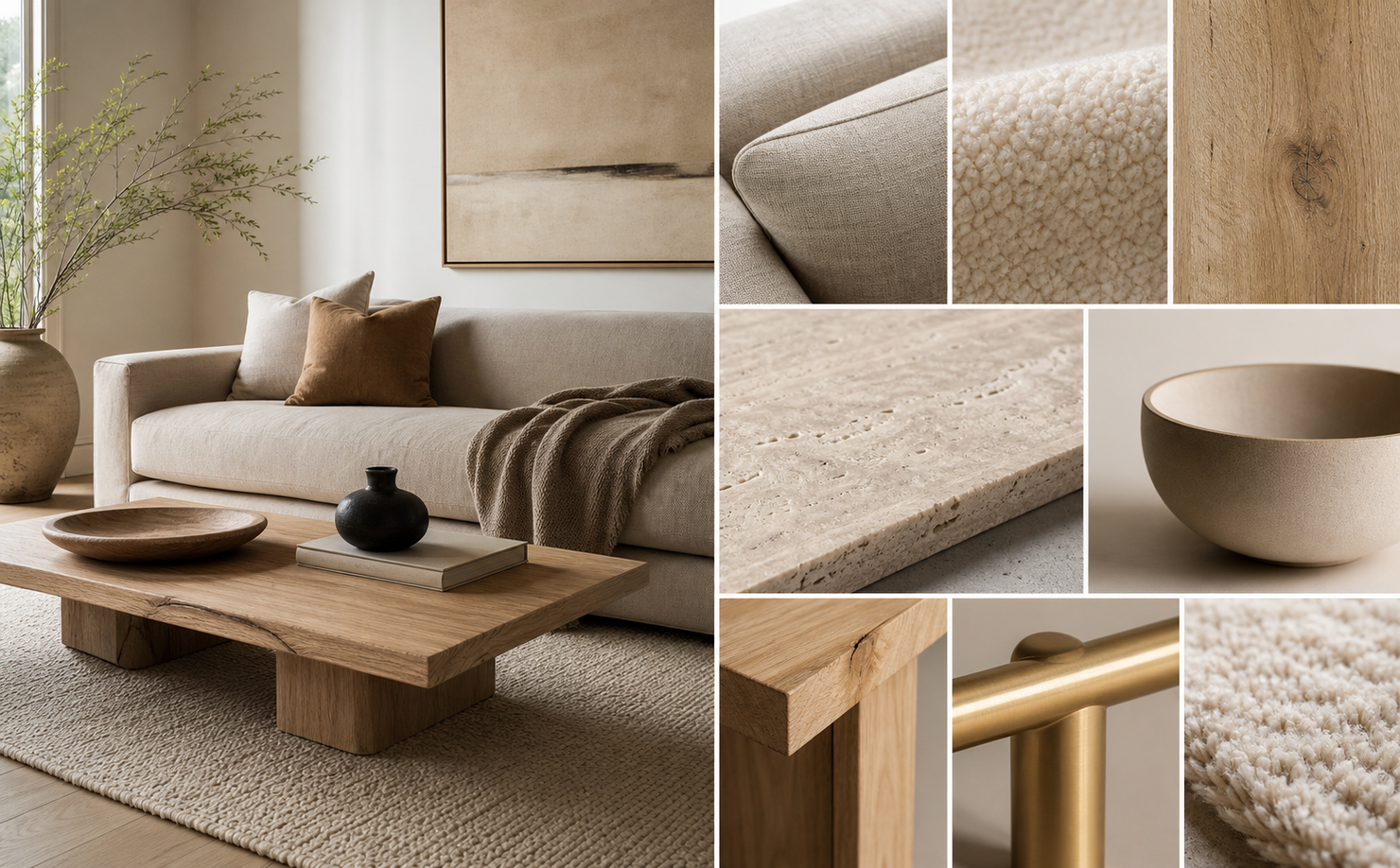
3.Materials that fit the style
Natural and tactile materials are the backbone of warm minimalism, such as:
- Oak for light warmth
- Walnut for depth
- Travertine for soft stone texture
- Marble with subtle veining
- Ceramic for handmade character
- Clay and terracotta for earthiness
- Rattan and cane for lightness
- Brushed brass for warm metal detail
- Aged iron or bronze for contrast
Use materials where people notice them most: tabletops, seating, lighting, handles, rugs, and surfaces near eye level. A small amount of real texture in the right place is more effective than many decorative objects.
One more tip: avoid anything overly glossy, sharp-edged, or highly reflective. Warm minimalism favors soft finishes, natural textures, and gentle forms that create a calm, comfortable, and welcoming atmosphere.
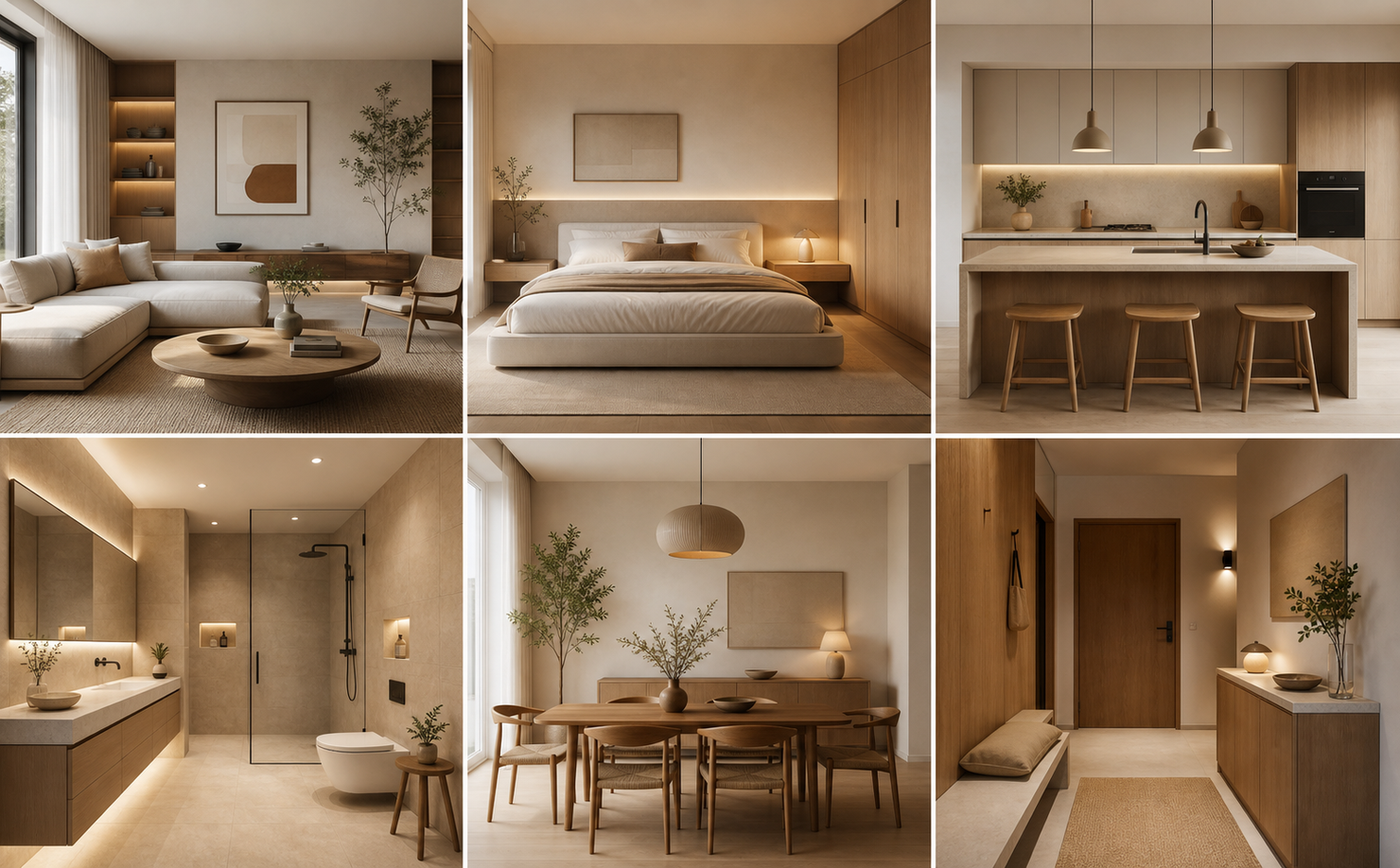
Warm Minimalism Design Guides by Room Type
Warm minimalism looks a little different in different rooms. Here are practical, beginner-friendly tips to help you apply the style throughout your home, from the living room and bedroom to the kitchen, bathroom, and beyond:
1.Warm minimalist living room design tips
- Start with the seating area. Choose a comfortable sofa in cream, oatmeal, taupe, warm gray, camel, or soft olive. Add a rug large enough to sit under the front legs of the main furniture. This makes the room feel grounded rather than scattered.
- Then add one focal point. It could be a fireplace, a large artwork, a sculptural coffee table, a vintage chair, or a beautiful window view. Do not create too many competing moments. Warm minimalism works best when the eye knows where to rest.
- For decor, keep the coffee table edited. A tray, a book, and one ceramic object may be enough. Add closed storage for remotes, cables, toys, blankets, or daily clutter. If your living room never looks clean, the issue may not be your taste. It may be a lack of storage.
- Lighting should include more than one source. Use a floor lamp near the sofa, a table lamp on a side table, or wall sconces if possible. Soft evening light is one of the easiest ways to make a minimalist living room feel cozy.
2.Warm minimalism bedroom design tips
A warm minimalist bedroom should feel quiet, soft, and easy to maintain.
- Start with the bed because it is the visual center of the room. Choose simple bedding in cotton, linen, or a cotton-linen blend. Layer a duvet, two sleeping pillows, and one or two decorative pillows. You do not need a pile of cushions to create warmth.
- Use a palette that supports rest: warm white, mushroom, taupe, clay, sage, soft gray-beige, or muted brown. If the room feels flat, add contrast through a wood nightstand, a woven rug, or a darker lamp base.
- Keep nightstands practical. A lamp, a book, a small dish, and a drawer for hidden items will usually work better than an open surface full of small objects.
- Bedroom lighting matters. Replace harsh overhead-only lighting with bedside lamps, sconces, or dimmable bulbs. A warm minimalist bedroom should look good in daylight, but it should feel even better at night.
3.Warm minimalist kitchen design tips
A warm minimalist kitchen is not just a white kitchen with fewer things on the counter.
- It needs warmth in the fixed materials. Wood cabinetry, warm stone, handmade tile, brushed brass, aged bronze, creamy paint, or a simple woven stool can all soften the space.
- Keep counters mostly clear, but not lifeless. A cutting board, ceramic bowl, small lamp, or everyday coffee setup can look natural if it is useful and well placed. The goal is not to hide cooking. The goal is to prevent visual overload.
- Storage is essential. Use drawer organizers, appliance garages, deep drawers, closed pantry storage, and simple cabinet fronts. If everything has a home, the kitchen can stay minimal without constant effort.
- For a 2026 look, consider warmer cabinet colors such as mushroom, olive, clay, soft taupe, or natural wood instead of default bright white. If you prefer white cabinets, add warmth with wood flooring, textured tile, brass hardware, linen shades, or warm under-cabinet lighting.
4.Warm minimalist bathroom design tips
Bathrooms can easily feel cold because they include so many hard surfaces. Warm minimalism solves this with tone, texture, and lighting.
- Use warm tile, stone, wood vanities, brushed metal, soft towels, and simple storage. Travertine, limestone-look tile, clay-toned ceramics, oak vanities, and warm white walls all work well. If your bathroom is already white or gray, add warmth with towels, a wood stool, a framed mirror, warm bulbs, and better storage.
- Keep products concealed when possible. Open shelves full of bottles create visual clutter quickly. Use drawers, mirrored cabinets, baskets inside cabinets, or uniform containers if items must stay visible.
- The bathroom should feel clean, but not clinical. Pay attention and also remember this tip in mind when working on a bathroom design project.
5.Warm minimalist dining room design tips
A dining room does not need much decor to feel complete. It needs good scale, comfortable seating, and warm light.
- Choose a table with material presence, such as oak, walnut, travertine, or a simple matte finish. Add chairs that are clean-lined but comfortable enough for long meals. A pendant light above the table can create intimacy and act as the main design feature.
- Keep the centerpiece simple. A ceramic bowl, low vase, linen runner, or seasonal branches can be enough. If the room needs more character, add one large artwork or a sideboard with closed storage.
Warm minimalism is especially useful in dining rooms because it keeps the space calm while still making meals feel intentional.
6.Warm minimalist entryway design tips
The entryway is where clutter tries to enter the home. Shoes, bags, keys, mail, coats, and packages can overwhelm the space quickly. A warm minimalist entry needs practical storage first.
Use a bench, closed shoe cabinet, wall hooks, a tray for keys, and a mirror or artwork. Choose materials that connect to the rest of the home: wood, warm metal, woven texture, or a soft neutral wall color.
Do not decorate the entryway before solving storage. A vase will not fix a pile of shoes. Once the practical pieces are in place, one warm lamp, mirror, or artwork can make the entry feel welcoming.
7.Warm minimalist small apartment design tips
Design any room, shop or space with DecAI in less 30 seconds! It's free!
Warm minimalism works beautifully in small apartments because it reduces clutter without making the space feel bare.
- The key is scale. Do not fill the apartment with tiny furniture just because the apartment is small. Too many small pieces can create more visual noise.
- Choose fewer pieces with multiple functions: a storage bed, a dining table that can also work as a desk, a sideboard with closed storage, a sofa with slim arms, or nesting tables. Use one cohesive palette across connected spaces so the apartment feels larger and calmer.
- Rugs, lighting, and furniture placement can define zones without adding walls. A living area can be marked by a rug. A sleeping area can feel calmer with curtains or a low bookcase. A dining corner can become intentional with one pendant or wall sconce.
- In a small warm minimalist home, every object needs a reason. That does not make the space less personal. It makes the personal pieces easier to see.
8 Warm Minimalism Decorating Rules
The biggest beginner struggle is balancing coziness and minimalism. Go try the following decor rules to avoid sparse cold spaces or cluttered messy ones:
Rule 1: Keep contrast soft but visible
A warm minimalist room should not look like one flat block of beige. Add contrast through wood tone, black accents, deeper brown, olive, stone veining, or shadow. The contrast can be quiet, but it must exist.
Rule 2: Choose warm light temperatures
Cool bulbs can make warm colors look gray and harsh. Use warm, dimmable lighting in living rooms, bedrooms, and dining areas. In kitchens and bathrooms, balance task brightness with warmer ambient lights.
Rule 3: Mix straight lines with soft curves
Too many straight lines can feel rigid. Add curves through a round coffee table, arched mirror, soft chair, rounded lamp, or oval dining table.
Rule 4: Use natural materials where they matter most
You do not need every item to be handmade or expensive. Focus on high-touch areas: sofa fabric, rug, tabletop, cabinet pulls, bedding, towels, and lighting.

Rule 5: Repeat materials, don't repeat colors
Use the same wood tone or metal finish in two or three places across a room to create cohesion, rather than trying to color-match everything.
Rule 6: Keep collections small and edited
A shelf of thirty small objects reads as clutter even if each item is beautiful individually; a shelf of three or four does not.
Rule 7: Leave visual breathing room
Empty wall and surface space isn't a failure — it's part of what makes the warm elements stand out instead of competing with each other.
Rule 8: Test the room in real life
A room can look minimal in a photo but fail during daily routines. Notice where clutter gathers, where lighting feels wrong, where seating is uncomfortable, and where storage is missing. Then adjust the room around those habits.
8 Best Warm Minimalism Design Examples for Your Inspriation In 2026
Warm minimalism in 2026 is less about copying one exact look and more about applying the same design logic to different rooms and lifestyles. Here are the examples worth paying attention to.
1. Soft neutral living rooms with sculptural furniture
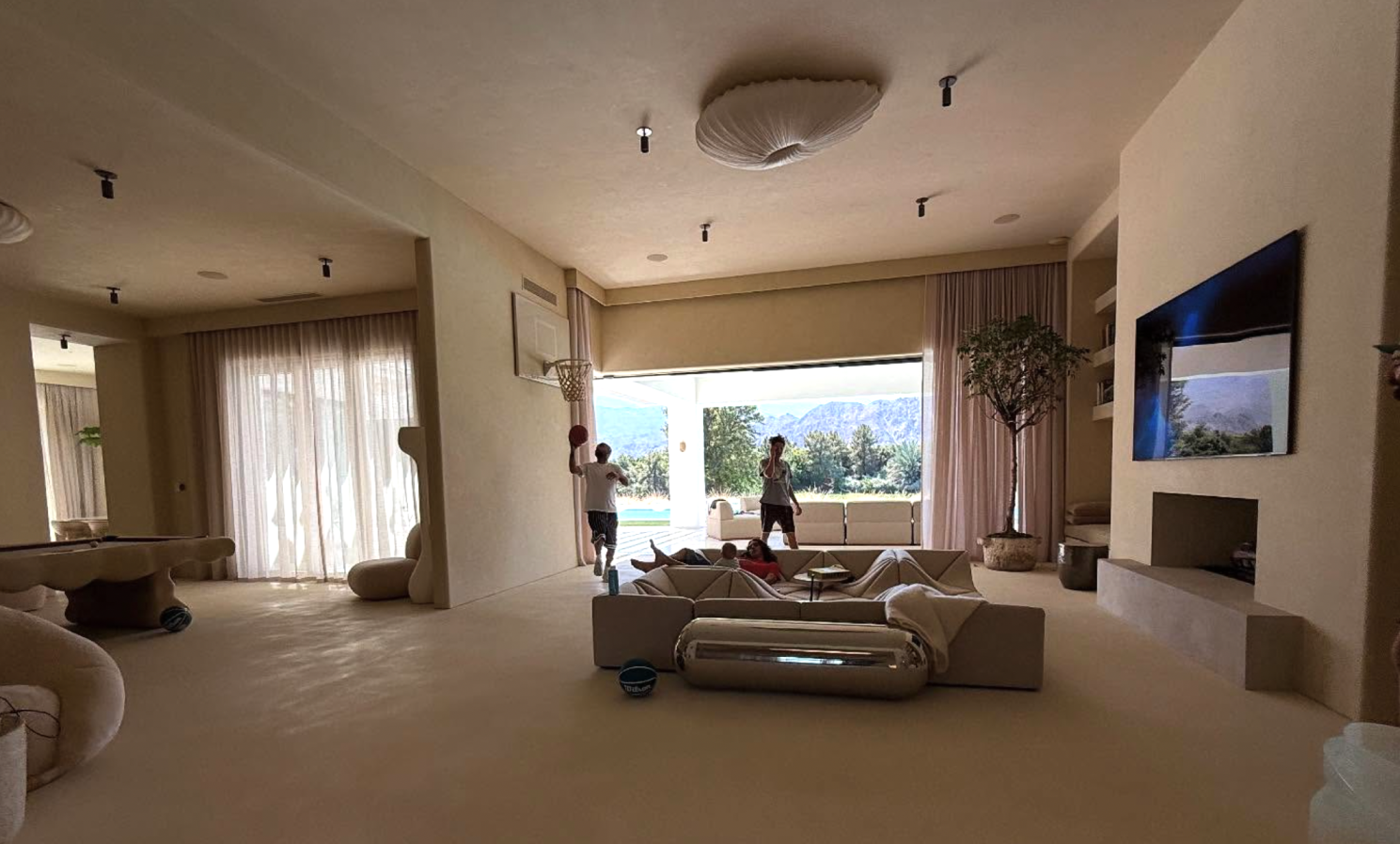
Homes & Gardens uses Justin and Hailey Bieber's living room as a 2026 example of warm minimalism built around a quiet neutral foundation, sculptural furniture, soft curtains, plants, and tactile accents. The room shows that a minimalist living room does not need many objects if the main furniture has enough shape and presence.
What to borrow: use one sculptural anchor, such as a curved sofa, low modular sectional, rounded coffee table, or fluid bench, then keep the surrounding palette calm.
Why it works: the room stays uncluttered, but the furniture form gives it personality. This is a good direction if your living room feels too plain after decluttering.
2.Earthy Neutral Living Rooms With Terracotta and Olive Accents
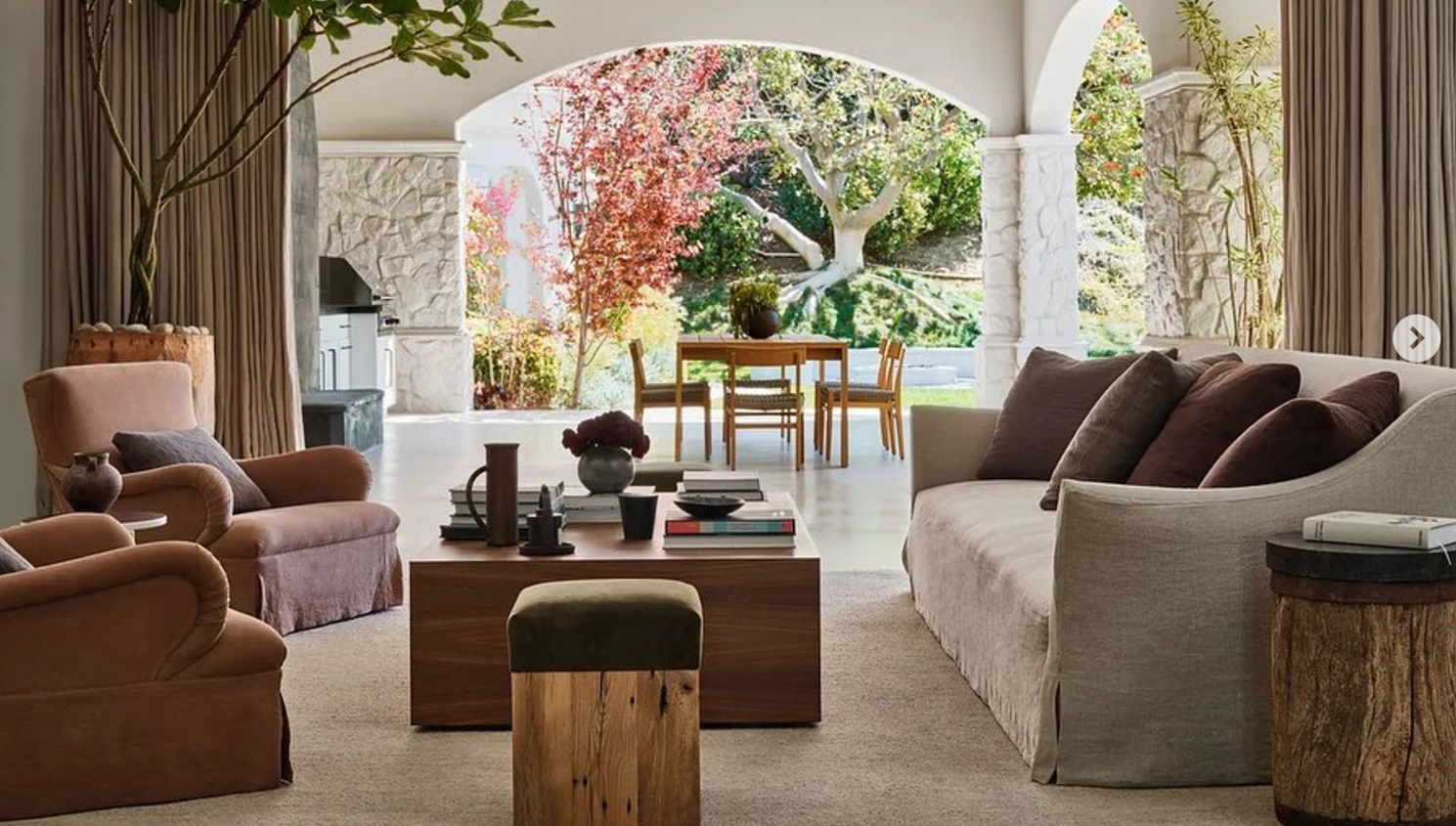
Another useful 2026 reference is Kourtney Kardashian and Travis Barker's living room, designed with Waldo Fernandez. The room still uses calm neutrals, but it adds depth with terracotta armchairs, chocolate tones, olive accents, wood furniture, and linen curtains.
What to borrow: if your beige or cream living room feels flat, add one earthy accent family instead of adding more random decor. Terracotta, olive, and chocolate brown are especially useful because they feel warm without breaking the calm mood.
Why it works: the palette creates warmth and contrast while staying grounded. This is a strong example for readers who want warm minimalism to feel richer, not just lighter.
3. A Minimalist Kitchen Layered With Warm Wood and Stone
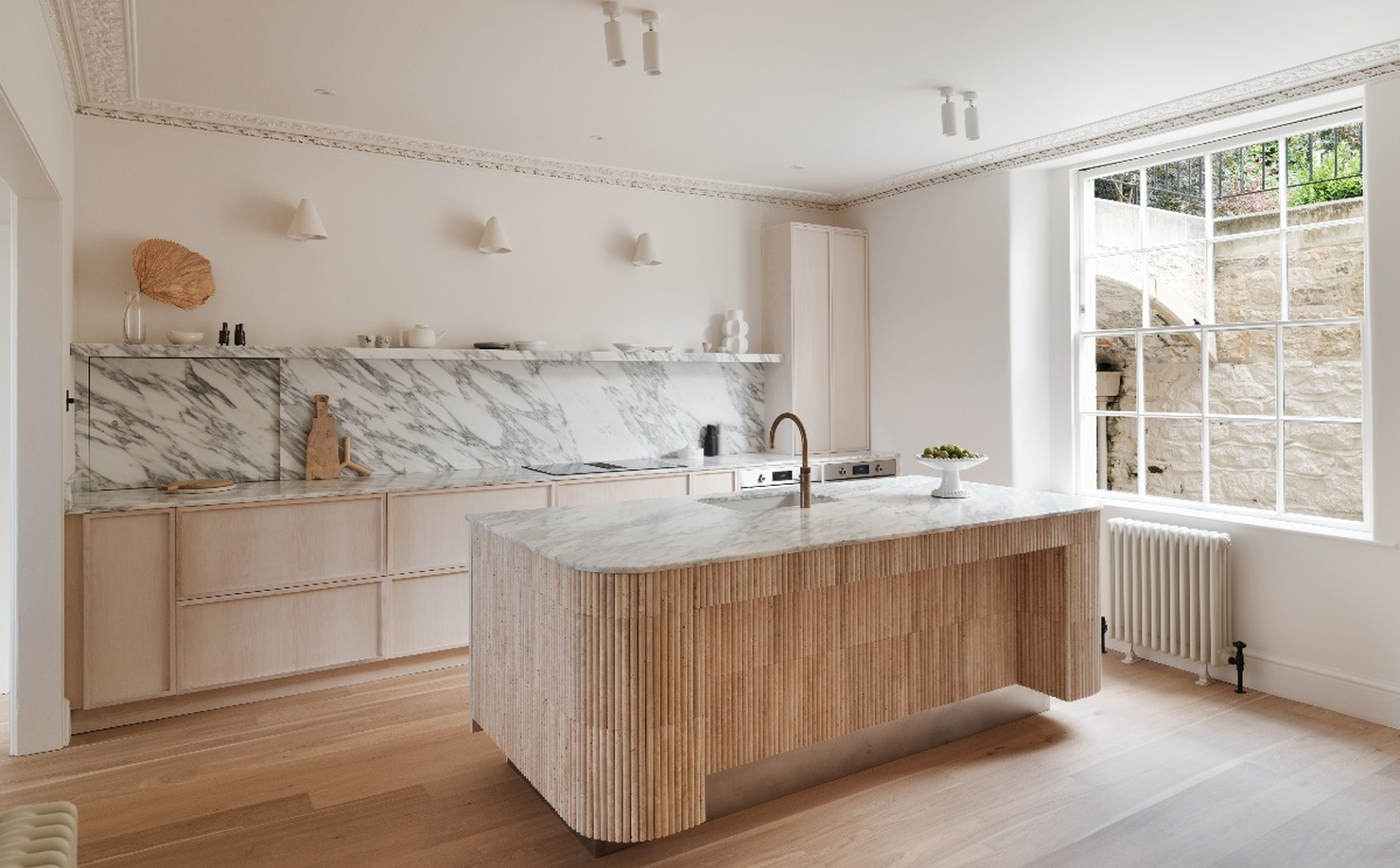
This Bath kitchen is a strong real-home example because it shows warm minimalism working in a busy family house, not only in a styled apartment. The design uses white-pigmented ash cabinetry, Arabescato marble, fluted travertine mosaic on the island, oak flooring, and a concealed storage nook behind a sliding splashback door.
What to borrow: combine clean cabinet lines with tactile natural materials. If a kitchen has to work hard every day, hidden storage is just as important as the color palette.
Why it works: the kitchen feels calm because clutter is controlled, but it does not feel cold because the wood grain, travertine, marble, and oak floor add visible warmth.
Warm Modern Kitchens With Dark Cabinetry and Natural Materials
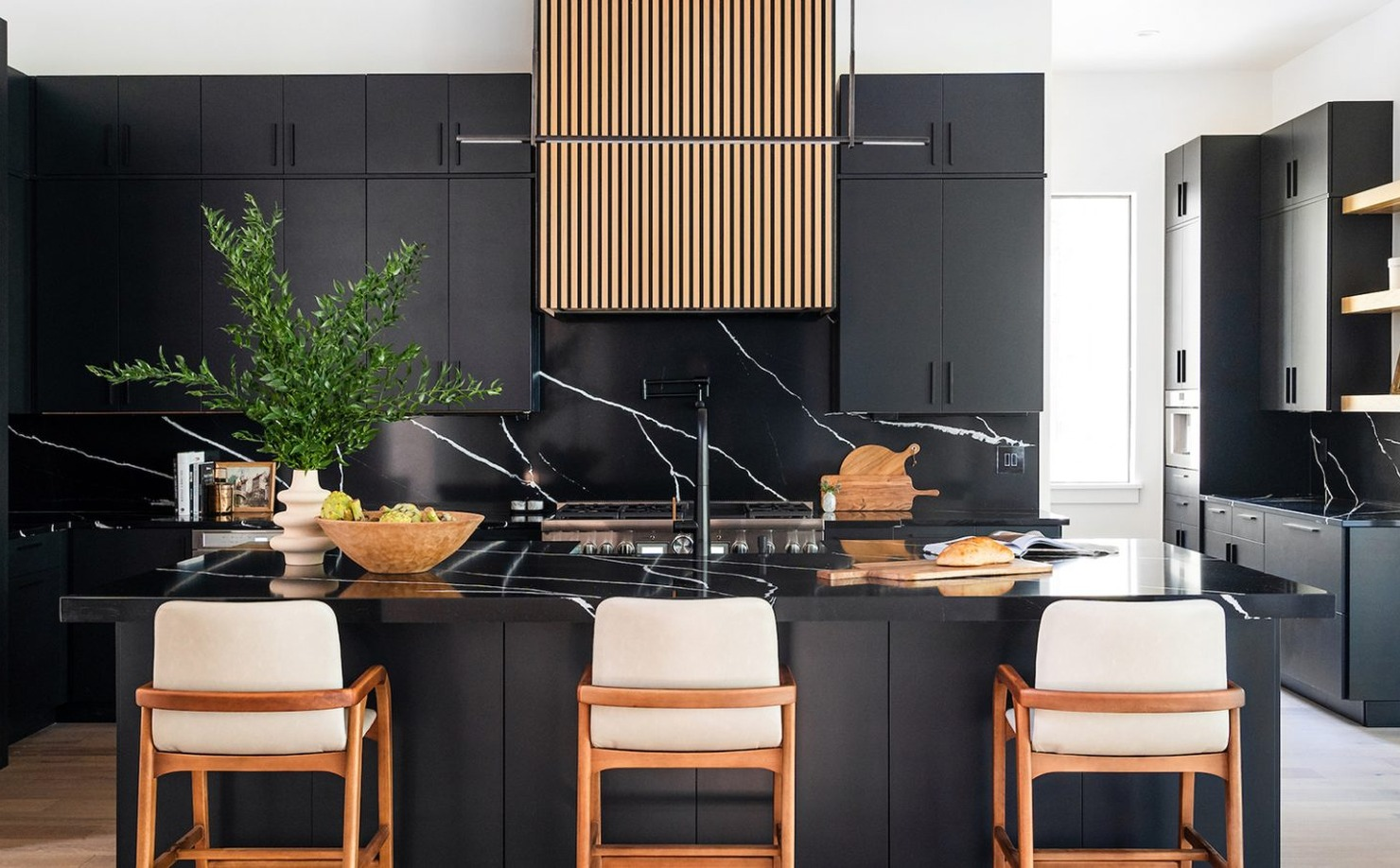
Sherwin-Williams' 2026 kitchen trend feature highlights designer projects that make modern kitchens feel warmer through wood, nuanced whites, sculptural details, layered lighting, and natural materials. One example pairs black cabinetry with white oak flooring and a vertical slatted hood, showing that warm minimalism does not always need to be pale.
What to borrow: use dark cabinetry carefully, then balance it with wood, warm undertones, natural materials, and layered light. Dark colors can work in warm minimalism when they are grounded rather than glossy or severe.
Why it works: the contrast gives the room structure, while wood and lighting prevent the space from feeling austere.
5. Travertine and Oak Bathrooms With Concealed Storage
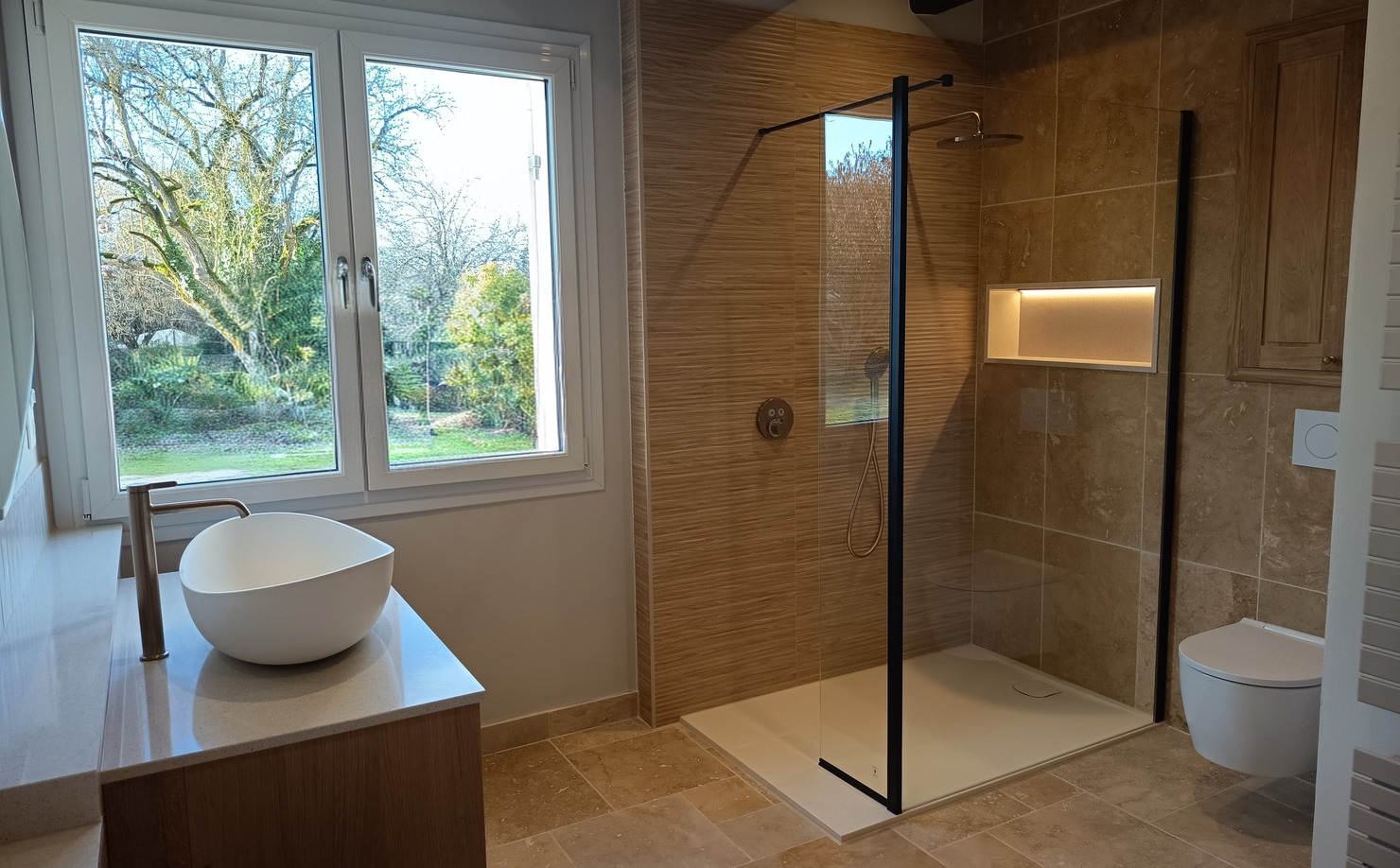
This bathroom renovation is a practical warm minimalist example because the project goal was not only visual calm. It also needed better function, more storage, openness, and a warmer contemporary feeling. The finished bathroom uses travertine, oak details, mineral stone fittings, brushed bronze finishes, integrated LED lighting, and concealed storage.
What to borrow: in bathrooms, use storage and lighting as design features. A recessed cabinet, oak shelf, warm metal tap, or integrated light can add comfort without placing more items on the counter.
Why it works: hard bathroom surfaces are softened by natural materials and warm metal. The room stays uncluttered because storage is built into the design.
6. Minimalist Bathrooms With Stone and Wood Contrast

The minimalist bathroom examples include a Brooklyn townhouse bathroom where veiny travertine is paired with a rich wood vanity. This is a useful warm minimalism reference because it shows how a bathroom can stay refined and minimal while still having visual texture.
What to borrow: pair one cool or hard surface with one warm material. Travertine with wood, terrazzo with warm lighting, or stone with brushed brass can create balance without adding clutter.
Why it works: texture and tone do the decorating. You do not need many accessories when the main materials already carry the room.
7. Small Apartments With Hidden Storage and Warm Natural Light
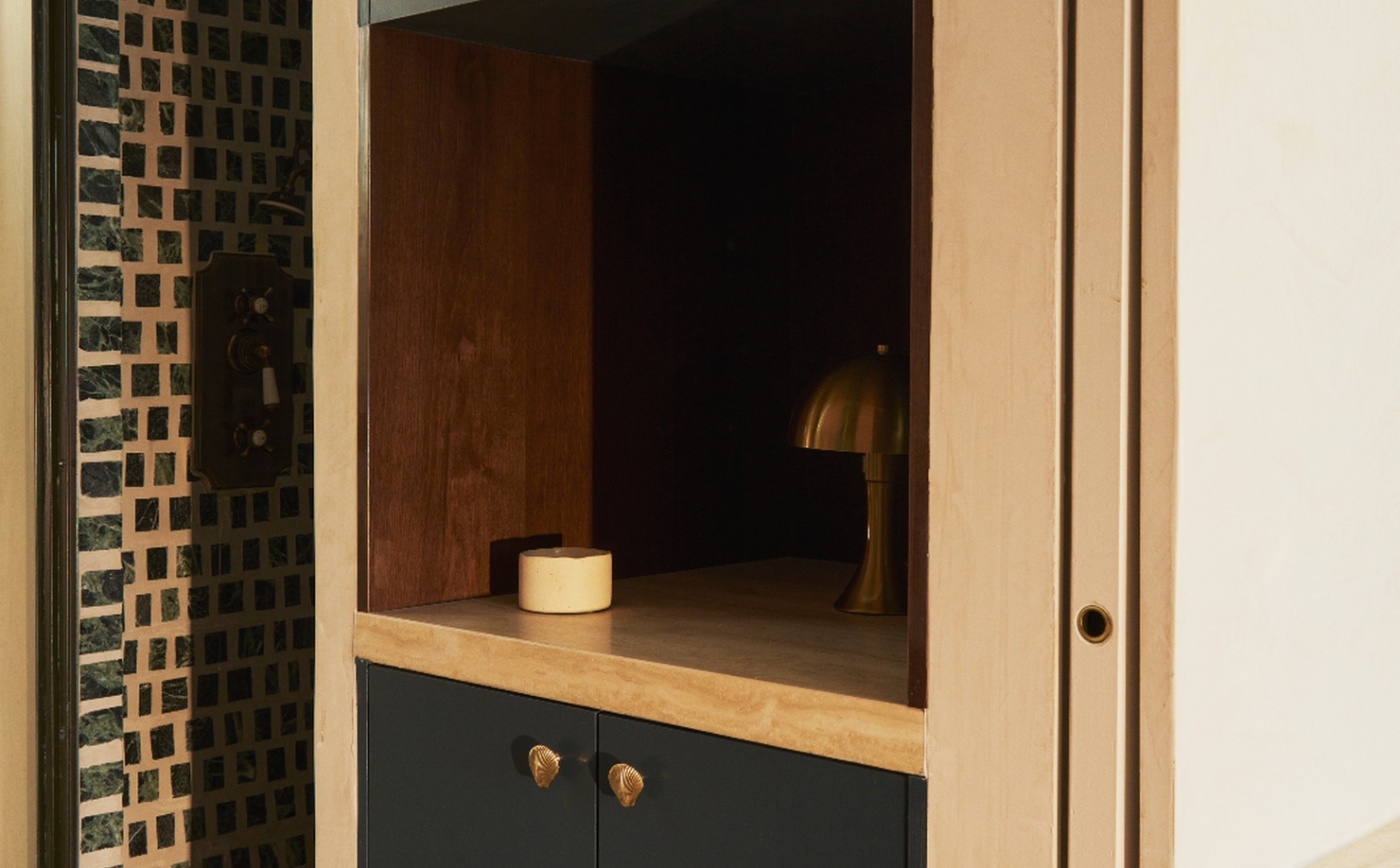
This example is not described only as warm minimalism, but it offers several ideas that fit the style well: white stucco walls that diffuse warm natural light, travertine details, green-stained wood, bronze faucets, a sliding door that closes off functional zones, and canele wood walls that hide discreet storage.
What to borrow: in a small apartment, use storage as architecture. Sliding doors, continuous wood panels, concealed zones, and a tight material palette can make a tiny home feel calmer without removing function.
Why it works: the apartment supports real living while keeping visual noise low. That is one of the hardest parts of warm minimalism in small spaces.
8. Travertine as a Warm Minimalist Feature Material

Travertine continues to appear in warm minimalist interiors because it has quiet movement, natural variation, and a warmer tone than many gray stones. Architectural Digest's travertine examples show the material in baths, floors, accent walls, and architectural features.
What to borrow: use travertine as one strong material moment rather than spreading it everywhere. A vanity top, coffee table, fireplace surround, floor tile, or shower wall can be enough.
Why it works: travertine adds warmth and texture while still feeling restrained. It is a useful material when a room needs depth but not pattern-heavy decoration.
If you're looking for even more inspiration, explore these 20 trendy minimalist interior design examples for more clues.
How to Create a Warm Minimalism Interior Design With DecAI™ Step by Step
Warm minimalism is easier when you can see ideas before you buy anything.
Paint colors, rugs, curtains, sofas, and wood tones can look very different in your actual room than they do in a mood board. This is where an AI interior design tool like DecAI™ can be useful.
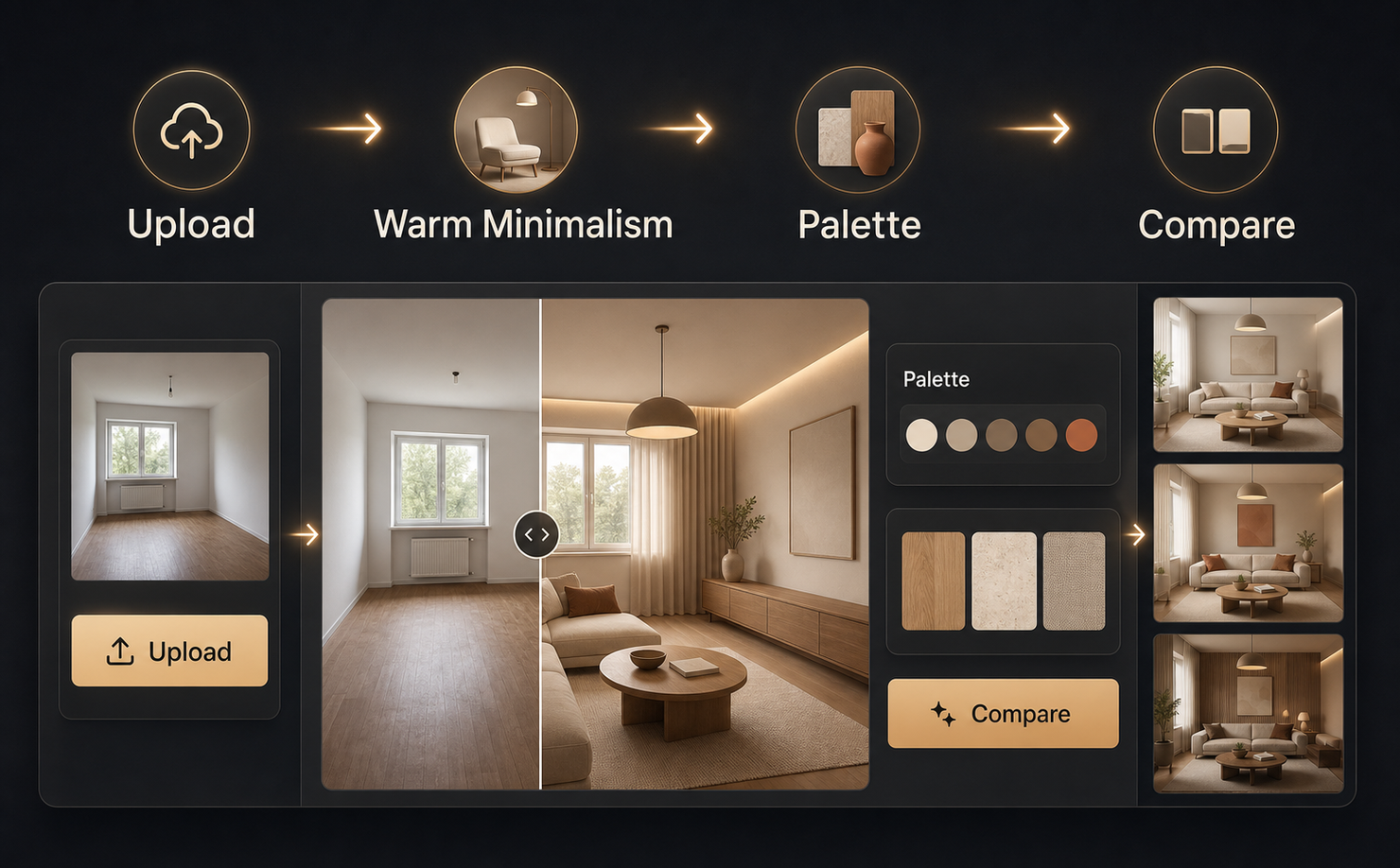
Simply upload a real room photo and the AI will take the rest to generate your warm minimalism design in just seconds. With over 15 room types and 130 textures and materials, you can quickly create design for any space or room type, and quickly iterate the detail till it envisions all possible ideas in your mind.
DecAI™ makes home interior design super easy and fast for anyone, even when you are on the go.
Here are the simple steps that you can follow:
Step 1: Clean and photograph your room
Before uploading a photo, remove temporary clutter such as laundry, dishes, packaging, and random cables. Take a clear photo in natural light from a corner or doorway so the room layout is easy to understand.
This matters because the AI reads what is visible. A cleaner photo usually produces clearer design suggestions.
Step 2: Upload the photo to DecAI™
Open DecAI™ on web or mobile and upload the room image. Choose the room type that matches your space, such as living room, bedroom, kitchen, bathroom, or entryway.
The goal at this stage is not perfection. It is to create a usable starting point.
Step 3: Choose a design style
It provides over 30 design styles, including the minimalism design. You can feel free to test several related styles, compare the results and choose the best one.
Step 4: Generate and also ask the AI designer
If the first attempt does not meet your needs, also ask the AI agent to iterate your ideas faster till it is completely right.
Step 5: Download and share
Once you've found a design you love, save it and use it as a visual guide when choosing furniture, paint colors, materials, and décor. This helps every decision work toward the same cohesive vision instead of being made one piece at a time.
You can also share your AI design with family members, friends, or contractors to communicate your ideas more clearly and make the redesign process smoother.
FAQs
1. What is warm minimalism in interior design?
Warm minimalism is a design style that combines minimalism's clean lines and lack of clutter with warm neutral colors, natural materials, and layered textures, creating a space that feels calm and inviting rather than sparse or cold.
2. Is warm minimalism still popular in 2026?
Yes. Warm minimalism is widely cited as one of the leading interior design trends of 2026, driven by a broader shift toward wellness-focused, livable design rather than purely visual, photo-ready minimalism.
3. How do you make minimalist interiors feel cozy?
Use warm lighting, natural wood, textured rugs, linen curtains, soft upholstery, warm white or earthy paint colors, and a few meaningful decor pieces. The goal is to add sensory warmth without adding visual clutter.
4. Can warm minimalism work in a small apartment?
Yes. Warm minimalism can work especially well in a small apartment because it reduces visual noise and makes each piece more purposeful. Use concealed storage, multipurpose furniture, a cohesive palette, and fewer larger pieces instead of many small items.
5. What materials are commonly used in warm minimalist interiors?
Common materials include oak, walnut, linen, wool, cotton, jute, rattan, travertine, ceramic, clay, limewash-style finishes, brushed brass, aged bronze, and matte stone. These materials add warmth through texture rather than excessive decoration.
6. Is warm minimalism expensive to achieve?
It does not have to be expensive. The most affordable starting points are decluttering, changing light bulbs, adding linen curtains, using a textured rug, simplifying surfaces, buying secondhand wood furniture, and replacing small clutter with one stronger focal piece.
7. Can AI help design a warm minimalist home?
Yes. AI tools like DecAI can help you upload a room photo, test warm minimalist ideas, compare colors and furniture styles, and preview different room directions quickly. AI is best for visual planning and inspiration, while measurements and installation details still need real-world checking.
8. What colors are best for warm minimalism?
The best colors are warm white, cream, taupe, greige, mushroom, clay, terracotta, soft olive, sand, and natural wood tones. Black, walnut, or aged metal can be used in small amounts for contrast.
9. What is the biggest mistake in warm minimalist design?
The biggest mistake is confusing warmth with adding more decor. Warm minimalism should feel cozy because of material, texture, light, comfort, and proportion, not because every surface is filled.
10. How do I start if my home is currently cluttered?
Start by removing what you do not use, then group the remaining items by function. Add closed storage where clutter gathers most often. After the room feels calmer, improve warmth with lighting, textiles, wood, and one or two personal focal points.
11.What materials are commonly used in warm minimalist interiors?
Light woods like oak and ash, linen and wool textiles, jute and sisal rugs, soft natural stone like travertine and limestone, textured plaster wall finishes, and matte warm-toned metals like brushed brass.
--------------------------------------
If you believe that any material on this site infringes your intellectual property rights, please contact the author at decaiwebteam@outlook.com with details of your claim.
Redesign any home interior, exterior & garden in seconds
Share this Post:
'%3e%3cpath%20d='M17.9995%2035.999C17.0317%2035.999%2016.0619%2035.9219%2015.1161%2035.7696C10.9414%2035.0973%207.11524%2032.9513%204.34408%2029.7273C1.54287%2026.4683%200%2022.3035%200%2017.9995C0%208.07403%208.07503%200%2017.9995%200C27.924%200%2036%208.07503%2036%2017.9995C36%2022.3696%2034.4151%2026.5835%2031.5357%2029.8646C28.6844%2033.1156%2024.7671%2035.2326%2020.5052%2035.8267C19.6806%2035.9419%2018.8371%2036%2017.9995%2036V35.999ZM17.9995%201.20123C8.73726%201.20123%201.20224%208.73626%201.20224%2017.9985C1.20224%2026.2919%207.13427%2033.2659%2015.3075%2034.5814C16.9546%2034.8469%2018.6808%2034.8659%2020.3389%2034.6345C28.5812%2033.4863%2034.7968%2026.334%2034.7968%2017.9985C34.7968%208.73626%2027.2617%201.20123%2017.9985%201.20123H17.9995Z'%20fill='%23FF0209'/%3e%3cpath%20d='M29.0557%2014.3621C28.9184%2013.0276%2028.6208%2011.5539%2027.5268%2010.7784C26.6782%2010.1773%2025.5642%2010.1553%2024.5242%2010.1563C22.3251%2010.1583%2020.126%2010.1603%2017.9269%2010.1623C15.812%2010.1643%2013.6971%2010.1663%2011.5821%2010.1683C10.6985%2010.1683%209.8399%2010.1002%209.01937%2010.4819C8.31406%2010.8105%207.76303%2011.4347%207.43241%2012.1289C6.97156%2013.0957%206.87438%2014.1898%206.81927%2015.2588C6.71708%2017.2044%206.7281%2019.156%206.85133%2021.0996C6.9405%2022.5193%207.16792%2024.0872%208.26496%2024.9919C9.23777%2025.7934%2010.6103%2025.8325%2011.8707%2025.8335C15.8741%2025.8365%2019.8776%2025.8395%2023.881%2025.8435C24.394%2025.8435%2024.93%2025.8345%2025.453%2025.7774C26.4829%2025.6661%2027.4637%2025.3716%2028.1249%2024.6092C28.7922%2023.8407%2028.9635%2022.7698%2029.0657%2021.7569C29.3121%2019.3003%2029.3091%2016.8177%2029.0557%2014.3621ZM15.6116%2021.4453V14.5545L21.5797%2017.9999L15.6116%2021.4453Z'%20fill='%23FF0209'/%3e%3c/g%3e%3cdefs%3e%3cclipPath%20id='clip0_13816_41422'%3e%3crect%20width='36'%20height='36'%20fill='white'/%3e%3c/clipPath%3e%3c/defs%3e%3c/svg%3e)
'%3e%3cpath%20d='M17.9995%2036C17.0327%2036%2016.0619%2035.9229%2015.1161%2035.7696C10.9414%2035.0973%207.11524%2032.9513%204.34408%2029.7273C1.54287%2026.4683%200%2022.3035%200%2017.9995C0%208.07403%208.07503%200%2017.9995%200C27.924%200%2036%208.07503%2036%2017.9995C36%2022.3696%2034.4151%2026.5835%2031.5357%2029.8646C28.6844%2033.1156%2024.7671%2035.2326%2020.5052%2035.8267C19.6806%2035.9419%2018.8371%2036%2017.9995%2036ZM17.9995%201.20224C8.73726%201.20224%201.20224%208.73726%201.20224%2017.9995C1.20224%2026.2919%207.13427%2033.2669%2015.3075%2034.5824C16.9556%2034.8479%2018.6808%2034.8669%2020.3389%2034.6355C28.5812%2033.4873%2034.7968%2026.335%2034.7968%2017.9995C34.7968%208.73726%2027.2617%201.20224%2017.9985%201.20224H17.9995Z'%20fill='url(%23paint0_linear_13816_41436)'/%3e%3cpath%20d='M23.4463%207.55469H12.549C9.53841%207.55469%207.08984%2010.0032%207.08984%2013.0138V22.9834C7.08984%2025.994%209.53841%2028.4426%2012.549%2028.4426H23.4463C26.4569%2028.4426%2028.9054%2025.994%2028.9054%2022.9834V13.0138C28.9054%2010.0032%2026.4569%207.55469%2023.4463%207.55469ZM9.01543%2013.0138C9.01543%2011.0652%2010.6004%209.48027%2012.549%209.48027H23.4463C25.3949%209.48027%2026.9799%2011.0652%2026.9799%2013.0138V22.9834C26.9799%2024.932%2025.3949%2026.517%2023.4463%2026.517H12.549C10.6004%2026.517%209.01543%2024.932%209.01543%2022.9834V13.0138Z'%20fill='url(%23paint1_linear_13816_41436)'/%3e%3cpath%20d='M17.9964%2023.0749C20.7966%2023.0749%2023.0749%2020.7966%2023.0749%2017.9964C23.0749%2015.1962%2020.7966%2012.918%2017.9964%2012.918C15.1962%2012.918%2012.918%2015.1962%2012.918%2017.9964C12.918%2020.7966%2015.1962%2023.0749%2017.9964%2023.0749ZM17.9964%2014.8446C19.7346%2014.8446%2021.1483%2016.2582%2021.1483%2017.9964C21.1483%2019.7347%2019.7346%2021.1483%2017.9964%2021.1483C16.2582%2021.1483%2014.8446%2019.7347%2014.8446%2017.9964C14.8446%2016.2582%2016.2582%2014.8446%2017.9964%2014.8446Z'%20fill='url(%23paint2_linear_13816_41436)'/%3e%3cpath%20d='M23.5482%2013.741C24.3026%2013.741%2024.9168%2013.1269%2024.9168%2012.3725C24.9168%2011.618%2024.3026%2011.0039%2023.5482%2011.0039C22.7938%2011.0039%2022.1797%2011.618%2022.1797%2012.3725C22.1797%2013.1269%2022.7938%2013.741%2023.5482%2013.741Z'%20fill='url(%23paint3_linear_13816_41436)'/%3e%3c/g%3e%3cdefs%3e%3clinearGradient%20id='paint0_linear_13816_41436'%20x1='5.27482'%20y1='30.7312'%20x2='30.7242'%20y2='5.28083'%20gradientUnits='userSpaceOnUse'%3e%3cstop%20stop-color='%23FAAD4F'/%3e%3cstop%20offset='0.35'%20stop-color='%23DD2A7B'/%3e%3cstop%20offset='0.62'%20stop-color='%239537B0'/%3e%3cstop%20offset='1'%20stop-color='%23515BD4'/%3e%3c/linearGradient%3e%3clinearGradient%20id='paint1_linear_13816_41436'%20x1='8.92225'%20y1='27.074'%20x2='27.073'%20y2='8.92324'%20gradientUnits='userSpaceOnUse'%3e%3cstop%20stop-color='%23FAAD4F'/%3e%3cstop%20offset='0.35'%20stop-color='%23DD2A7B'/%3e%3cstop%20offset='0.62'%20stop-color='%239537B0'/%3e%3cstop%20offset='1'%20stop-color='%23515BD4'/%3e%3c/linearGradient%3e%3clinearGradient%20id='paint2_linear_13816_41436'%20x1='14.4077'%20y1='21.5861'%20x2='21.5861'%20y2='14.4077'%20gradientUnits='userSpaceOnUse'%3e%3cstop%20stop-color='%23FAAD4F'/%3e%3cstop%20offset='0.35'%20stop-color='%23DD2A7B'/%3e%3cstop%20offset='0.62'%20stop-color='%239537B0'/%3e%3cstop%20offset='1'%20stop-color='%23515BD4'/%3e%3c/linearGradient%3e%3clinearGradient%20id='paint3_linear_13816_41436'%20x1='22.5814'%20y1='13.3393'%20x2='24.515'%20y2='11.4057'%20gradientUnits='userSpaceOnUse'%3e%3cstop%20stop-color='%23FAAD4F'/%3e%3cstop%20offset='0.35'%20stop-color='%23DD2A7B'/%3e%3cstop%20offset='0.62'%20stop-color='%239537B0'/%3e%3cstop%20offset='1'%20stop-color='%23515BD4'/%3e%3c/linearGradient%3e%3cclipPath%20id='clip0_13816_41436'%3e%3crect%20width='36'%20height='36'%20fill='white'/%3e%3c/clipPath%3e%3c/defs%3e%3c/svg%3e)
'%3e%3cpath%20d='M17.9995%2035.999C17.0317%2035.999%2016.0619%2035.9219%2015.1161%2035.7696C10.9414%2035.0973%207.11524%2032.9513%204.34408%2029.7273C1.54287%2026.4683%200%2022.3035%200%2017.9995C0%208.07403%208.07502%200%2017.9995%200C27.924%200%2036%208.07503%2036%2017.9995C36%2022.3696%2034.415%2026.5835%2031.5357%2029.8646C28.6844%2033.1156%2024.7671%2035.2326%2020.5052%2035.8267C19.6806%2035.9419%2018.8371%2036%2017.9995%2036V35.999ZM17.9995%201.20123C8.73725%201.20123%201.20224%208.73626%201.20224%2017.9985C1.20224%2026.2919%207.13427%2033.2659%2015.3075%2034.5814C16.9545%2034.8469%2018.6808%2034.8659%2020.3388%2034.6345C28.5812%2033.4863%2034.7968%2026.334%2034.7968%2017.9985C34.7968%208.73626%2027.2617%201.20123%2017.9985%201.20123H17.9995Z'%20fill='%23007EBB'/%3e%3cpath%20d='M9.06639%2012.124C8.60253%2011.6932%208.37109%2011.1602%208.37109%2010.526C8.37109%209.89184%208.60253%209.33481%209.06639%208.90401C9.53026%208.47321%2010.1274%208.25781%2010.8587%208.25781C11.5901%208.25781%2012.1642%208.47321%2012.627%208.90401C13.0909%209.33481%2013.3223%209.87581%2013.3223%2010.526C13.3223%2011.1762%2013.0909%2011.6932%2012.627%2012.124C12.1631%2012.5548%2011.5741%2012.7702%2010.8587%2012.7702C10.1434%2012.7702%209.52926%2012.5548%209.06639%2012.124ZM12.9326%2014.5946V27.7962H8.76182V14.5946H12.9326Z'%20fill='%23007EBB'/%3e%3cpath%20d='M26.8196%2015.9006C27.7283%2016.8875%2028.1832%2018.243%2028.1832%2019.9682V27.5663H24.2208V20.5042C24.2208%2019.6346%2023.9954%2018.9583%2023.5445%2018.4764C23.0937%2017.9945%2022.4876%2017.7541%2021.7262%2017.7541C20.9647%2017.7541%2020.3586%2017.9955%2019.9078%2018.4764C19.4569%2018.9583%2019.2315%2019.6346%2019.2315%2020.5042V27.5663H15.2461V14.5611H19.2315V16.2863C19.6353%2015.7113%2020.1793%2015.2574%2020.8636%2014.9228C21.5468%2014.5892%2022.3163%2014.4219%2023.1708%2014.4219C24.6937%2014.4219%2025.9099%2014.9158%2026.8186%2015.9016L26.8196%2015.9006Z'%20fill='%23007EBB'/%3e%3c/g%3e%3cdefs%3e%3cclipPath%20id='clip0_13816_41425'%3e%3crect%20width='36'%20height='36'%20fill='white'/%3e%3c/clipPath%3e%3c/defs%3e%3c/svg%3e)
'%3e%3cpath%20d='M18%2035.999C17.0322%2035.999%2016.0623%2035.9219%2015.1166%2035.7696C10.9417%2035.0973%207.11544%2032.9513%204.3442%2029.7273C1.54291%2026.4683%200%2022.3035%200%2017.9995C0%208.07403%208.07526%200%2018%200C27.9248%200%2036%208.07503%2036%2017.9995C36%2022.3696%2034.415%2026.5835%2031.5356%2029.8646C28.6842%2033.1156%2024.7668%2035.2326%2020.5047%2035.8267C19.6802%2035.9419%2018.8366%2036%2017.999%2036L18%2035.999ZM18%201.20123C8.73751%201.20123%201.20227%208.73626%201.20227%2017.9985C1.20227%2026.2919%207.13448%2033.2659%2015.3079%2034.5814C16.955%2034.8469%2018.6813%2034.8659%2020.3394%2034.6345C28.582%2033.4863%2034.7977%2026.334%2034.7977%2017.9985C34.7977%208.73626%2027.2625%201.20123%2018%201.20123Z'%20fill='black'/%3e%3cpath%20d='M7%208.09163H13.5067L19.521%2016.1816L27.0073%207.90625L28.786%207.93715L20.4078%2017.3454L29%2028.901H22.4959L16.8193%2021.362L9.8847%2029.0864H8.13428L15.9583%2020.26L7%208.09163ZM12.8931%209.28633H9.45676L23.2048%2027.6754H26.5793L12.8931%209.28633Z'%20fill='black'/%3e%3c/g%3e%3cdefs%3e%3cclipPath%20id='clip0_13886_43848'%3e%3crect%20width='36'%20height='36'%20fill='white'/%3e%3c/clipPath%3e%3c/defs%3e%3c/svg%3e)
'%3e%3cpath%20d='M17.9995%2035.999C17.0327%2035.999%2016.0619%2035.9219%2015.1161%2035.7686C10.9414%2035.0963%207.11524%2032.9503%204.34408%2029.7263C1.54287%2026.4673%200%2022.3025%200%2017.9995C0%208.07403%208.07503%200%2017.9995%200C27.924%200%2036%208.07503%2036%2017.9995C36%2022.3696%2034.415%2026.5835%2031.5357%2029.8646C28.6844%2033.1156%2024.7671%2035.2326%2020.5052%2035.8267C19.6806%2035.9419%2018.8371%2036%2017.9995%2036V35.999ZM17.9995%201.20123C8.73726%201.20123%201.20224%208.73626%201.20224%2017.9985C1.20224%2026.2909%207.13428%2033.2659%2015.3075%2034.5814C16.9556%2034.8469%2018.6808%2034.8659%2020.3389%2034.6345C28.5812%2033.4863%2034.7968%2026.334%2034.7968%2017.9985C34.7968%208.73626%2027.2617%201.20123%2017.9985%201.20123H17.9995Z'%20fill='%231877F7'/%3e%3cpath%20d='M20.5337%2014.9635V18.7536H25.2225L24.4801%2023.8601H20.5337V35.624C19.7423%2035.7342%2018.9328%2035.7913%2018.1112%2035.7913C17.1625%2035.7913%2016.2317%2035.7151%2015.324%2035.5689V23.8601H11V18.7536H15.324V14.1169C15.324%2011.2396%2017.6564%208.90625%2020.5347%208.90625V8.90926C20.5428%208.90926%2020.5508%208.90625%2020.5588%208.90625H25.2235V13.3215H22.1758C21.2691%2013.3215%2020.5347%2014.0558%2020.5347%2014.9625L20.5337%2014.9635Z'%20fill='%231877F7'/%3e%3c/g%3e%3cdefs%3e%3cclipPath%20id='clip0_13816_41433'%3e%3crect%20width='36'%20height='36'%20fill='white'/%3e%3c/clipPath%3e%3c/defs%3e%3c/svg%3e)
'%3e%3cpath%20d='M17.9995%2035.999C17.0327%2035.999%2016.0619%2035.9219%2015.1161%2035.7686C10.9414%2035.0963%207.11524%2032.9503%204.34408%2029.7263C1.54287%2026.4673%200%2022.3025%200%2017.9995C0%208.07403%208.07503%200%2017.9995%200C27.924%200%2036%208.07503%2036%2017.9995C36%2022.3696%2034.415%2026.5835%2031.5357%2029.8646C28.6844%2033.1156%2024.7671%2035.2326%2020.5052%2035.8267C19.6806%2035.9419%2018.8371%2036%2017.9995%2036V35.999ZM17.9995%201.20123C8.73726%201.20123%201.20224%208.73626%201.20224%2017.9985C1.20224%2026.2909%207.13428%2033.2659%2015.3075%2034.5814C16.9556%2034.8469%2018.6808%2034.8659%2020.3389%2034.6345C28.5812%2033.4863%2034.7968%2026.334%2034.7968%2017.9985C34.7968%208.73626%2027.2617%201.20123%2017.9985%201.20123H17.9995Z'%20fill='%232A91F7'/%3e%3cg%20clip-path='url(%23clip1_13816_41442)'%3e%3cpath%20d='M16.3345%2018.834C16.6924%2019.3124%2017.149%2019.7083%2017.6733%2019.9947C18.1976%2020.2812%2018.7774%2020.4516%2019.3734%2020.4942C19.9693%2020.5369%2020.5675%2020.4509%2021.1273%2020.2421C21.6871%2020.0333%2022.1954%2019.7065%2022.6178%2019.284L25.1178%2016.784C25.8768%2015.9981%2026.2968%2014.9456%2026.2873%2013.8531C26.2778%2012.7606%2025.8396%2011.7156%2025.0671%2010.943C24.2946%2010.1705%2023.2495%209.73231%2022.157%209.72281C21.0645%209.71332%2020.012%2010.1333%2019.2262%2010.8923L17.7928%2012.3173M19.6678%2017.1673C19.3099%2016.6889%2018.8533%2016.293%2018.329%2016.0065C17.8047%2015.7201%2017.2249%2015.5497%2016.6289%2015.507C16.033%2015.4643%2015.4348%2015.5503%2014.875%2015.7592C14.3152%2015.968%2013.8069%2016.2947%2013.3845%2016.7173L10.8845%2019.2173C10.1255%2020.0031%209.70551%2021.0557%209.715%2022.1481C9.72449%2023.2406%2010.1627%2024.2857%2010.9352%2025.0582C11.7078%2025.8307%2012.7528%2026.269%2013.8453%2026.2784C14.9378%2026.2879%2015.9903%2025.868%2016.7761%2025.109L18.2011%2023.684'%20stroke='%232A91F7'%20stroke-width='1.66667'%20stroke-linecap='round'%20stroke-linejoin='round'/%3e%3c/g%3e%3c/g%3e%3cdefs%3e%3cclipPath%20id='clip0_13816_41442'%3e%3crect%20width='36'%20height='36'%20fill='white'/%3e%3c/clipPath%3e%3cclipPath%20id='clip1_13816_41442'%3e%3crect%20width='20'%20height='20'%20fill='white'%20transform='translate(8%208)'/%3e%3c/clipPath%3e%3c/defs%3e%3c/svg%3e)
Redesign any home interior, exterior & garden in seconds