
Luxury Interior Design Guide: How to Make Your Home Feel Luxurious, Not Expensive

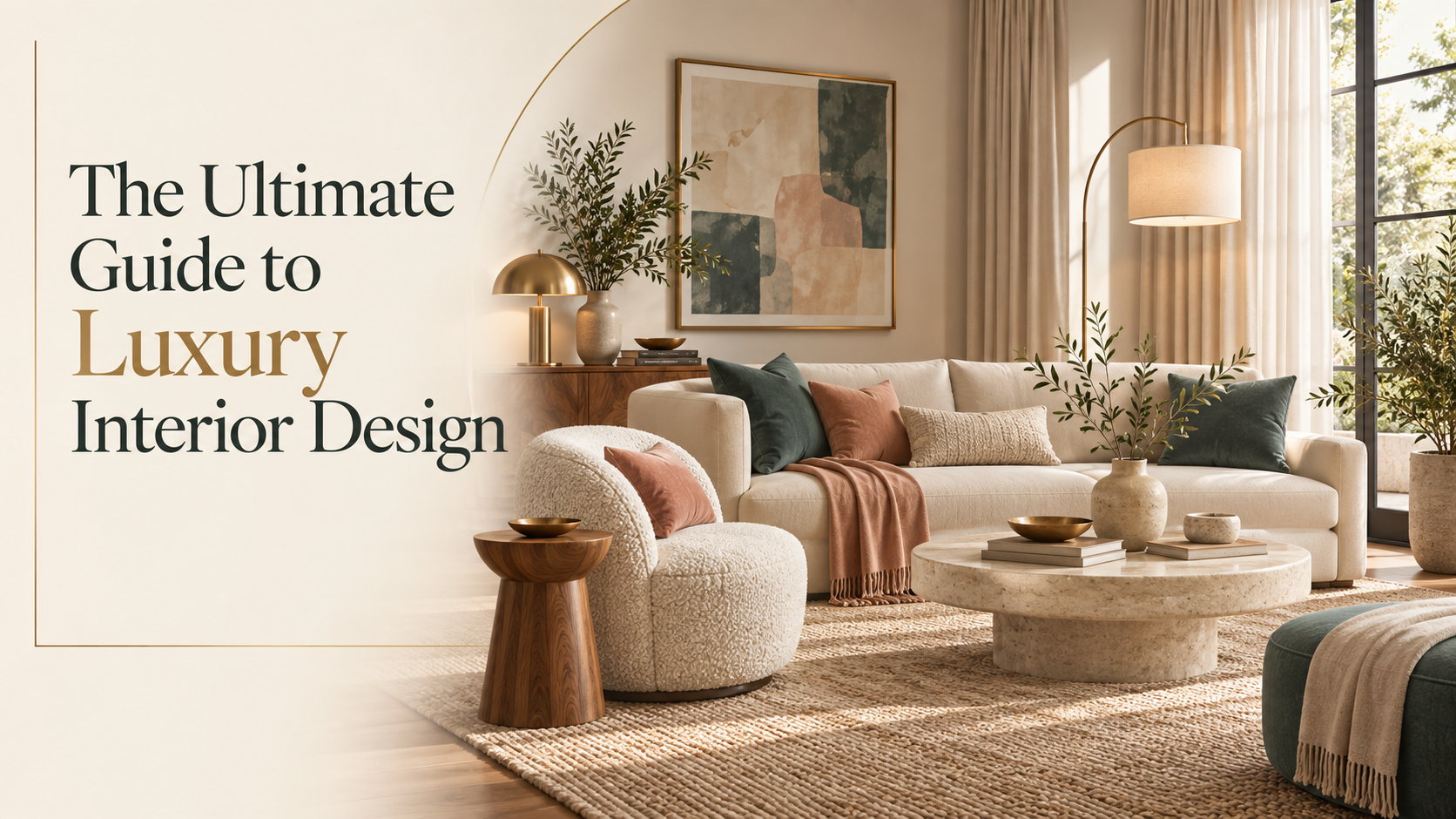
What actually makes a home look and feel luxurious?
Is it the marble? The designer furniture? High ceilings? Custom cabinetry? An expensive chandelier?
They can certainly help—but none of them guarantees a luxurious interior.
True luxury interior design is less about filling a home with expensive things and more about making thoughtful choices that work beautifully together. Proportion, materials, lighting, craftsmanship, comfort, color, texture, and personality all play a part.
So, before you start shopping for expensive furniture or planning a major renovation, read this ultimate luxury interior design guide to to learn what luxury really means in interior design, its key elements and principles, practical tips and ideas, and how to create that feeling in your own home—whatever your style or budget.
While learning this, also feel free to try our free AI interior design tool to quickly visualize and test any luxury design ideas hitting on you.
Design any room, shop or space with DecAI in less 30 seconds! It's free!
What Is Luxury Interior Design?
Luxury interior design is a professional design philosophy that focuses on quality, balance, comfort, and refinement, rather than superficial opulence or expensive furnishings. It is a systematic design approach that unifies space layout, material texture, color tone, lighting hierarchy, and soft furnishing details to create a cohesive, elevated, and lifestyle-oriented living environment.
Unlike outdated traditional luxury design that pursues complicated carvings, shiny metal decorations, and stacked luxury materials, 2026 modern luxury interior design advocates quiet luxury and tactile minimalism. It abandons visual clutter and excessive decoration, focusing on creating a calm, warm, and sophisticated space that fits daily family life.
What Makes a Home Interior Feel Luxurious? 7 Key Elements
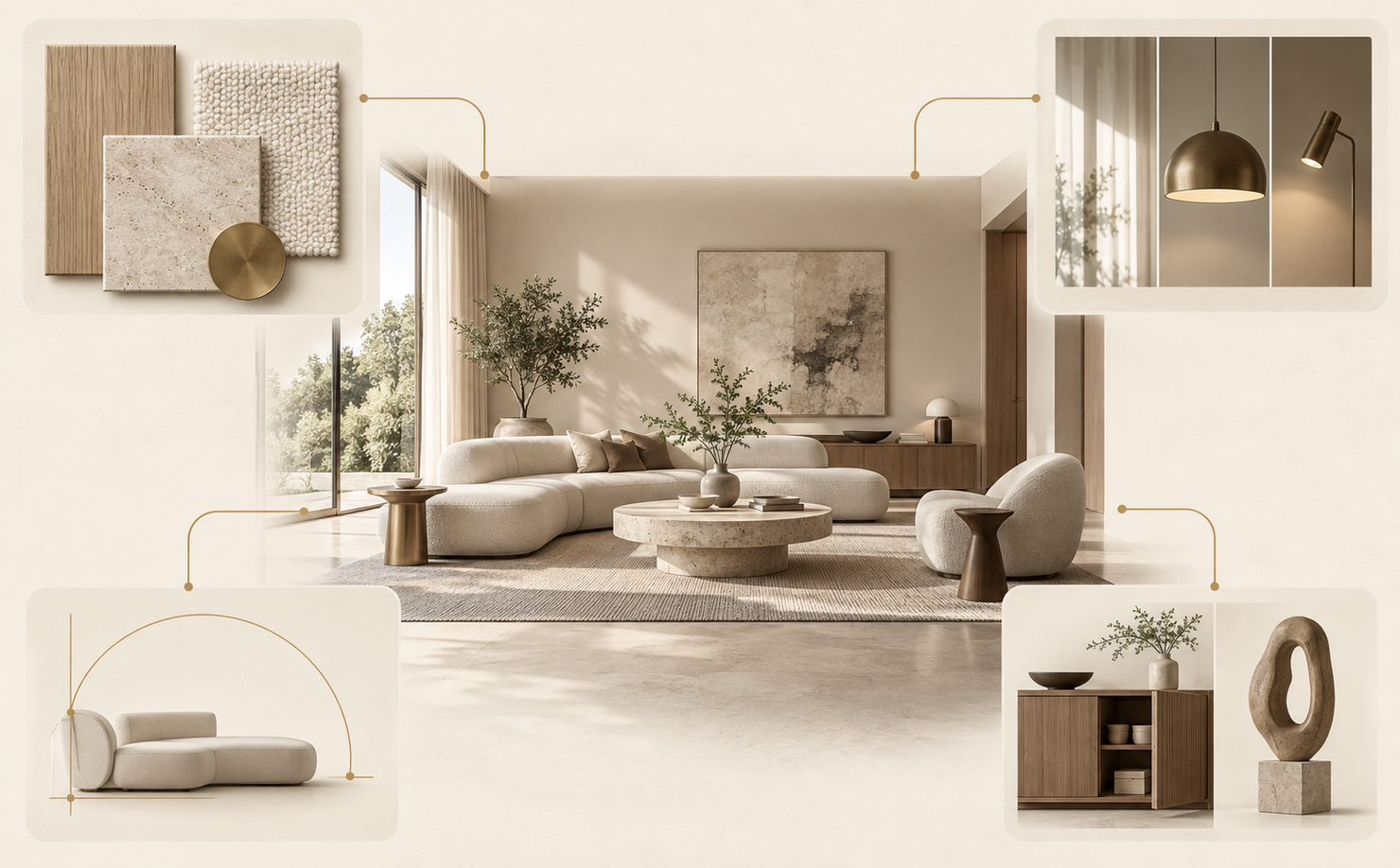
Luxury atmosphere is not created by a single expensive item, but by the superposition of multiple professional elements. These 7 core key elements are the foundation of all high-end luxury interiors, applicable to villas, apartments, small homes, and rental spaces:
1. Unified & Restrained Color Palette
Luxury homes never use messy, high-saturation color combinations. Modern luxury sticks to a low-contrast, neutral-dominated color system: cream, warm gray, taupe, soft white, and light wood tones as the base, with a small amount of low-saturation dark green, navy, or black as accents. A unified whole-house color tone is the fastest way to improve space grade.
2. Layered & Tactile Material Collision
Texture is the soul of luxury design. Flat single materials will make the space cheap, no matter how expensive they are. Qualified luxury interiors mix diverse natural textures: natural stone, solid wood, brushed metal, frosted glass, hand-woven textiles, and matte paint. The contrast of soft and hard, rough and smooth creates rich spatial hierarchy.
3. Scientific Negative Space & Spatial Balance
The biggest feature of luxury design is "less is more". It reserves sufficient negative space and avoids full-space decoration and furniture stacking. Every decoration and furniture placement follows proportion and balance rules, making the space breathable, neat, and advanced.
4. Multi-Layered Intelligent Lighting System
Lighting determines the atmosphere of luxury space. Ordinary homes only rely on a single main lamp, while luxury interiors adopt three-layer lighting: ambient lighting + task lighting + accent lighting. Soft non-main lamp lighting eliminates harsh shadows, creating a warm and high-end light and shadow atmosphere.
5. Customized & Proportional Furniture
Disproportionate furniture scale is the main reason expensive homes look cheap. Luxury design insists on matching furniture size, height, and proportion according to room area and ceiling height. Customized built-in cabinets and ultra-high curtain top design stretch the spatial vision instantly.
6. Integrated Storage & Zero Clutter
Luxury homes are never messy. Hidden integrated storage systems hide daily sundries completely, keeping the visual surface clean and tidy. Clean space vision is the most intuitive advanced sense of luxury interiors.
7. Curated & Personalized Soft Furnishings
Mass-matched uniform soft furnishings lack temperature. Luxury design uses customized art paintings, handcrafted textiles, and personalized decorative ornaments to enrich details, making the space unique and lifestyle-oriented.
Luxury Design Principles & Pro Tips You Should Follow
To avoid wasting budget and creating tacky luxury, follow these professional designer principles for every luxury home project:
- Prioritize proportion over decoration: Perfect spatial proportion and layout are more important than any expensive decor. Fix layout problems first before adding soft furnishings.
- Choose texture over gloss: 2026 luxury design abandons high-gloss flashy materials. Matte, frosted, and raw natural textures are more advanced and timeless.
- Unify style, mix materials: Keep the overall design style consistent, but boldly mix different material textures to avoid flat space.
- Invest in permanent hardware, experiment with soft decor: Spend budget on floor, wall, cabinet, and lighting hardware; update affordable soft furnishings regularly to keep the space trendy.
- Avoid over-decoration: Every decorative element must have a purpose. Redundant ornaments will destroy the restrained luxury atmosphere.
- Combine comfort and aesthetics: Real luxury is livable luxury. Excessively fancy and impractical design is pseudo-luxury.
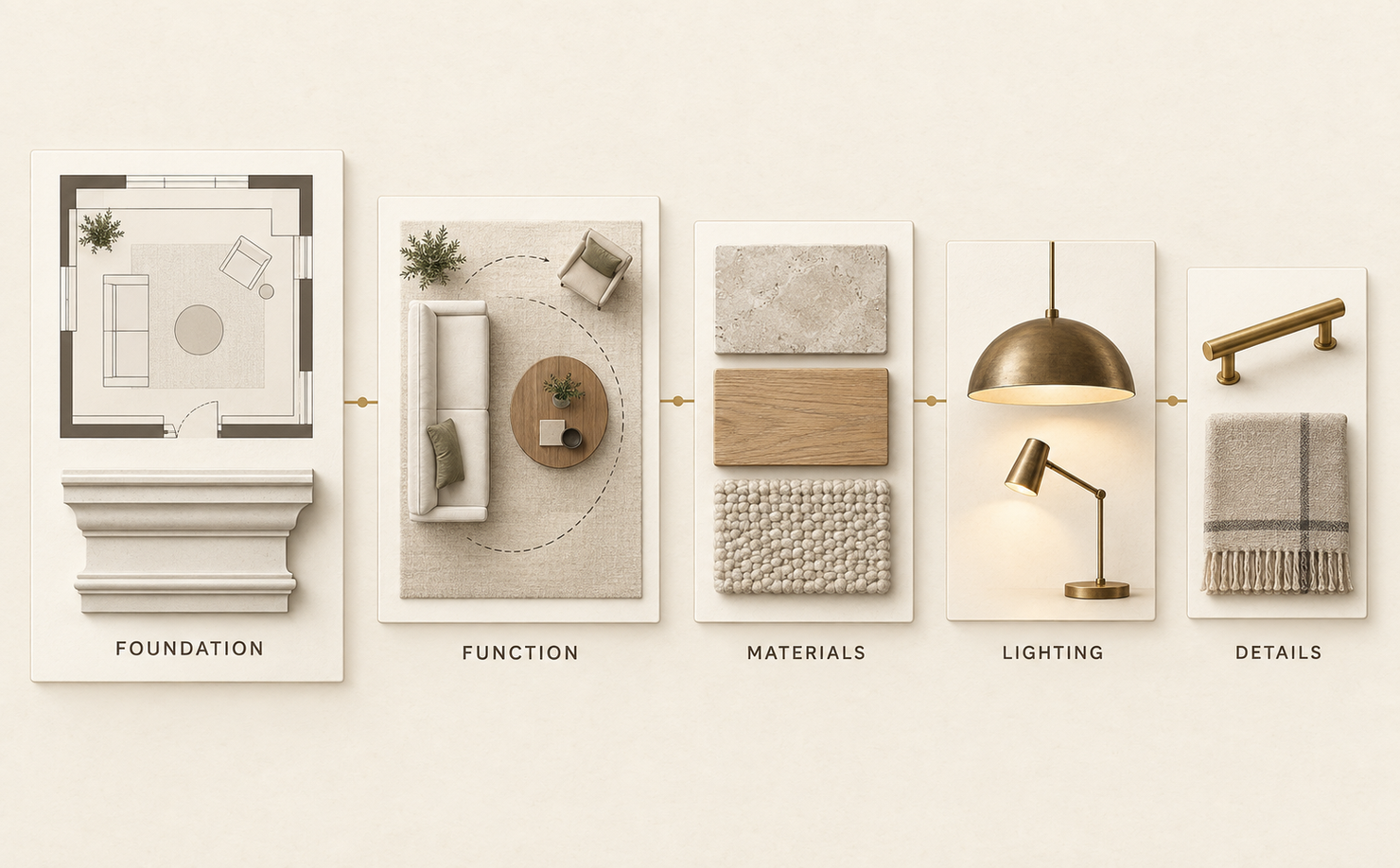
How to Create a Luxury Interior Design Step by Step
Don't worry! You don’t need professional designer experience or a huge budget to design a luxury home. With the help of the right luxury interior design tools, even the complete beginners can complete professional-level luxury space design from layout planning to style preview in 5 simple steps:
Step 1: Define How the Room Should Work
List the activities the room needs to support, who uses it, and your three main frustrations.
For a living room, your brief might be: “Comfortable evening reading, seating for four, and a place to store children’s games.” That gives you more useful direction than simply requesting a luxurious appearance.
Step 2: Measure and Photograph the Space
Record room dimensions, windows, door openings, fixed features, and furniture you plan to keep. Take clear photographs from several angles.
Measurements will support purchase decisions; photographs will help you compare visual changes. Keep both together so an attractive concept does not become detached from the actual space.
Step 3: Set a Budget and Rank the Changes
Divide your plan into essentials, useful improvements, and optional additions. Include delivery, installation, and finishing costs where relevant.
If the seating is uncomfortable and storage is inadequate, address those needs before committing most of the budget to decorative objects. Decide in advance what can wait.
Step 4: Define Your Design Direction
Based on the elements and principles above, define the specific direction for your luxury interior:
- What is the primary color palette? (warm neutrals, deep jewel tones, monochromatic, or a specific color story)
- What is the primary material language? (organic natural, refined traditional, modern minimal, or artisan craft)
- What is the one statement piece the room will be built around?
- What feeling do you want the room to evoke? (calm sanctuary, sophisticated entertaining, creative warmth)
Write this down before moving on to the next step. The clearer your direction is, the faster and easier it will be to make the decisions that follow.
Step 5: Choose the Right Interior Design Tool
Living in this tech-driven era, learning to use the right tools can make your design process much easier and more efficient.
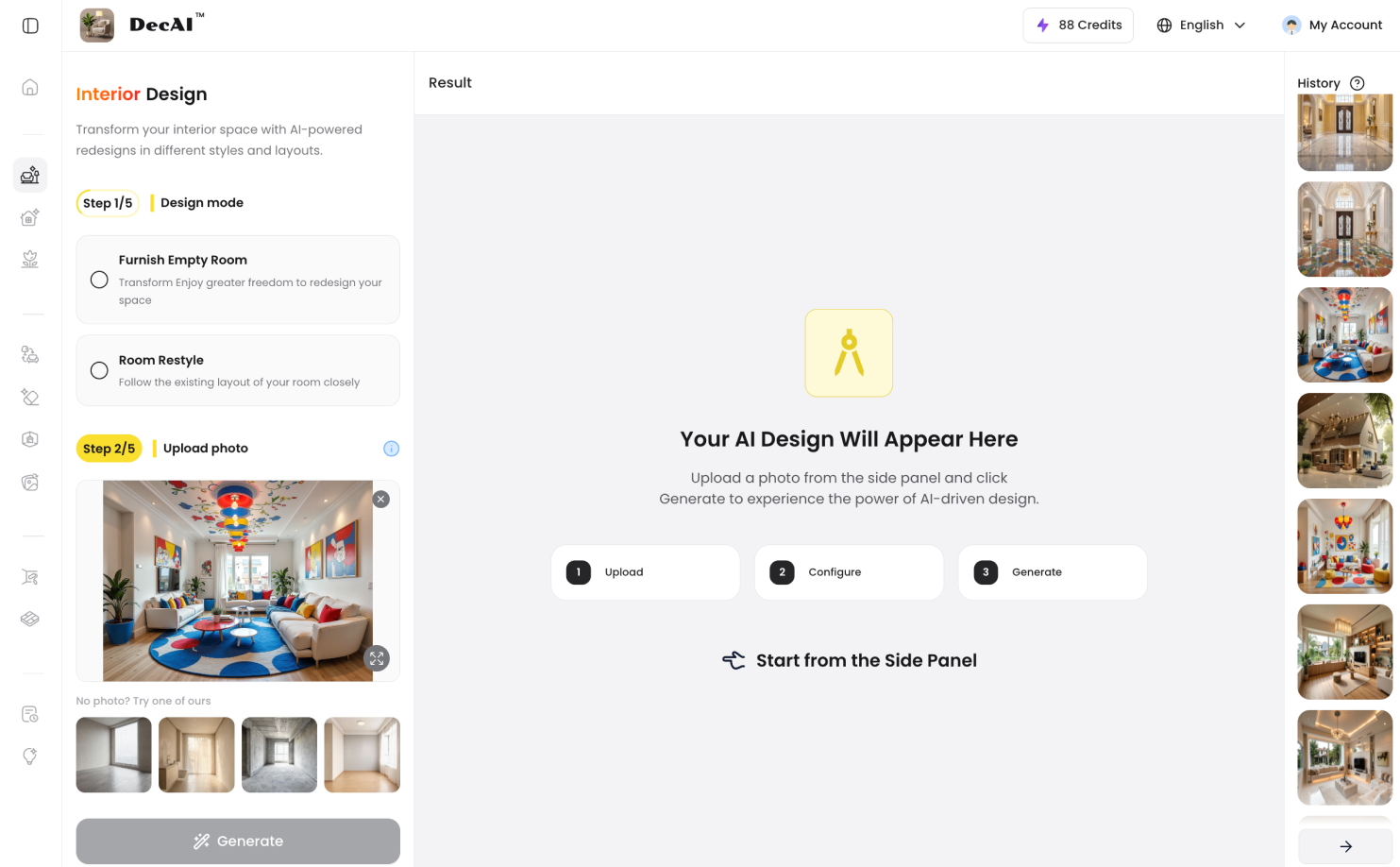
For homeowners, beginners, or anyone who wants to create a luxury interior without professional design skills or experience, DecAI is a practical tool to get started with in 2026.
DecAI interior design
Unlike other single-function AI design tools out there, DecAI focuses on real-home luxury design, supporting one-click generation of modern luxury, quiet luxury, and minimalist luxury styles.
It allows you to preview luxury design ideas directly in a photo of your own room and refine details like furniture, décor, walls, flooring, and colors until your dream space comes to life right before your eyes—all with a few simple clicks or prompt-based chats, no professional design skills required.
Curious about how fast it is? Free try it now to start creating your luxury interior design now!
Step 6: Upload Your Room Photo and Explore With DecAI
Upload your room photo to DecAI and start visualizing your dream luxury interior design.
Step 7: Compare and Refine the Concepts
Review the result against your original brief. Does it address storage, improve visual coordination, and preserve the features you intend to keep?
If you generate more versions, compare a small number with clear differences. Change one major variable, such as the wall palette or furniture style, rather than changing everything at once.
Step 8: Check the Design Against Reality
Verify dimensions, furniture availability, material samples, and total costs before purchasing. Check that the image has not enlarged windows, shifted walls, or introduced furniture that cannot fit.
AI luxury interior design is useful for exploring a direction. An appealing image does not establish construction feasibility, accurate color, or real product dimensions.
Step 9: Implement in a Practical Order
Complete relevant repairs, preparation, and installation before placing furniture and styling the room. Coordinate the sequence with the people doing the work.
Finish with a short review: walk through the space, test lighting, open storage, and sit in each main position. Your completed plan should include a selected concept, verified dimensions, material choices, and a prioritized purchase list.
How to Make Your Home Look Luxurious Without Spending a Fortune
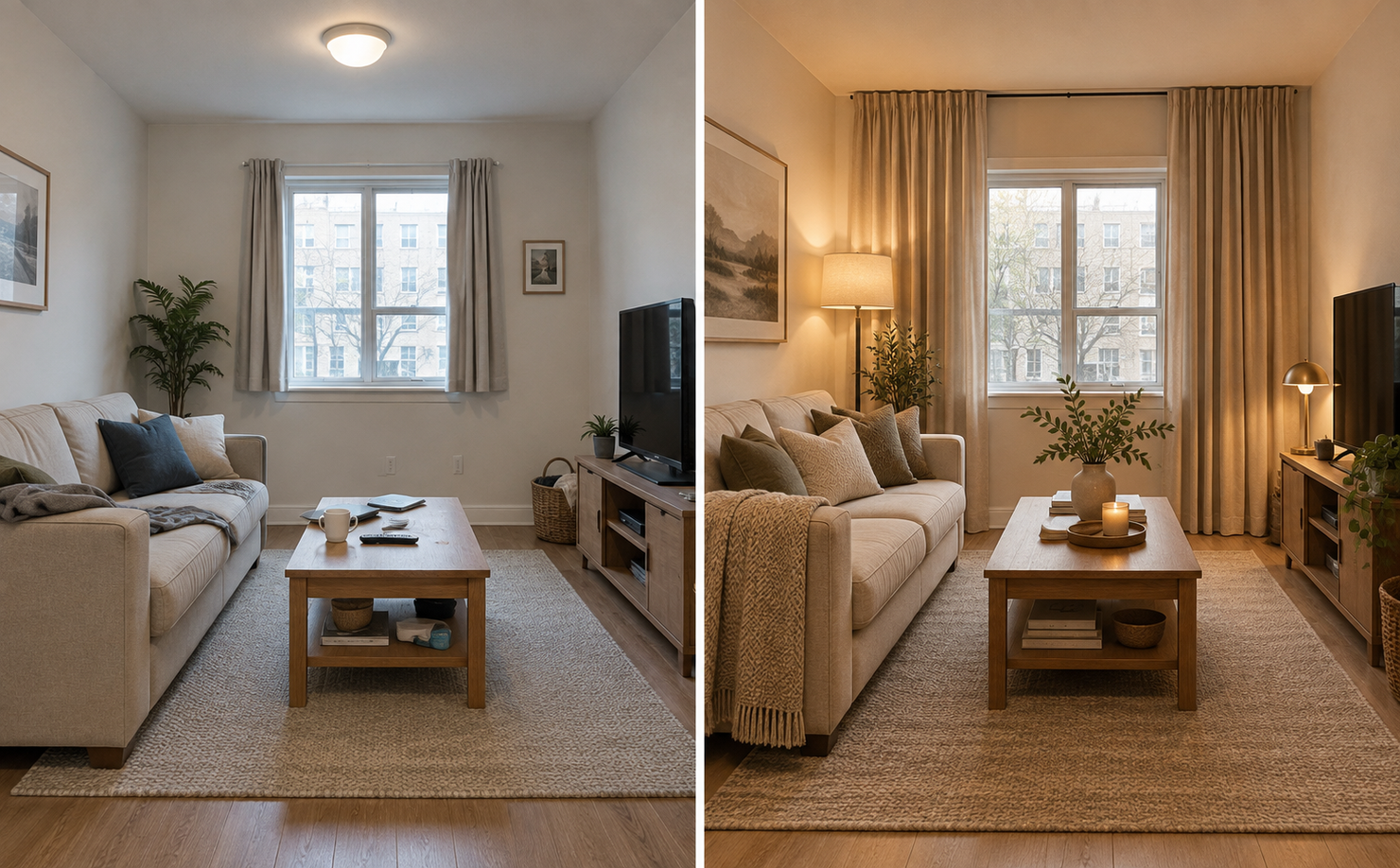
Luxury interior design doesn’t mean everything in your home has to be expensive. With the right choices and a little creativity, you can create a space that looks and feels luxurious without filling it with high-end pieces. So, try to follow this:
- Unify whole-house color: Abandon messy colorful soft furnishings, uniformly use neutral color curtains, rugs, and cushions to improve overall harmony.
- Upgrade lighting for free: Turn off single main lamps, use floor lamps, table lamps, and strip lights to create layered light and shadow, the cheapest luxury upgrade.
- Heighten curtains: Hang curtains close to the ceiling to stretch vertical space, instantly making the room tall and elegant.
- Hide all clutter: Use hidden storage boxes and built-in cabinets to store sundries; clean vision is the most advanced luxury.
- Mix textures reasonably: Match rough wood grain with smooth stone and soft fabric to create layered texture without expensive materials.
- Reduce decorative ornaments: Remove redundant small decorations, retain a small number of high-quality large-scale art ornaments to enhance refinement.
Luxury Interior Design Ideas and Inspiration
We also gather some inspiring luxury design examples and ideas for your inspiration:
1. Living Room: Understated Warmth at 262 Fifth Avenue
Designer: Norm Architects
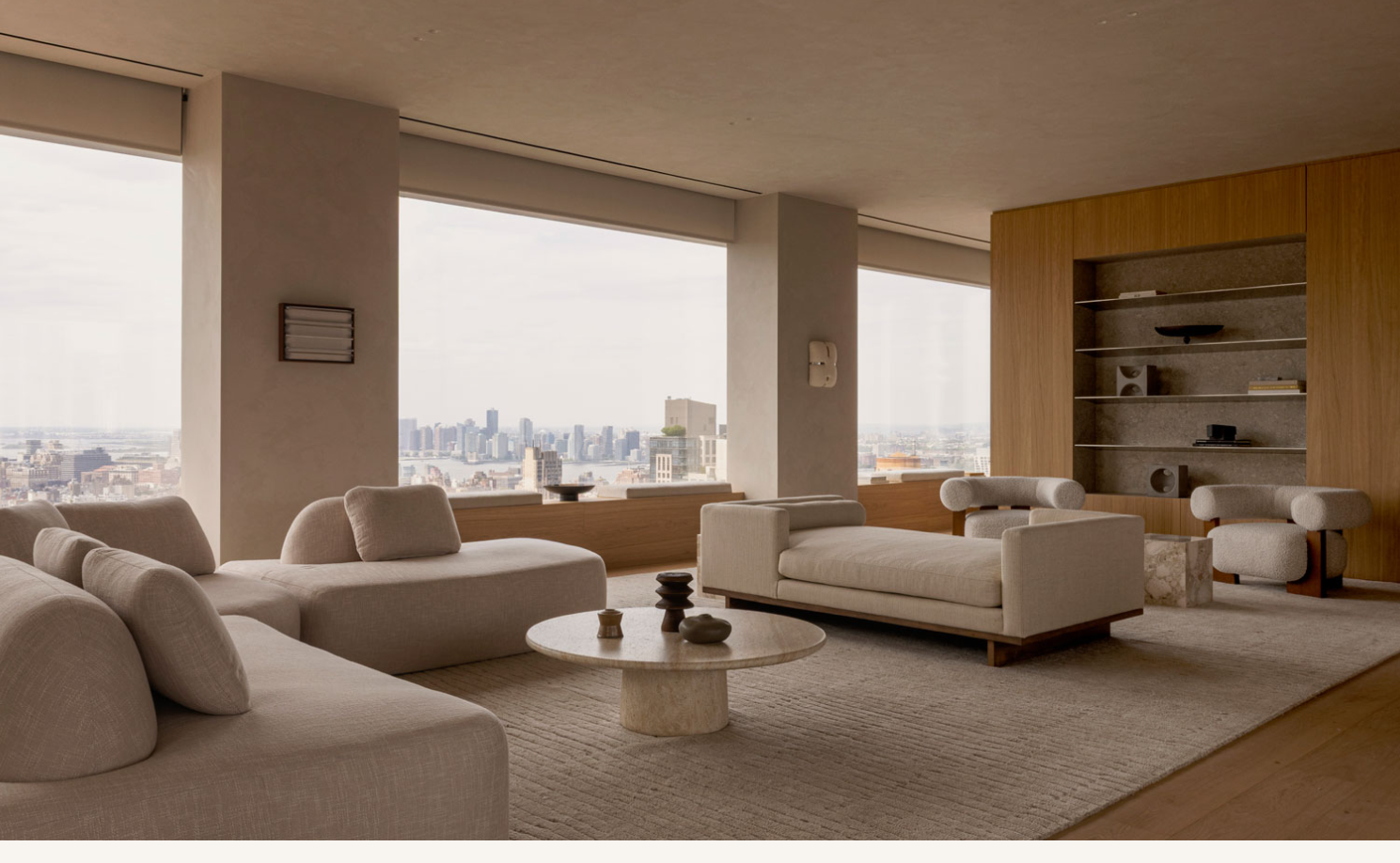
At 262 Fifth Avenue, natural oak, stone, softly textured surfaces, and integrated lighting bring warmth to expansive interiors. The restrained material palette allows the architecture and city views to remain prominent while giving the living spaces a more intimate atmosphere. It is a useful reference for modern luxury living room design because the richness comes from coordinated surfaces and careful detailing.
What to borrow:
Choose a consistent material direction for your largest pieces, then add texture through upholstery and textiles. In a smaller room, avoid placing tall furniture where it would interrupt your best view or daylight.
2. Living Room: Comfortable Rustic Luxury at SM Ranch House
Designer: Studio McGee
Design any room, shop or space with DecAI in less 30 seconds! It's free!

Studio McGee’s SM Ranch House grew from a brief combining traditional character with the comfort of a cabin. Warm whites, varied textures, and iron details establish a shared direction across the living room and adjoining spaces. The project offers an alternative to polished, formal luxury: a home can feel refined while remaining relaxed and welcoming.
What to borrow:
Start with comfortable seating and a warm background palette. Repeat a darker finish in a few selected details, such as a lamp or curtain rod, to give softer materials definition.
3. Bedroom: Integrated Storage at Sandbjerg Residence
Designer: Norm Architects
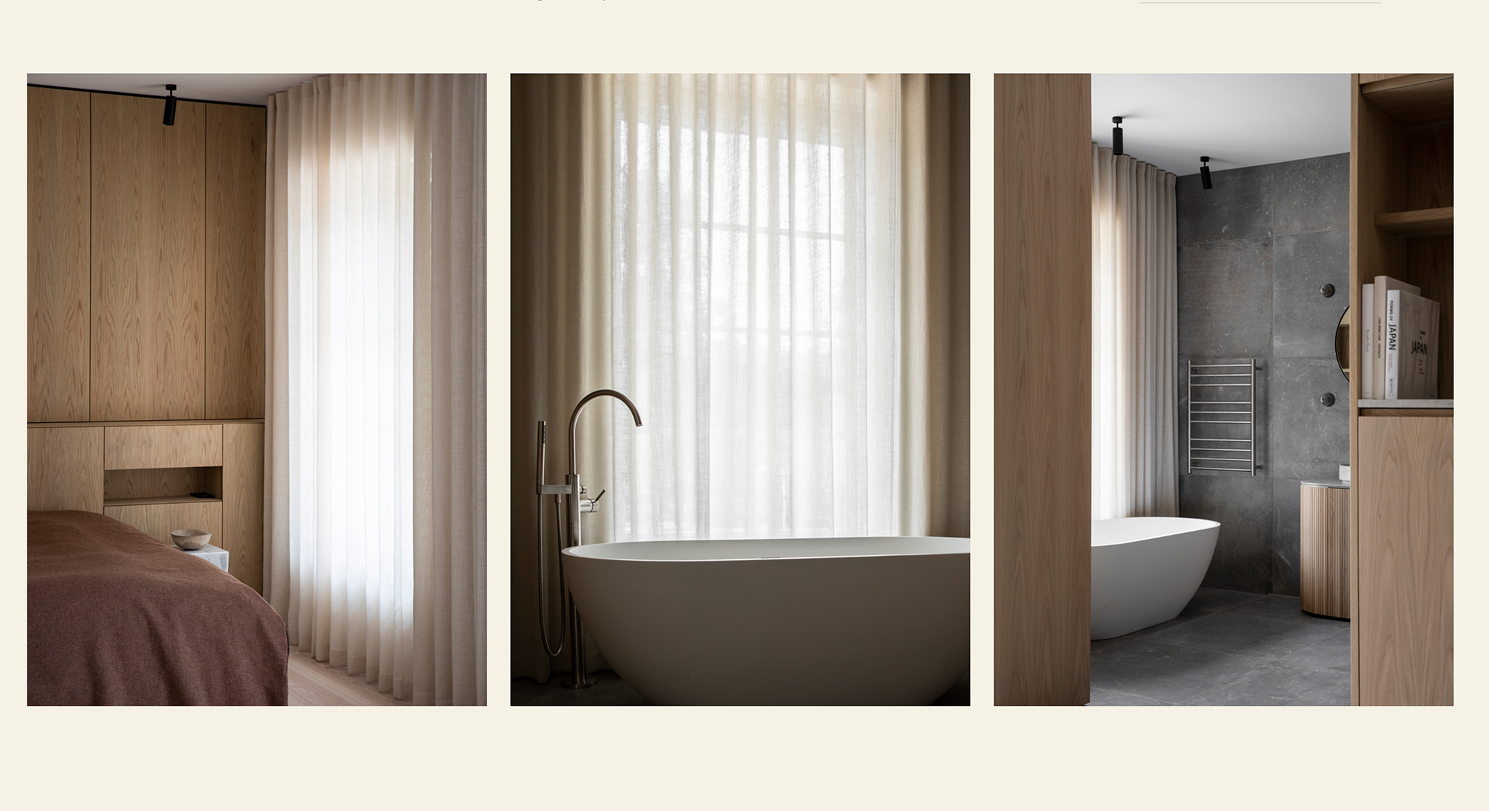
At Sandbjerg Residence, pale walls and white oak create a coordinated bedroom setting. Some paneled surfaces incorporate storage and bedside niches, making practical functions part of the architecture. This luxury bedroom design demonstrates how planning everyday belongings can contribute to a composed interior.
What to borrow:
List what needs to live beside your bed before choosing furniture. Coordinate bedside storage with the surrounding finishes, and leave enough usable surface for a book, water, and lighting controls.
4. Bedroom: Privacy and Coastal Calm at Strandgården
Designer: Norm Architects
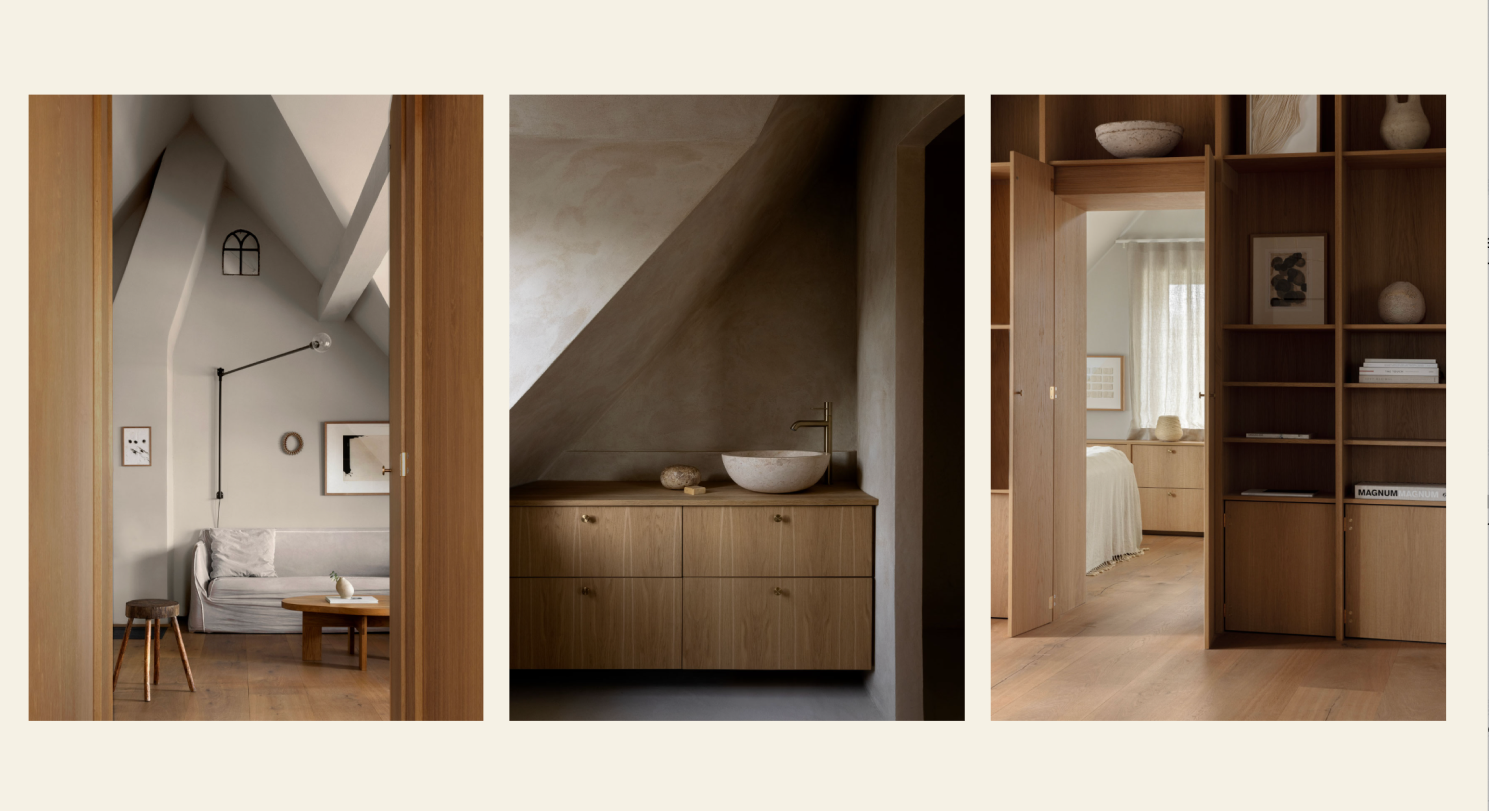
Strandgården bedroom design transforms two historic dwellings into one family home, with the primary bedroom and connected bathroom occupying their own wing. Across the residence, muted whites, sandy tones, oak, and stone establish a relationship with the coastal setting. The useful lesson is that a restful bedroom depends on its position and connection to the rest of the home as well as its decoration.
What to borrow:
Consider privacy, storage access, and movement around the bed before adding decorative layers. Choose colors that work with your room’s actual light and the finishes you intend to retain.
5. Kitchen: Historic Character With Contemporary Updates at PH House II
Designer: Norm Architects
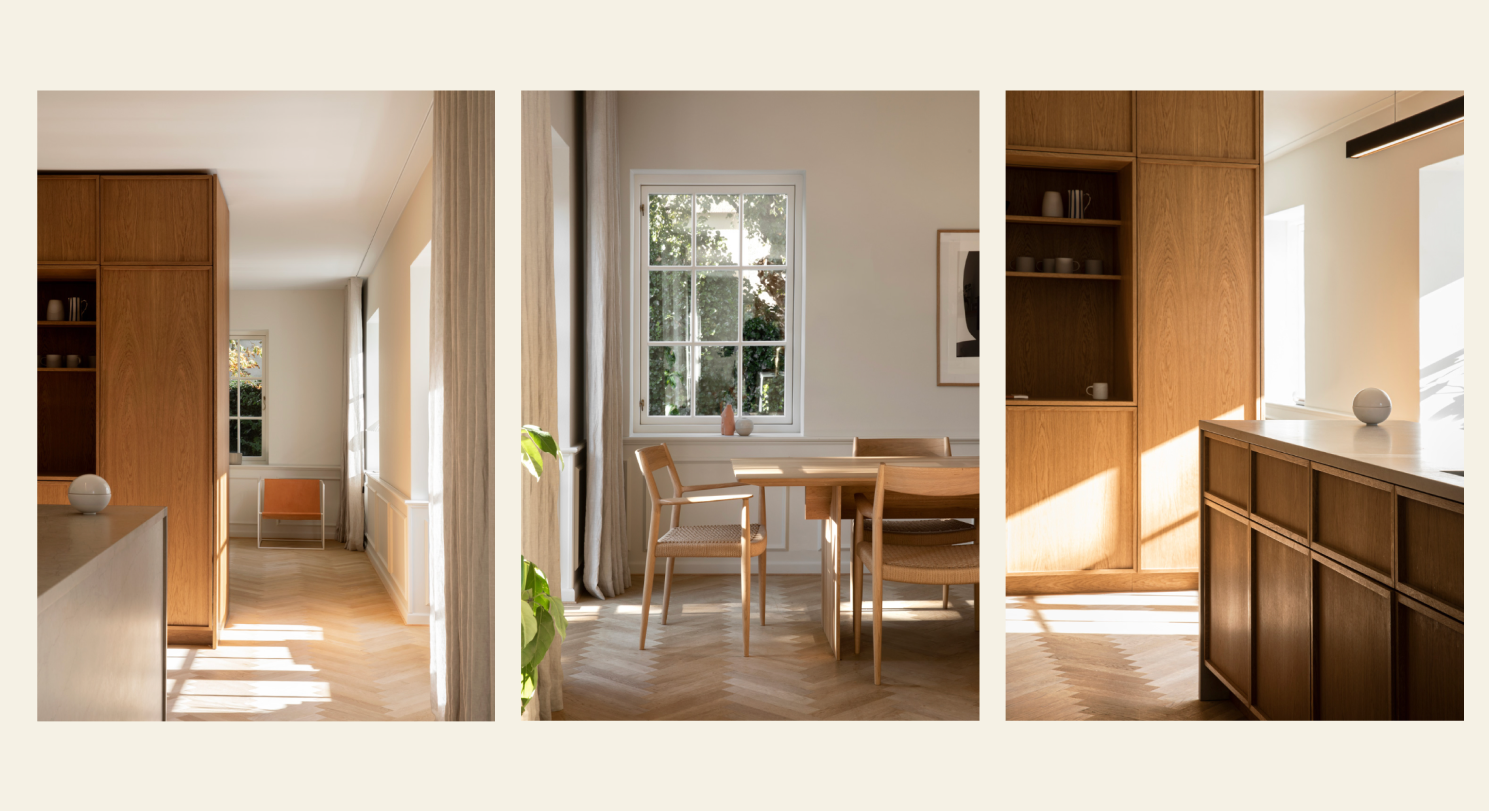
PH House II combines historic architectural features with updated kitchen units in warm oak. Traditional paneling, parquet flooring, and familiar Danish lighting give the home continuity while contemporary additions support present-day living. It shows how an existing home can gain sophistication through a carefully judged update.
What to borrow:
Identify the strongest existing feature in your kitchen before replacing finishes. Let the flooring, window proportions, or original cabinetry guide your choice of wood tones, lighting, and hardware.
6. Compact Kitchen: Complete Function Within Dwell House
Designer: Norm Architects, produced by Abodu
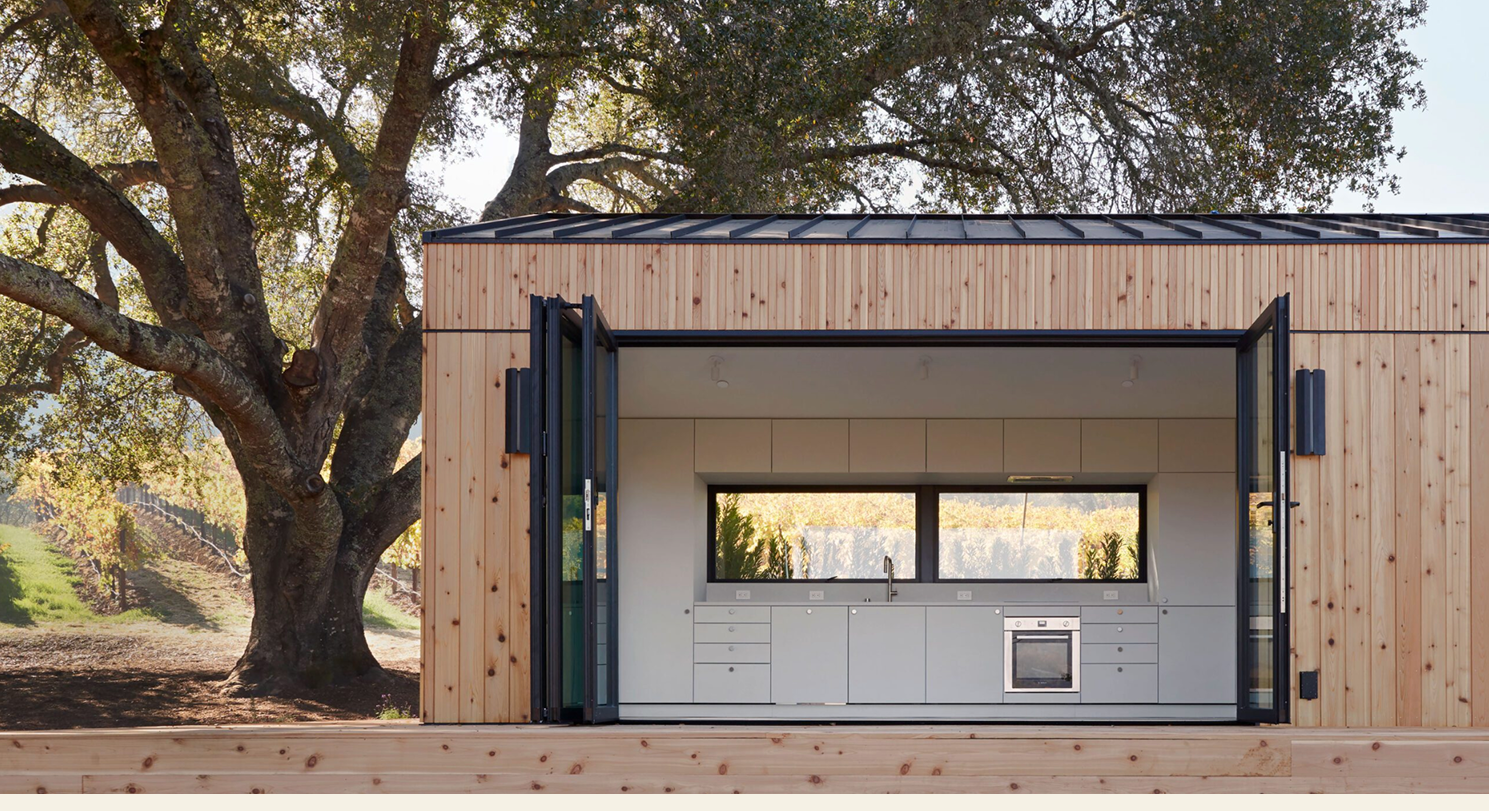
Dwell House incorporates a complete kitchen and bathroom within a 50-square-meter, one-bedroom home. Its design combines Scandinavian simplicity with a relaxed California sensibility. Although it is a compact residential project, it provides a useful lesson for luxury kitchen planning: giving essential functions a coherent setting can be more valuable than adding oversized features.
What to borrow:
Prioritize workable preparation space, appropriate appliances, and useful storage. In a small kitchen, test whether an island would improve daily use before sacrificing circulation to include one.
7. Bathroom: Soft Light and Privacy at Holmen Abode
Designer: Norm Architects
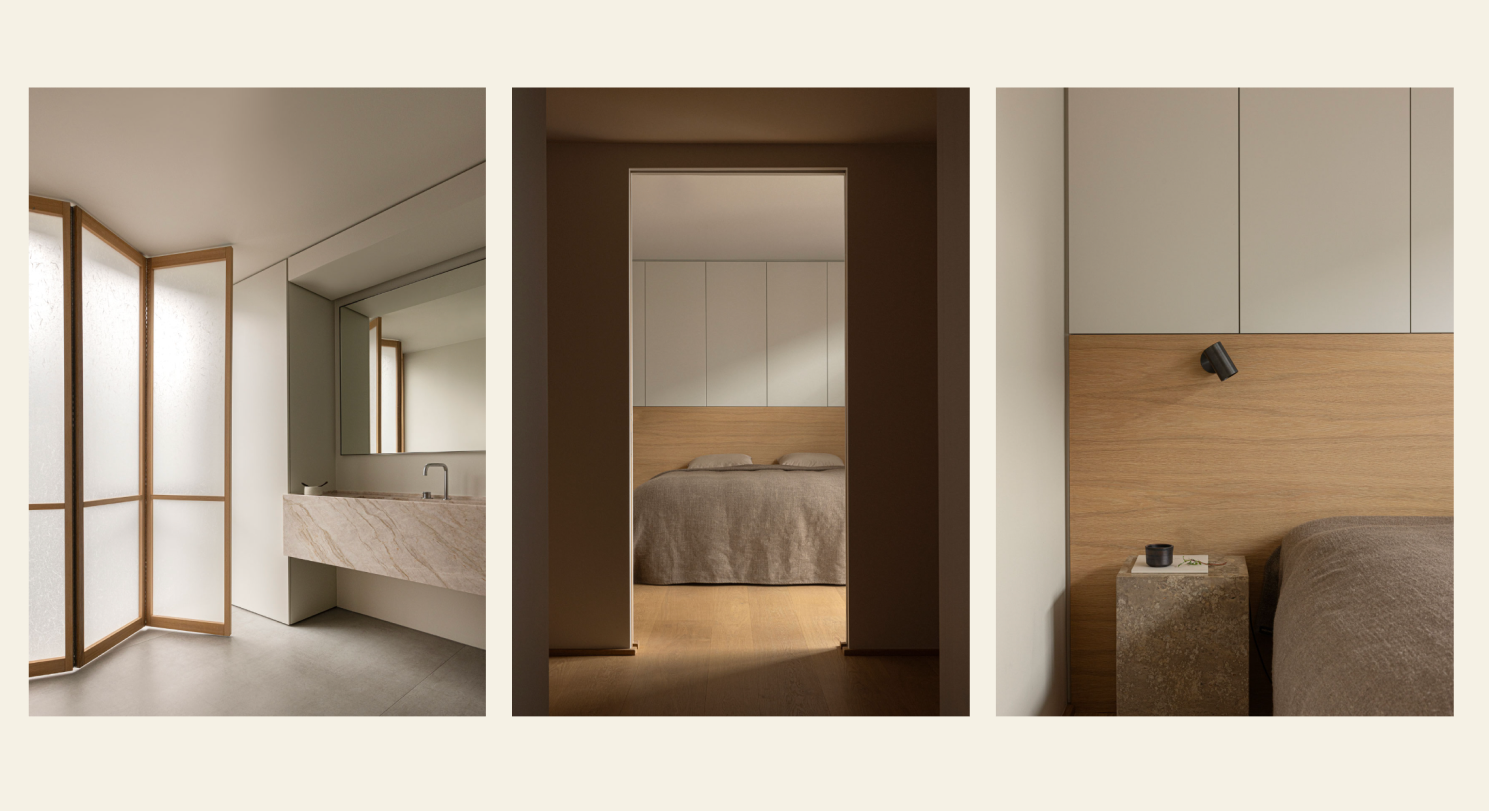
Holmen Abode combines Japanese and Scandinavian influences within a converted maritime building. In the bathroom, a traditional shoji screen filters natural light while providing separation and privacy. The resulting atmosphere illustrates how light control can become a defining feature of luxury bathroom design.
What to borrow:
Examine how daylight enters your bathroom and where privacy is needed. Explore an appropriately specified translucent treatment or screen, with materials selected for the location’s moisture exposure.
8. Dining Room: Pattern and Softness at The Gable House
Designer: Studio McGee
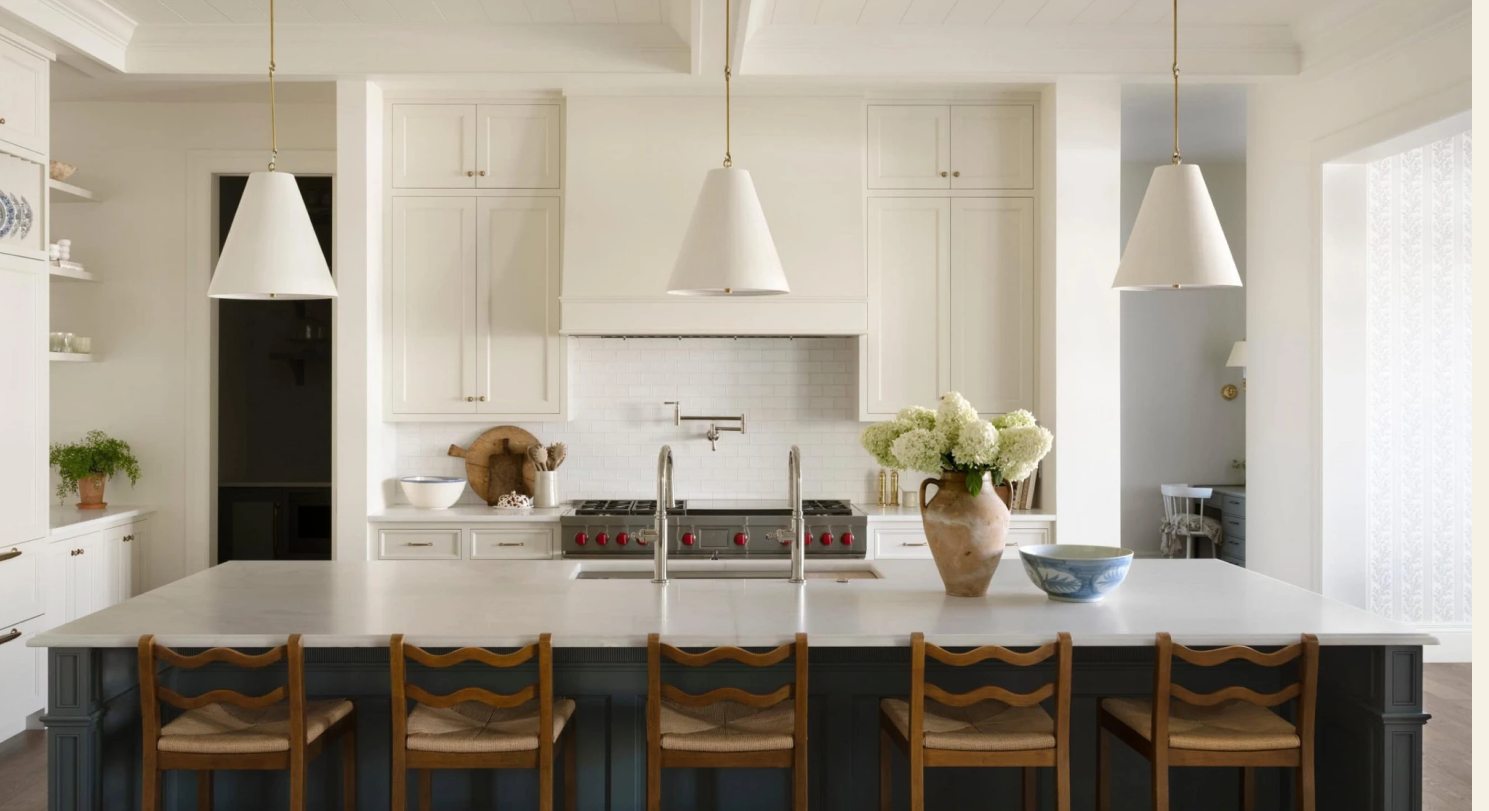
The Gable House brings traditional East Coast influences into a family home in a mountain setting. Its dining room uses softly colored patterned wallpaper and drapery to establish character within a space connected to the kitchen. The room offers a useful example of introducing decorative richness when there is limited space for additional furniture.
What to borrow:
If your dining area already has enough furniture, consider whether the walls or window treatments need attention. Test a wallpaper sample beside your existing table and chairs before committing to the full room.
9. Home Office: Rich Color at Stoneford Cottage
Designer: Studio McGee
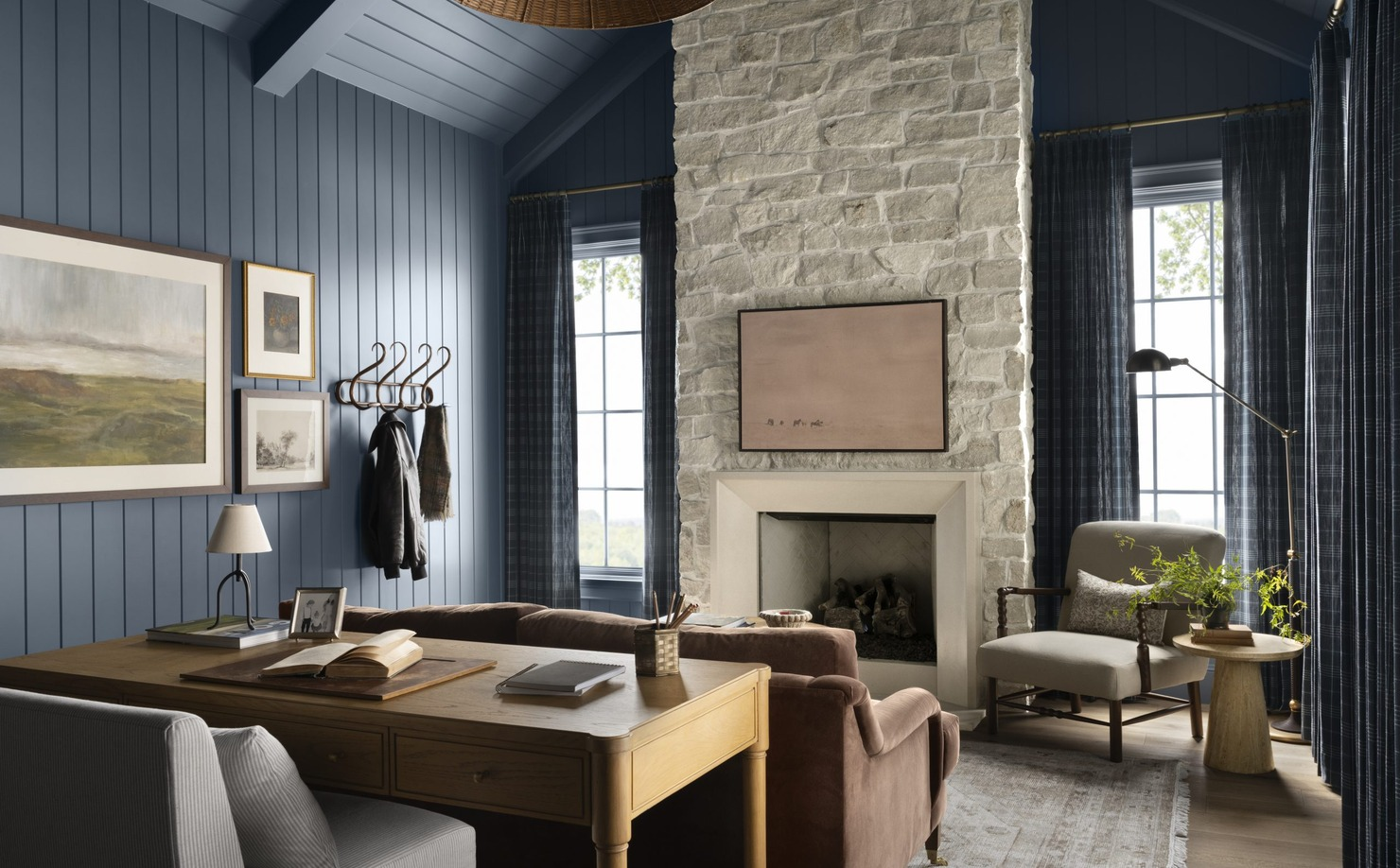
Revealed in August 2026, Stoneford Cottage includes a home office with deep blue walls, plaid drapery, and warm rust velvet. The combination gives the workspace a distinct identity while remaining connected to the home’s broader use of pattern and traditional character. It demonstrates how luxury home decor can include strong color and familiar, comfortable materials.
What to borrow:
Choose one main color and a complementary textile before adding accessories. Check the palette during working hours and after sunset, then plan task lighting around reading and screen use.
10. Entryway and Circulation: Material Continuity at C+C House
Designer: Studio MK27
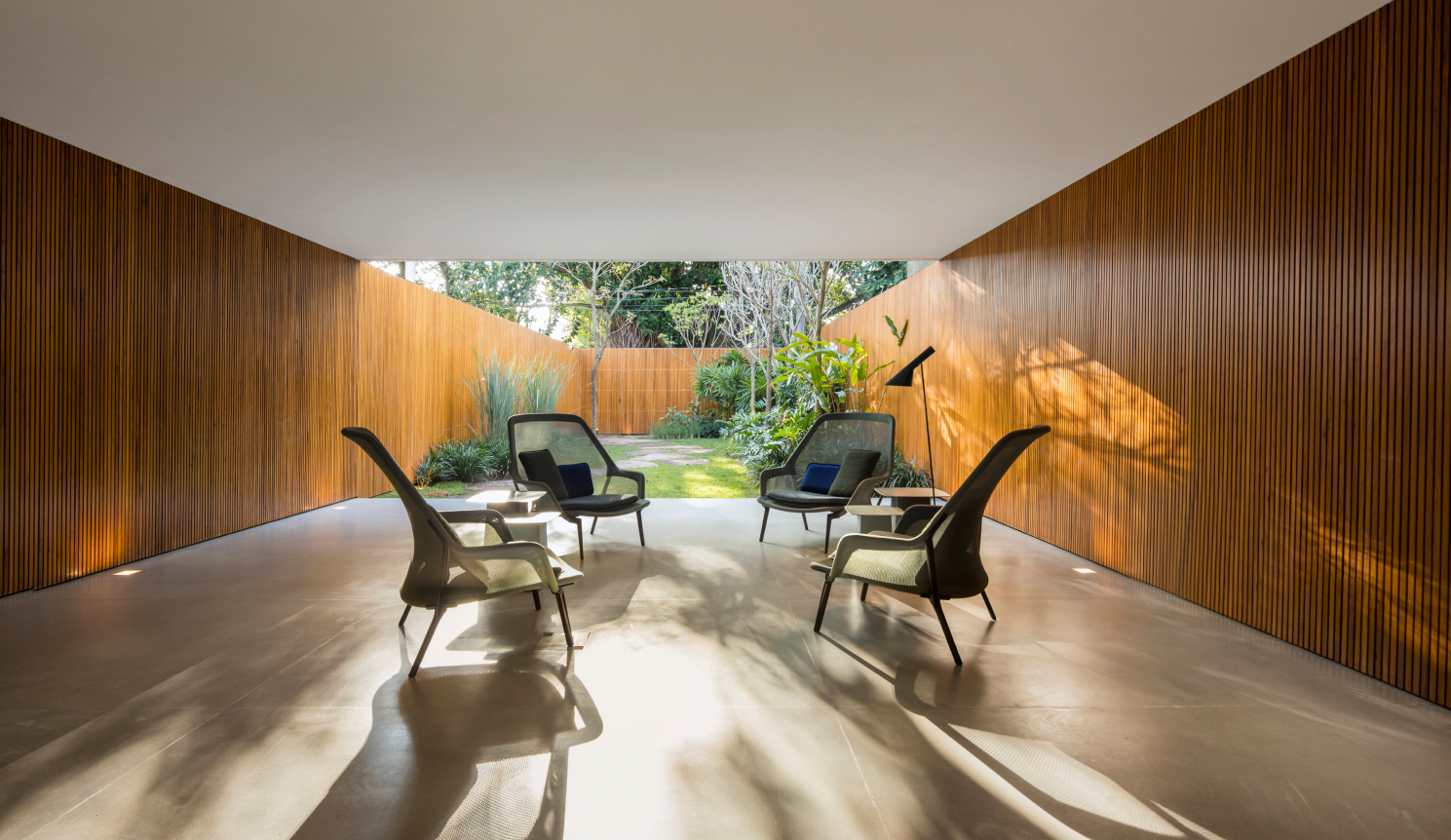
At C+C House, a long wall clad in slatted Freijó wood helps organize the entrance, living spaces, kitchen, and circulation. The repeated material gives different areas a clear architectural relationship. This is a valuable reference for luxury house interiors because connecting spaces receive the same design attention as the principal rooms.
What to borrow:
Carry one selected finish or color from your entryway into an adjoining room. A coordinated door finish, console, or storage cabinet can establish continuity without requiring extensive wall paneling.
These projects offer different routes to a luxurious home. Choose the example that addresses your room’s most pressing need—better storage, softer light, stronger color coordination, or more comfortable circulation—and adapt that decision before adding more decoration.
FAQs
1. What Is a Luxury Interior Designer, and What Do They Do?
A luxury interior designer develops personalized spaces, often handling layouts, materials, furniture, lighting, and custom details. Depending on the agreement, they may also manage sourcing and coordinate with architects, contractors, and craftspeople. Ask what their service includes, who produces technical drawings, and who oversees installation.
2. What Is Quiet Luxury Interior Design?
Quiet luxury is an understated approach emphasizing craftsmanship, comfort, texture, and careful coordination. It often uses restrained compositions, but it does not require an entirely neutral palette. The defining quality is the attention given to materials and details throughout the room.
3. Why Does Expensive Furniture Still Look Cheap in My Room?
The surrounding composition may be undermining it. Unsuitable scale, awkward spacing, harsh lighting, clutter, or conflicting finishes can prevent a beautiful piece from looking settled. Assess the room as a whole and test placement and lighting before assuming you need different furniture.
4. Can Beginners Design Luxury Homes Without Professional Experience?
Yes. Beginners can also design luxury rooms and homes with the aid of the right interior design tool. Go free try DecAI, which lets even first-comer to transfer their room in seconds with AI.
5. What Is the Difference Between Luxury and Expensive Interior Design?
“Expensive” describes cost. Luxury describes the quality of the overall experience, including comfort, craftsmanship, coherence, and personal relevance. High costs may reflect excellent work or rare materials, but those elements still need to suit the room and the people using it.
6.Can I Combine Luxury Design With Other Styles?
Yes. Luxury home interior design can incorporate coastal, farmhouse, minimalist, traditional, or eclectic influences. Use recurring colors, materials, and proportions to connect different pieces. Focus on their compatibility with your architecture and daily routines rather than trying to satisfy a single style label.
------------------------------------
If you believe that any material on this site infringes your intellectual property rights, please contact the author at decaiwebteam@outlook.com with details of your claim.
Redesign any home interior, exterior & garden in seconds
Share this Post:


Redesign any home interior, exterior & garden in seconds