
Interior Design Style Guide 2026: Top 15 Popular Ones That Surely Inspire Your Next Project

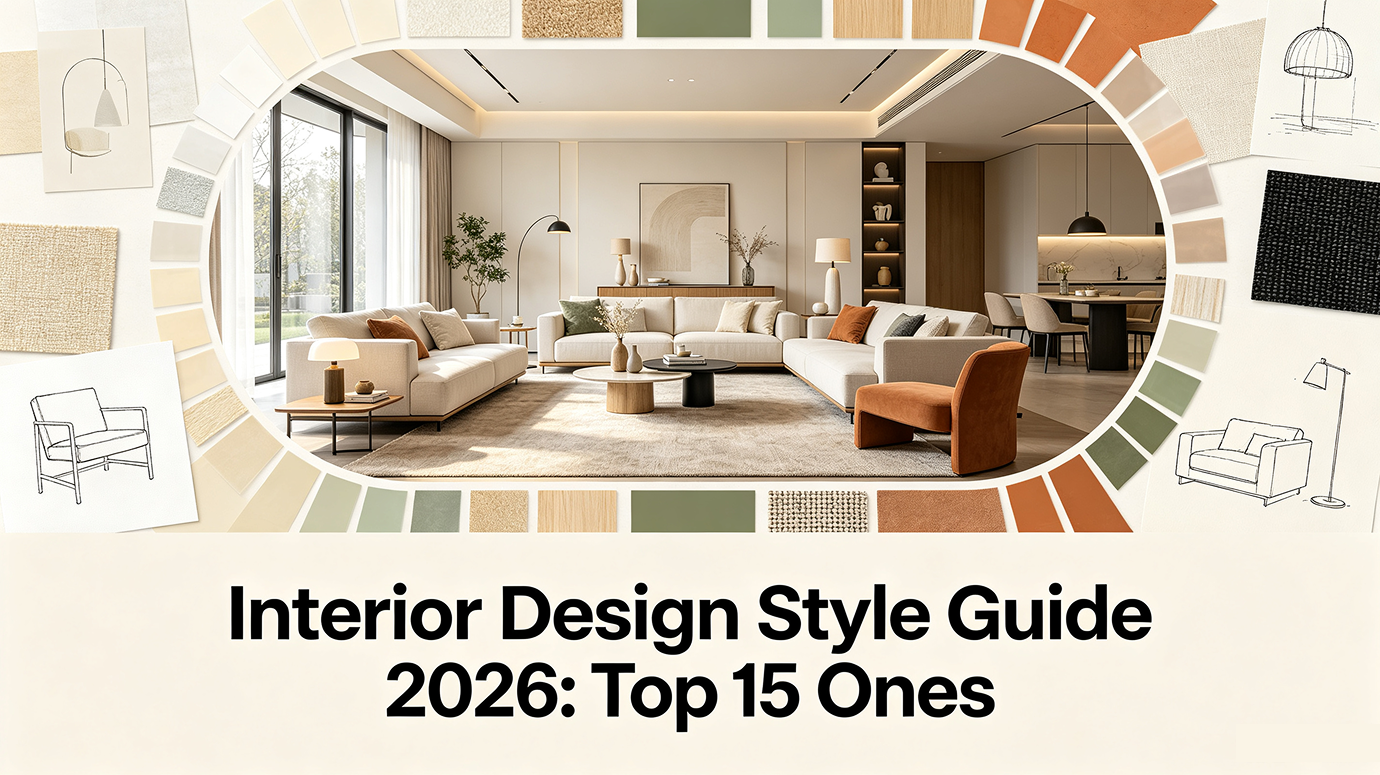
Been browsing and saving tons of beautiful room inspiration photos but still can’t figure out which interior design style best fits your space, taste, and lifestyle? No worries! This ultimate 2026 interior design style guide breaks down 15 popular styles by their key features, colors, materials, furniture, designer tips, and real-world examples, so you can easily compare them, find inspiration, and choose the right fit for your space or design project.
Also do not forget to directly try these interior design style on your computer with our free AI interior design tool simply by uploading a room photo.
Design any room, shop or space with DecAI in less 30 seconds! It's free!
What Is an Interior Design Style, and Why Does It Matter?
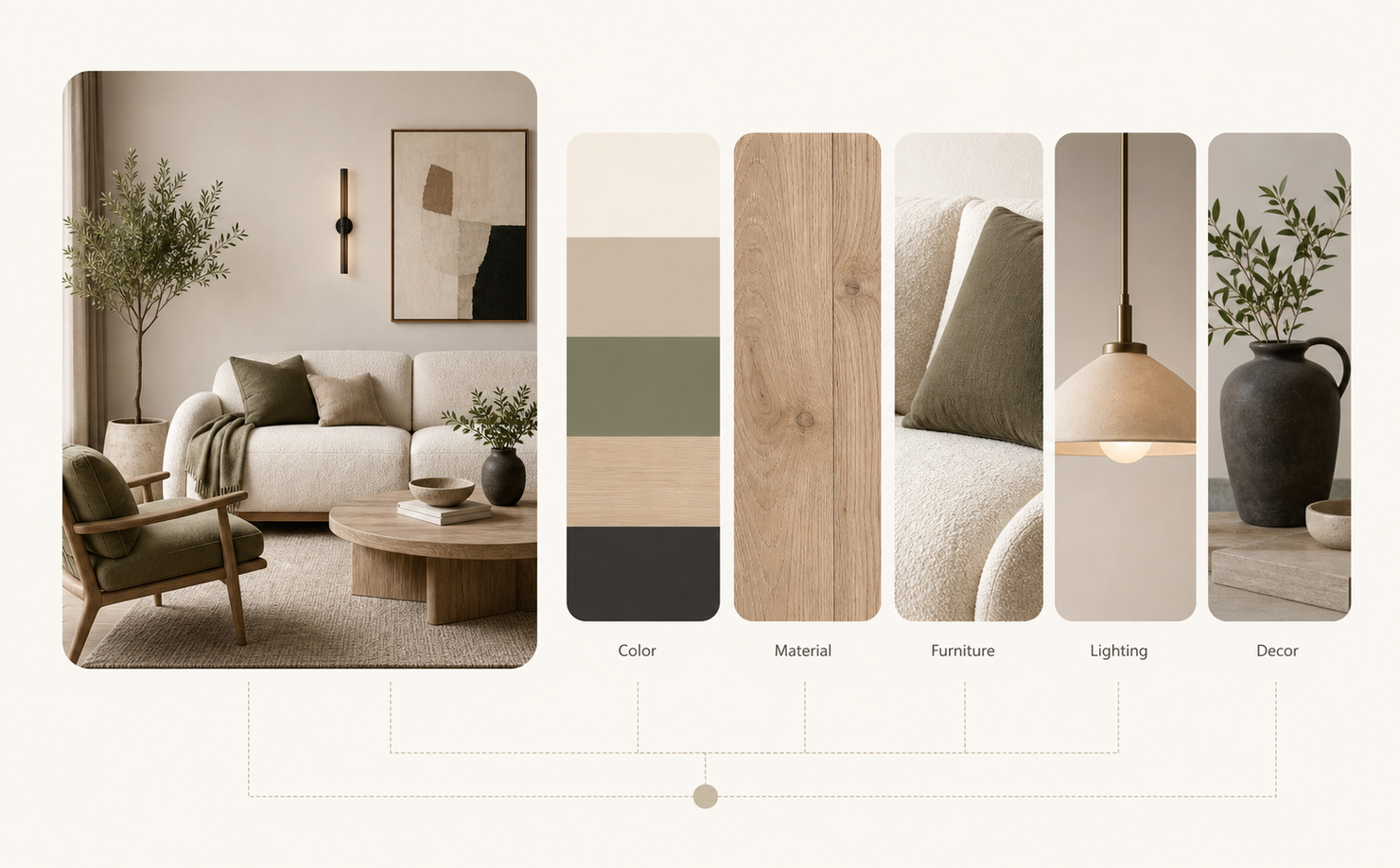
An interior design style is the overall visual language that gives a space its recognizable look and feel. It brings colors, materials, furniture, layout, décor, and atmosphere together under one clear direction.
It guides how you choose and combine colors, materials, furniture, lighting, décor, and other elements to create a consistent atmosphere.
For example, minimalist design is more than simply using fewer objects—it favors clean lines, open space, neutral colors, and carefully chosen materials. Mediterranean design, meanwhile, often combines textured walls, terracotta, natural materials, ceramics, and warm, relaxed colors.
Why does it matter? Having a clear style makes design decisions much easier. It helps you:
- Keep different elements of your room looking cohesive.
- Choose furniture, colors, and materials with more confidence.
- Avoid unnecessary purchases and repeated changes.
- Give your renovation or decorating project a clear direction.
Without a style in mind, you can easily end up with a room full of beautiful pieces that simply don’t work well together. Think of your design style as a guide, not a strict set of rules—it gives you direction while leaving plenty of room to make the space your own.
15 Popular and Inspiring Interior Design Styles You Should Know in 2026
Interior design styles in 2026 are not moving in one single direction. Some people want softer, warmer homes after years of cold gray minimalism. Others are leaning into natural materials, imperfect textures, cultural details, nostalgic furniture, or smarter homes where technology disappears into the background.
That is why this list mixes timeless styles with newer design directions that feel especially relevant now.
Let's firstly take a quick look at all 15 styles:
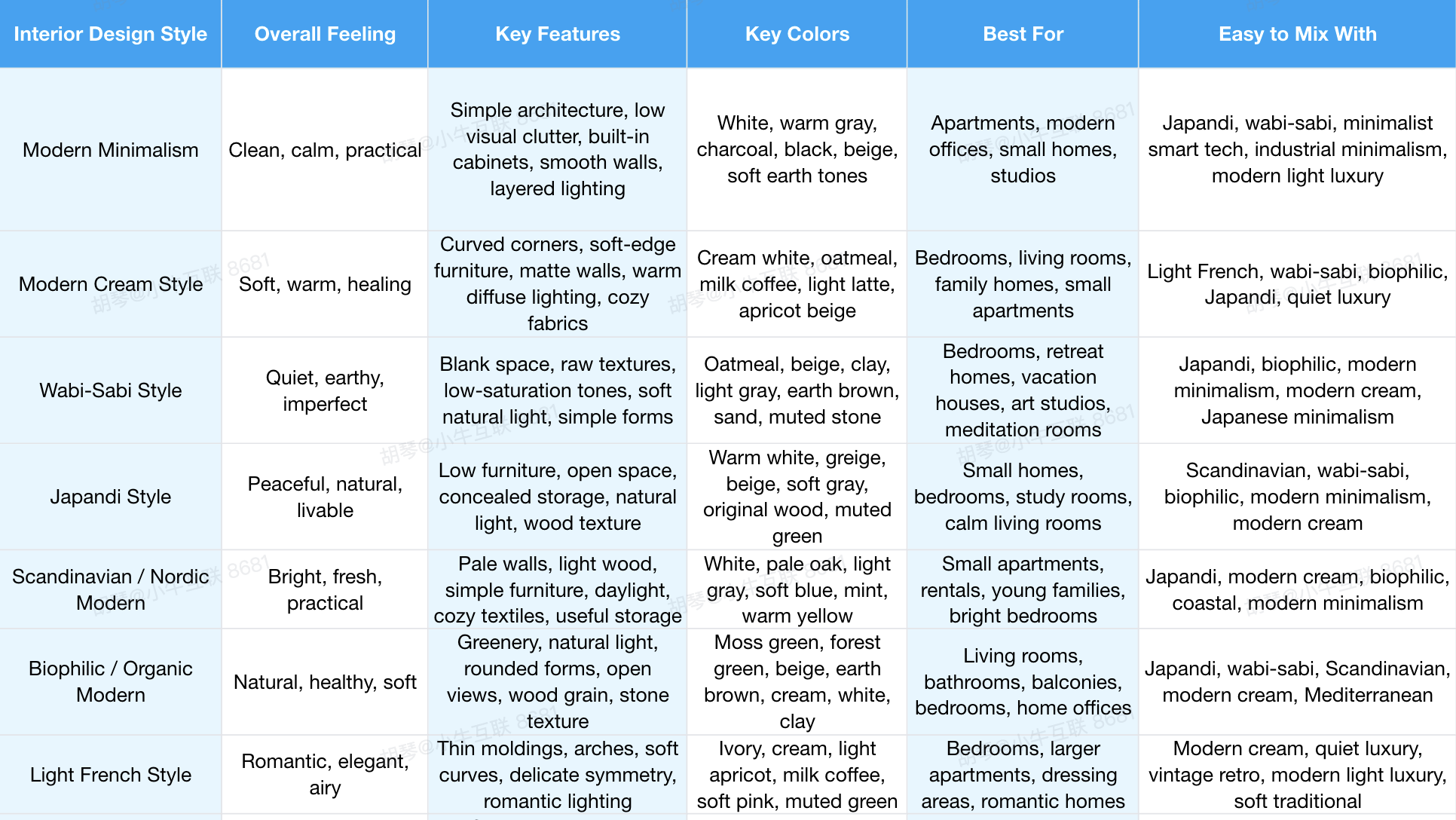
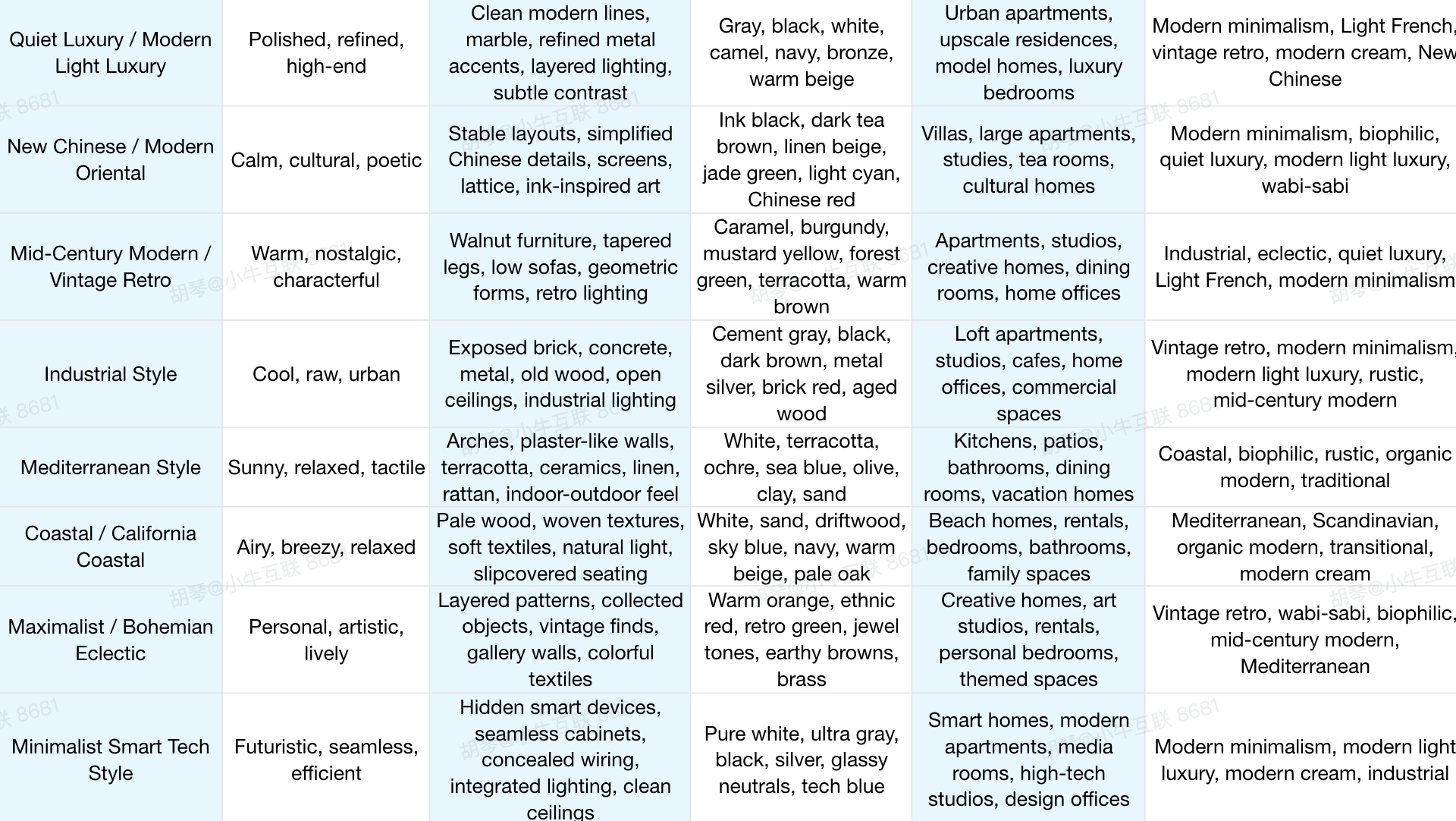
A quick overview of these 15 interior design styles
1. Modern Minimalism
Modern minimalism is a clean, calm, and highly practical interior design style built around the idea that a room should feel clear rather than crowded. Every visible element has a purpose: the sofa is simple, the storage is hidden, the walls stay quiet, and the materials are chosen carefully. In 2026, the best version is warmer than the cold white minimalist rooms people used to imagine. It still uses open layouts, straight lines, matte surfaces, and visual restraint, but it feels more livable through wood, texture, and layered lighting.
● Key features: simple architecture, low visual clutter, built-in cabinets, smooth wall finishes, and layered lighting.
● Color palettes: white, warm gray, charcoal, black, beige, and soft earth tones.
● Materials: microcement, matte stone, plain wood veneer, frosted metal, glass, and wool.
● Furniture style: geometric, slim, modular, and low-profile rather than decorative.
● Best for: apartments, modern offices, small homes, studios, and anyone who wants a space that feels calm and easy to maintain.
● Designer tip: make texture do the work of decoration: wood grain, a tactile rug, warm indirect lighting, or one sculptural chair can keep the room from feeling too bare.
● Modern minimalism mixes well with Japandi, wabi-sabi, minimalist smart tech, industrial minimalism, and modern light luxury.
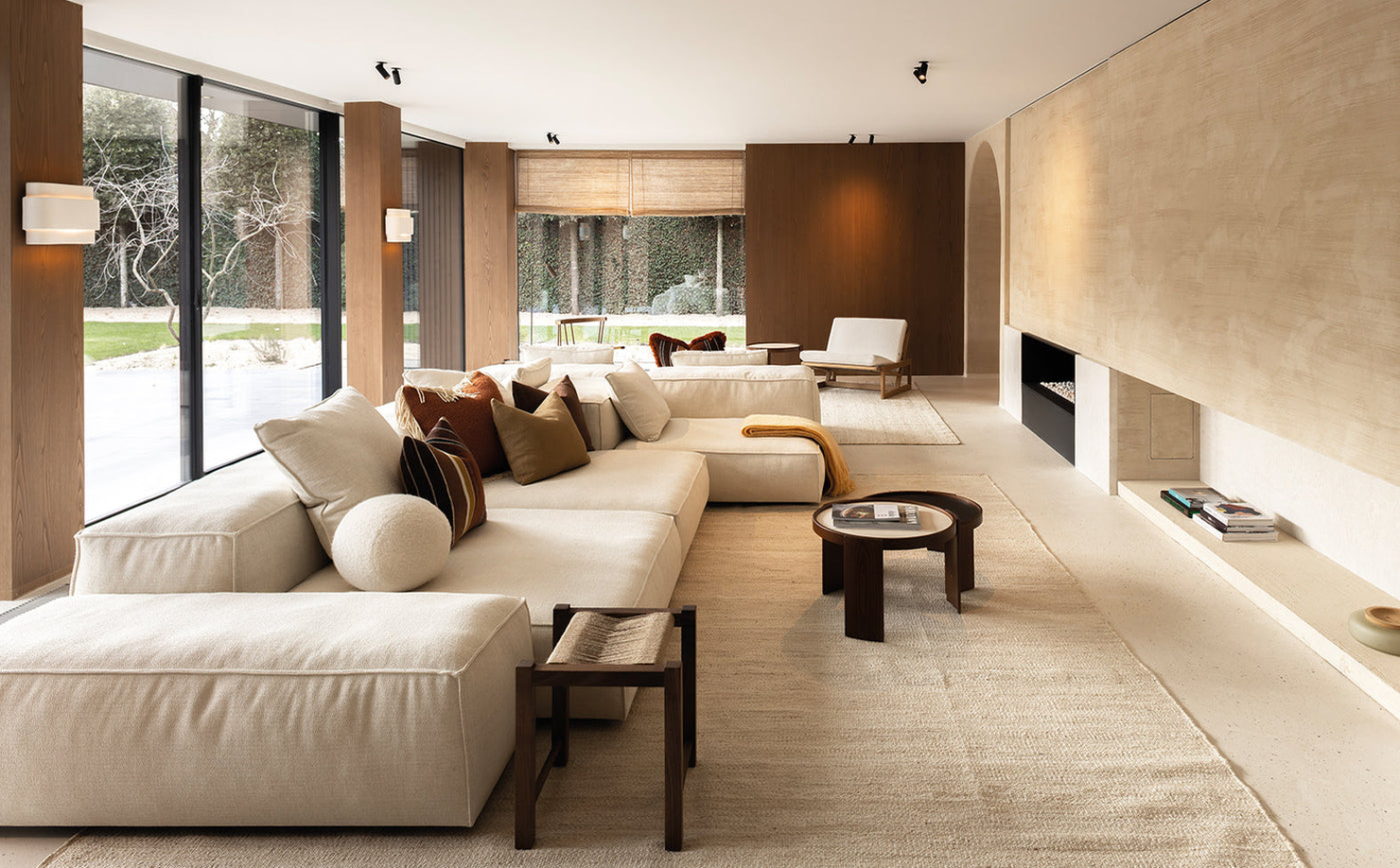
This interior design example shows how modern interiors use proportion, clean volumes, and refined materials.
If you are planning to adopt the minimalist design example, another 20 minimalist design examples or our warm minimalism design guide can also give you some clues.
2. Modern Cream Style
Modern cream style is one of the warmest and most popular home looks for 2026. It softens modern design with creamy neutrals, rounded forms, gentle lighting, and cozy materials. A room in this style usually feels like warm milk, soft fabric, and quiet morning light rather than stark white walls and strong black contrast. The look is simple, but it should never feel flat or plain.
● Key features: curved corners, soft-edge furniture, matte walls, warm diffuse lighting, cozy fabrics, and a unified whole-room tone.
● Color palettes: cream white, oatmeal, milk coffee, light latte, apricot beige, and soft warm neutrals.
● Materials: matte art paint, microcement, light wood, boucle, linen, cotton, ceramic, and warm stone.
● Furniture style: rounded sofas, soft dining chairs, low cabinets, upholstered pieces, and furniture with softened edges.
● Best for: bedrooms, living rooms, family homes, small apartments, and anyone who wants a healing, cozy atmosphere.
● Designer tip: avoid making every surface the same cream tone. Add depth through linen, wood, boucle, ceramic, stone, or warm metal.
● Modern cream style mixes well with light French, wabi-sabi, biophilic style, Japandi, and quiet luxury.
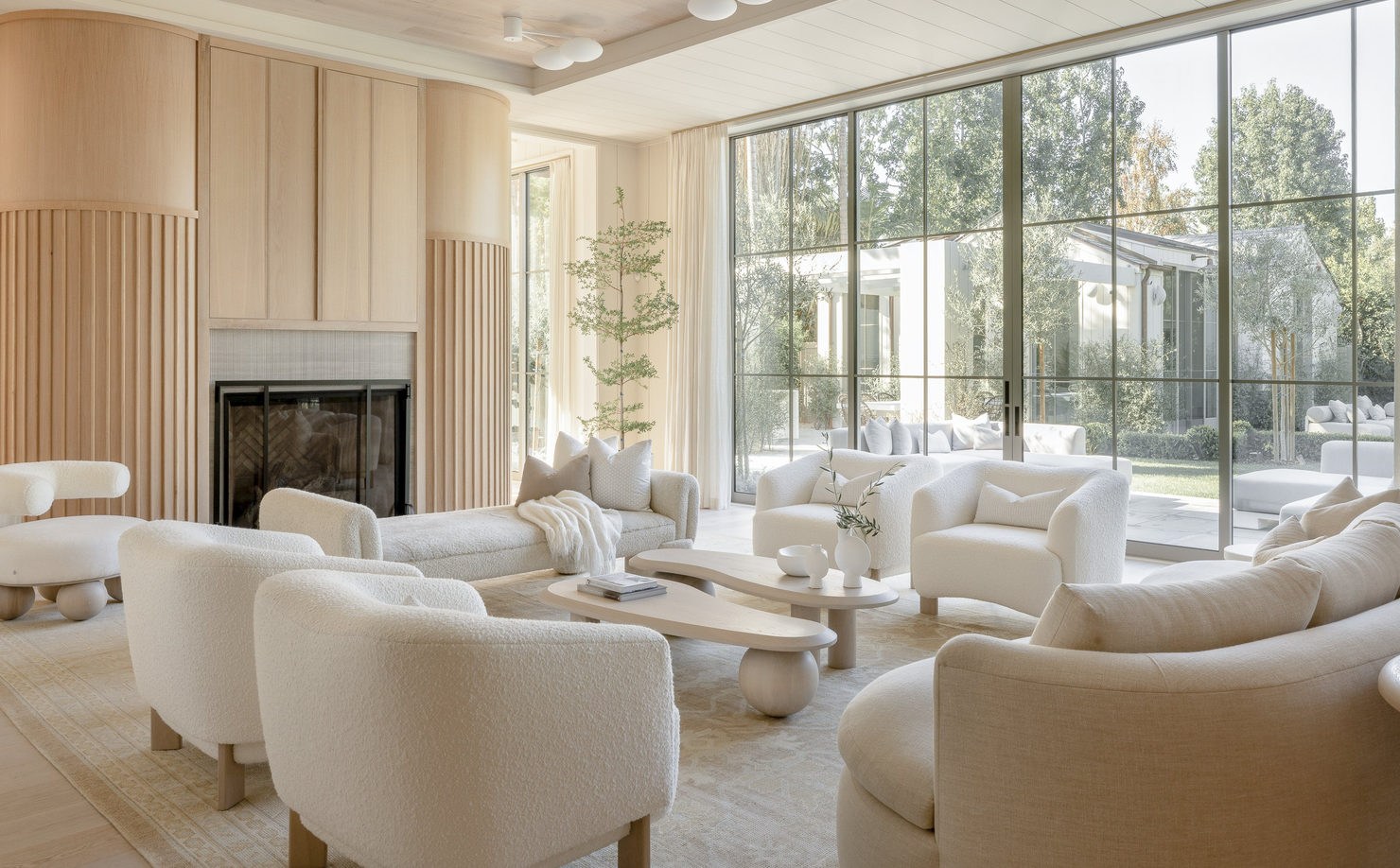
This cream style interior design from Hong Kong shows how cream interiors can feel soft and spacious in compact urban homes.
3. Wabi-Sabi Style
Wabi-sabi is a quiet, earthy interior design style inspired by the beauty of imperfection, age, and natural materials. It does not chase polished perfection. A wabi-sabi room may have a limewash wall, a handmade ceramic bowl, visible wood grain, soft shadows, and objects that feel calm rather than decorative. Instead of adding more, this style asks what can be removed so the remaining materials can breathe.
● Key features: blank space, rough material texture, low-saturation tones, soft natural light, simple forms, and a grounded atmosphere.
● Color palettes: oatmeal, beige, clay, light gray, earth brown, sand, and muted stone.
● Materials: limewash, travertine, raw cement, original wood, coarse pottery, linen, jute, clay, and handmade ceramic.
● Furniture style: low, simple, irregular, natural, and textural.
● Best for: bedrooms, retreat homes, vacation houses, art studios, meditation rooms, and quiet living spaces.
● Designer tip: wabi-sabi is not unfinished or cheap. It needs good materials, thoughtful lighting, and careful editing.
● Wabi-sabi mixes well with Japandi, biophilic design, modern minimalism, modern cream, and Japanese minimalism
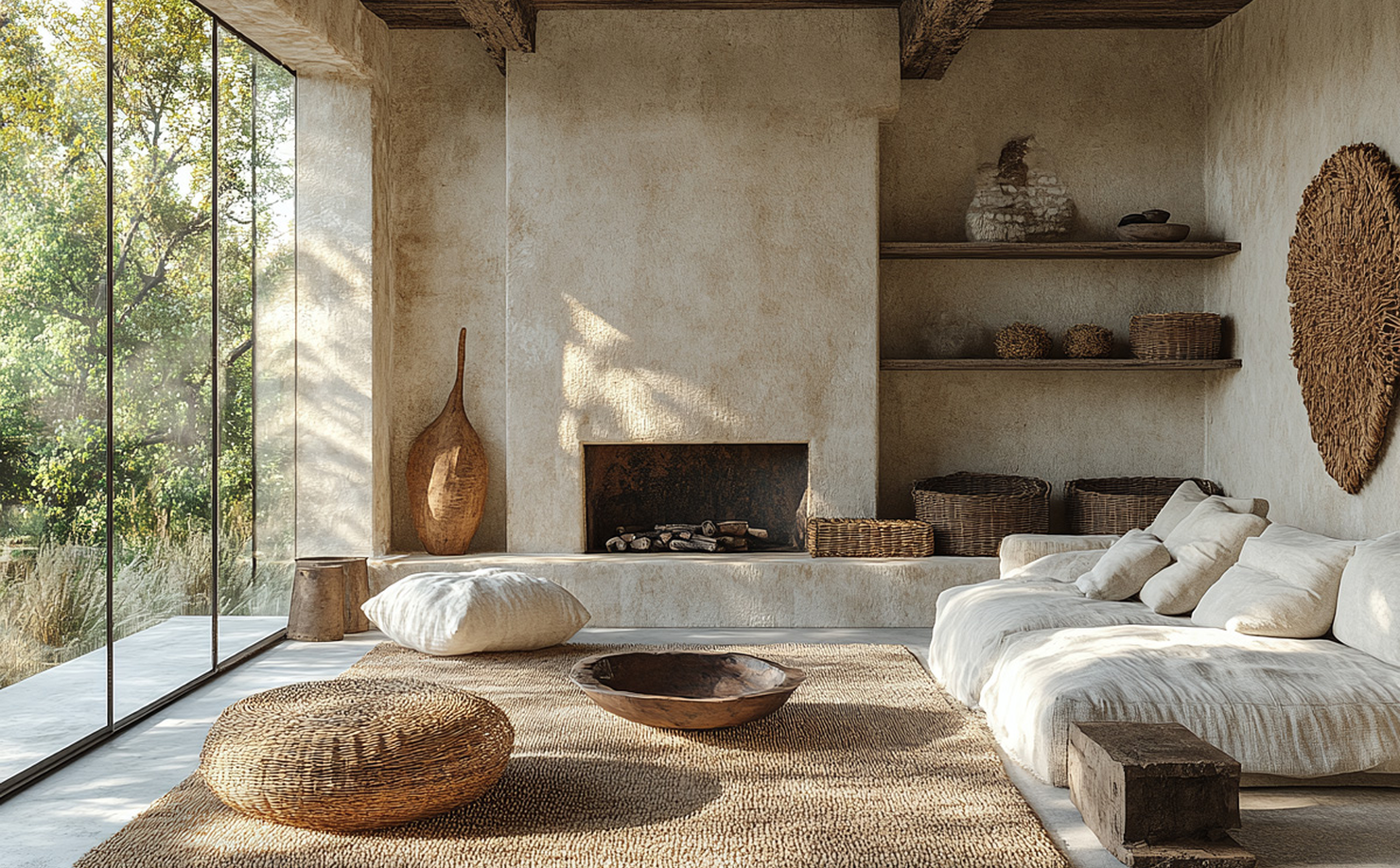
4. Japandi Style
Japandi blends Japanese minimalism with Scandinavian warmth. It is peaceful, natural, and easy to live with: cleaner than Scandinavian style, warmer than strict minimalism, and softer than a typical modern room. A Japandi space usually has low furniture, open space, pale wood, soft fabrics, and simple decor. Nothing feels loud, but the room still feels alive because the materials are warm and tactile.
● Key features: low furniture, open breathing space, concealed storage, natural light, wood texture, simple decor, and a relaxed layout.
● Color palettes: warm white, greige, beige, soft gray, original wood, muted green, and charcoal accents.
● Materials: natural wood, bamboo, rattan, linen, frosted glass, paper lighting, and matte stone.
● Furniture style: low sofas, platform beds, shallow wood cabinets, rattan chairs, simple tables, and open shelving.
● Best for: small homes, bedrooms, study rooms, calm living rooms, and families who want a clean but not empty home.
● Designer tip: avoid heavy dark furniture, which can compress the space. Use plants, linen, wood, and soft lighting to keep the room fresh.
● Japandi mixes well with Scandinavian, wabi-sabi, biophilic, modern minimalism, and modern cream style.
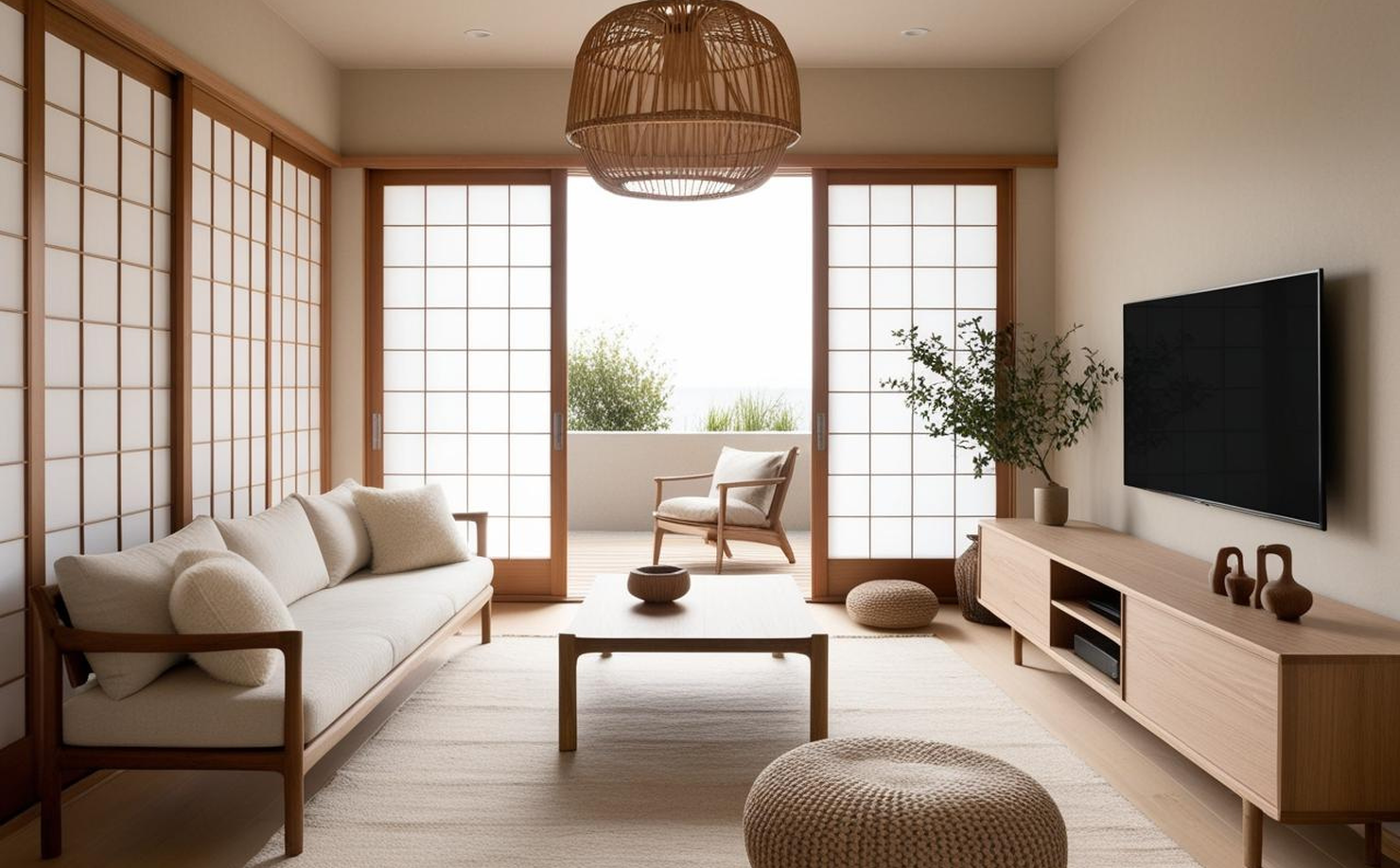
This internal house design highlights Japandi’s low furniture, neutral palettes, paper lanterns, and imperfect ceramics.
5. Scandinavian / Nordic Modern
Scandinavian or Nordic modern design is bright, fresh, and practical. It comes from a design culture shaped by long winters, limited daylight, and the need for homes that feel functional but still cozy. A typical Scandinavian room uses pale walls, light wood furniture, soft textiles, natural light, and simple objects that make daily life easier. Its beauty comes from comfort and usefulness, not drama.
● Key features: pale walls, light wood, simple furniture, natural daylight, cozy textiles, useful storage, and a clean but lived-in feeling.
● Color palettes: white, pale oak, light gray, soft blue, mint, warm yellow, and gentle natural tones.
● Materials: light wood, cotton, linen, wool, rattan, ceramic, frosted glass, and leather.
● Furniture style: lightweight, flexible, functional, simple, and easy to move.
● Best for: small apartments, rentals, young families, bright bedrooms, and everyday living spaces.
● Designer tip: add personality through books, ceramics, plants, art, patterned textiles, or one vintage chair so the room does not feel generic.
● Scandinavian design mixes well with Japandi, modern cream, biophilic, coastal, and modern minimalism.
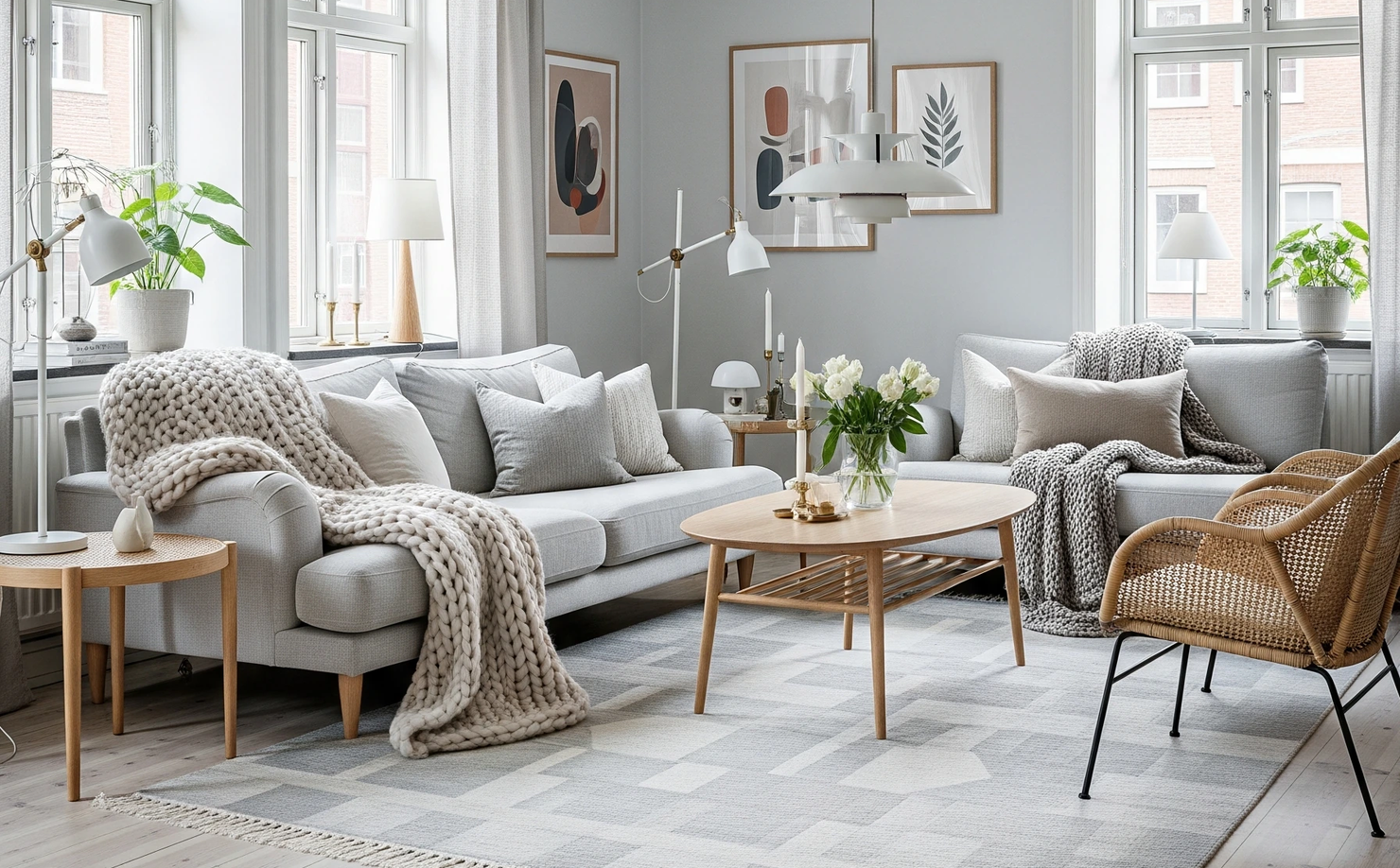
This living room design example explains Scandinavian design through simplicity, natural materials, comfort, and function.
6. Biophilic / Organic Modern
Biophilic and organic modern design both make the home feel healthier, softer, and closer to nature. Biophilic design brings in plants, daylight, natural materials, and outdoor connection, while organic modern gives that natural feeling a cleaner contemporary shape. A room in this style often feels calm because it reminds the body of outdoor environments: wood grain, stone texture, greenery, daylight, curved forms, and earthy colors all work together.
● Key features: greenery, natural light, rounded forms, open views, wood grain, stone texture, breathable layouts, and earthy colors.
● Color palettes: moss green, forest green, beige, earth brown, cream, white, clay, and stone.
● Materials: original wood, natural stone, rattan, bamboo, plant fibers, linen, cork, and matte eco-friendly paint.
● Furniture style: curved shapes, natural wood finishes, simple lines, and soft organic profiles.
● Best for: living rooms, bathrooms, balconies, bedrooms, home offices, wellness spaces, and homes that feel too hard or artificial.
● Designer tip: do not rely only on plants. Light, airflow, material texture, and views matter just as much.
● Biophilic and organic modern design mix well with Japandi, wabi-sabi, Scandinavian, modern cream, and Mediterranean style.
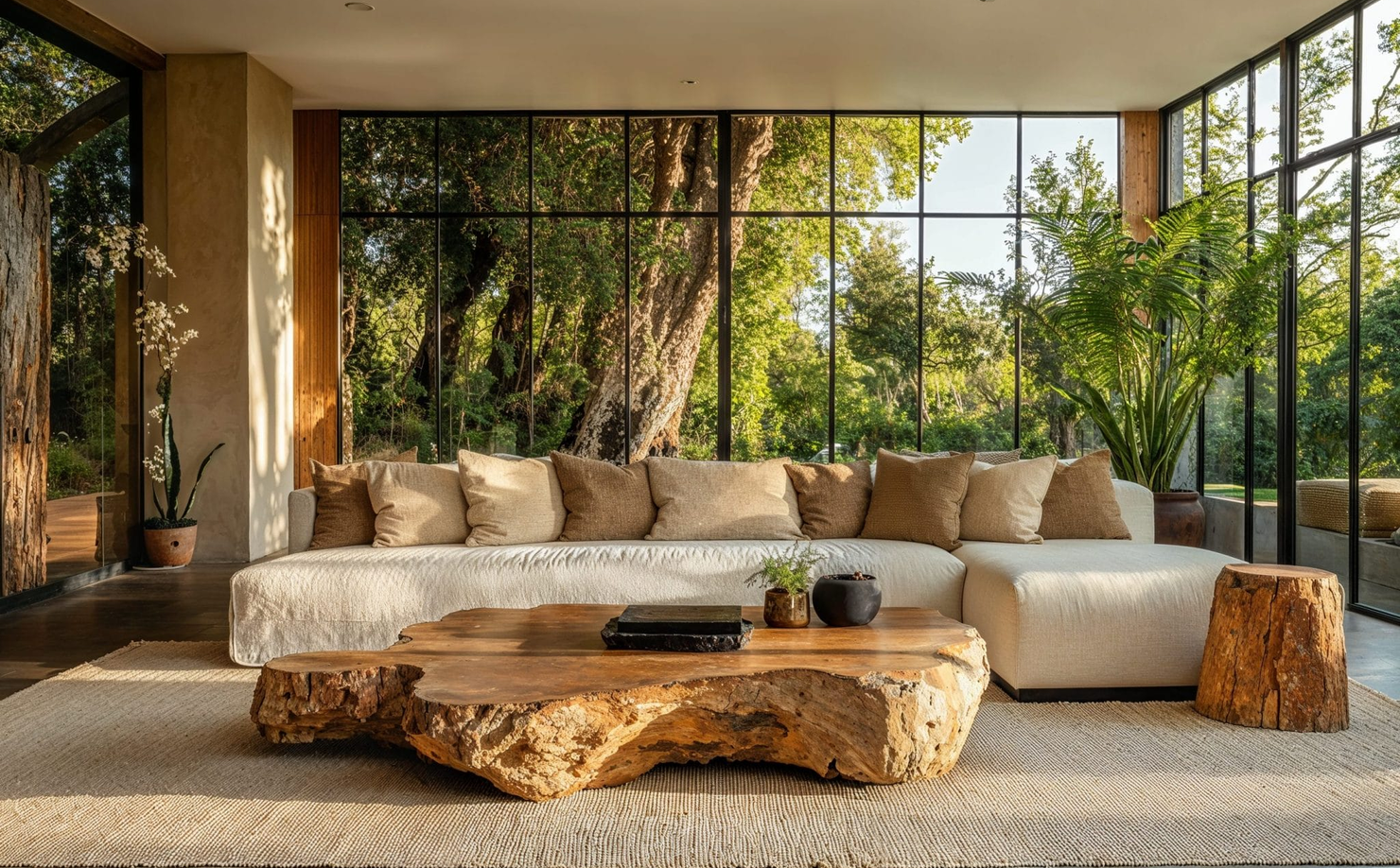
For a real example, this design example highlights natural light, greenery, recycled materials, and stronger indoor-outdoor connection.
7. Light French Style
Light French style keeps the romance and elegance of French interiors but makes them softer and more livable for modern homes. It uses classic French details in a lighter way: thin wall moldings instead of heavy carving, soft curves instead of grand formality, and elegant fabrics instead of overly ornate decoration. The result feels graceful, romantic, and refined without becoming heavy.
● Key features: thin moldings, arched openings, soft curves, delicate symmetry, elegant fabrics, romantic lighting, and an airy layout.
● Color palettes: ivory, cream, light apricot, milk coffee, soft pink, muted green, and caramel.
● Materials: matte wall paint, gypsum trim, natural wood, velvet, cotton, linen, and brushed metal.
● Furniture style: curved backs, slender legs, vintage-inspired lines, soft upholstery, and refined proportions.
● Best for: bedrooms, larger apartments, dressing areas, romantic homes, and spaces that need elegance without heaviness.
● Designer tip: restraint is everything. Too many moldings, curves, or romantic accessories can make the room feel dated.
● Light French mixes well with modern cream, quiet luxury, vintage retro, modern light luxury, and soft traditional interiors.
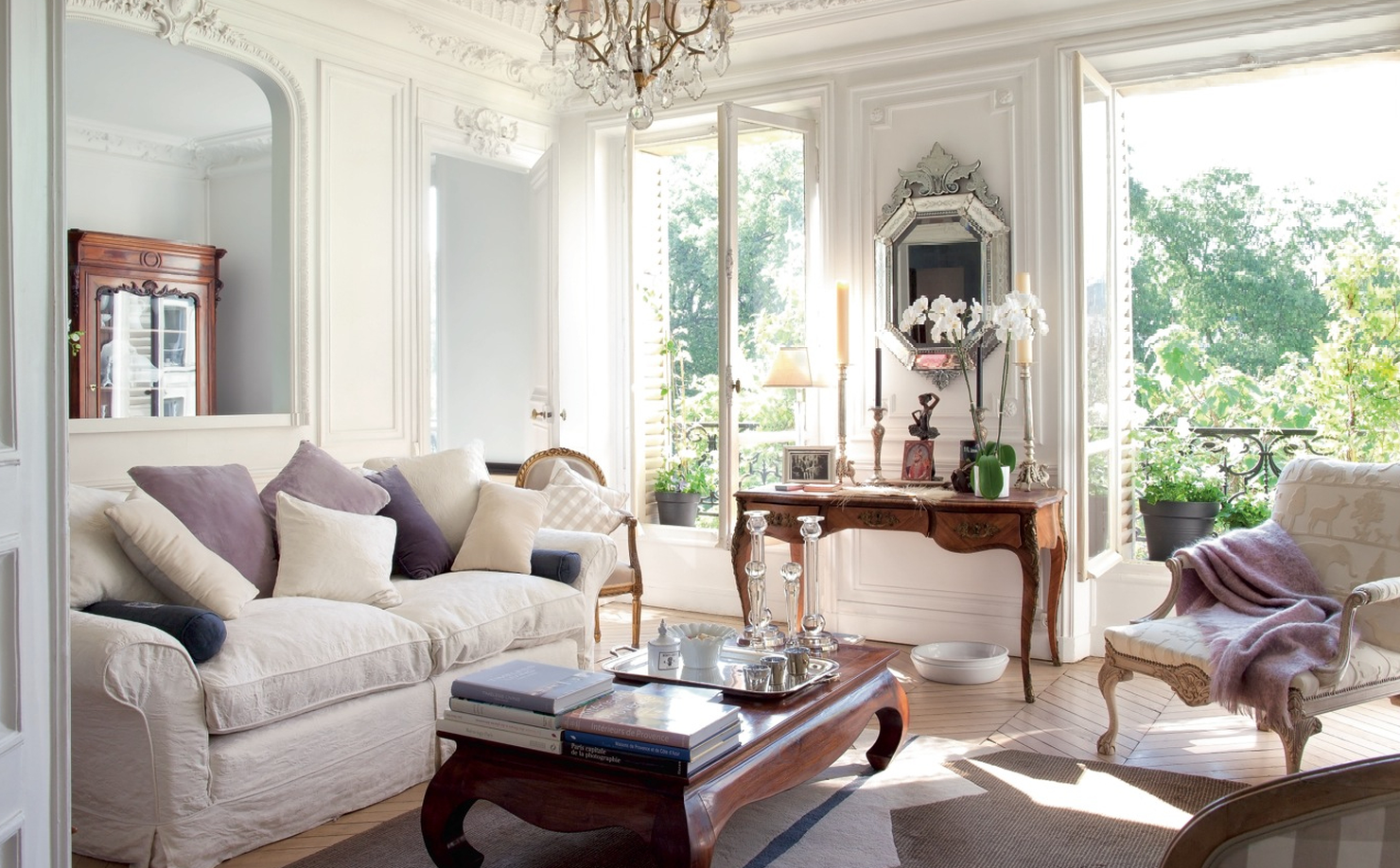
This Danielle Siggerud’s design example shows French architectural bones softened with Nordic restraint and warm materials.
8. Quiet Luxury / Modern Light Luxury
Quiet luxury, or modern light luxury, is the polished side of 2026 interior design. It creates a high-end feeling without loud glamour. Instead of shiny gold everywhere or dramatic luxury decoration, it uses good proportions, quality materials, soft lighting, refined surfaces, and subtle contrast. The luxury is quiet because it comes from details you feel more than details that shout.
● Key features: clean modern lines, marble, refined metal accents, layered lighting, custom-looking storage, soft textiles, and subtle contrast.
● Color palettes: gray, black, white, camel, navy, bronze, warm beige, and soft metallic tones.
● Materials: natural marble, frosted metal, leather, velvet, glass, matte paint, stone, and high-quality wood.
● Furniture style: leather sofas, marble tables, metal-leg chairs, upholstered beds, and integrated cabinets.
● Best for: urban apartments, upscale residences, model homes, luxury bedrooms, and high-end client projects.
● Designer tip: use metal carefully. A small amount of brass, bronze, or silver can elevate the room; too much can feel cold or showy.
● Quiet luxury mixes well with modern minimalism, light French, vintage retro, modern cream, and new Chinese style.

This luxury living design example shows how pale neutrals can feel expensive through restraint, texture, and material contrast.
9. New Chinese / Modern Oriental
New Chinese style, also called modern Oriental design, updates traditional Chinese aesthetics for contemporary life. It is not about filling a room with heavy antique furniture or obvious red-and-gold decoration. The modern version is calmer and more refined. It uses balance, symmetry, wood, screens, lattice details, ink-inspired tones, tea-room atmosphere, and simplified Chinese forms to create a space that feels cultural but current.
● Key features: stable layouts, simplified Chinese details, screen partitions, lattice patterns, ink-inspired art, natural wood, soft lighting, and a quiet sense of ceremony.
● Color palettes: ink black, dark tea brown, linen beige, jade green, light cyan, and small accents of Chinese red.
● Materials: solid wood, bamboo, stone, linen, textured wallpaper, brass, and natural fabric.
● Furniture style: simplified Chinese sofas, tea tables, display shelves, screens, and low wood cabinets.
● Best for: villas, large apartments, studies, tea rooms, cultural homes, and spaces where atmosphere matters.
● Designer tip: avoid copying antique motifs too directly. Use modern lines and subtle cultural references instead.
● New Chinese style mixes well with modern minimalism, biophilic design, quiet luxury, modern light luxury, and wabi-sabi.

Design any room, shop or space with DecAI in less 30 seconds! It's free!
Lookbox Living’s design example shows how Chinese-inspired interiors can feel current and quietly layered
10. Mid-Century Modern / Vintage Retro
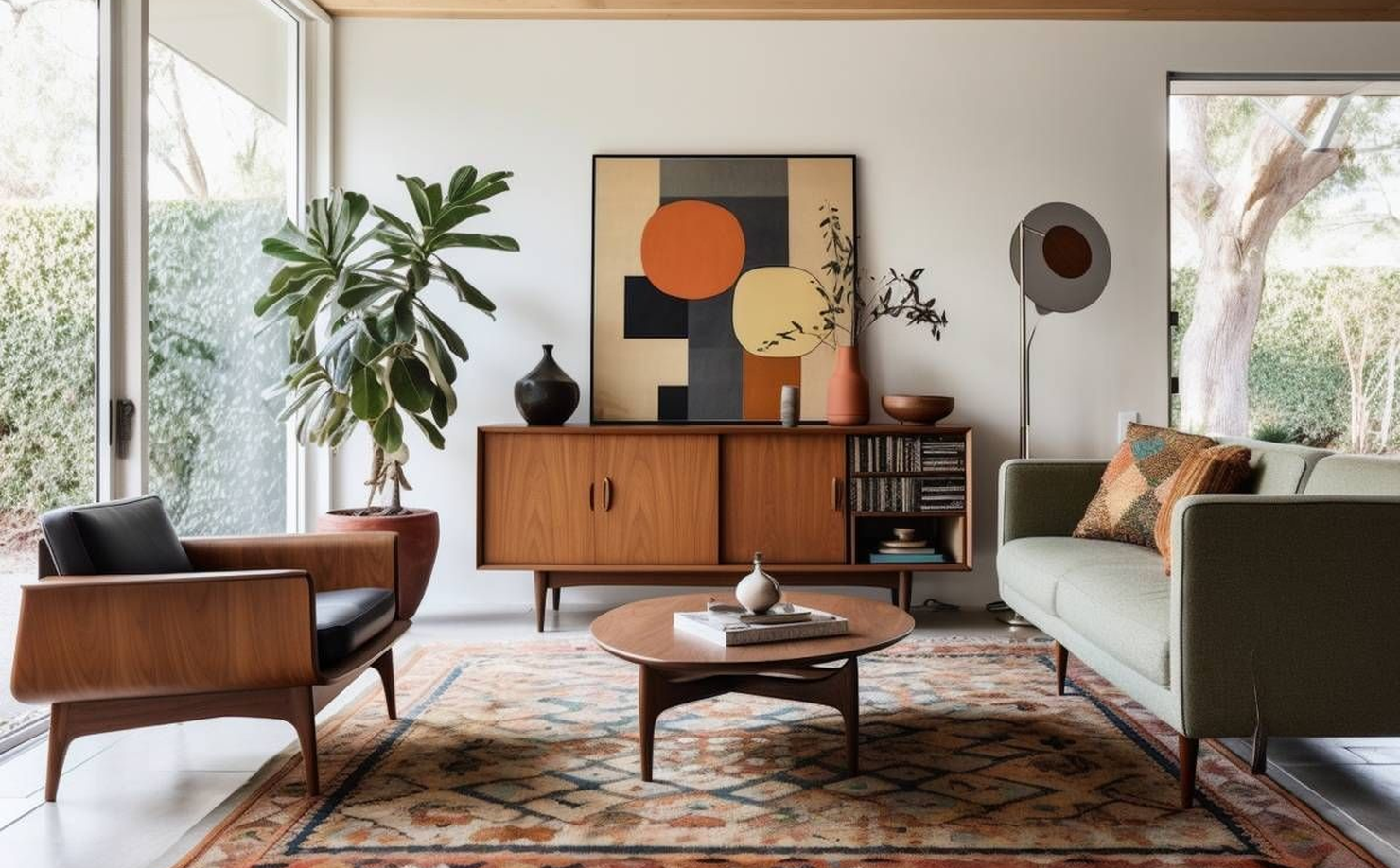
Mid-century modern and vintage retro bring warmth, memory, and character back into the home. Mid-century modern usually refers to the clean, practical furniture styles from the mid-20th century: walnut cabinets, tapered legs, low sofas, and simple geometric forms. Vintage retro is broader and more nostalgic, using aged leather, retro colors, older lamps, and pieces that feel collected rather than newly matched.
● Key features: walnut furniture, tapered legs, low sofas, geometric forms, retro lighting, aged leather, brushed metal, frosted glass, and collected decor.
● Color palettes: caramel, burgundy, mustard yellow, forest green, terracotta, warm brown, and retro gray.
● Materials: dark wood, vintage leather, brushed metal, frosted glass, aged wall paint, wool, and patterned textiles.
● Furniture style: walnut credenzas, retro sofas, metal-leg tables, classic lamps, and vintage storage cabinets.
● Best for: apartments, studios, creative homes, dining rooms, and home offices.
● Designer tip: use retro as character, not costume. Keep the base simple, then add a few strong vintage pieces.
● Mid-century modern and vintage retro mix well with industrial, eclectic, quiet luxury, light French, and modern
11. Industrial Style
Industrial style is cool, raw, and urban. It takes cues from old lofts, factories, warehouses, and converted studios: exposed brick, concrete floors, steel frames, visible beams, leather sofas, and aged wood. It is a style that shows the structure of a space instead of hiding everything behind smooth finishes.
● Key features: exposed brick, concrete, metal, old wood, open ceilings, visible beams, industrial lighting, and a tough neutral tone.
● Color palettes: cement gray, black, dark brown, metal silver, brick red, and aged wood.
● Materials: microcement, raw concrete, iron, steel, reclaimed wood, frosted glass, brick, and leather.
● Furniture style: metal frames, leather sofas, old wood tabletops, open shelving, and factory-inspired lamps.
● Best for: loft apartments, studios, cafes, home offices, creative rooms, and commercial spaces.
● Designer tip: soften the hardness with rugs, fabric seating, plants, art, warm lighting, and wood.
● Industrial design mixes well with vintage retro, modern minimalism, modern light luxury, rustic, and mid-century modern.
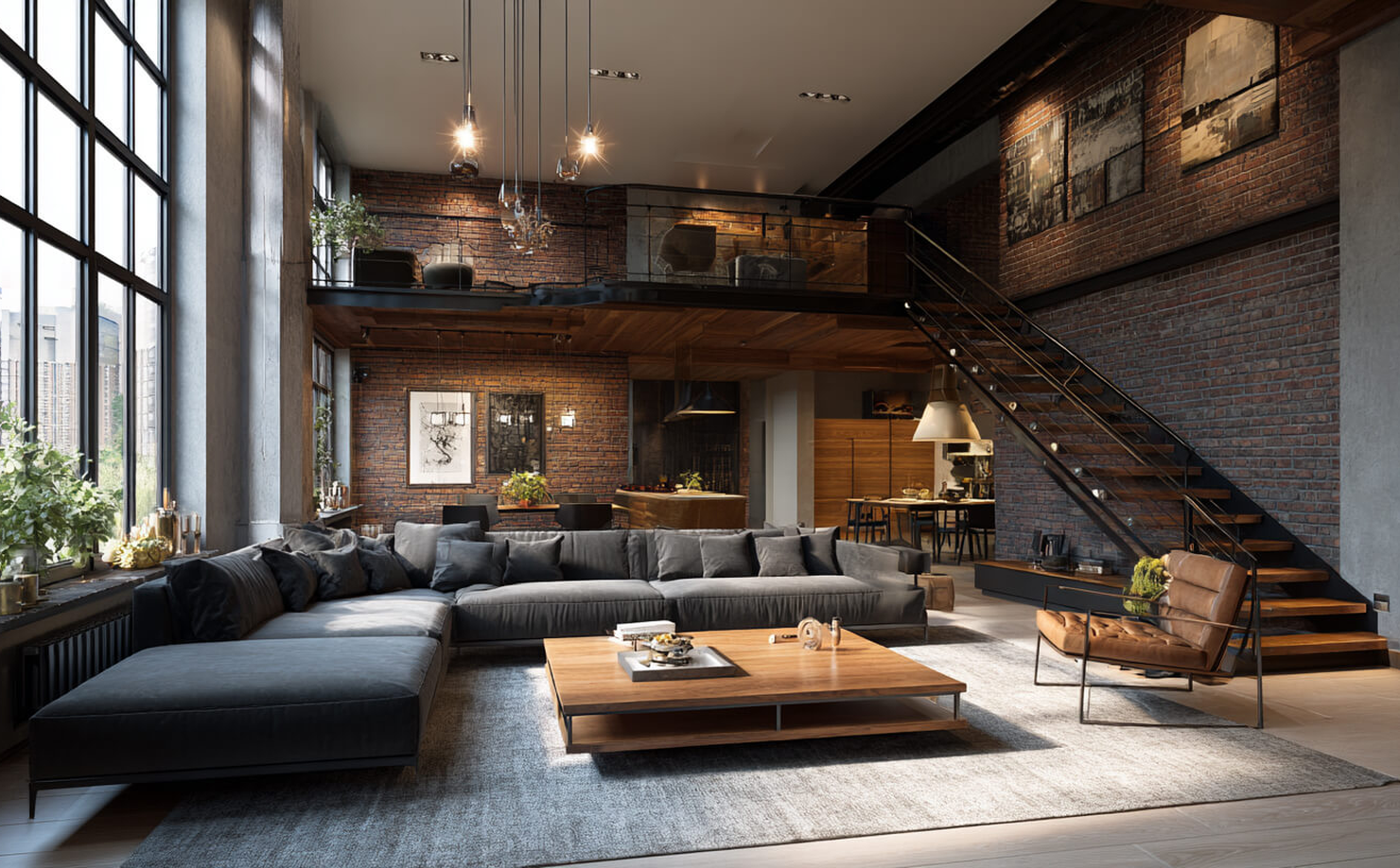
This industrial style design points to exposed brick, steel, patinated wood, weathered leather, and concrete as key markers.
12. Mediterranean Style
Mediterranean style feels sunny, relaxed, and tactile. It draws from warm coastal regions and often looks like a home shaped by sunlight, handmade materials, and indoor-outdoor living: white or plaster-like walls, terracotta floors, arched openings, ceramic tiles, linen curtains, rattan chairs, olive wood, and blue or ochre accents. It is less about perfect polish and more about warmth, craft, and ease.
● Key features: arches, plaster-like walls, terracotta, ceramics, linen, rattan, olive wood, iron, mosaic tile, and relaxed layouts.
● Color palettes: white, terracotta, ochre, sea blue, olive, clay, sand, and deep wood.
● Materials: limewash, plaster, terracotta tile, ceramic, rattan, linen, cotton, olive wood, stone, and wrought iron.
● Furniture style: rustic wood tables, linen sofas, woven chairs, ceramic lamps, and relaxed dining pieces.
● Best for: kitchens, patios, bathrooms, dining rooms, vacation homes, and spaces with good natural light.
● Designer tip: let materials feel handmade rather than overly perfect. A ceramic pendant, uneven tile, linen curtain, or terracotta planter can do more than obvious themed decor.
● Mediterranean design mixes well with coastal, biophilic, rustic, organic modern, and traditional interiors.
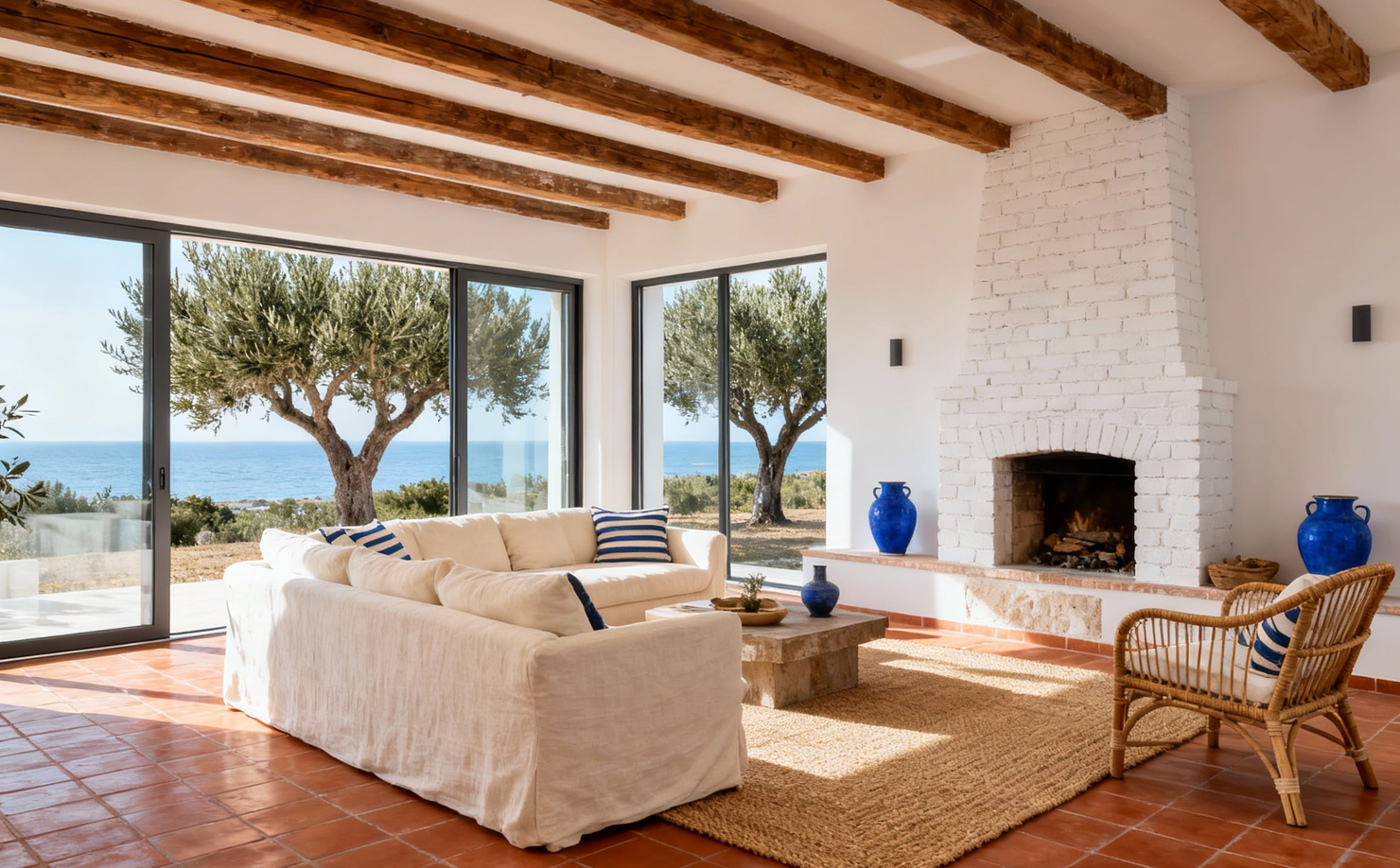
This room design example shows how a Mediterranean-style Los Angeles cottage can be refreshed with contemporary furniture and family-friendly updates.
13. Coastal / California Coastal
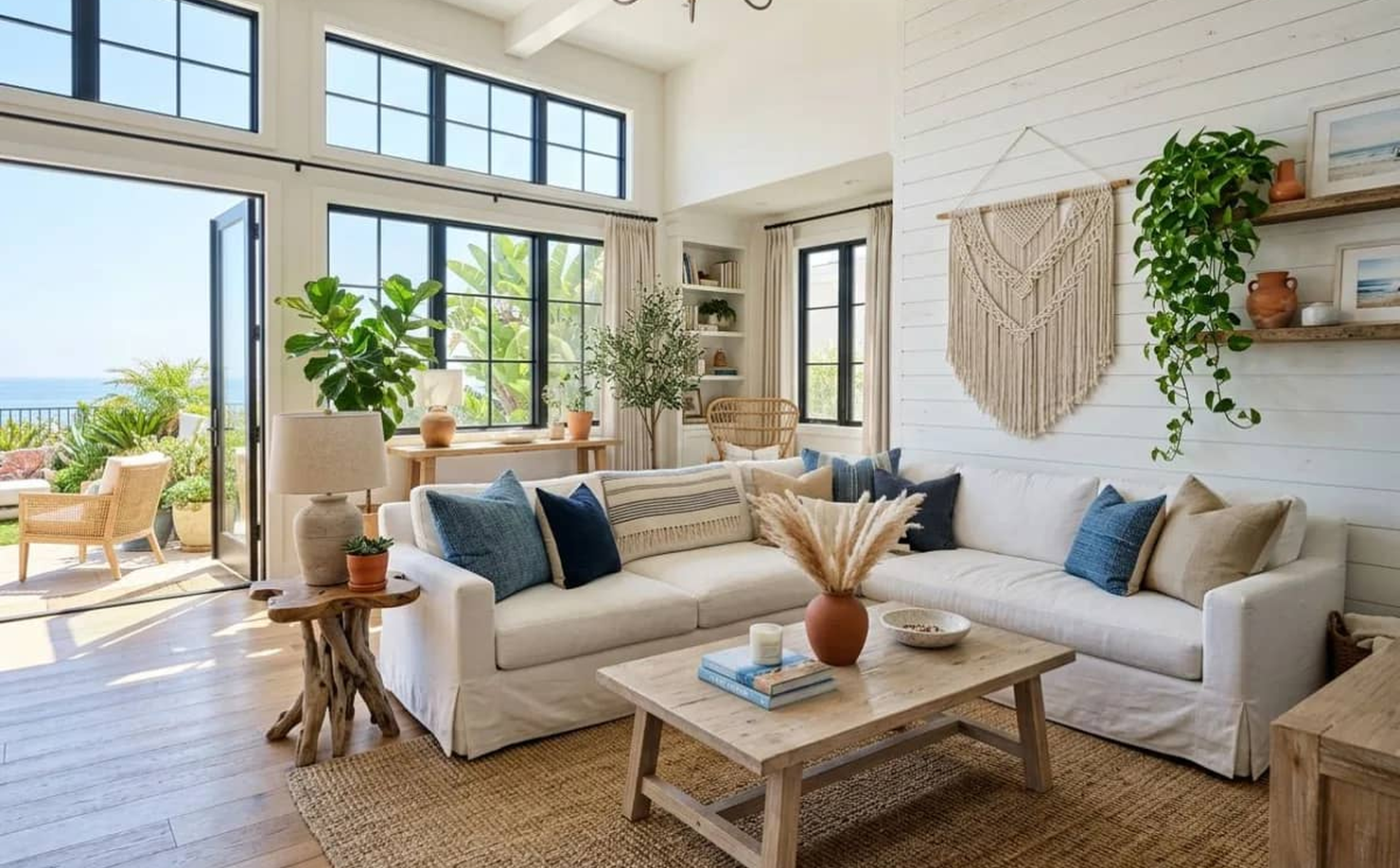
Coastal and California coastal interiors are airy, breezy, and relaxed. A good coastal room is not built from seashells, anchors, or beach signs. It feels coastal because of its light, palette, materials, and layout: pale wood, white walls, woven textures, linen, soft blue, sand tones, and comfortable furniture that feels easy to live with.
● Key features: pale wood, woven textures, soft textiles, natural light, slipcovered seating, relaxed layouts, and minimal nautical decor.
● Color palettes: white, sand, driftwood, sky blue, navy, warm beige, and pale oak.
● Materials: rattan, seagrass, linen, cotton, jute, light wood, ceramic, and natural fibers.
● Furniture style: slipcovered sofas, woven chairs, pale wood tables, soft rugs, benches, and casual dining chairs.
● Best for: beach homes, rentals, bedrooms, bathrooms, family spaces, and anyone who wants a lighter home atmosphere.
● Designer tip: create a coastal feeling through texture and light first. If the room still feels breezy after removing obvious beach decor, the design is working.
● Coastal style mixes well with Mediterranean, Scandinavian, organic modern, transitional, and modern cream interiors.
14. Maximalist / Bohemian Eclectic
Maximalist and bohemian eclectic design is for people who want their home to feel personal, artistic, and alive. This style can include bold color, layered patterns, vintage pieces, art, books, plants, handmade textiles, and objects from different cultures or eras, but it should not feel like random clutter. The best version has rhythm, repetition, and a clear sense of personality.
● Key features: layered patterns, collected objects, vintage finds, handmade pieces, gallery walls, colorful textiles, plants, books, and mixed cultural references.
● Color palettes: warm orange, ethnic red, retro green, jewel tones, earthy browns, brass, and deep accent colors.
● Materials: handwoven fabric, tapestry, old wood, coarse pottery, metal, velvet, rattan, and carved wood.
● Furniture style: handmade, vintage, irregular, artistic, or boldly upholstered pieces.
● Best for: creative homes, art studios, rentals, personal bedrooms, themed spaces, and anyone with meaningful collections.
● Designer tip: repetition keeps the room readable. Repeat a color, metal, wood tone, shape, or pattern scale so the room feels collected rather than chaotic.
● Maximalist and bohemian eclectic design mixes well with vintage retro, wabi-sabi, biophilic design, mid-century modern, and Mediterranean interiors.
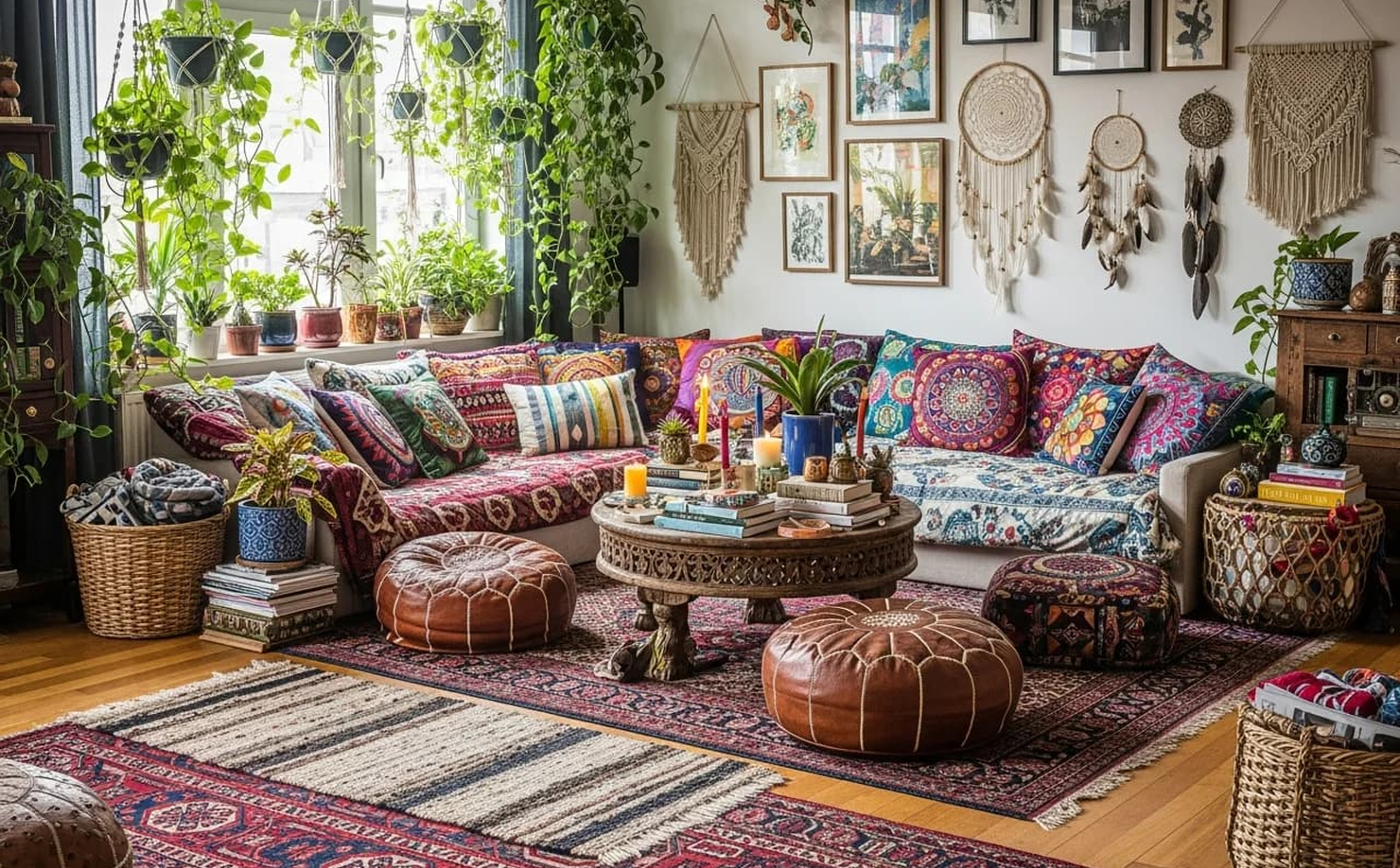
This Maximalist design style example explains how bold color, pattern, and texture still need balance.
15. Minimalist Smart Tech Style
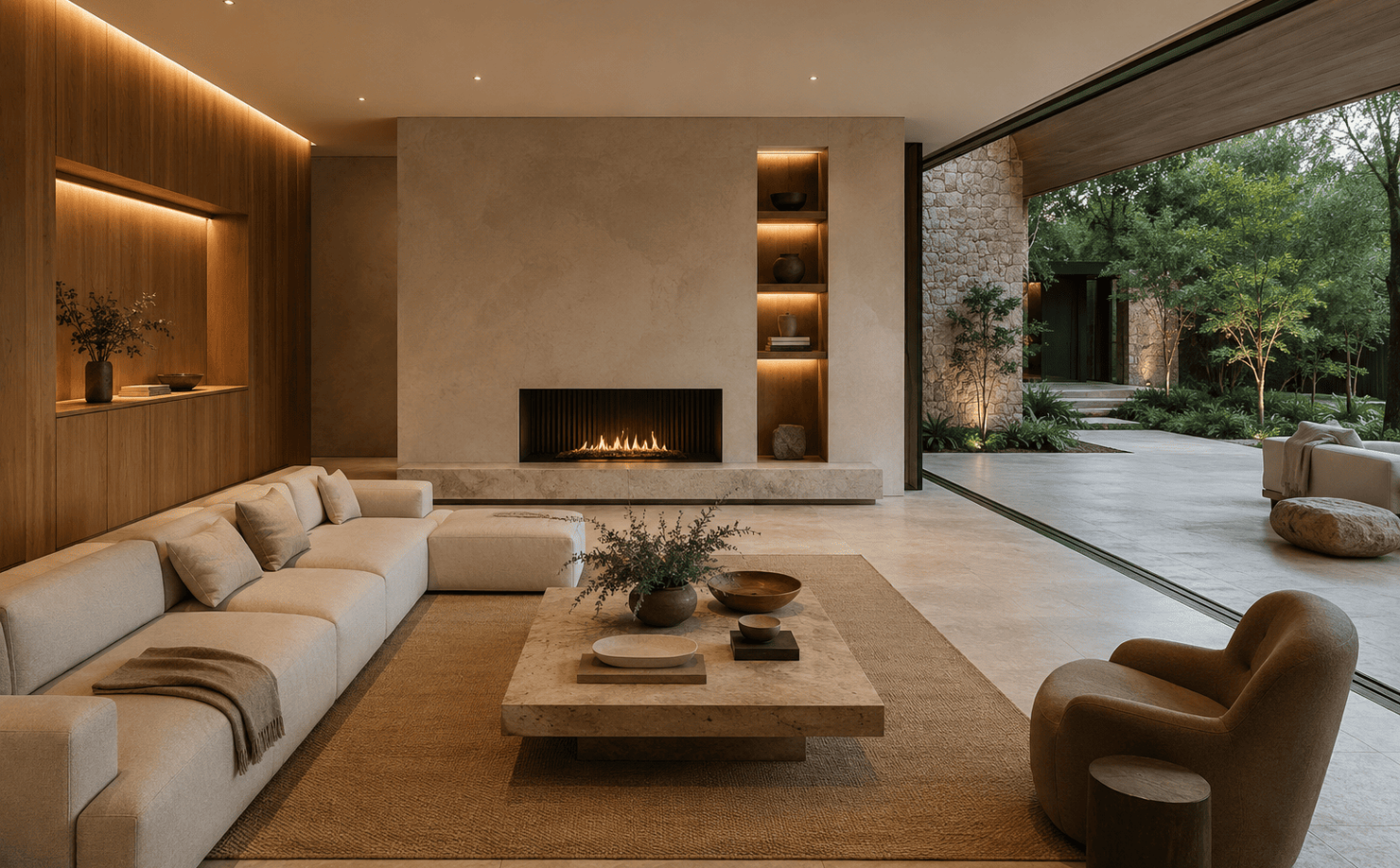
Minimalist smart tech style is one of the most future-facing interior design styles for 2026. It combines the clean look of modern minimalism with hidden smart-home systems, so technology supports daily life without visually taking over the room. The lights, curtains, speakers, climate control, and storage may all be smart or integrated, but the space still looks seamless and uncluttered.
● Key features: hidden smart devices, seamless cabinets, concealed wiring, smart curtains, integrated lighting, linear light strips, clean ceilings, and zero-clutter surfaces.
● Color palettes: pure white, ultra gray, black, silver, glassy neutrals, and small touches of tech blue.
● Materials: matte tech metal, glass, acrylic, integrated wall panels, smart dimming materials, and smooth cabinet finishes.
● Furniture style: built-in, geometric, modular, hidden, or multifunctional.
● Best for: smart homes, modern apartments, media rooms, high-tech studios, design offices, and younger homeowners who like efficient living.
● Designer tip: keep the home human. Smart technology should make life easier, not make the room feel like a device showroom.
● Minimalist smart tech mixes well with modern minimalism, modern light luxury, modern cream, and industrial style.
How to Choose the Best Style for Your Home or Project
The best interior design style is not always the most popular one. It is the one that fits your space, lifestyle, budget, architecture, and emotional goal. Before choosing, ask these questions.
First, what does the architecture already suggest?
A loft with exposed brick can carry industrial style naturally. A bright small apartment may work beautifully with Scandinavian or warm minimalist design. A historic home can handle traditional, transitional, or new traditional details more convincingly than an ultra-sleek theme.
Second, how do you want the room to feel?
If you want calm, look at Japandi, warm minimalist, Scandinavian, or organic modern. If you want energy, consider eclectic, maximalist, Mediterranean, or contemporary. If you want long-term resale appeal, transitional, modern, warm minimalist, and coastal are usually safer than highly themed styles.
Third, how much maintenance can you tolerate?
Minimalist spaces look simple, but they require storage discipline. Maximalist spaces can hide daily life better, but they need stronger editing. Coastal and Scandinavian styles are beginner-friendly because their palettes and materials are forgiving. Traditional and luxury styles can look excellent, but quality matters more, so cheap versions often feel weak.
Fourth, what is your real budget?
A full traditional renovation with millwork, custom curtains, antique furniture, and quality lighting can become expensive. Mediterranean style may require architectural surface changes to feel authentic. Warm minimalism can work on a smaller budget if you focus on paint, lighting, textiles, and fewer better pieces.
If you still cannot make a decision, this simple shortcut would also help:
- For small homes: Scandinavian, warm minimalist, Japandi, coastal
- For beginners: Scandinavian, transitional, organic modern, coastal
- For resale: transitional, warm minimalist, modern, coastal
- For family homes: modern farmhouse, transitional, rustic, Scandinavian
- For bold personal style: eclectic, maximalist, Mediterranean, contemporary
- For calm bedrooms: Japandi, warm minimalist, Scandinavian, organic modern
- For cafes or small commercial spaces: industrial, modern, Mediterranean, eclectic.
And remember: you don’t have to fit your home perfectly into one style. Start with one as your foundation, then borrow elements from another to make the space feel more personal. The goal isn’t to recreate a style textbook—it’s to create a home that works and feels right for you.
How to Preview & Test These Design Styles in Your Own Home or Project With DecAI™
Love several of these styles but not sure which one will actually look good in your own space? Instead of trying to imagine it, you can test them directly on a photo of your room with the free, yet powerful AI home design tool, DecAI™.
It is a free, AI-powered home design tool built specifically for home and interior design. Simply upload a photo of your space, choose from 30+ design styles, and see your room transformed in seconds—no design skills or complicated software required.
There are two easy ways to test out these styles in this guide:
1.Want to redesign an empty or existing room?
You can use DecAI™'s AI Interior Design tool, which allows you to upload your room photo, choose a style, and quickly compare how different looks work in your actual space.
2.Already found an inspiration photo you love?
You can also try its AI Style Transfer tool, which helps to transfer between different design styles simply by uploading a reference photo, no matter whether the photo or inspiration is from Pinterest, Instagram, or anywhere else, and it bring that look and feel directly into your own space.
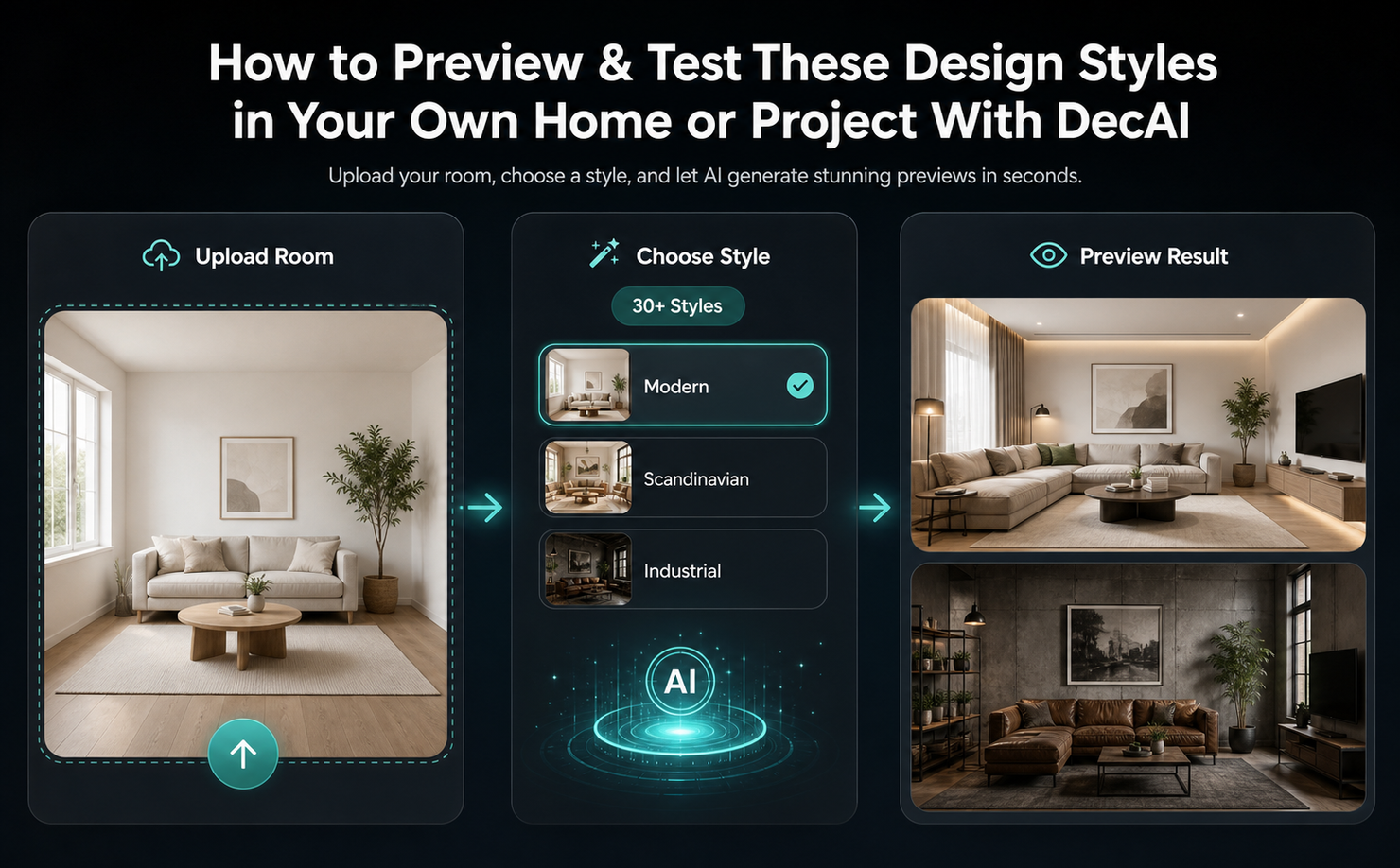
And DecAI™ goes far beyond testing interior styles. Its 9 AI home design tools cover everything from interiors, exteriors, and gardens to furniture, walls, floors, materials, and more—all in one place, so you can keep exploring and refining your ideas without constantly switching between different tools.
2026 Interior Style Mixing Rules: How to Mix Styles Without Chaos
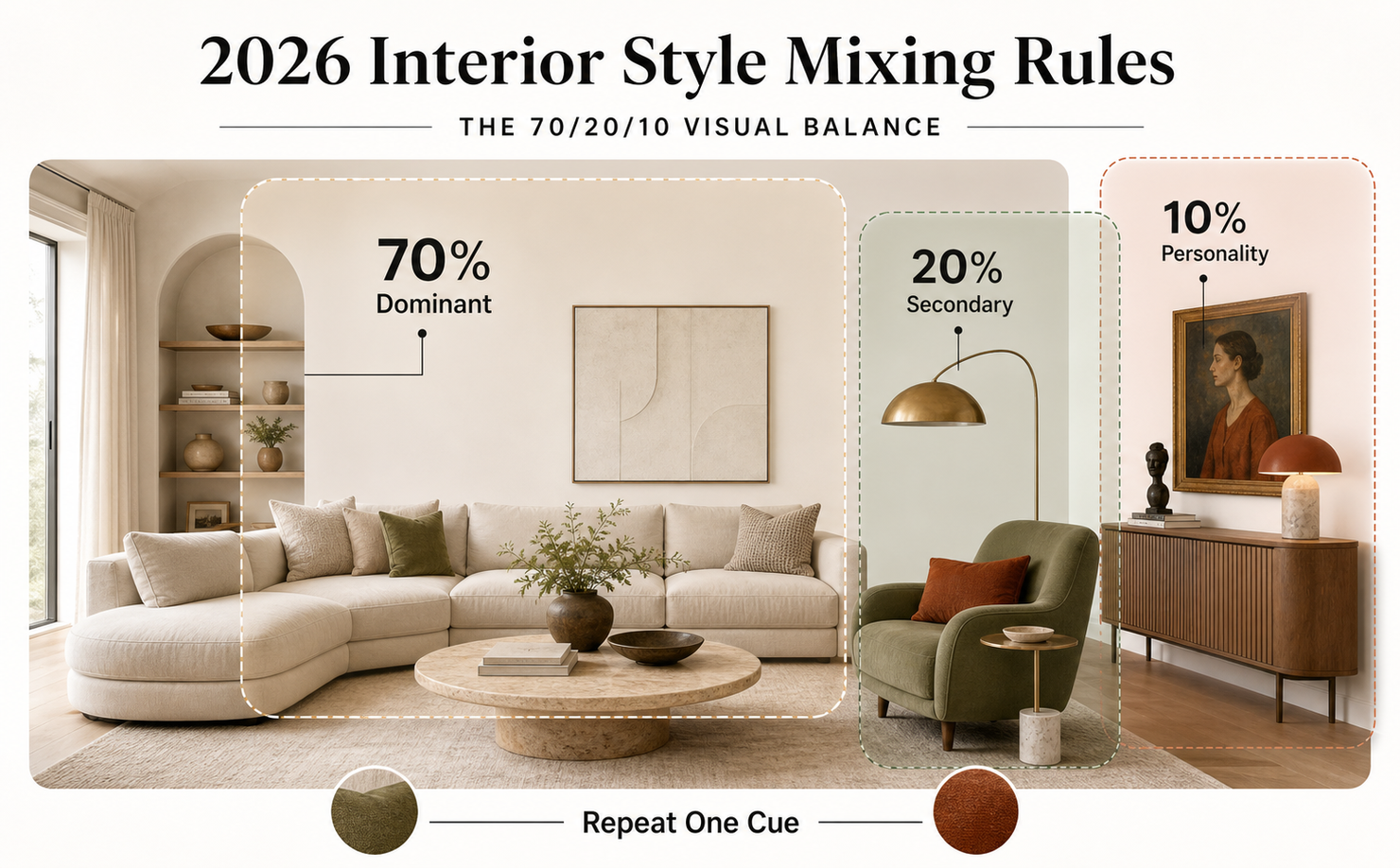
You don’t have to stick to just one interior design style. In fact, mixing styles is often what makes a home feel more personal, natural, and lived-in. The key is to mix them intentionally—otherwise, the room can quickly start to feel disconnected or cluttered.
Here are a few simple rules to keep your style mix cohesive:
1.Choose one dominant style for about 70% of the room
Let your main style guide the big decisions, such as the overall color palette, sofa, flooring, large furniture, and general mood of the space.
2.Bring in a secondary style for about 20%
Use your second style through smaller elements such as lighting, accent chairs, rugs, artwork, or side tables. For example, a warm minimalist living room can easily incorporate a few mid-century modern pieces without losing its calm feel.
3.Save the final 10% for personality
This is where you can have fun with family pieces, travel finds, vintage décor, bold artwork, or an unusual lamp that simply makes you happy.
4.Repeat something
When mixing styles, repeat at least one element—such as a color, wood tone, metal finish, material, or shape—to visually connect everything. For example, repeating brass across a lamp, picture frame, and cabinet hardware can help traditional and contemporary pieces feel more intentional together.
5.Keep proportions in balance
Different styles still need to work together visually. A delicate Scandinavian chair may feel out of place next to an oversized rustic table, while a bulky traditional sofa can easily overwhelm an otherwise minimalist room.
6.Don’t let every piece compete for attention
A statement sofa, sculptural pendant, or bold patterned rug can become a beautiful focal point—but you probably don’t need all three competing at once. Give standout pieces enough visual space to shine.
It is noticable that this 70/20/10 rule isn’t a strict formul, just think of it as an easy starting point. The goal is not to make every room perfectly match, but to create enough consistency that your mix of styles feels intentional rather than accidental.
FAQs
1.What are the top 5 styles of interior design?
The top five interior design styles many homeowners recognize are modern, contemporary, Scandinavian, traditional, and minimalist. In 2026, Japandi, organic modern, transitional, and eclectic interiors are also very influential because they match the broader move toward warmer, more personal homes.
2.What is the most popular interior design style?
There is no single universal winner, but transitional, modern, Scandinavian, and contemporary styles are among the most popular because they are flexible and easy to adapt. For 2026 specifically, warm minimalism, Japandi, and organic modern are especially strong because they combine calm design with natural texture.
3.How do I know what my interior design style is?
You can judge your exclusive design style from four dimensions: your favorite color tone (warm or cold), material preference (natural texture or smooth metal), living demand (simple and practical or romantic and personalized), and house type size. You can also upload your room photos to DecAI™ for intelligent style matching and accurate recommendation.
4.What interior design style is timeless?
Traditional, transitional, Scandinavian, and warm minimalist interiors tend to age well when executed with quality materials and restrained choices. Timeless design usually depends less on the style name and more on proportion, durable materials, good lighting, and avoiding overly themed decor.
5.What is the easiest interior design style for beginners?
Scandinavian and coastal styles are among the easiest for beginners because their palettes are simple, materials are accessible, and the overall mood is forgiving. Warm minimalist and transitional interiors can also work well if you keep the palette tight and avoid overdecorating.
6.What interior design style works best for small homes?
Scandinavian, Japandi, warm minimalist, coastal, and modern styles often work best for small homes. They favor light, function, clean lines, and visual breathing room. For small spaces, avoid too many competing colors, oversized furniture, and heavy window treatments.
7.Which interior design style adds the most home value?
For resale, transitional, modern, warm minimalist, and light contemporary interiors are usually safer because they appeal to a wide audience. Highly personal maximalist or themed interiors can be beautiful, but they may not attract every buyer. If home value is the goal, use bold style in removable elements like art, rugs, and decor.
--------------------------------------
If you believe that any material on this site infringes your intellectual property rights, please contact the author at decaiwebteam@outlook.com with details of your claim.
Redesign any home interior, exterior & garden in seconds
Share this Post:
'%3e%3cpath%20d='M17.9995%2035.999C17.0317%2035.999%2016.0619%2035.9219%2015.1161%2035.7696C10.9414%2035.0973%207.11524%2032.9513%204.34408%2029.7273C1.54287%2026.4683%200%2022.3035%200%2017.9995C0%208.07403%208.07503%200%2017.9995%200C27.924%200%2036%208.07503%2036%2017.9995C36%2022.3696%2034.4151%2026.5835%2031.5357%2029.8646C28.6844%2033.1156%2024.7671%2035.2326%2020.5052%2035.8267C19.6806%2035.9419%2018.8371%2036%2017.9995%2036V35.999ZM17.9995%201.20123C8.73726%201.20123%201.20224%208.73626%201.20224%2017.9985C1.20224%2026.2919%207.13427%2033.2659%2015.3075%2034.5814C16.9546%2034.8469%2018.6808%2034.8659%2020.3389%2034.6345C28.5812%2033.4863%2034.7968%2026.334%2034.7968%2017.9985C34.7968%208.73626%2027.2617%201.20123%2017.9985%201.20123H17.9995Z'%20fill='%23FF0209'/%3e%3cpath%20d='M29.0557%2014.3621C28.9184%2013.0276%2028.6208%2011.5539%2027.5268%2010.7784C26.6782%2010.1773%2025.5642%2010.1553%2024.5242%2010.1563C22.3251%2010.1583%2020.126%2010.1603%2017.9269%2010.1623C15.812%2010.1643%2013.6971%2010.1663%2011.5821%2010.1683C10.6985%2010.1683%209.8399%2010.1002%209.01937%2010.4819C8.31406%2010.8105%207.76303%2011.4347%207.43241%2012.1289C6.97156%2013.0957%206.87438%2014.1898%206.81927%2015.2588C6.71708%2017.2044%206.7281%2019.156%206.85133%2021.0996C6.9405%2022.5193%207.16792%2024.0872%208.26496%2024.9919C9.23777%2025.7934%2010.6103%2025.8325%2011.8707%2025.8335C15.8741%2025.8365%2019.8776%2025.8395%2023.881%2025.8435C24.394%2025.8435%2024.93%2025.8345%2025.453%2025.7774C26.4829%2025.6661%2027.4637%2025.3716%2028.1249%2024.6092C28.7922%2023.8407%2028.9635%2022.7698%2029.0657%2021.7569C29.3121%2019.3003%2029.3091%2016.8177%2029.0557%2014.3621ZM15.6116%2021.4453V14.5545L21.5797%2017.9999L15.6116%2021.4453Z'%20fill='%23FF0209'/%3e%3c/g%3e%3cdefs%3e%3cclipPath%20id='clip0_13816_41422'%3e%3crect%20width='36'%20height='36'%20fill='white'/%3e%3c/clipPath%3e%3c/defs%3e%3c/svg%3e)
'%3e%3cpath%20d='M17.9995%2036C17.0327%2036%2016.0619%2035.9229%2015.1161%2035.7696C10.9414%2035.0973%207.11524%2032.9513%204.34408%2029.7273C1.54287%2026.4683%200%2022.3035%200%2017.9995C0%208.07403%208.07503%200%2017.9995%200C27.924%200%2036%208.07503%2036%2017.9995C36%2022.3696%2034.4151%2026.5835%2031.5357%2029.8646C28.6844%2033.1156%2024.7671%2035.2326%2020.5052%2035.8267C19.6806%2035.9419%2018.8371%2036%2017.9995%2036ZM17.9995%201.20224C8.73726%201.20224%201.20224%208.73726%201.20224%2017.9995C1.20224%2026.2919%207.13427%2033.2669%2015.3075%2034.5824C16.9556%2034.8479%2018.6808%2034.8669%2020.3389%2034.6355C28.5812%2033.4873%2034.7968%2026.335%2034.7968%2017.9995C34.7968%208.73726%2027.2617%201.20224%2017.9985%201.20224H17.9995Z'%20fill='url(%23paint0_linear_13816_41436)'/%3e%3cpath%20d='M23.4463%207.55469H12.549C9.53841%207.55469%207.08984%2010.0032%207.08984%2013.0138V22.9834C7.08984%2025.994%209.53841%2028.4426%2012.549%2028.4426H23.4463C26.4569%2028.4426%2028.9054%2025.994%2028.9054%2022.9834V13.0138C28.9054%2010.0032%2026.4569%207.55469%2023.4463%207.55469ZM9.01543%2013.0138C9.01543%2011.0652%2010.6004%209.48027%2012.549%209.48027H23.4463C25.3949%209.48027%2026.9799%2011.0652%2026.9799%2013.0138V22.9834C26.9799%2024.932%2025.3949%2026.517%2023.4463%2026.517H12.549C10.6004%2026.517%209.01543%2024.932%209.01543%2022.9834V13.0138Z'%20fill='url(%23paint1_linear_13816_41436)'/%3e%3cpath%20d='M17.9964%2023.0749C20.7966%2023.0749%2023.0749%2020.7966%2023.0749%2017.9964C23.0749%2015.1962%2020.7966%2012.918%2017.9964%2012.918C15.1962%2012.918%2012.918%2015.1962%2012.918%2017.9964C12.918%2020.7966%2015.1962%2023.0749%2017.9964%2023.0749ZM17.9964%2014.8446C19.7346%2014.8446%2021.1483%2016.2582%2021.1483%2017.9964C21.1483%2019.7347%2019.7346%2021.1483%2017.9964%2021.1483C16.2582%2021.1483%2014.8446%2019.7347%2014.8446%2017.9964C14.8446%2016.2582%2016.2582%2014.8446%2017.9964%2014.8446Z'%20fill='url(%23paint2_linear_13816_41436)'/%3e%3cpath%20d='M23.5482%2013.741C24.3026%2013.741%2024.9168%2013.1269%2024.9168%2012.3725C24.9168%2011.618%2024.3026%2011.0039%2023.5482%2011.0039C22.7938%2011.0039%2022.1797%2011.618%2022.1797%2012.3725C22.1797%2013.1269%2022.7938%2013.741%2023.5482%2013.741Z'%20fill='url(%23paint3_linear_13816_41436)'/%3e%3c/g%3e%3cdefs%3e%3clinearGradient%20id='paint0_linear_13816_41436'%20x1='5.27482'%20y1='30.7312'%20x2='30.7242'%20y2='5.28083'%20gradientUnits='userSpaceOnUse'%3e%3cstop%20stop-color='%23FAAD4F'/%3e%3cstop%20offset='0.35'%20stop-color='%23DD2A7B'/%3e%3cstop%20offset='0.62'%20stop-color='%239537B0'/%3e%3cstop%20offset='1'%20stop-color='%23515BD4'/%3e%3c/linearGradient%3e%3clinearGradient%20id='paint1_linear_13816_41436'%20x1='8.92225'%20y1='27.074'%20x2='27.073'%20y2='8.92324'%20gradientUnits='userSpaceOnUse'%3e%3cstop%20stop-color='%23FAAD4F'/%3e%3cstop%20offset='0.35'%20stop-color='%23DD2A7B'/%3e%3cstop%20offset='0.62'%20stop-color='%239537B0'/%3e%3cstop%20offset='1'%20stop-color='%23515BD4'/%3e%3c/linearGradient%3e%3clinearGradient%20id='paint2_linear_13816_41436'%20x1='14.4077'%20y1='21.5861'%20x2='21.5861'%20y2='14.4077'%20gradientUnits='userSpaceOnUse'%3e%3cstop%20stop-color='%23FAAD4F'/%3e%3cstop%20offset='0.35'%20stop-color='%23DD2A7B'/%3e%3cstop%20offset='0.62'%20stop-color='%239537B0'/%3e%3cstop%20offset='1'%20stop-color='%23515BD4'/%3e%3c/linearGradient%3e%3clinearGradient%20id='paint3_linear_13816_41436'%20x1='22.5814'%20y1='13.3393'%20x2='24.515'%20y2='11.4057'%20gradientUnits='userSpaceOnUse'%3e%3cstop%20stop-color='%23FAAD4F'/%3e%3cstop%20offset='0.35'%20stop-color='%23DD2A7B'/%3e%3cstop%20offset='0.62'%20stop-color='%239537B0'/%3e%3cstop%20offset='1'%20stop-color='%23515BD4'/%3e%3c/linearGradient%3e%3cclipPath%20id='clip0_13816_41436'%3e%3crect%20width='36'%20height='36'%20fill='white'/%3e%3c/clipPath%3e%3c/defs%3e%3c/svg%3e)
'%3e%3cpath%20d='M17.9995%2035.999C17.0317%2035.999%2016.0619%2035.9219%2015.1161%2035.7696C10.9414%2035.0973%207.11524%2032.9513%204.34408%2029.7273C1.54287%2026.4683%200%2022.3035%200%2017.9995C0%208.07403%208.07502%200%2017.9995%200C27.924%200%2036%208.07503%2036%2017.9995C36%2022.3696%2034.415%2026.5835%2031.5357%2029.8646C28.6844%2033.1156%2024.7671%2035.2326%2020.5052%2035.8267C19.6806%2035.9419%2018.8371%2036%2017.9995%2036V35.999ZM17.9995%201.20123C8.73725%201.20123%201.20224%208.73626%201.20224%2017.9985C1.20224%2026.2919%207.13427%2033.2659%2015.3075%2034.5814C16.9545%2034.8469%2018.6808%2034.8659%2020.3388%2034.6345C28.5812%2033.4863%2034.7968%2026.334%2034.7968%2017.9985C34.7968%208.73626%2027.2617%201.20123%2017.9985%201.20123H17.9995Z'%20fill='%23007EBB'/%3e%3cpath%20d='M9.06639%2012.124C8.60253%2011.6932%208.37109%2011.1602%208.37109%2010.526C8.37109%209.89184%208.60253%209.33481%209.06639%208.90401C9.53026%208.47321%2010.1274%208.25781%2010.8587%208.25781C11.5901%208.25781%2012.1642%208.47321%2012.627%208.90401C13.0909%209.33481%2013.3223%209.87581%2013.3223%2010.526C13.3223%2011.1762%2013.0909%2011.6932%2012.627%2012.124C12.1631%2012.5548%2011.5741%2012.7702%2010.8587%2012.7702C10.1434%2012.7702%209.52926%2012.5548%209.06639%2012.124ZM12.9326%2014.5946V27.7962H8.76182V14.5946H12.9326Z'%20fill='%23007EBB'/%3e%3cpath%20d='M26.8196%2015.9006C27.7283%2016.8875%2028.1832%2018.243%2028.1832%2019.9682V27.5663H24.2208V20.5042C24.2208%2019.6346%2023.9954%2018.9583%2023.5445%2018.4764C23.0937%2017.9945%2022.4876%2017.7541%2021.7262%2017.7541C20.9647%2017.7541%2020.3586%2017.9955%2019.9078%2018.4764C19.4569%2018.9583%2019.2315%2019.6346%2019.2315%2020.5042V27.5663H15.2461V14.5611H19.2315V16.2863C19.6353%2015.7113%2020.1793%2015.2574%2020.8636%2014.9228C21.5468%2014.5892%2022.3163%2014.4219%2023.1708%2014.4219C24.6937%2014.4219%2025.9099%2014.9158%2026.8186%2015.9016L26.8196%2015.9006Z'%20fill='%23007EBB'/%3e%3c/g%3e%3cdefs%3e%3cclipPath%20id='clip0_13816_41425'%3e%3crect%20width='36'%20height='36'%20fill='white'/%3e%3c/clipPath%3e%3c/defs%3e%3c/svg%3e)
'%3e%3cpath%20d='M18%2035.999C17.0322%2035.999%2016.0623%2035.9219%2015.1166%2035.7696C10.9417%2035.0973%207.11544%2032.9513%204.3442%2029.7273C1.54291%2026.4683%200%2022.3035%200%2017.9995C0%208.07403%208.07526%200%2018%200C27.9248%200%2036%208.07503%2036%2017.9995C36%2022.3696%2034.415%2026.5835%2031.5356%2029.8646C28.6842%2033.1156%2024.7668%2035.2326%2020.5047%2035.8267C19.6802%2035.9419%2018.8366%2036%2017.999%2036L18%2035.999ZM18%201.20123C8.73751%201.20123%201.20227%208.73626%201.20227%2017.9985C1.20227%2026.2919%207.13448%2033.2659%2015.3079%2034.5814C16.955%2034.8469%2018.6813%2034.8659%2020.3394%2034.6345C28.582%2033.4863%2034.7977%2026.334%2034.7977%2017.9985C34.7977%208.73626%2027.2625%201.20123%2018%201.20123Z'%20fill='black'/%3e%3cpath%20d='M7%208.09163H13.5067L19.521%2016.1816L27.0073%207.90625L28.786%207.93715L20.4078%2017.3454L29%2028.901H22.4959L16.8193%2021.362L9.8847%2029.0864H8.13428L15.9583%2020.26L7%208.09163ZM12.8931%209.28633H9.45676L23.2048%2027.6754H26.5793L12.8931%209.28633Z'%20fill='black'/%3e%3c/g%3e%3cdefs%3e%3cclipPath%20id='clip0_13886_43848'%3e%3crect%20width='36'%20height='36'%20fill='white'/%3e%3c/clipPath%3e%3c/defs%3e%3c/svg%3e)
'%3e%3cpath%20d='M17.9995%2035.999C17.0327%2035.999%2016.0619%2035.9219%2015.1161%2035.7686C10.9414%2035.0963%207.11524%2032.9503%204.34408%2029.7263C1.54287%2026.4673%200%2022.3025%200%2017.9995C0%208.07403%208.07503%200%2017.9995%200C27.924%200%2036%208.07503%2036%2017.9995C36%2022.3696%2034.415%2026.5835%2031.5357%2029.8646C28.6844%2033.1156%2024.7671%2035.2326%2020.5052%2035.8267C19.6806%2035.9419%2018.8371%2036%2017.9995%2036V35.999ZM17.9995%201.20123C8.73726%201.20123%201.20224%208.73626%201.20224%2017.9985C1.20224%2026.2909%207.13428%2033.2659%2015.3075%2034.5814C16.9556%2034.8469%2018.6808%2034.8659%2020.3389%2034.6345C28.5812%2033.4863%2034.7968%2026.334%2034.7968%2017.9985C34.7968%208.73626%2027.2617%201.20123%2017.9985%201.20123H17.9995Z'%20fill='%231877F7'/%3e%3cpath%20d='M20.5337%2014.9635V18.7536H25.2225L24.4801%2023.8601H20.5337V35.624C19.7423%2035.7342%2018.9328%2035.7913%2018.1112%2035.7913C17.1625%2035.7913%2016.2317%2035.7151%2015.324%2035.5689V23.8601H11V18.7536H15.324V14.1169C15.324%2011.2396%2017.6564%208.90625%2020.5347%208.90625V8.90926C20.5428%208.90926%2020.5508%208.90625%2020.5588%208.90625H25.2235V13.3215H22.1758C21.2691%2013.3215%2020.5347%2014.0558%2020.5347%2014.9625L20.5337%2014.9635Z'%20fill='%231877F7'/%3e%3c/g%3e%3cdefs%3e%3cclipPath%20id='clip0_13816_41433'%3e%3crect%20width='36'%20height='36'%20fill='white'/%3e%3c/clipPath%3e%3c/defs%3e%3c/svg%3e)
'%3e%3cpath%20d='M17.9995%2035.999C17.0327%2035.999%2016.0619%2035.9219%2015.1161%2035.7686C10.9414%2035.0963%207.11524%2032.9503%204.34408%2029.7263C1.54287%2026.4673%200%2022.3025%200%2017.9995C0%208.07403%208.07503%200%2017.9995%200C27.924%200%2036%208.07503%2036%2017.9995C36%2022.3696%2034.415%2026.5835%2031.5357%2029.8646C28.6844%2033.1156%2024.7671%2035.2326%2020.5052%2035.8267C19.6806%2035.9419%2018.8371%2036%2017.9995%2036V35.999ZM17.9995%201.20123C8.73726%201.20123%201.20224%208.73626%201.20224%2017.9985C1.20224%2026.2909%207.13428%2033.2659%2015.3075%2034.5814C16.9556%2034.8469%2018.6808%2034.8659%2020.3389%2034.6345C28.5812%2033.4863%2034.7968%2026.334%2034.7968%2017.9985C34.7968%208.73626%2027.2617%201.20123%2017.9985%201.20123H17.9995Z'%20fill='%232A91F7'/%3e%3cg%20clip-path='url(%23clip1_13816_41442)'%3e%3cpath%20d='M16.3345%2018.834C16.6924%2019.3124%2017.149%2019.7083%2017.6733%2019.9947C18.1976%2020.2812%2018.7774%2020.4516%2019.3734%2020.4942C19.9693%2020.5369%2020.5675%2020.4509%2021.1273%2020.2421C21.6871%2020.0333%2022.1954%2019.7065%2022.6178%2019.284L25.1178%2016.784C25.8768%2015.9981%2026.2968%2014.9456%2026.2873%2013.8531C26.2778%2012.7606%2025.8396%2011.7156%2025.0671%2010.943C24.2946%2010.1705%2023.2495%209.73231%2022.157%209.72281C21.0645%209.71332%2020.012%2010.1333%2019.2262%2010.8923L17.7928%2012.3173M19.6678%2017.1673C19.3099%2016.6889%2018.8533%2016.293%2018.329%2016.0065C17.8047%2015.7201%2017.2249%2015.5497%2016.6289%2015.507C16.033%2015.4643%2015.4348%2015.5503%2014.875%2015.7592C14.3152%2015.968%2013.8069%2016.2947%2013.3845%2016.7173L10.8845%2019.2173C10.1255%2020.0031%209.70551%2021.0557%209.715%2022.1481C9.72449%2023.2406%2010.1627%2024.2857%2010.9352%2025.0582C11.7078%2025.8307%2012.7528%2026.269%2013.8453%2026.2784C14.9378%2026.2879%2015.9903%2025.868%2016.7761%2025.109L18.2011%2023.684'%20stroke='%232A91F7'%20stroke-width='1.66667'%20stroke-linecap='round'%20stroke-linejoin='round'/%3e%3c/g%3e%3c/g%3e%3cdefs%3e%3cclipPath%20id='clip0_13816_41442'%3e%3crect%20width='36'%20height='36'%20fill='white'/%3e%3c/clipPath%3e%3cclipPath%20id='clip1_13816_41442'%3e%3crect%20width='20'%20height='20'%20fill='white'%20transform='translate(8%208)'/%3e%3c/clipPath%3e%3c/defs%3e%3c/svg%3e)
Redesign any home interior, exterior & garden in seconds