
25 Stylist Accent Wall Ideas Designers Will Love to Level Up Their Design Projects

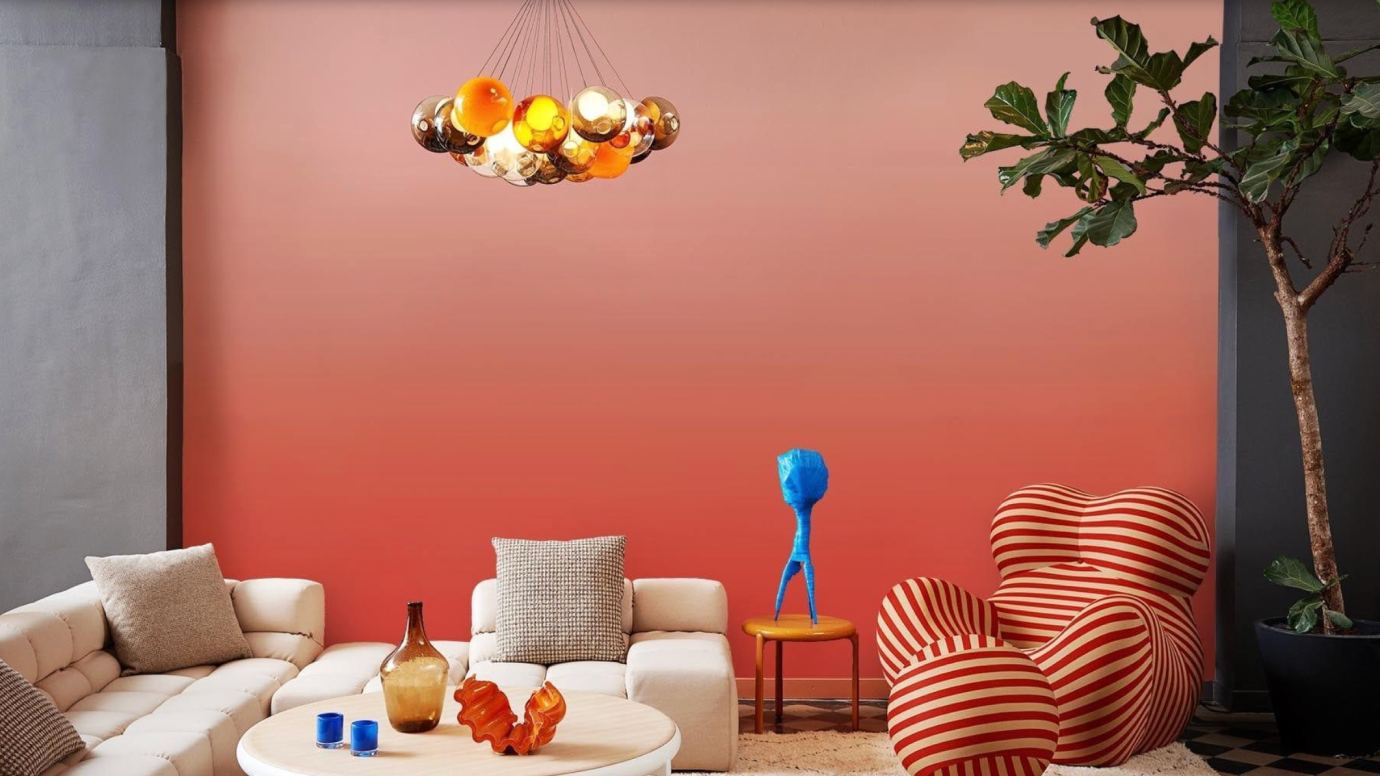
Thinking of adding more style and personality to your home? An accent wall is one of the easiest and most effective ways to transform any space. If you're looking for inspiration but aren't sure where to start, you've come to the right place.
In this guide, we've rounded up 25 stylish accent wall ideas that designers are leaning on in 2026. From trending colors, materials, textures, patterns, and wall art to room-specific inspiration and practical decorating tips, you will surely find inspiring clues to level up your project.
We've also introduced a helpful free AI interior design tool to help you quickly visualize and test your accent wall ideas easier than ever.
Design any room, shop or space with DecAI in less 30 seconds! It's free!
What Is an Accent Wall?
An accent wall, also known as a feature wall, is a single wall that stands out from the others through a different color, material, texture, pattern, or decorative treatment. Instead of redesigning an entire room, it creates a visual focal point that instantly draws attention and adds depth to the space.
In actual design cases, designers often use accent walls to:
- Highlight the room's natural focal point, such as behind a bed, sofa, fireplace, or dining table.
- Introduce color and texture without overwhelming the entire room.
- Add personality and visual interest while maintaining a balanced design.
- Make a room feel larger, warmer, or more luxurious with minimal effort.
Because only one wall is transformed, accent walls are also one of the most budget-friendly ways to refresh a room while making a significant visual impact. Of course, it is also a good way to add style and show your personality.
How to Choose The Right Accent Wall for Your Home Design Project?
Not every wall deserves to be the accent wall, and not every accent wall idea suits every room.
Here are afew things worth weighing before you commit:
- Pick the wall with the most visual weight. Usually this is the wall you see first when entering the room, the one behind a bed or sofa, or a wall with a built-in architectural feature like a fireplace or alcove.
- Consider natural light. Darker colors and richer materials read best on walls that get consistent light; a wall in permanent shadow can end up looking muddy rather than moody.
- Match the intensity to the room's function. Bedrooms and reading nooks often call for softer, calming accents, while living rooms, entryways, and dining rooms can handle bolder color or pattern.
- Think about the whole palette, not just one wall. The accent should relate to existing flooring, trim, and furniture — either through contrast or a shared undertone — rather than existing in isolation.
- Factor in longevity and budget. Paint is low-commitment and easy to change; wallpaper, millwork, stone, and paneling are higher-investment choices that should be selected with more certainty.
- Test before you commit. Lighting, scale, and material all look different on a wall than they do on a sample chip or product photo — which is why testing a design digitally before purchasing materials is one of the best habits a designer can build into their process.

25 Stylish Accent Wall Ideas for Designers in 2026
A great accent wall isn't just about looks—it solves a design challenge. Does the room need more warmth, depth, a stronger focal point, extra personality, or a cleaner backdrop for your furniture? Once you define the purpose of the wall, choosing the right finish becomes much easier.
To help you find the right inspiration quickly, we've organized these 25 accent wall ideas into 5 categories:
- 5 best accent wall color ideas
- 5 best accent wall material and texture ideas
- 5 best accent wall pattern and art ideas
- 5 best accent wall decorating ideas
- 5 best accent wall ideas by room type
5 Best Accent Wall Color Ideas
1. Warm Terracotta Accent Wall
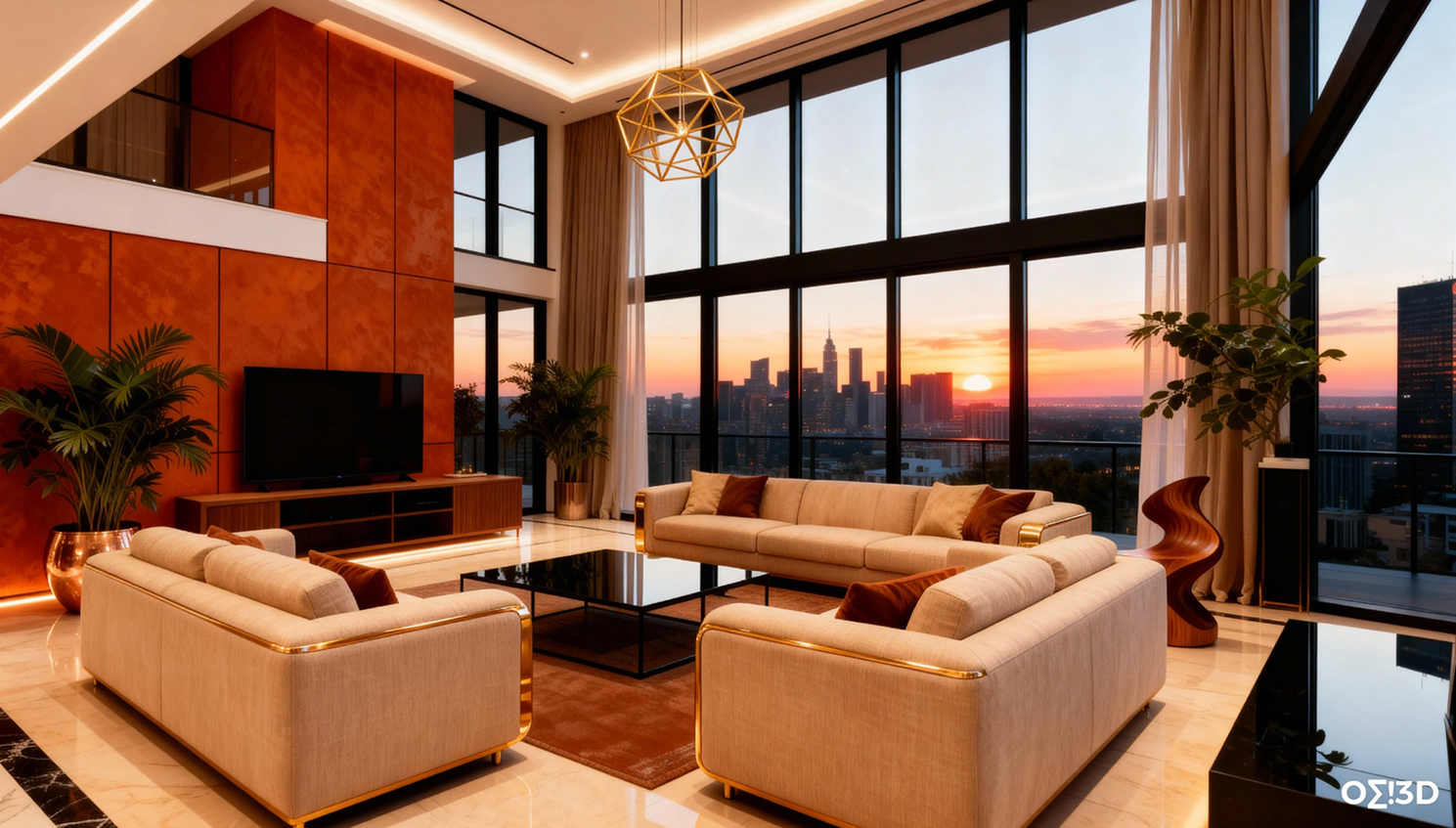
Warm terracotta accent wall behind a neutral sofa with linen pillows, stone side tables, and soft wall lighting, a design example from Om Mundankar.
A warm terracotta accent wall is one of the most useful color moves for 2026 because it feels rich without being loud. It works especially well in living rooms, dining rooms, boutique bedrooms, and hospitality-inspired spaces where the client wants warmth and character.
Unlike bright orange or rustic red, modern terracotta feels grounded when paired with cream upholstery, walnut, travertine, blackened metal, or plaster textures. A recent terracotta-focused interior project on Behance shows how this kind of earthy palette can feel urban, refined, and tactile rather than farmhouse-heavy.
Designer takeaway:
Use terracotta when a room feels too pale, too cold, or too visually thin, but keep the surrounding palette quiet so the wall feels intentional.
2. Deep Olive or Moss Green Accent Wall
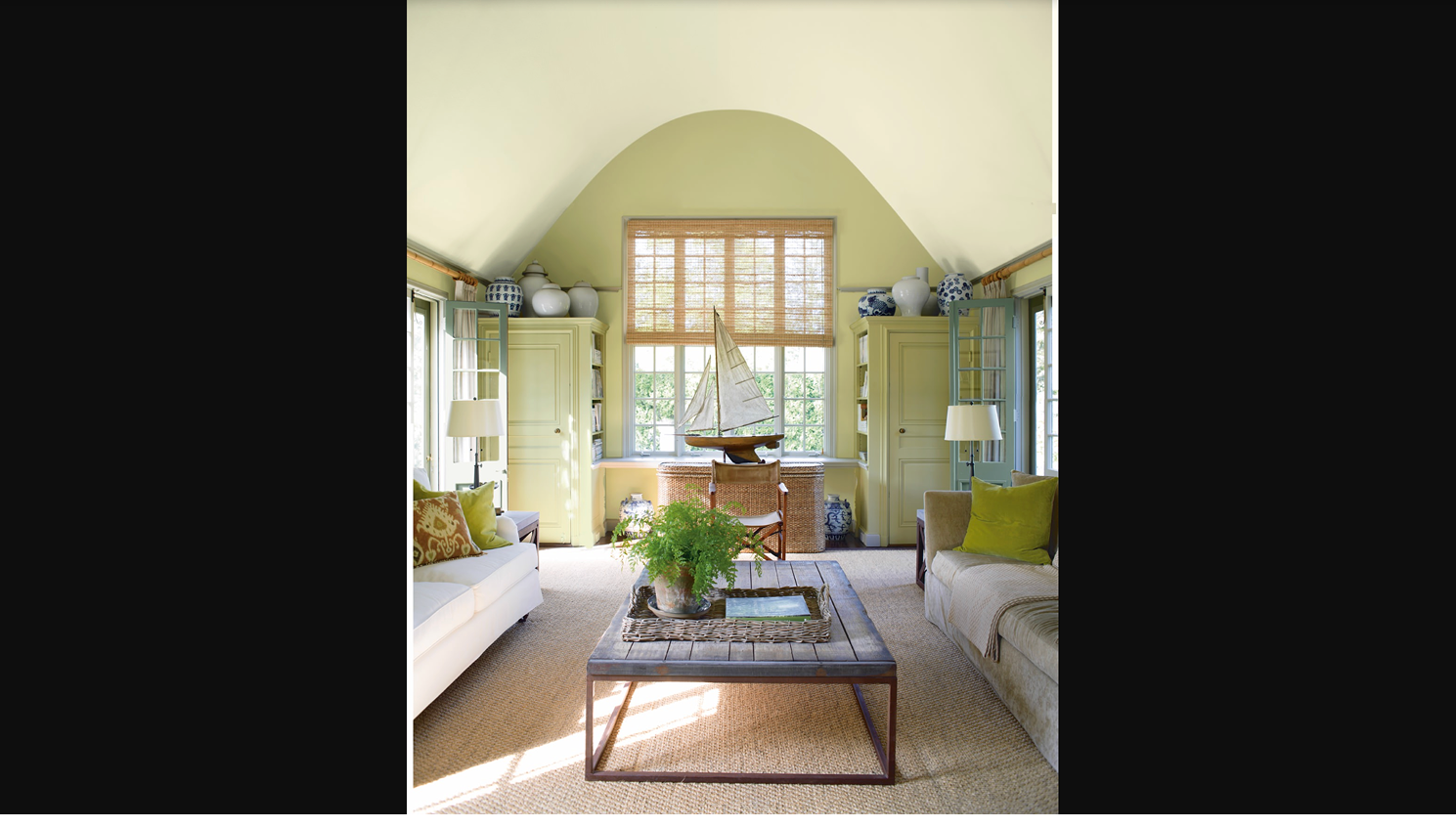
Deep olive green accent wall in a study with warm wood shelving, brass lighting, and a leather desk chair, a home wall design example from Benjamin Moore
Deep olive and moss green are stronger alternatives to the overused soft sage walls of the past few years. They feel mature, architectural, and flexible enough for studies, bedrooms, entryways, libraries, and cozy dining rooms.
These greens work especially well with walnut, antique brass, warm white trim, cream linen, and darker stone. They also help bring a natural feeling into city apartments without relying only on plants.
Designer takeaway:
Choose olive or moss green when the room needs calm and depth at the same time. It is especially useful for clients who want color but still fear anything too bright.
3. Chocolate Brown or Caramel Accent Wall
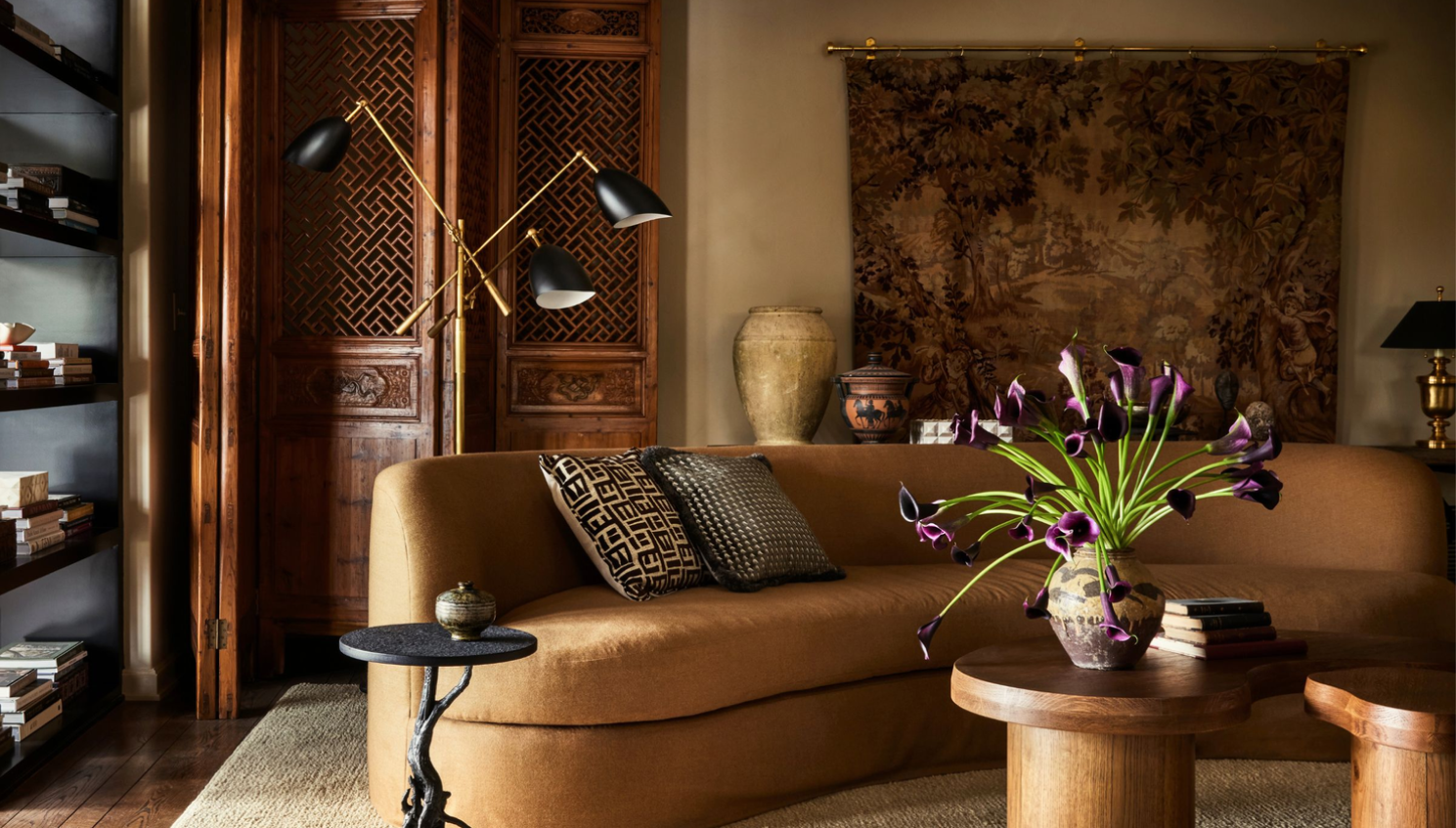
Chocolate brown accent wall behind a low-profile sofa with caramel leather, warm lighting, and textured neutral decor
Brown is no longer just a retro color. In 2026 interiors, chocolate, caramel, bronze, and coffee tones are becoming sophisticated alternatives to cold gray and flat beige. Homes & Gardens has noted the shift from gray toward warmer neutrals such as greige, green-toned neutrals, soft earthy pinks, and brown, which makes this color family especially relevant for accent walls.
A brown accent wall can make a media room, lounge, bedroom, or reading corner feel enveloping without going full dark-room dramatic.
Designer takeaway:
Use chocolate or caramel when you want the accent wall to feel like a luxury neutral, not a trendy color statement.
4. Soft Earthy Pink or Clay Accent Wall
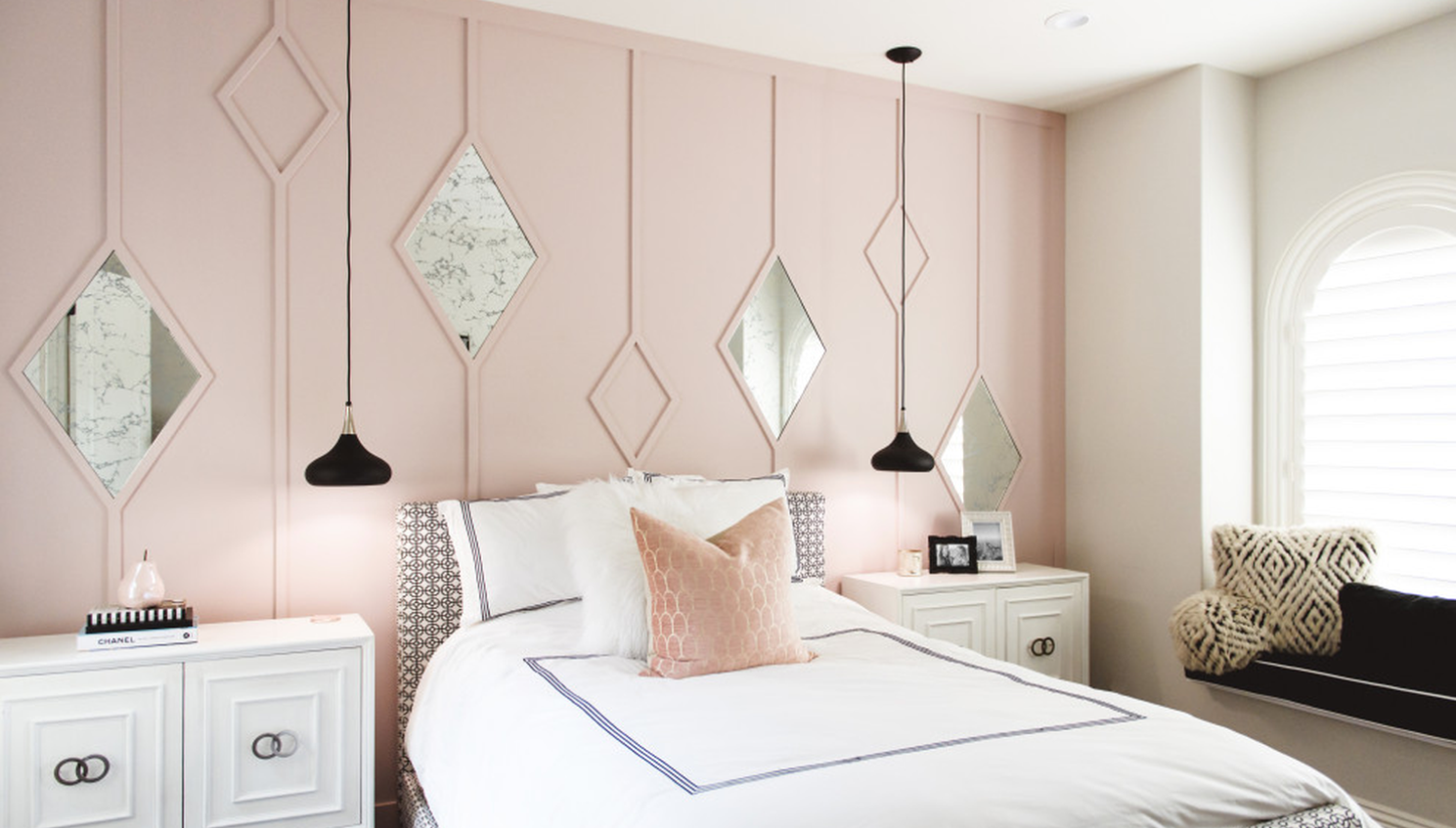
Soft clay pink bedroom accent wall behind a curved upholstered bed with warm white bedding and pale wood nightstand, an example from Sentimental Home
A clay pink accent wall is a smart choice for bedrooms, wellness spaces, powder rooms, nurseries, and soft modern interiors. The color adds warmth and emotional softness without turning the room sugary or overly feminine.
It pairs beautifully with limestone, oak, boucle, pale gray-green, cream, burgundy, and aged brass. In smaller rooms, clay pink can also make the space feel warmer and more personal than white while still staying calm.
Designer takeaway:
Use earthy pink when the room needs softness, but avoid pairing it with too many pastel accessories. Ground it with natural materials.
5. Gradient Tone Accent Wall
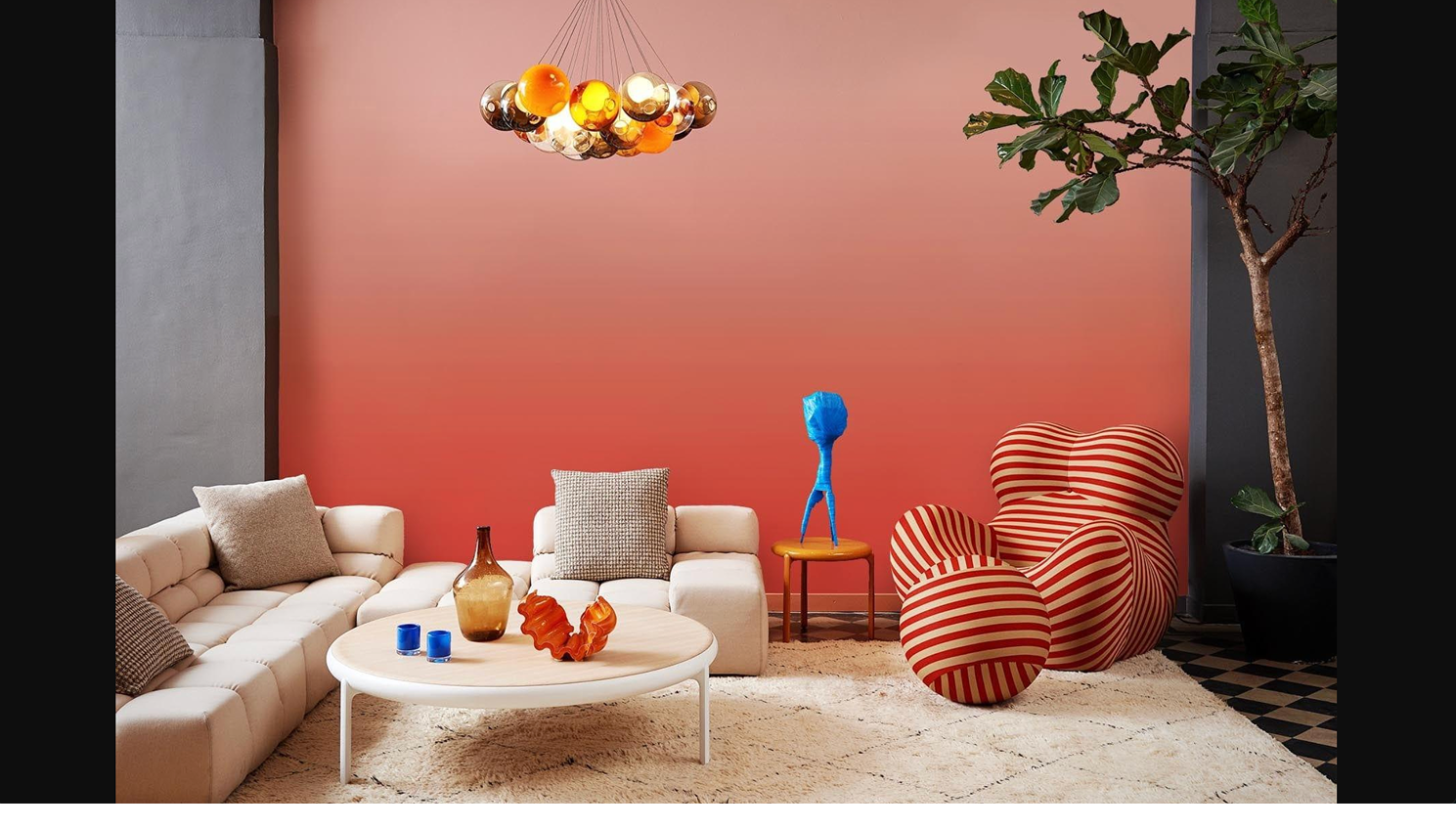 Alt: Gradient accent wall transitioning from deep warm red near the baseboard to a lighter organge tone near the ceiling
Gradient accent wall transitioning from deep warm red near the baseboard to a lighter organge tone near the ceiling, an red accent wall example from belartestudio.
Gradient walls are a more refined evolution of the older ombre wall. Better Homes & Gardens recently described gradient walls as a defining 2026 paint trend, especially when several related tones are used to create depth around architectural details.
Instead of one flat feature color, a gradient wall can move from deep to light across molding, trim, baseboards, or ceiling transitions. It is especially effective in larger rooms, creative studios, dining rooms, or spaces with strong architectural lines.
Designer takeaway:
Use a gradient wall when a plain painted accent wall feels too simple, but keep all colors in the same undertone family for a polished result.
5 Best Accent Wall Material & Texture Ideas
6. Limewash or Textured Plaster Wall
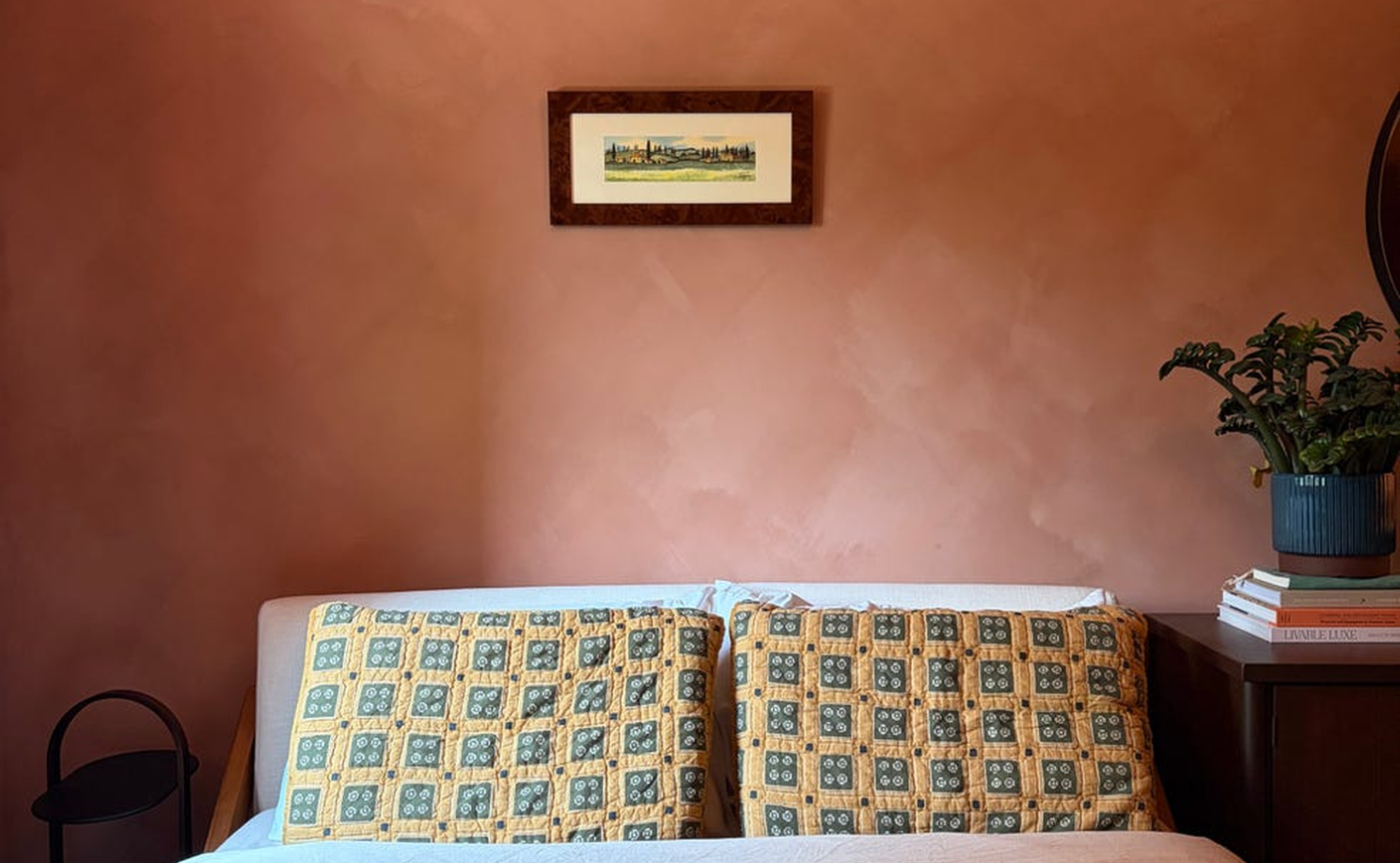
Limewash accent wall in a neutral living room with soft shadows, curved furniture, and natural wood details
Limewash and textured plaster are ideal when a room needs depth but not a strong pattern. The subtle movement in the finish makes the wall feel handmade, atmospheric, and more expensive than a standard painted surface.
This works beautifully in Mediterranean, wabi-sabi, organic modern, warm minimalist, and boutique hotel-style interiors. It is also a strong option for clients who want an accent wall that ages gracefully.
Designer takeaway:
Use limewash or plaster when you want the wall to hold light and shadow. It is best for mood, not sharp contrast.
7. Vertical Wood Slat Accent Wall
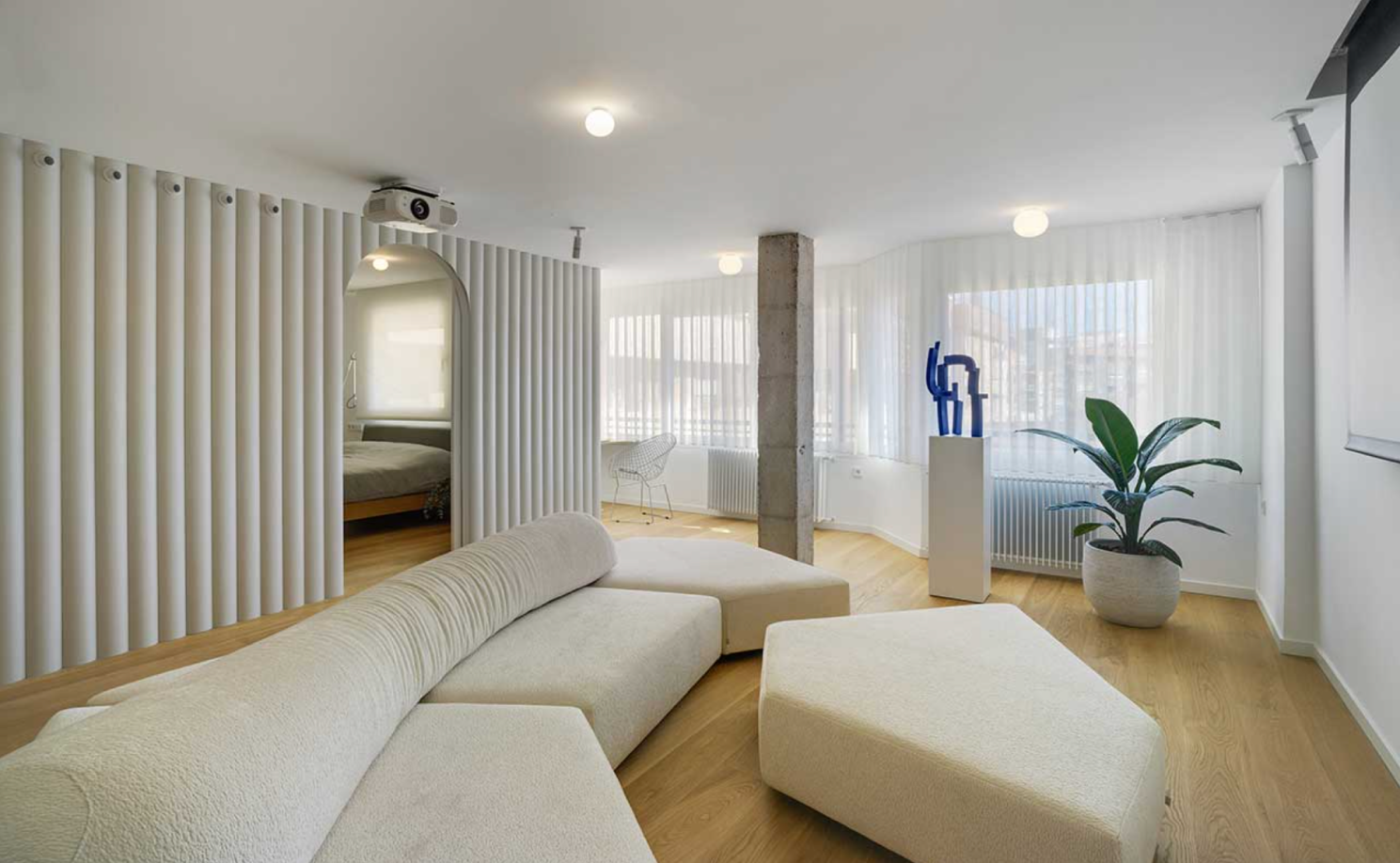
Vertical wood slat accent wall behind a media console with warm LED lighting and neutral modern furniture, an interior design project from Desig milk.
Wood slats remain useful because they solve several design problems at once. They add warmth, vertical rhythm, acoustic softness, and a sense of custom architecture. A 2026 ArchDaily apartment project used birch wood and slats to filter views and create privacy, showing how slatted elements can be both decorative and functional. In residential interiors, a slat accent wall works well behind TVs, beds, consoles, and entry benches.
Designer takeaway:
Use vertical slats when the wall needs structure, warmth, or height. Avoid overly thin, closely spaced slats if the room already has many vertical lines.
8. Stone or Marble Feature Wall
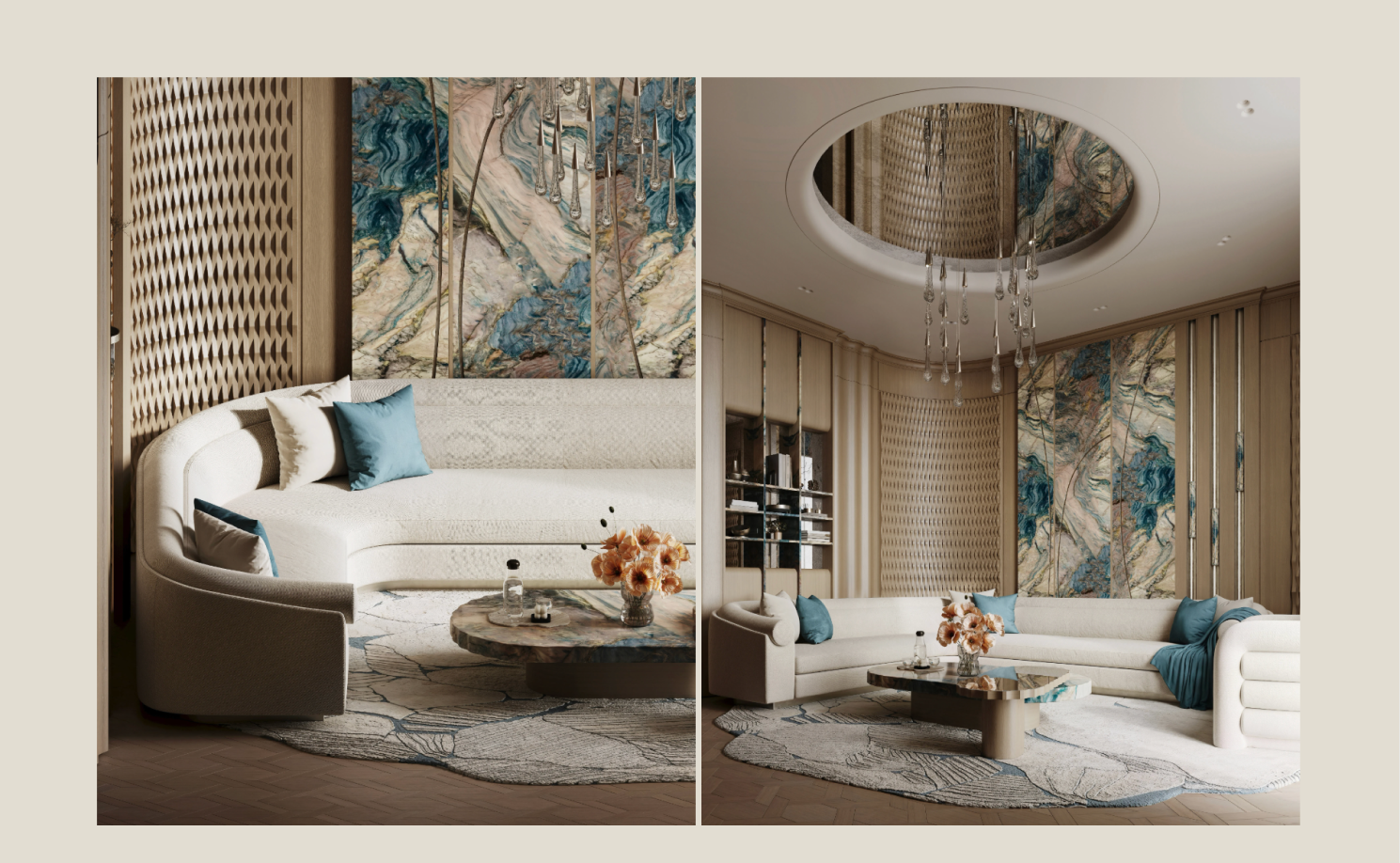
Marble accent wall behind a low media unit with sculptural furniture, neutral rugs, and warm indirect lighting, an marble accent wall design example from mrelshipli.
Stone and marble accent walls work best when the room needs a strong architectural focal point. They are especially suitable for fireplaces, formal living rooms, luxury bedrooms, bathrooms, reception areas, and hospitality spaces.
A recent Behance luxury living project uses a marble panel with a parametric wood feature wall, showing how stone can become the visual anchor when balanced with warmer materials. The key is restraint: too much polished stone can quickly feel cold or showroom-like.
Designer takeaway:
Use stone when the wall should feel permanent and high-value. Pair it with soft textiles and warm light to keep it livable.
9. Upholstered or Fabric Accent Wall
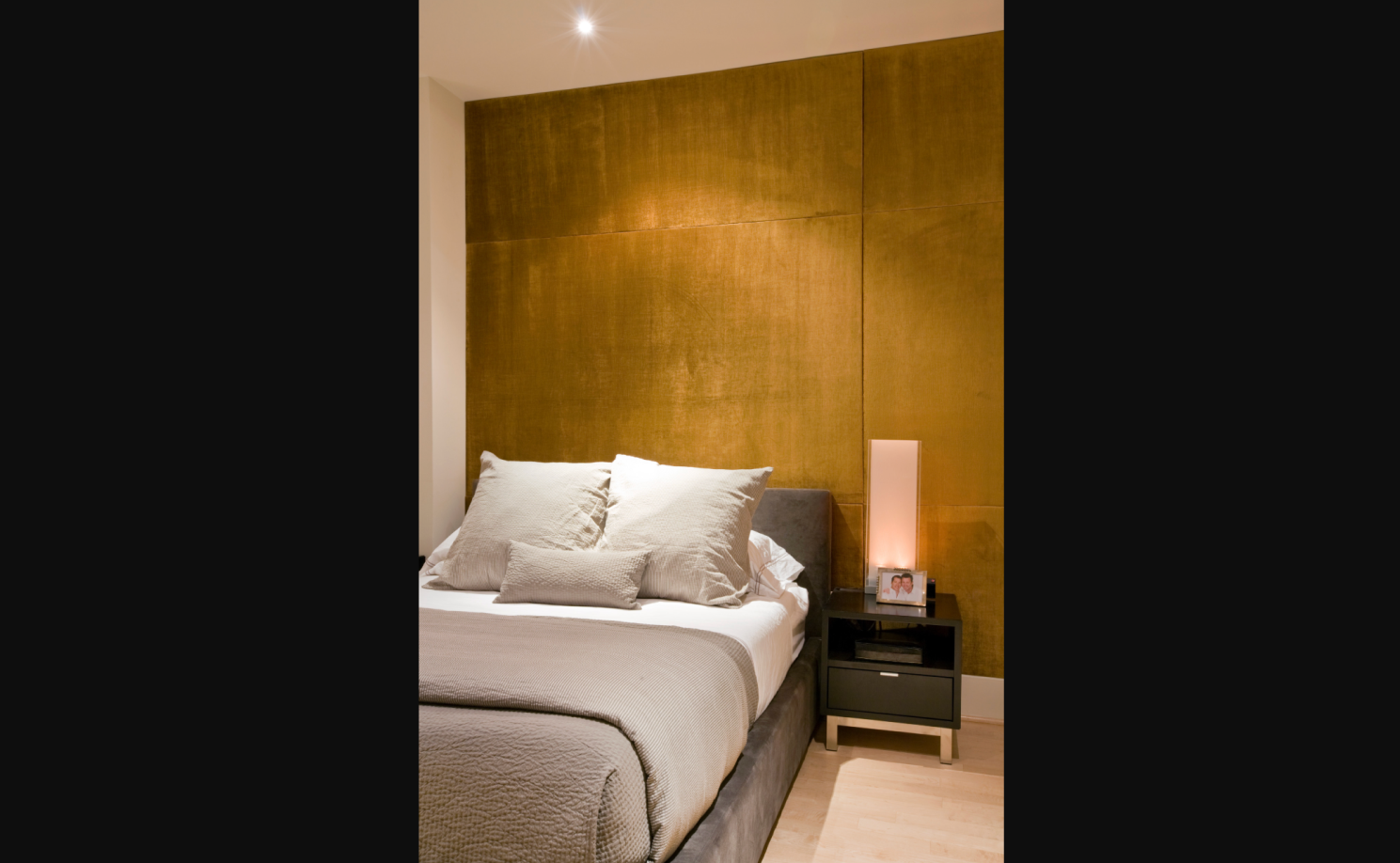
Upholstered fabric accent wall behind a bed with vertical panels, layered bedding, and warm bedside sconces, an accent wall example from Ernesto Santalla PLLC.
An upholstered accent wall is one of the best designer moves for bedrooms, hotel suites, nurseries, and media rooms. It adds softness, sound absorption, and a tailored custom look. Fabric panels can be vertical, grid-based, channel-tufted, or wrapped as an oversized headboard. This idea is especially helpful when a client wants luxury but does not want stone, wallpaper, or strong paint.
Designer takeaway:
Use upholstered panels when comfort is part of the design goal. Choose performance fabrics in homes with children, pets, or heavy use.
10. Fluted, Ribbed, or Parametric Wall Panel
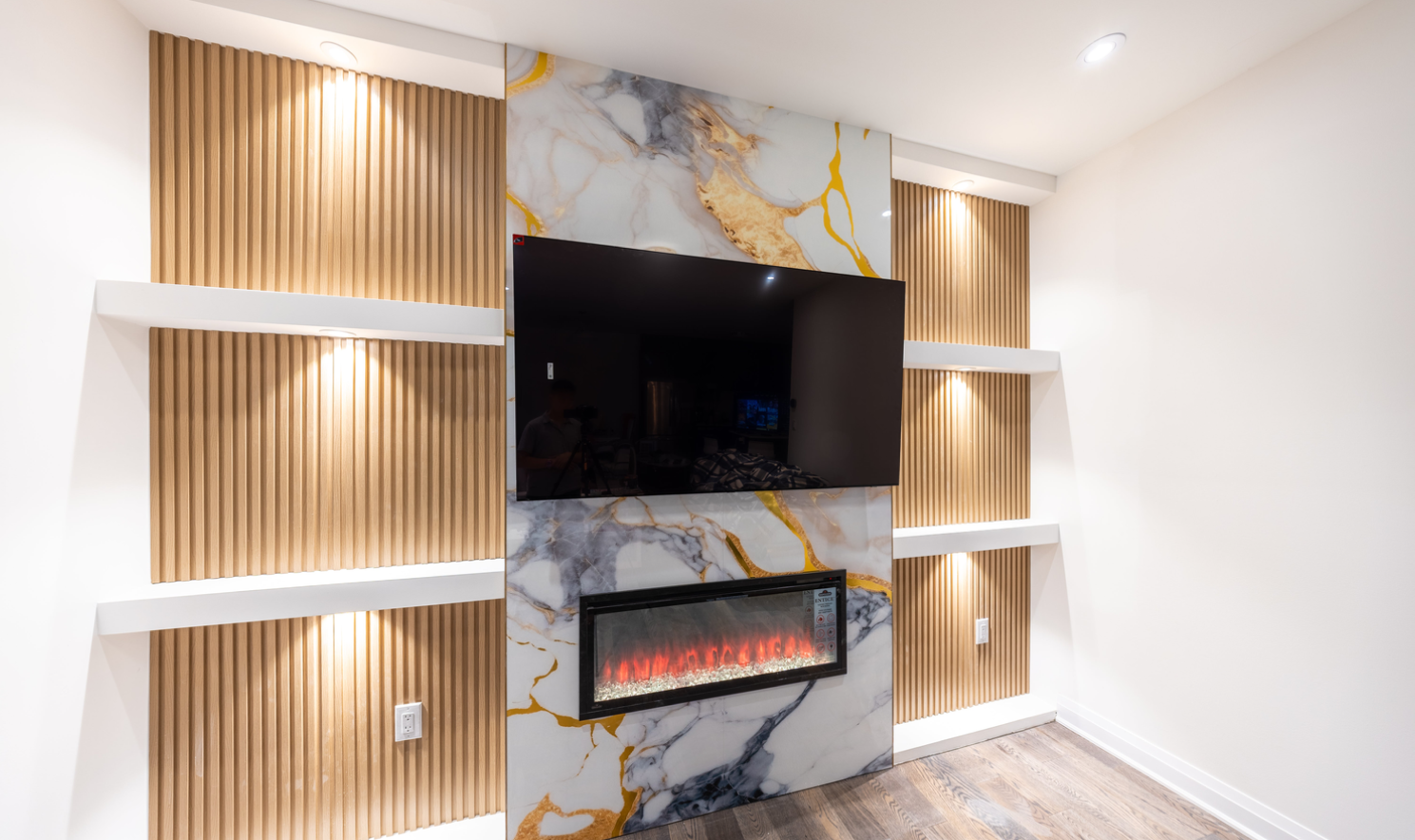
Fluted wall panel accent behind a TV with curved wood details, marble insert, and soft cove lighting
Fluted and ribbed wall panels give a room movement through shadow rather than color. They are excellent for contemporary luxury, commercial lounges, modern apartments, and statement media walls.
Parametric panels can feel especially sculptural when they frame a marble insert, fireplace, or built-in console. The challenge is scale: if the pattern is too busy, it can compete with furniture and lighting.
Designer takeaway:
Use ribbed or parametric walls when the project needs drama without bright color. Keep accessories minimal around the wall.
5 Best Accent Wall Pattern and Art Ideas
11. Large-Scale Wallpaper Accent Wall
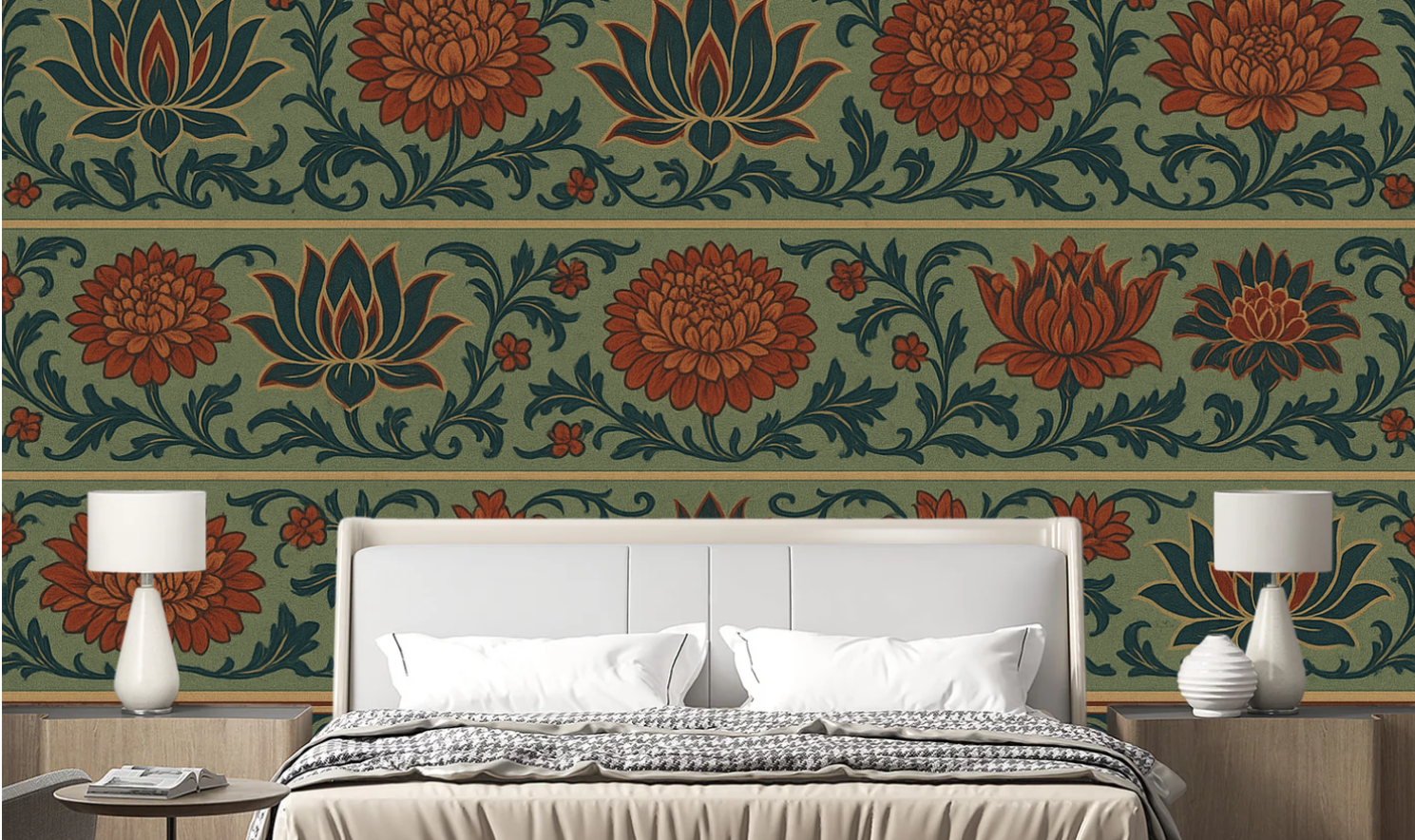
Large-scale botanical wallpaper accent wall behind a dining table with upholstered chairs and a warm pendant light
Wallpaper is one of the easiest ways to make an accent wall feel complete because color, pattern, and mood arrive together. In 2026, the stronger direction is large-scale, expressive, and room-specific rather than tiny repetitive prints used without context.
The Spruce has reported a return of wallpapered and color-drenched rooms, especially as interiors move toward personality and emotional connection. A wallpaper accent wall works well in dining rooms, bedrooms, powder rooms, kitchens, and entryways.
Designer takeaway:
Use wallpaper when the wall needs story, not just color. Pull at least two colors from the wallpaper into furniture or decor.
12. Mural-Style Accent Wall
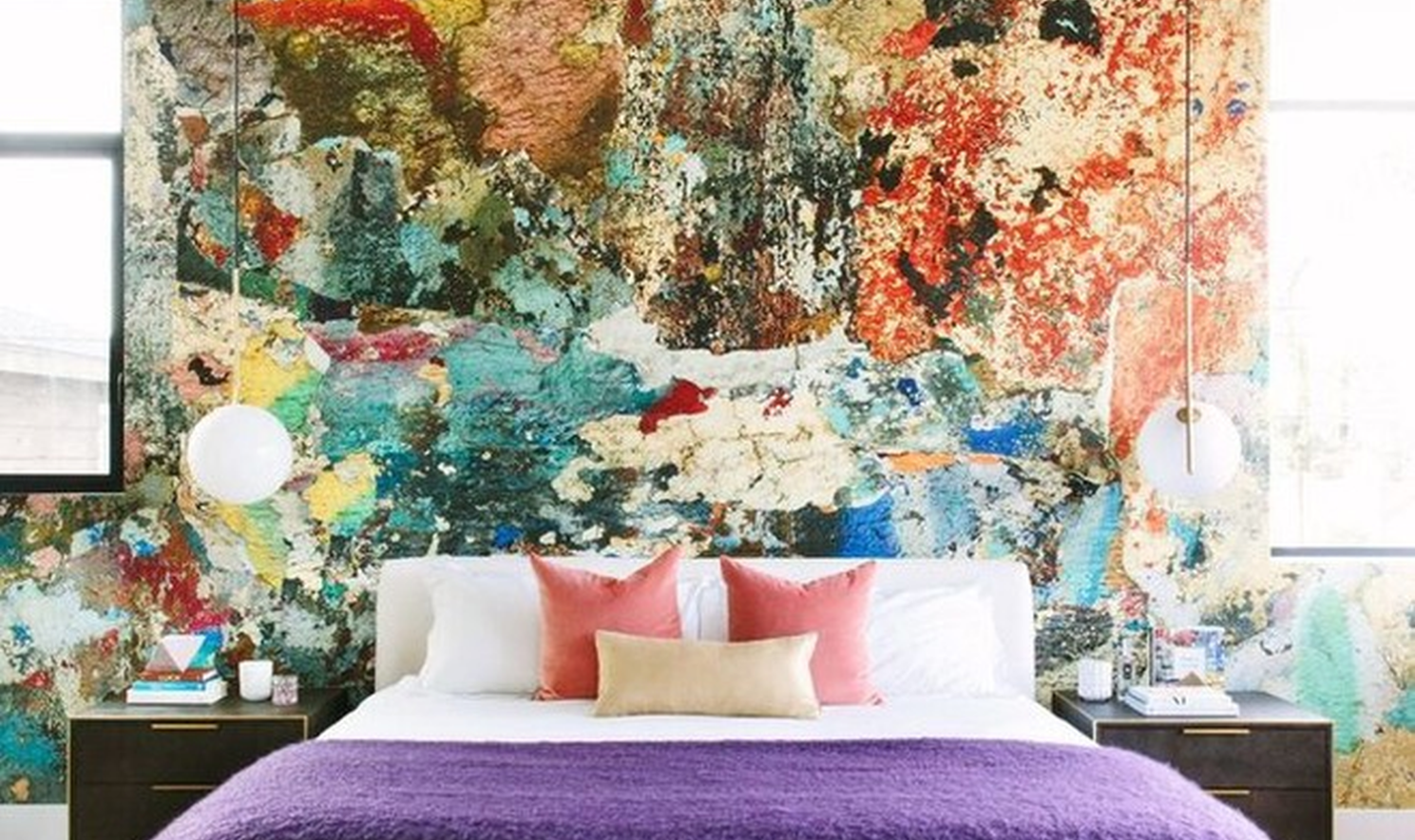
Mural accent wall with abstract landscape shapes behind a curved sofa and low sculptural coffee table
A mural wall is more immersive than wallpaper because it can create a scene, brand mood, or one-of-a-kind focal point. It is especially useful for kids’ rooms, cafés, creative studios, restaurants, home gyms, and bold bedrooms. The best mural walls are not just decorative; they support the purpose of the space. For example, a soft landscape mural can make a bedroom restful, while a graphic mural can energize a commercial interior.
Designer takeaway:
Use murals when the wall needs identity. Avoid generic murals that could belong in any room.
13. Oversized Artwork Wall
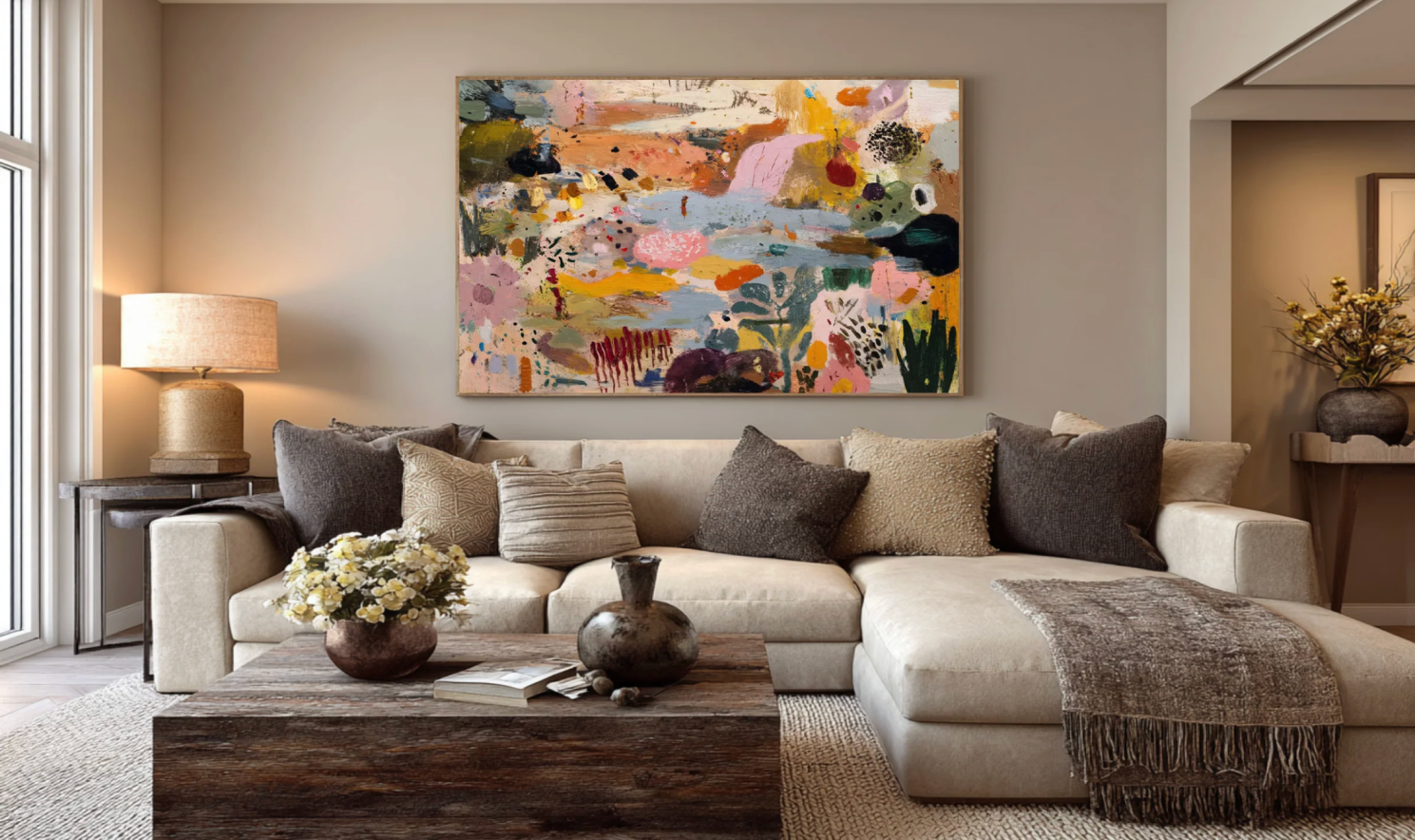
Oversized abstract artwork on a soft white wall above a sofa with comfortable pillows and planets
Sometimes the best accent wall is not a wall finish at all. A single oversized artwork can create the focal point while keeping the surface flexible for future changes.
Architectural Digest highlights how art can define a living room, with walls kept quiet so bold pieces can stand out. This is a great choice for collectors, renters, staging projects, and clients who like to refresh their interiors over time.
Designer takeaway:
Use oversized art when the room needs focus but the client does not want a permanent finish. Size matters more than quantity.
14. Curated Gallery Wall
Design any room, shop or space with DecAI in less 30 seconds! It's free!
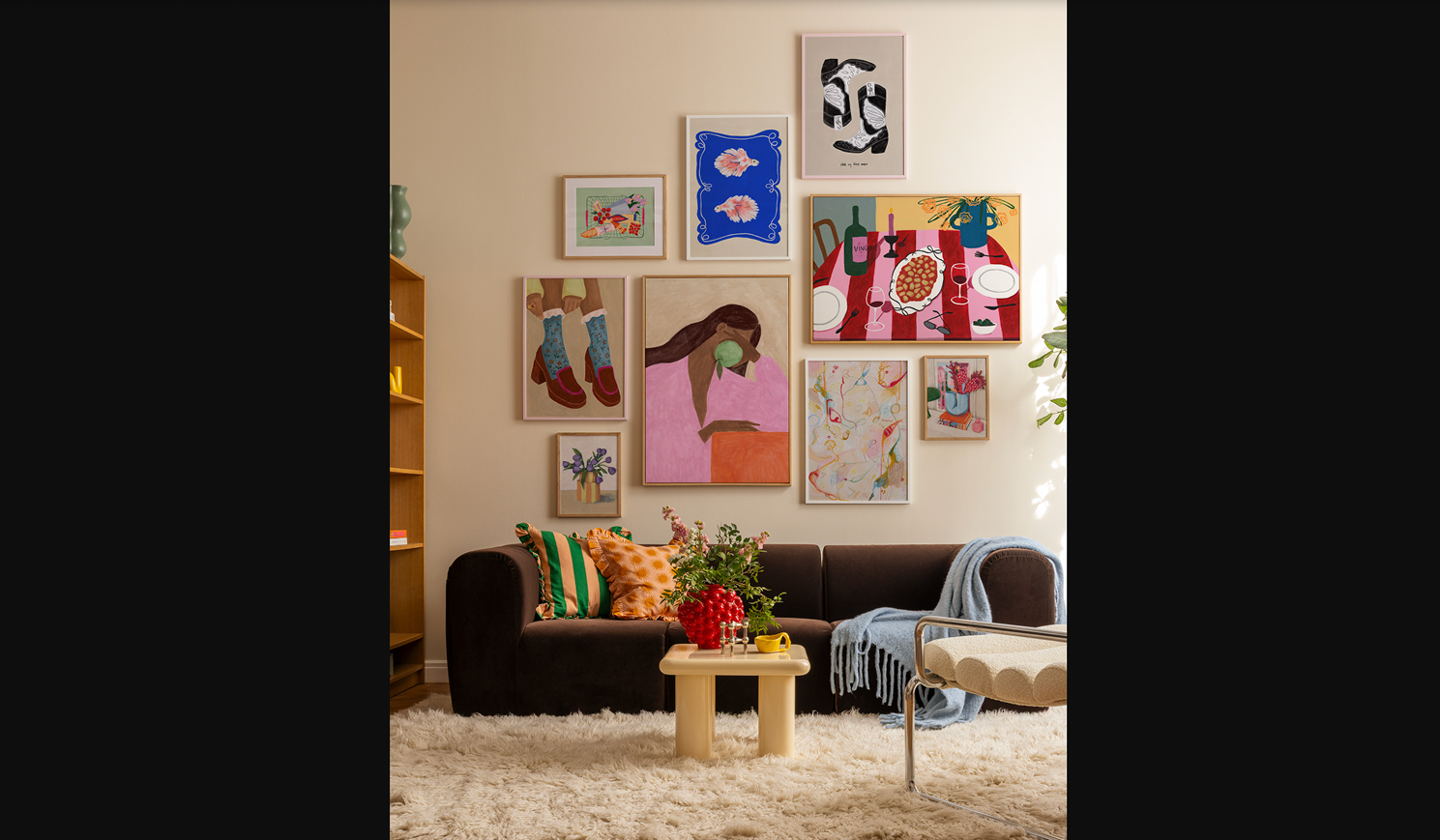
Curated gallery wall with mixed frames, folk art, and a warm neutral sofa below
A gallery wall works when it feels collected, not mass-produced. It can make family rooms, stairways, hallways, and eclectic living rooms feel personal and layered. The trick is to create order through spacing, frame tone, color palette, or subject matter, even if the pieces themselves vary. This makes the wall feel intentional rather than cluttered.
Designer takeaway:
Use gallery walls for personality-rich projects. Start with one anchor piece, then build outward with consistent spacing.
15. Geometric Painted Pattern Wall
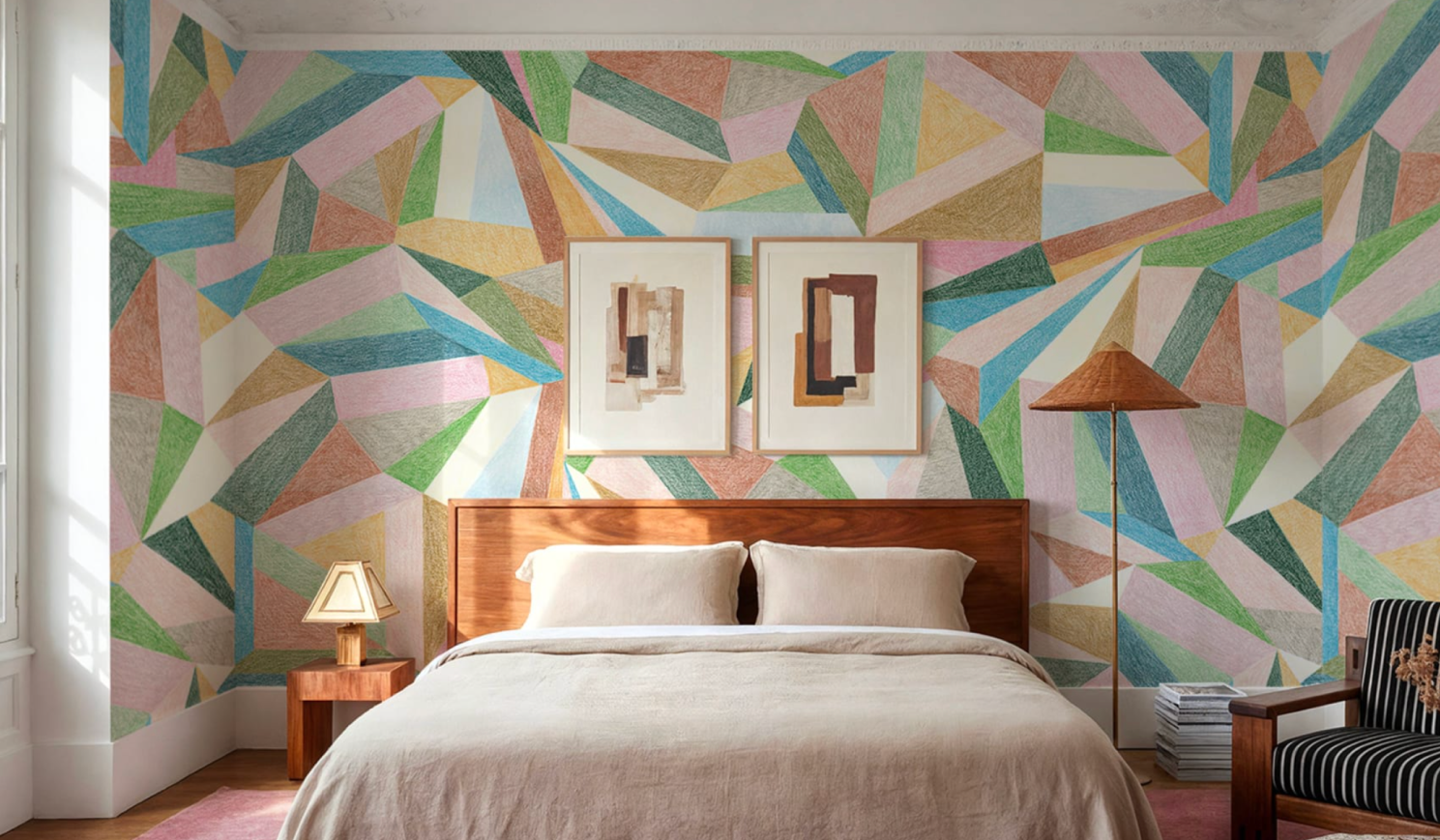
Geometric painted accent wall with muted green, yellow and clay shapes in a bedroom
A geometric painted wall is budget-friendly, customizable, and useful for modern apartments, home offices, playrooms, and creative corners. The 2026 version should be softer and more architectural than the sharp, high-contrast graphics that dominated older DIY content.
Muted colors, curved blocks, arches, or tone-on-tone geometry tend to age better. This approach also lets designers echo shapes already present in furniture or lighting.
Designer takeaway:
Use geometric paint when the budget is limited but the room still needs energy. Keep the palette restrained.
5 Best Accent Wall Decorating Ideas
16. Accent Wall With Floating Shelves
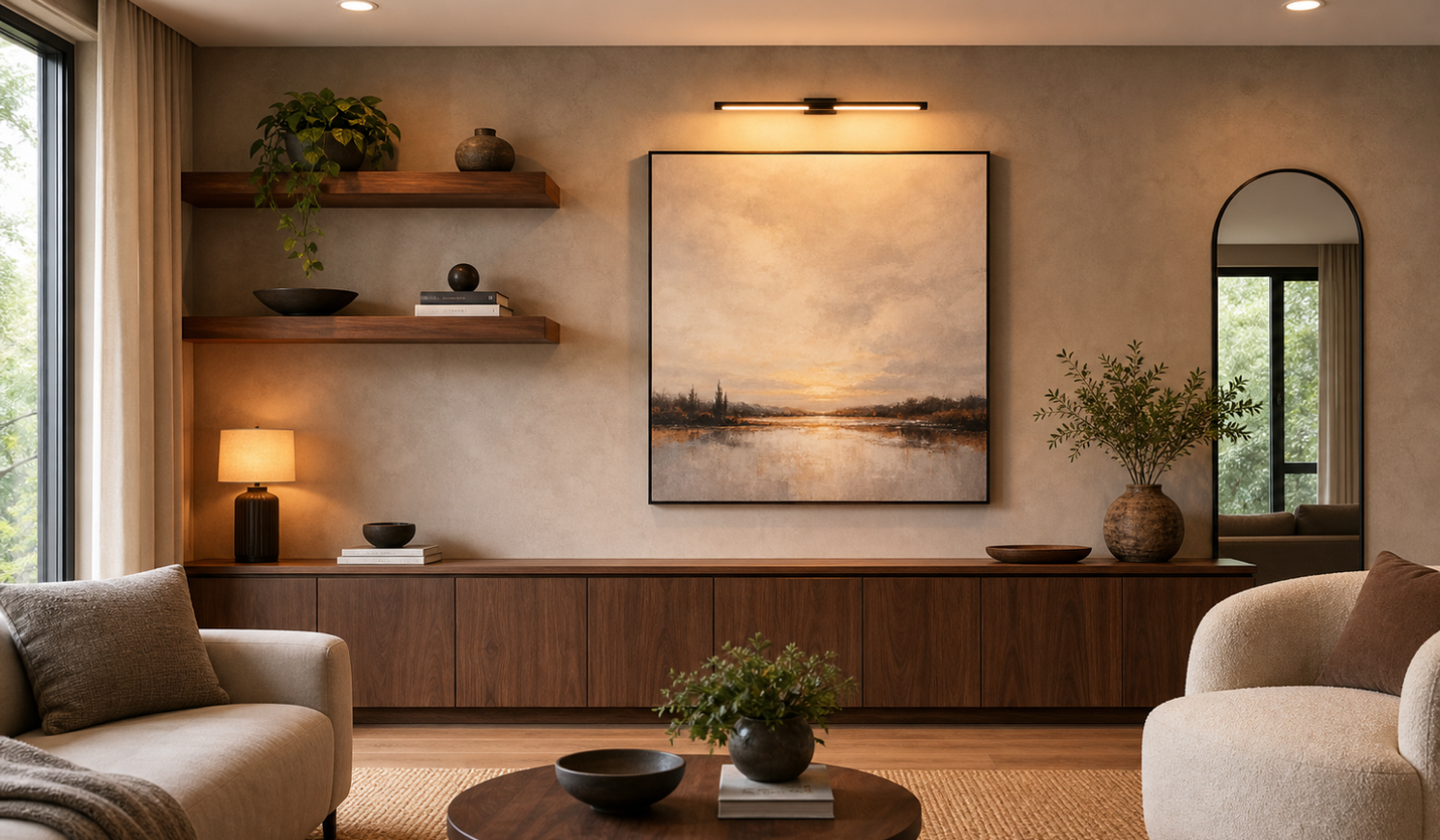
Floating shelves on a warm neutral accent wall with ceramics, books, small artwork, and integrated lighting
Floating shelves can turn an accent wall into both storage and display. This works well in living rooms, kitchens, home offices, reading corners, and small apartments where every wall needs to earn its place.
The key is editing: shelves should not become a dumping ground for objects. Use a mix of books, ceramics, framed art, plants, and negative space.
Designer takeaway:
Use shelves when the wall needs function and personality. Style fewer objects with stronger shapes.
17. Accent Wall With Statement Lighting
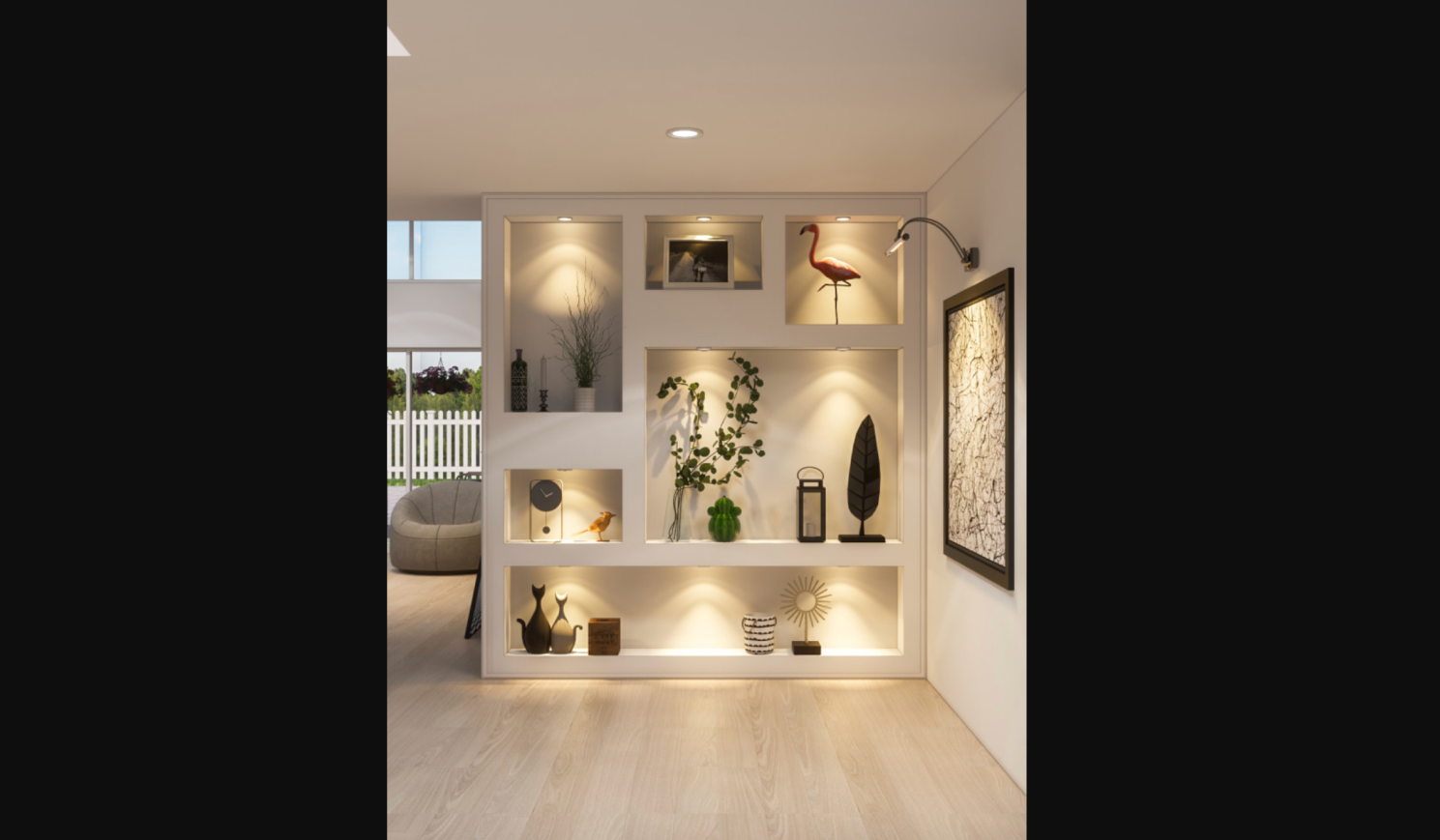
The white shelf style accent wall with warmer yellow lightning, helping to stand out the displays easily
Lighting can make an accent wall feel designed even when the finish is simple. Sconces, picture lights, LED strips, or concealed cove lighting can emphasize texture, art, paneling, or shelves.
This is especially effective in bedrooms, dining rooms, hallways, lounge spaces, and media walls. Light also helps the accent wall work at night, not just in daytime photos.
Designer takeaway:
Use lighting when the accent wall needs atmosphere. Test shadows carefully if the wall has texture.
18. Fireplace Accent Wall
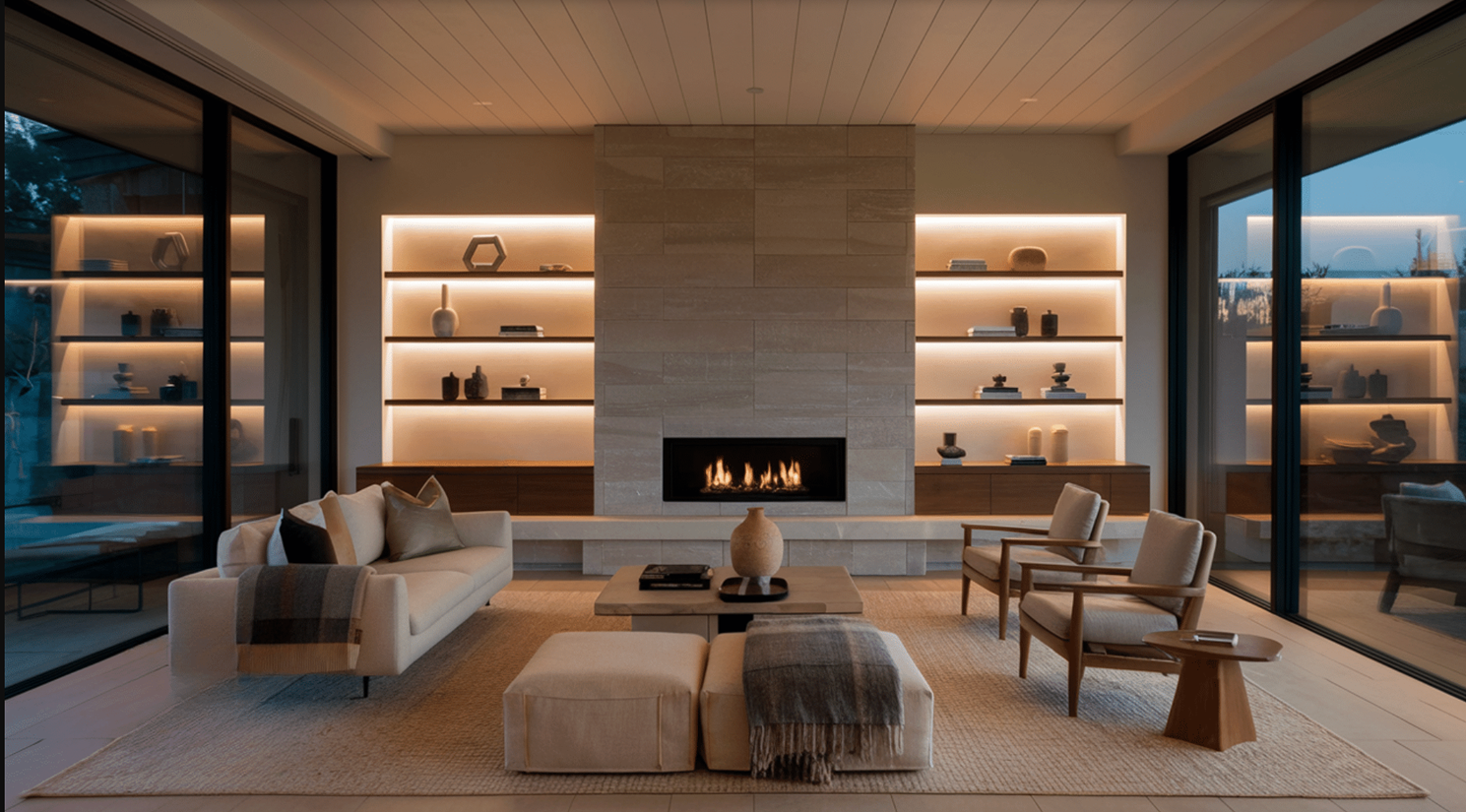
Fireplace accent wall with stone surround, built-in shelving and soft neutral seating
A fireplace wall is often the most natural accent wall because the architecture already gives the room a focal point. Instead of inventing a competing feature, designers can enhance the fireplace with stone, tile, plaster, paneling, paint, built-ins, or artwork. The accent wall example also points to highlighting existing architectural features as a useful approach. This is especially smart in living rooms, cabins, traditional homes, and open-plan spaces.
Designer takeaway:
Use the fireplace wall when the room already wants to face it. Do not create a second focal wall across the room unless there is a clear reason.
19. Built-In Storage Accent Wall
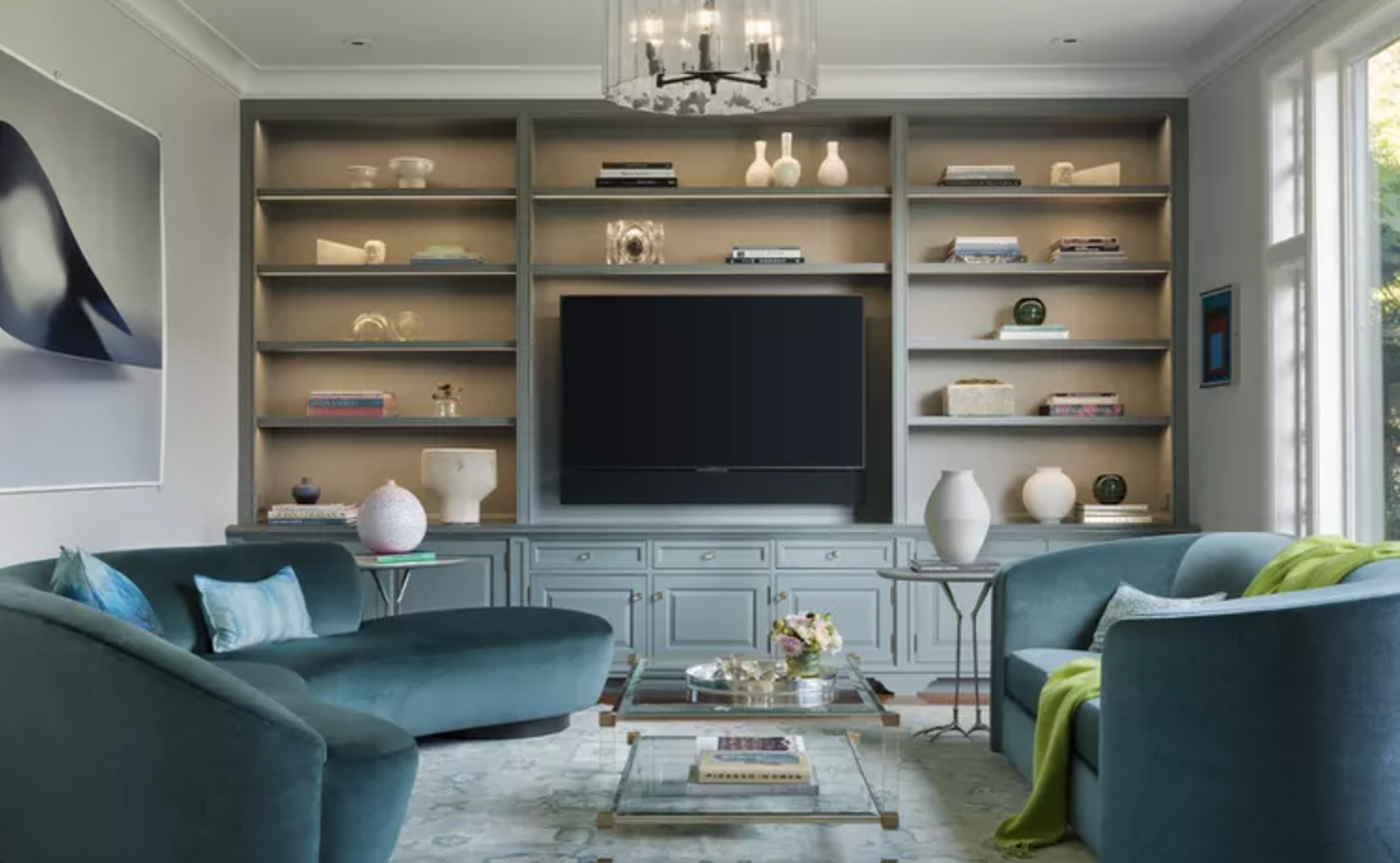
Built-in storage accent wall with closed lower cabinets, open shelves, and warm wood paneling, from Kendall Wilkinson Design
Built-ins make an accent wall feel architectural and useful. They are ideal for family rooms, home offices, media rooms, playrooms, and small apartments where storage is a real design need. A built-in accent wall can combine closed cabinets, open display shelves, lighting, a desk niche, or a media center.
The result is more permanent than a paint feature, but also more valuable.
Designer takeaway:
Use built-ins when the client needs storage and a focal point. Plan proportions before choosing finishes.
20. Mirror Accent Wall or Reflective Detail Wall

Entryway accent wall with a large antique mirror, slim console table, wall sconces, and warm neutral paint
Mirrors can make narrow rooms, dark entries, and dining spaces feel brighter and deeper. The modern version is not a full mirrored wall from floor to ceiling; it is more selective and architectural.
Think oversized antique mirror, smoked mirror panels, ribbed mirror inserts, or mirror framed inside paneling. Used carefully, it adds light without feeling dated.
Designer takeaway:
Use mirrors when the wall needs depth or brightness. Avoid reflecting clutter, doors, or awkward ceiling fixtures.
5 Best Accent Wall Ideas by Room Type
21. Living Room Accent Wall
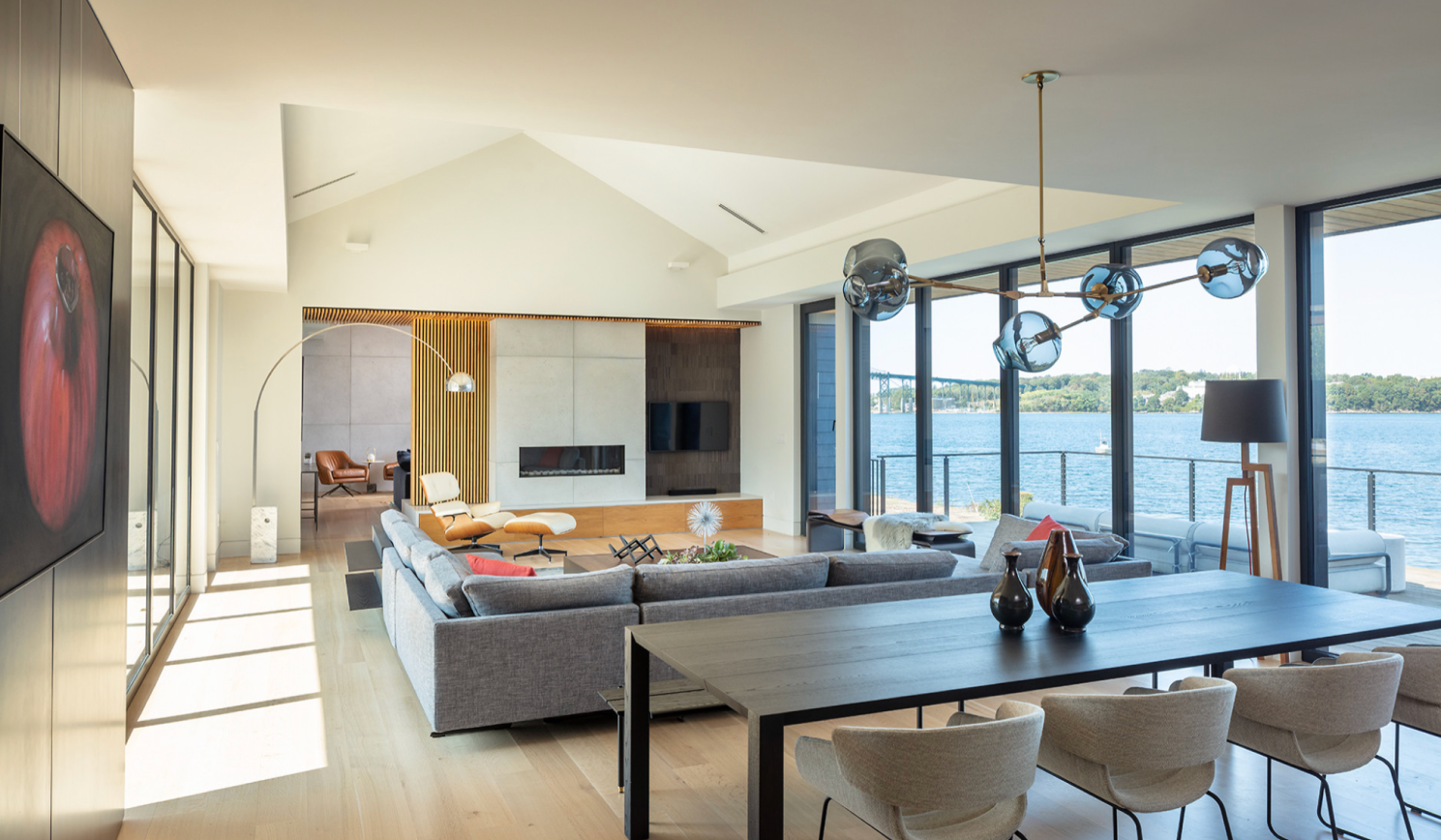
Living room accent wall behind a sofa with textured plaster, oversized artwork, warm wood furniture, and layered lighting
The best living room accent wall is usually the fireplace wall, media wall, or the wall behind the main sofa. This is where the eye naturally lands, so the wall should support the seating arrangement rather than fight it. Strong options include limewash, wood slats, stone, oversized art, or built-ins. If the room already has a bold rug or colorful furniture, keep the wall quieter.
Designer takeaway:
In living rooms, the accent wall should organize the space. It should not be the only interesting thing in the room.
22. Bedroom Accent Wall
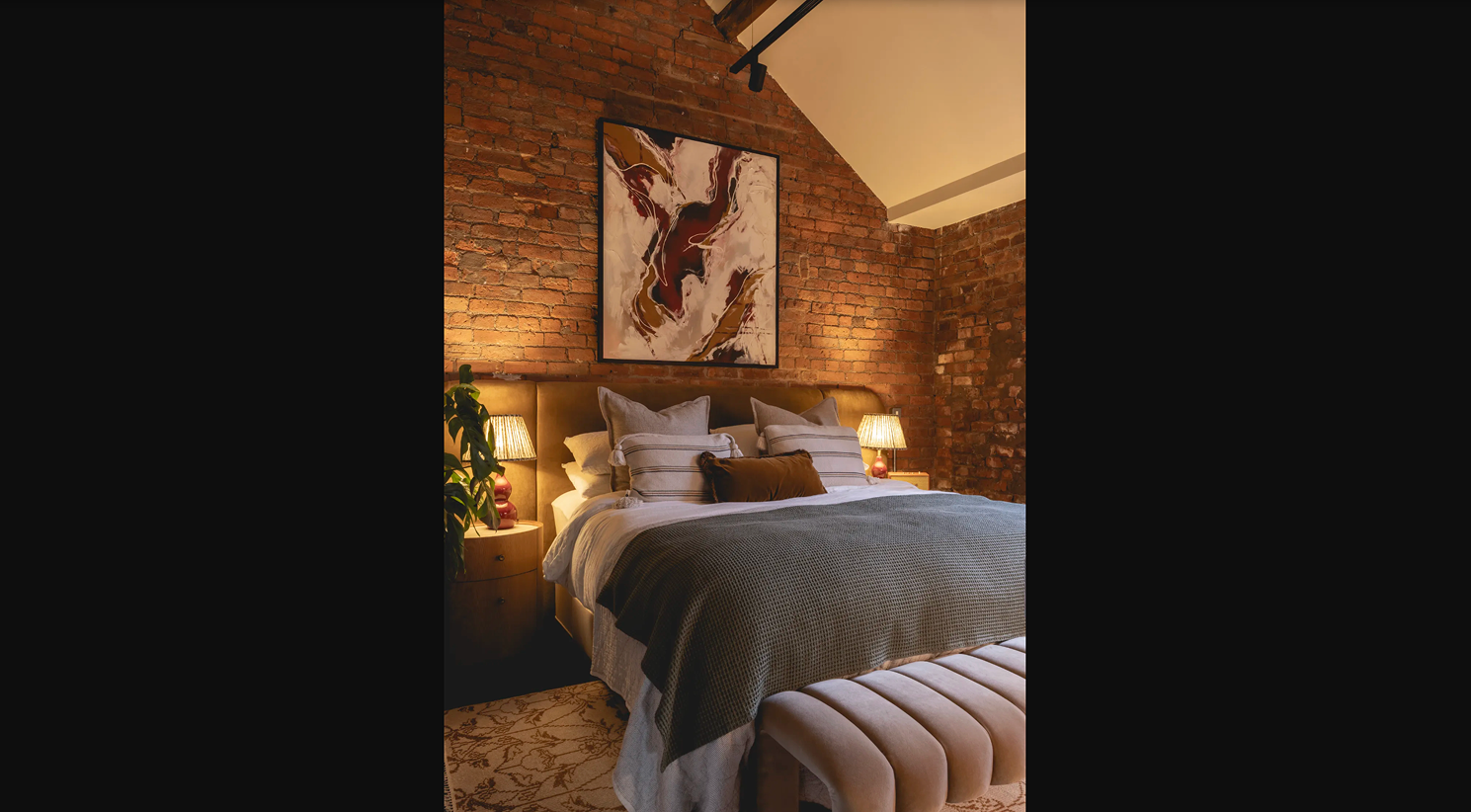
Bedroom accent wall behind a bed with upholstered panels, soft clay paint, warm lamps, and layered bedding
A bedroom accent wall almost always works best behind the headboard. This placement creates a visual anchor and makes the bed feel more intentional.
Good treatments include upholstered panels, wallpaper, limewash, warm paint, wood veneer, or soft vertical paneling. Because bedrooms need rest, avoid overly loud patterns unless the client specifically wants a dramatic boutique hotel feel.
Designer takeaway:
In bedrooms, the wall should calm the room, not overperform.
23. Kitchen Accent Wall

Kitchen accent wall with handmade tile backsplash, open wood shelves, warm white cabinets, and muted green details
Kitchen accent walls need more practical thinking than living room walls. Heat, moisture, cleaning, and splash zones matter. Good ideas include handmade tile, stone backsplash slabs, painted pantry walls, open shelving walls, wallpaper in low-splash breakfast nooks, or a color-blocked cabinet wall. The strongest kitchen accent walls look integrated with cabinetry, hardware, and countertops.
Designer takeaway:
In kitchens, durability beats novelty. Make the accent wall part of the working room.
24. Home Office Accent Wall
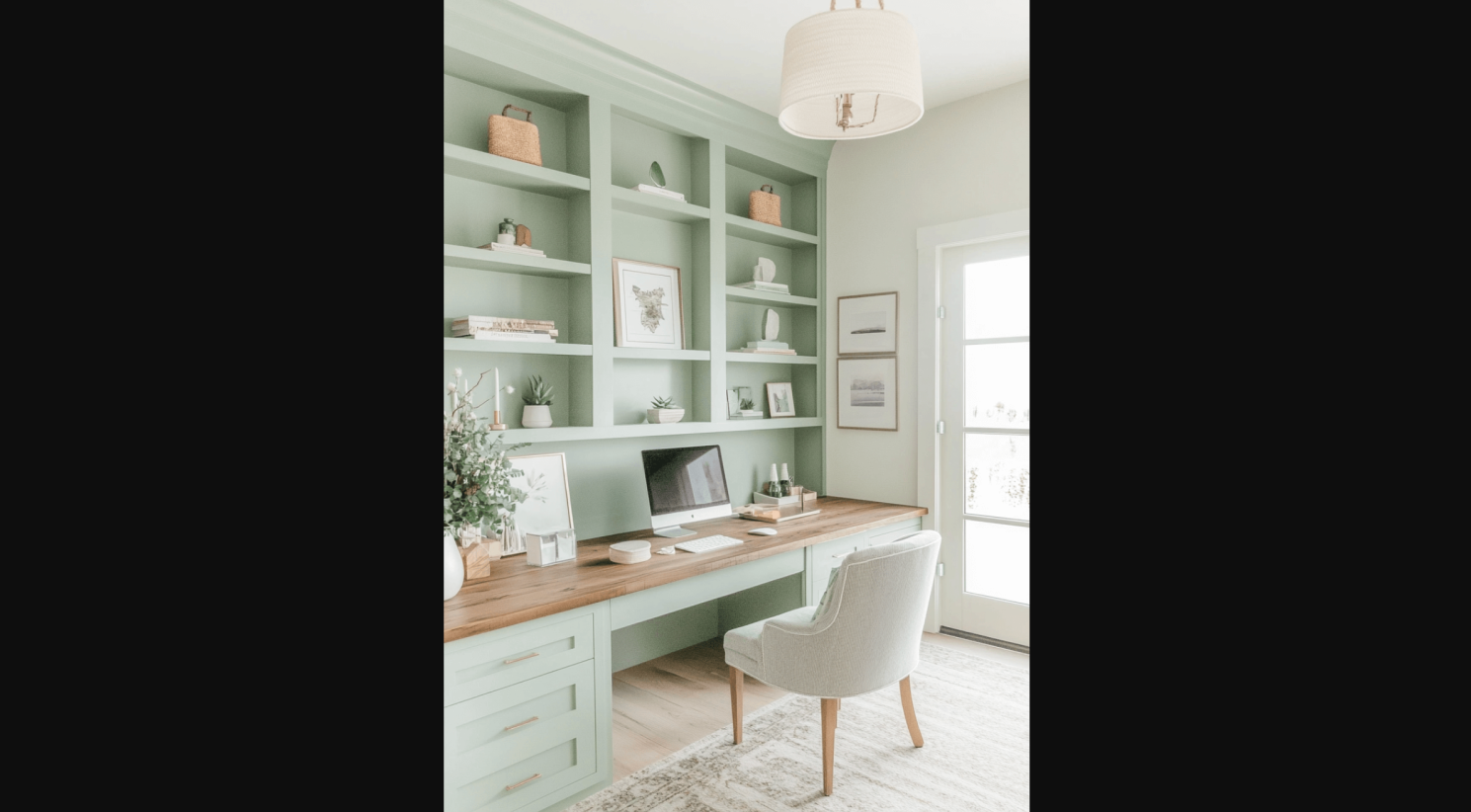
Home office accent wall behind a desk with muted olive paint, built-in shelves, task lighting, and framed art
A home office accent wall often doubles as a video-call background, so it needs to look polished without being distracting. Muted colors, built-in shelves, acoustic panels, framed artwork, or wood slats work especially well. Avoid overly busy wallpaper behind the desk if the client spends a lot of time on camera. The goal is quiet authority.
Designer takeaway:
In offices, choose an accent wall that supports focus and credibility.
25. Entryway or Hallway Accent Wall
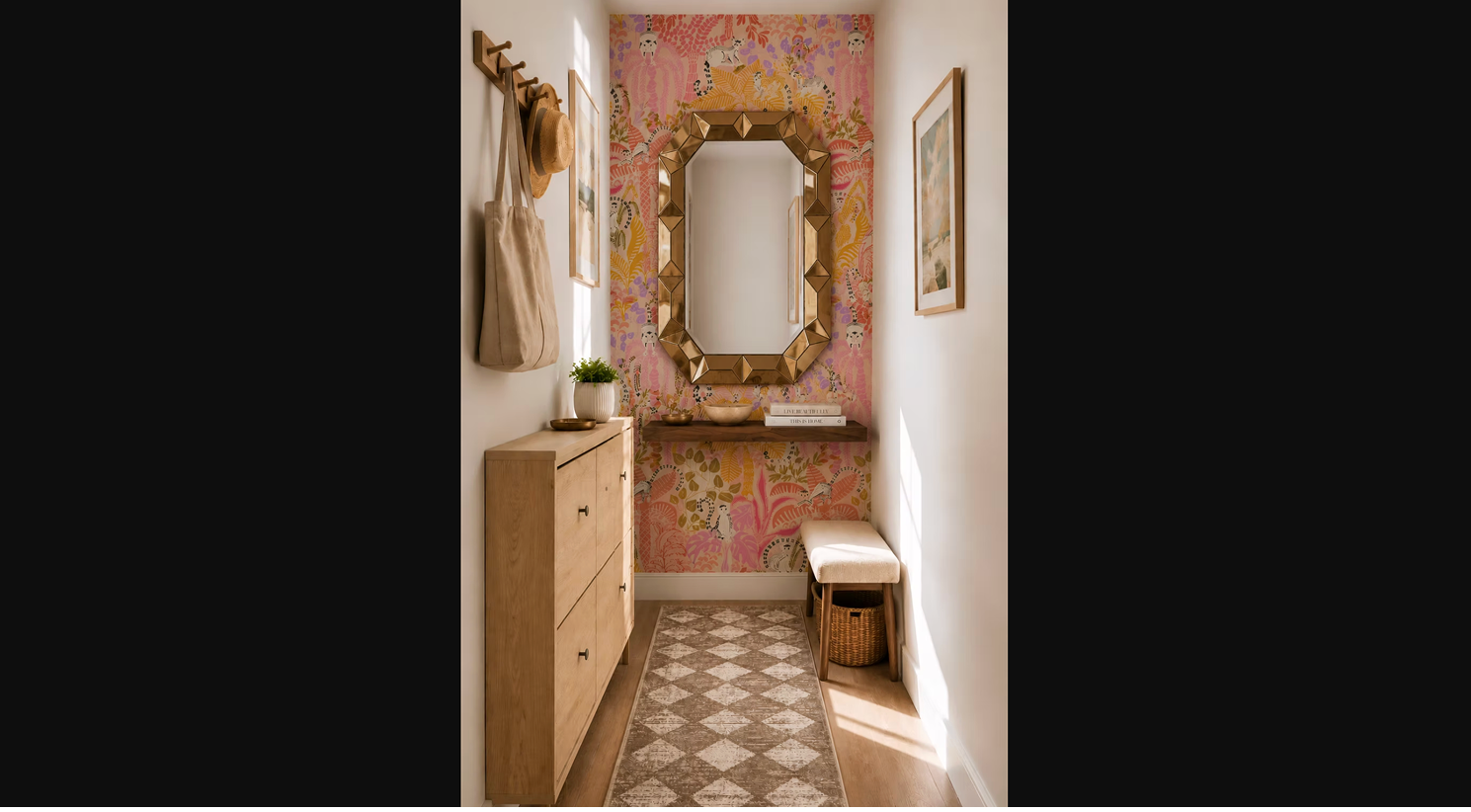
Image source
Entryway accent wall with patterned wallpaper, narrow console, mirror, wall sconce, and a runner rug
Entryways and hallways are perfect places to be bold because people experience them in motion. A wallpapered end wall, painted arch, gallery wall, mirror moment, or narrow paneling treatment can make a transitional area feel designed. Accent doors are also gaining attention as a more subtle way to add color to transitional spaces, especially when a full wall feels too much.
The key is scale: hallway details are viewed up close, so oversized textures or overly busy patterns can overwhelm.
Designer takeaway:
In entries and halls, design for first impression and movement, not long sitting time.
5 Practical Accent Wall Design Tips You Should Always Know
After exploring these 25 accent wall ideas, keep these five practical design tips in mind to avoid common mistakes and create an accent wall that truly enhances your space:
- Keep the rest of the room quiet. An accent wall works best when the surrounding walls, floor, and larger furniture pieces stay neutral, letting the feature wall do the visual work.
- Repeat the accent color or material in small doses elsewhere. A cushion, a vase, or a picture frame in the same tone ties the room together without diluting the focal point.
- Mind the sightline. Choose the wall that's visible from the main seating area or entry point of the room — an accent wall no one sees loses its purpose.
- Don't be afraid of contrast in trim. Painting trim a different tone than the accent wall — or leaving it a crisp white — can sharpen the whole look.
- Scale patterns to the room. Large-scale prints and murals suit bigger rooms and taller ceilings; smaller, subtler patterns work better in compact spaces.
Quick Test Your Accent Wall Design Ideas With DecAI™ in Seconds
Accent walls are hard to judge from a tiny paint swatch, a material sample, or a saved reference image. That's why quick visual testing can save time. And some free AI interior design tools like DecAI™ would help to save much time and effort for quick visual testing.
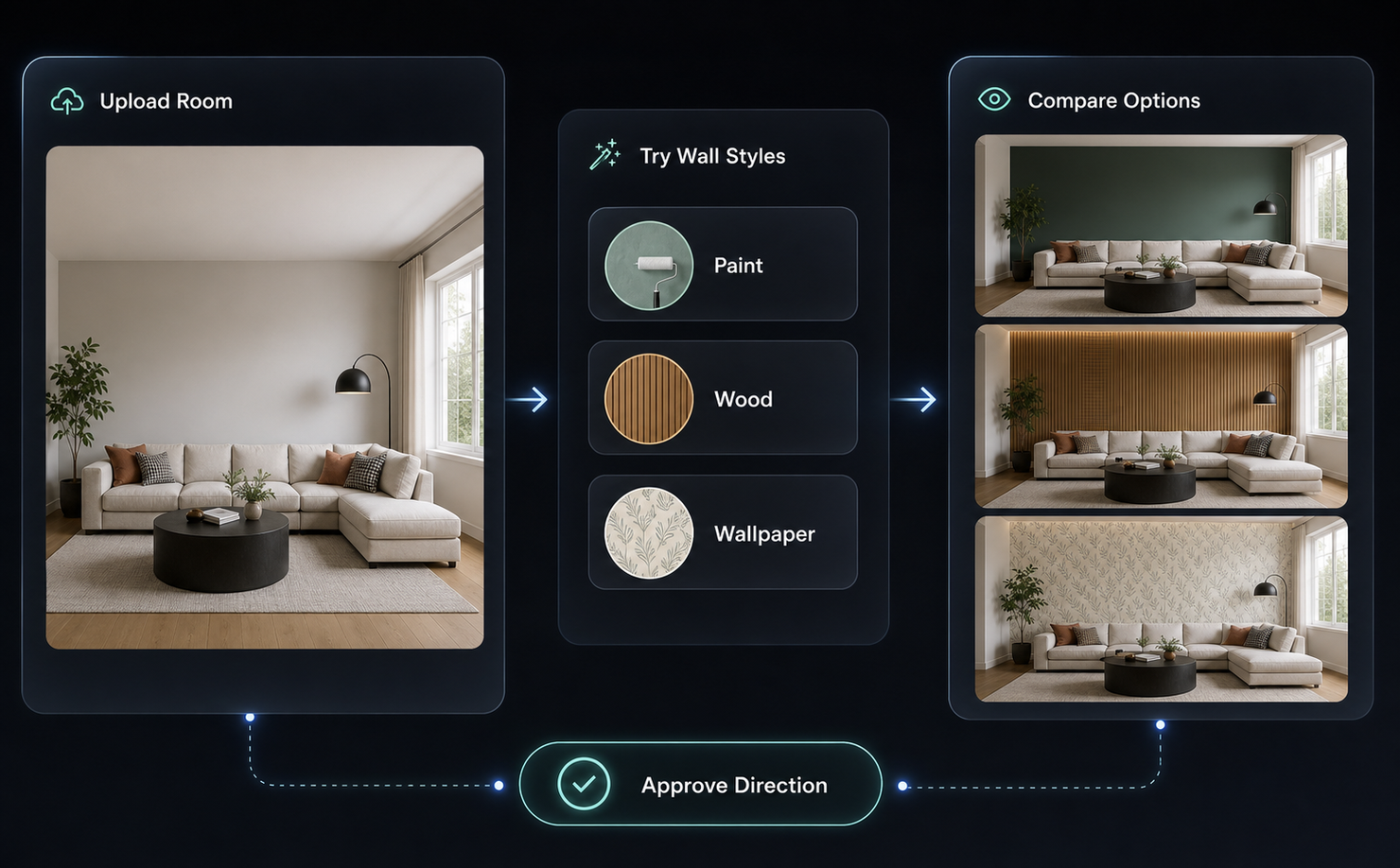
DecAI™ is a free, powerful AI interior design tool that is useful for this kind of early design exploration because it lets you upload a real room photo and instantly visualize different accent wall ideas — colors, wood paneling, stone, wallpaper patterns, and more — before a single can of paint is opened or a single panel is ordered.
It's a fast way to compare options side by side, get client sign-off with confidence, and avoid costly material mistakes.
FAQs
1.What are the rules for accent walls?
The most important rule is to choose a wall that already makes sense as a focal point. Good options include the fireplace wall, headboard wall, media wall, dining backdrop, entry wall, or the wall visible when you first enter the room. The accent wall should also connect to the room’s palette, furniture, lighting, and architecture. Avoid choosing a random side wall just because it is empty.
2.Are accent walls outdated in 2026?
No, accent walls are not outdated in 2026. What feels outdated is the disconnected feature wall: one bold paint color that does not relate to anything else in the room. Current accent walls feel more integrated, using warm colors, textured finishes, wallpaper, art, lighting, stone, wood, or built-ins to support the full design.
3.What is the easiest way to accent a wall?
Paint is usually the easiest way to create an accent wall. Peel-and-stick wallpaper, large artwork, picture lights, floating shelves, and removable panels are also relatively simple options. Of course, if you do have more detailed ideas, like the patterns, artwork and more, free try DecAI™ and firstly preview how it will look before you do any purchase or action in actual world.
4.What color is best for an accent wall?
The best color depends on the room’s light, furniture, and mood. For 2026, strong options include terracotta, olive green, moss green, chocolate brown, caramel, clay pink, warm beige, burgundy, and deep blue-green. If you want a timeless result, choose a color that already appears somewhere in the room, even subtly.
5.Which wall should be the accent wall?
Choose the wall that naturally attracts attention. In bedrooms, that is usually the wall behind the bed. In living rooms, it may be the fireplace wall, TV wall, or sofa wall. In dining rooms, it is often the wall behind the table. In an entryway, it can be the first wall people see when they walk in.
6.Can an accent wall make a room look bigger?
Yes, if it is used carefully. A darker end wall can add depth to a narrow room, vertical slats can make ceilings feel taller, and mirrors can reflect light in small spaces. However, a harsh high-contrast wall can also chop up a room and make it feel smaller. The effect depends on color, placement, lighting, and surrounding furniture.
7.What accent wall materials are best for luxury projects?
Stone, marble, wood veneer, fluted panels, ribbed plaster, limewash, upholstered panels, handmade tile, and custom built-ins all work well for luxury projects. The best choice depends on the room. For example, upholstered panels suit bedrooms, stone suits fireplaces and bathrooms, and wood slats work well for media walls and warm modern living rooms.
8.Can every room have an accent wall?
Technically yes, but it is usually better not to force one into every room. Some rooms already have enough visual interest through windows, furniture, art, or architecture. Use an accent wall when it improves the room’s focus, mood, or function. If the wall does not solve a design problem, it may not be needed.
Wrap Up
The best accent wall ideas in 2026 are intentional. They do more than add contrast. They shape the room’s focal point, support the palette, introduce texture, frame furniture, improve a sightline, or make a space feel more personal.
For designers, the real question is not “What wall treatment looks trendy?” It is “What should this wall do for the room?” Once you define its purpose, choosing the right colors, materials, textures, or finishes becomes much easier.
We hope these 25 accent wall ideas inspire your next project and help you create a space that's both beautiful and functional.
--------------------------------------
If you believe that any material on this site infringes your intellectual property rights, please contact the author at decaiwebteam@outlook.com with details of your claim.
Redesign any home interior, exterior & garden in seconds
Share this Post:
'%3e%3cpath%20d='M17.9995%2035.999C17.0317%2035.999%2016.0619%2035.9219%2015.1161%2035.7696C10.9414%2035.0973%207.11524%2032.9513%204.34408%2029.7273C1.54287%2026.4683%200%2022.3035%200%2017.9995C0%208.07403%208.07503%200%2017.9995%200C27.924%200%2036%208.07503%2036%2017.9995C36%2022.3696%2034.4151%2026.5835%2031.5357%2029.8646C28.6844%2033.1156%2024.7671%2035.2326%2020.5052%2035.8267C19.6806%2035.9419%2018.8371%2036%2017.9995%2036V35.999ZM17.9995%201.20123C8.73726%201.20123%201.20224%208.73626%201.20224%2017.9985C1.20224%2026.2919%207.13427%2033.2659%2015.3075%2034.5814C16.9546%2034.8469%2018.6808%2034.8659%2020.3389%2034.6345C28.5812%2033.4863%2034.7968%2026.334%2034.7968%2017.9985C34.7968%208.73626%2027.2617%201.20123%2017.9985%201.20123H17.9995Z'%20fill='%23FF0209'/%3e%3cpath%20d='M29.0557%2014.3621C28.9184%2013.0276%2028.6208%2011.5539%2027.5268%2010.7784C26.6782%2010.1773%2025.5642%2010.1553%2024.5242%2010.1563C22.3251%2010.1583%2020.126%2010.1603%2017.9269%2010.1623C15.812%2010.1643%2013.6971%2010.1663%2011.5821%2010.1683C10.6985%2010.1683%209.8399%2010.1002%209.01937%2010.4819C8.31406%2010.8105%207.76303%2011.4347%207.43241%2012.1289C6.97156%2013.0957%206.87438%2014.1898%206.81927%2015.2588C6.71708%2017.2044%206.7281%2019.156%206.85133%2021.0996C6.9405%2022.5193%207.16792%2024.0872%208.26496%2024.9919C9.23777%2025.7934%2010.6103%2025.8325%2011.8707%2025.8335C15.8741%2025.8365%2019.8776%2025.8395%2023.881%2025.8435C24.394%2025.8435%2024.93%2025.8345%2025.453%2025.7774C26.4829%2025.6661%2027.4637%2025.3716%2028.1249%2024.6092C28.7922%2023.8407%2028.9635%2022.7698%2029.0657%2021.7569C29.3121%2019.3003%2029.3091%2016.8177%2029.0557%2014.3621ZM15.6116%2021.4453V14.5545L21.5797%2017.9999L15.6116%2021.4453Z'%20fill='%23FF0209'/%3e%3c/g%3e%3cdefs%3e%3cclipPath%20id='clip0_13816_41422'%3e%3crect%20width='36'%20height='36'%20fill='white'/%3e%3c/clipPath%3e%3c/defs%3e%3c/svg%3e)
'%3e%3cpath%20d='M17.9995%2036C17.0327%2036%2016.0619%2035.9229%2015.1161%2035.7696C10.9414%2035.0973%207.11524%2032.9513%204.34408%2029.7273C1.54287%2026.4683%200%2022.3035%200%2017.9995C0%208.07403%208.07503%200%2017.9995%200C27.924%200%2036%208.07503%2036%2017.9995C36%2022.3696%2034.4151%2026.5835%2031.5357%2029.8646C28.6844%2033.1156%2024.7671%2035.2326%2020.5052%2035.8267C19.6806%2035.9419%2018.8371%2036%2017.9995%2036ZM17.9995%201.20224C8.73726%201.20224%201.20224%208.73726%201.20224%2017.9995C1.20224%2026.2919%207.13427%2033.2669%2015.3075%2034.5824C16.9556%2034.8479%2018.6808%2034.8669%2020.3389%2034.6355C28.5812%2033.4873%2034.7968%2026.335%2034.7968%2017.9995C34.7968%208.73726%2027.2617%201.20224%2017.9985%201.20224H17.9995Z'%20fill='url(%23paint0_linear_13816_41436)'/%3e%3cpath%20d='M23.4463%207.55469H12.549C9.53841%207.55469%207.08984%2010.0032%207.08984%2013.0138V22.9834C7.08984%2025.994%209.53841%2028.4426%2012.549%2028.4426H23.4463C26.4569%2028.4426%2028.9054%2025.994%2028.9054%2022.9834V13.0138C28.9054%2010.0032%2026.4569%207.55469%2023.4463%207.55469ZM9.01543%2013.0138C9.01543%2011.0652%2010.6004%209.48027%2012.549%209.48027H23.4463C25.3949%209.48027%2026.9799%2011.0652%2026.9799%2013.0138V22.9834C26.9799%2024.932%2025.3949%2026.517%2023.4463%2026.517H12.549C10.6004%2026.517%209.01543%2024.932%209.01543%2022.9834V13.0138Z'%20fill='url(%23paint1_linear_13816_41436)'/%3e%3cpath%20d='M17.9964%2023.0749C20.7966%2023.0749%2023.0749%2020.7966%2023.0749%2017.9964C23.0749%2015.1962%2020.7966%2012.918%2017.9964%2012.918C15.1962%2012.918%2012.918%2015.1962%2012.918%2017.9964C12.918%2020.7966%2015.1962%2023.0749%2017.9964%2023.0749ZM17.9964%2014.8446C19.7346%2014.8446%2021.1483%2016.2582%2021.1483%2017.9964C21.1483%2019.7347%2019.7346%2021.1483%2017.9964%2021.1483C16.2582%2021.1483%2014.8446%2019.7347%2014.8446%2017.9964C14.8446%2016.2582%2016.2582%2014.8446%2017.9964%2014.8446Z'%20fill='url(%23paint2_linear_13816_41436)'/%3e%3cpath%20d='M23.5482%2013.741C24.3026%2013.741%2024.9168%2013.1269%2024.9168%2012.3725C24.9168%2011.618%2024.3026%2011.0039%2023.5482%2011.0039C22.7938%2011.0039%2022.1797%2011.618%2022.1797%2012.3725C22.1797%2013.1269%2022.7938%2013.741%2023.5482%2013.741Z'%20fill='url(%23paint3_linear_13816_41436)'/%3e%3c/g%3e%3cdefs%3e%3clinearGradient%20id='paint0_linear_13816_41436'%20x1='5.27482'%20y1='30.7312'%20x2='30.7242'%20y2='5.28083'%20gradientUnits='userSpaceOnUse'%3e%3cstop%20stop-color='%23FAAD4F'/%3e%3cstop%20offset='0.35'%20stop-color='%23DD2A7B'/%3e%3cstop%20offset='0.62'%20stop-color='%239537B0'/%3e%3cstop%20offset='1'%20stop-color='%23515BD4'/%3e%3c/linearGradient%3e%3clinearGradient%20id='paint1_linear_13816_41436'%20x1='8.92225'%20y1='27.074'%20x2='27.073'%20y2='8.92324'%20gradientUnits='userSpaceOnUse'%3e%3cstop%20stop-color='%23FAAD4F'/%3e%3cstop%20offset='0.35'%20stop-color='%23DD2A7B'/%3e%3cstop%20offset='0.62'%20stop-color='%239537B0'/%3e%3cstop%20offset='1'%20stop-color='%23515BD4'/%3e%3c/linearGradient%3e%3clinearGradient%20id='paint2_linear_13816_41436'%20x1='14.4077'%20y1='21.5861'%20x2='21.5861'%20y2='14.4077'%20gradientUnits='userSpaceOnUse'%3e%3cstop%20stop-color='%23FAAD4F'/%3e%3cstop%20offset='0.35'%20stop-color='%23DD2A7B'/%3e%3cstop%20offset='0.62'%20stop-color='%239537B0'/%3e%3cstop%20offset='1'%20stop-color='%23515BD4'/%3e%3c/linearGradient%3e%3clinearGradient%20id='paint3_linear_13816_41436'%20x1='22.5814'%20y1='13.3393'%20x2='24.515'%20y2='11.4057'%20gradientUnits='userSpaceOnUse'%3e%3cstop%20stop-color='%23FAAD4F'/%3e%3cstop%20offset='0.35'%20stop-color='%23DD2A7B'/%3e%3cstop%20offset='0.62'%20stop-color='%239537B0'/%3e%3cstop%20offset='1'%20stop-color='%23515BD4'/%3e%3c/linearGradient%3e%3cclipPath%20id='clip0_13816_41436'%3e%3crect%20width='36'%20height='36'%20fill='white'/%3e%3c/clipPath%3e%3c/defs%3e%3c/svg%3e)
'%3e%3cpath%20d='M17.9995%2035.999C17.0317%2035.999%2016.0619%2035.9219%2015.1161%2035.7696C10.9414%2035.0973%207.11524%2032.9513%204.34408%2029.7273C1.54287%2026.4683%200%2022.3035%200%2017.9995C0%208.07403%208.07502%200%2017.9995%200C27.924%200%2036%208.07503%2036%2017.9995C36%2022.3696%2034.415%2026.5835%2031.5357%2029.8646C28.6844%2033.1156%2024.7671%2035.2326%2020.5052%2035.8267C19.6806%2035.9419%2018.8371%2036%2017.9995%2036V35.999ZM17.9995%201.20123C8.73725%201.20123%201.20224%208.73626%201.20224%2017.9985C1.20224%2026.2919%207.13427%2033.2659%2015.3075%2034.5814C16.9545%2034.8469%2018.6808%2034.8659%2020.3388%2034.6345C28.5812%2033.4863%2034.7968%2026.334%2034.7968%2017.9985C34.7968%208.73626%2027.2617%201.20123%2017.9985%201.20123H17.9995Z'%20fill='%23007EBB'/%3e%3cpath%20d='M9.06639%2012.124C8.60253%2011.6932%208.37109%2011.1602%208.37109%2010.526C8.37109%209.89184%208.60253%209.33481%209.06639%208.90401C9.53026%208.47321%2010.1274%208.25781%2010.8587%208.25781C11.5901%208.25781%2012.1642%208.47321%2012.627%208.90401C13.0909%209.33481%2013.3223%209.87581%2013.3223%2010.526C13.3223%2011.1762%2013.0909%2011.6932%2012.627%2012.124C12.1631%2012.5548%2011.5741%2012.7702%2010.8587%2012.7702C10.1434%2012.7702%209.52926%2012.5548%209.06639%2012.124ZM12.9326%2014.5946V27.7962H8.76182V14.5946H12.9326Z'%20fill='%23007EBB'/%3e%3cpath%20d='M26.8196%2015.9006C27.7283%2016.8875%2028.1832%2018.243%2028.1832%2019.9682V27.5663H24.2208V20.5042C24.2208%2019.6346%2023.9954%2018.9583%2023.5445%2018.4764C23.0937%2017.9945%2022.4876%2017.7541%2021.7262%2017.7541C20.9647%2017.7541%2020.3586%2017.9955%2019.9078%2018.4764C19.4569%2018.9583%2019.2315%2019.6346%2019.2315%2020.5042V27.5663H15.2461V14.5611H19.2315V16.2863C19.6353%2015.7113%2020.1793%2015.2574%2020.8636%2014.9228C21.5468%2014.5892%2022.3163%2014.4219%2023.1708%2014.4219C24.6937%2014.4219%2025.9099%2014.9158%2026.8186%2015.9016L26.8196%2015.9006Z'%20fill='%23007EBB'/%3e%3c/g%3e%3cdefs%3e%3cclipPath%20id='clip0_13816_41425'%3e%3crect%20width='36'%20height='36'%20fill='white'/%3e%3c/clipPath%3e%3c/defs%3e%3c/svg%3e)
'%3e%3cpath%20d='M18%2035.999C17.0322%2035.999%2016.0623%2035.9219%2015.1166%2035.7696C10.9417%2035.0973%207.11544%2032.9513%204.3442%2029.7273C1.54291%2026.4683%200%2022.3035%200%2017.9995C0%208.07403%208.07526%200%2018%200C27.9248%200%2036%208.07503%2036%2017.9995C36%2022.3696%2034.415%2026.5835%2031.5356%2029.8646C28.6842%2033.1156%2024.7668%2035.2326%2020.5047%2035.8267C19.6802%2035.9419%2018.8366%2036%2017.999%2036L18%2035.999ZM18%201.20123C8.73751%201.20123%201.20227%208.73626%201.20227%2017.9985C1.20227%2026.2919%207.13448%2033.2659%2015.3079%2034.5814C16.955%2034.8469%2018.6813%2034.8659%2020.3394%2034.6345C28.582%2033.4863%2034.7977%2026.334%2034.7977%2017.9985C34.7977%208.73626%2027.2625%201.20123%2018%201.20123Z'%20fill='black'/%3e%3cpath%20d='M7%208.09163H13.5067L19.521%2016.1816L27.0073%207.90625L28.786%207.93715L20.4078%2017.3454L29%2028.901H22.4959L16.8193%2021.362L9.8847%2029.0864H8.13428L15.9583%2020.26L7%208.09163ZM12.8931%209.28633H9.45676L23.2048%2027.6754H26.5793L12.8931%209.28633Z'%20fill='black'/%3e%3c/g%3e%3cdefs%3e%3cclipPath%20id='clip0_13886_43848'%3e%3crect%20width='36'%20height='36'%20fill='white'/%3e%3c/clipPath%3e%3c/defs%3e%3c/svg%3e)
'%3e%3cpath%20d='M17.9995%2035.999C17.0327%2035.999%2016.0619%2035.9219%2015.1161%2035.7686C10.9414%2035.0963%207.11524%2032.9503%204.34408%2029.7263C1.54287%2026.4673%200%2022.3025%200%2017.9995C0%208.07403%208.07503%200%2017.9995%200C27.924%200%2036%208.07503%2036%2017.9995C36%2022.3696%2034.415%2026.5835%2031.5357%2029.8646C28.6844%2033.1156%2024.7671%2035.2326%2020.5052%2035.8267C19.6806%2035.9419%2018.8371%2036%2017.9995%2036V35.999ZM17.9995%201.20123C8.73726%201.20123%201.20224%208.73626%201.20224%2017.9985C1.20224%2026.2909%207.13428%2033.2659%2015.3075%2034.5814C16.9556%2034.8469%2018.6808%2034.8659%2020.3389%2034.6345C28.5812%2033.4863%2034.7968%2026.334%2034.7968%2017.9985C34.7968%208.73626%2027.2617%201.20123%2017.9985%201.20123H17.9995Z'%20fill='%231877F7'/%3e%3cpath%20d='M20.5337%2014.9635V18.7536H25.2225L24.4801%2023.8601H20.5337V35.624C19.7423%2035.7342%2018.9328%2035.7913%2018.1112%2035.7913C17.1625%2035.7913%2016.2317%2035.7151%2015.324%2035.5689V23.8601H11V18.7536H15.324V14.1169C15.324%2011.2396%2017.6564%208.90625%2020.5347%208.90625V8.90926C20.5428%208.90926%2020.5508%208.90625%2020.5588%208.90625H25.2235V13.3215H22.1758C21.2691%2013.3215%2020.5347%2014.0558%2020.5347%2014.9625L20.5337%2014.9635Z'%20fill='%231877F7'/%3e%3c/g%3e%3cdefs%3e%3cclipPath%20id='clip0_13816_41433'%3e%3crect%20width='36'%20height='36'%20fill='white'/%3e%3c/clipPath%3e%3c/defs%3e%3c/svg%3e)
'%3e%3cpath%20d='M17.9995%2035.999C17.0327%2035.999%2016.0619%2035.9219%2015.1161%2035.7686C10.9414%2035.0963%207.11524%2032.9503%204.34408%2029.7263C1.54287%2026.4673%200%2022.3025%200%2017.9995C0%208.07403%208.07503%200%2017.9995%200C27.924%200%2036%208.07503%2036%2017.9995C36%2022.3696%2034.415%2026.5835%2031.5357%2029.8646C28.6844%2033.1156%2024.7671%2035.2326%2020.5052%2035.8267C19.6806%2035.9419%2018.8371%2036%2017.9995%2036V35.999ZM17.9995%201.20123C8.73726%201.20123%201.20224%208.73626%201.20224%2017.9985C1.20224%2026.2909%207.13428%2033.2659%2015.3075%2034.5814C16.9556%2034.8469%2018.6808%2034.8659%2020.3389%2034.6345C28.5812%2033.4863%2034.7968%2026.334%2034.7968%2017.9985C34.7968%208.73626%2027.2617%201.20123%2017.9985%201.20123H17.9995Z'%20fill='%232A91F7'/%3e%3cg%20clip-path='url(%23clip1_13816_41442)'%3e%3cpath%20d='M16.3345%2018.834C16.6924%2019.3124%2017.149%2019.7083%2017.6733%2019.9947C18.1976%2020.2812%2018.7774%2020.4516%2019.3734%2020.4942C19.9693%2020.5369%2020.5675%2020.4509%2021.1273%2020.2421C21.6871%2020.0333%2022.1954%2019.7065%2022.6178%2019.284L25.1178%2016.784C25.8768%2015.9981%2026.2968%2014.9456%2026.2873%2013.8531C26.2778%2012.7606%2025.8396%2011.7156%2025.0671%2010.943C24.2946%2010.1705%2023.2495%209.73231%2022.157%209.72281C21.0645%209.71332%2020.012%2010.1333%2019.2262%2010.8923L17.7928%2012.3173M19.6678%2017.1673C19.3099%2016.6889%2018.8533%2016.293%2018.329%2016.0065C17.8047%2015.7201%2017.2249%2015.5497%2016.6289%2015.507C16.033%2015.4643%2015.4348%2015.5503%2014.875%2015.7592C14.3152%2015.968%2013.8069%2016.2947%2013.3845%2016.7173L10.8845%2019.2173C10.1255%2020.0031%209.70551%2021.0557%209.715%2022.1481C9.72449%2023.2406%2010.1627%2024.2857%2010.9352%2025.0582C11.7078%2025.8307%2012.7528%2026.269%2013.8453%2026.2784C14.9378%2026.2879%2015.9903%2025.868%2016.7761%2025.109L18.2011%2023.684'%20stroke='%232A91F7'%20stroke-width='1.66667'%20stroke-linecap='round'%20stroke-linejoin='round'/%3e%3c/g%3e%3c/g%3e%3cdefs%3e%3cclipPath%20id='clip0_13816_41442'%3e%3crect%20width='36'%20height='36'%20fill='white'/%3e%3c/clipPath%3e%3cclipPath%20id='clip1_13816_41442'%3e%3crect%20width='20'%20height='20'%20fill='white'%20transform='translate(8%208)'/%3e%3c/clipPath%3e%3c/defs%3e%3c/svg%3e)
Redesign any home interior, exterior & garden in seconds