
12 Common Interior Design Mistakes Most People Should Avoid in 2026 (With Examples & Fixes)

Clashing color? Poor lightning? Feel your home design a bit overcrowded or lack of personality? Don’t worry! Even the most experienced interior designers make mistakes, it's part of the process. But some come up so often that they're worth knowing before you start, not after. Clashing color palettes, poor lighting, overcrowded spaces, overlooked room functionality — all these pitfalls catch designers at every level, across projects of every size.
That's what this guide is for. We've pulled together 12 of the most common interior design mistakes that both beginners and experts can make, even in this 2026. Each mistake comes with a real example and a practical fix, so you can spot them before they cost you time and money.
Also feel free to try all these fixes with our free AI interior design tool to quickly enhance your designs and sharpen your skills with ease.
Design any room, shop or space with DecAI in less 30 seconds! It's free!
Mistake 1: Choose the wrong color palette
Walk into a living room or bedroom and instantly feel uncomfortable or restless? Color is usually the culprit. It might be an overuse of dark or overly bright tones across the whole space, a mix of colors that compete rather than complement, or shades chosen in a store that look nothing like they do once they're on your walls at home.
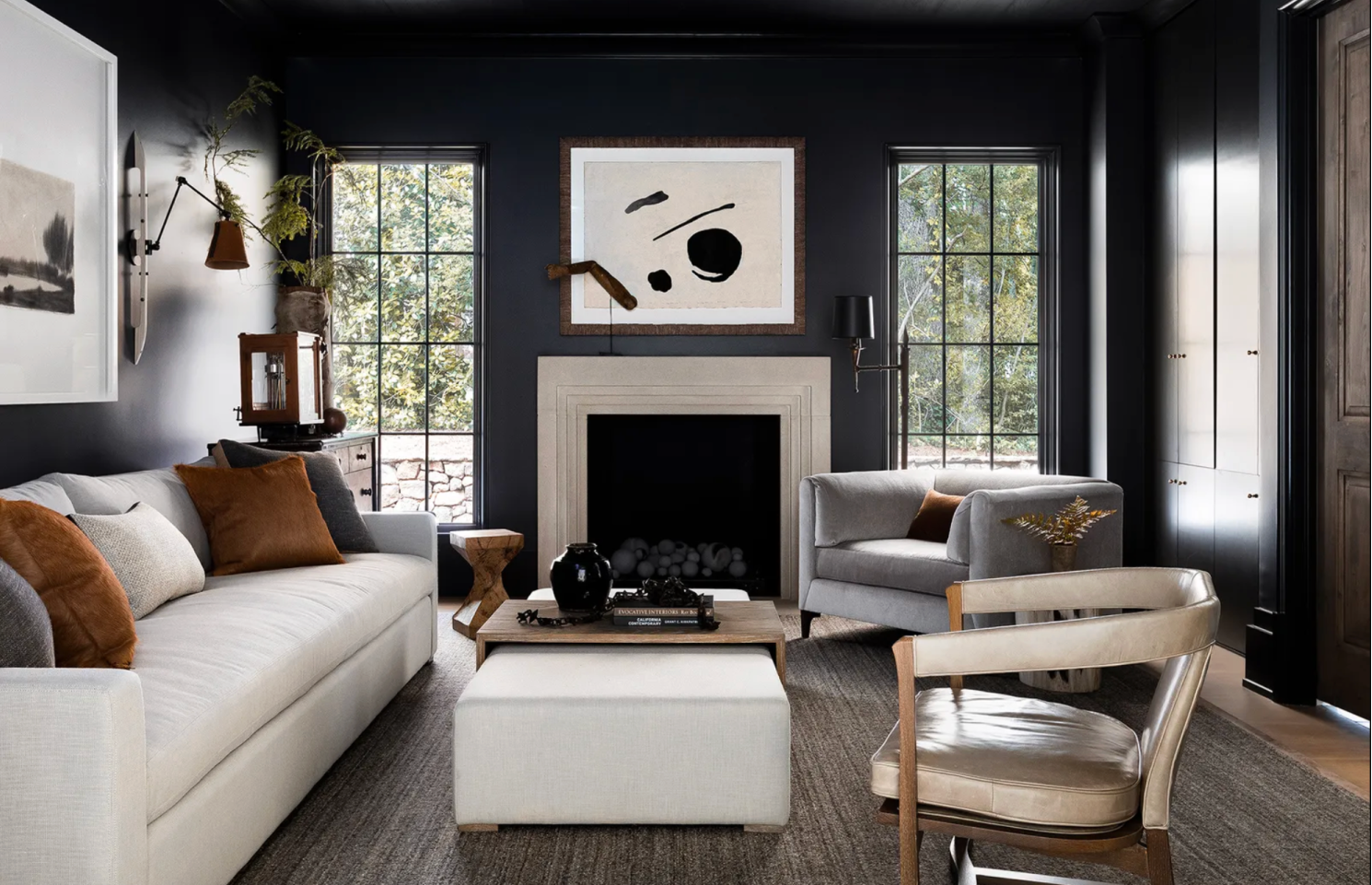
Improper color palette example from Sean Anderson
As this example shows, using too many cold colors—like dark brown, dark shades, white, and gray—can make the entire room feel dark and cold, giving off an unwelcoming atmosphere.
Color sets the emotional tones of a room before anything else does. So, if the color palette isn’t right, even the most carefully selected furniture, décor and design can’t fully fix the room.
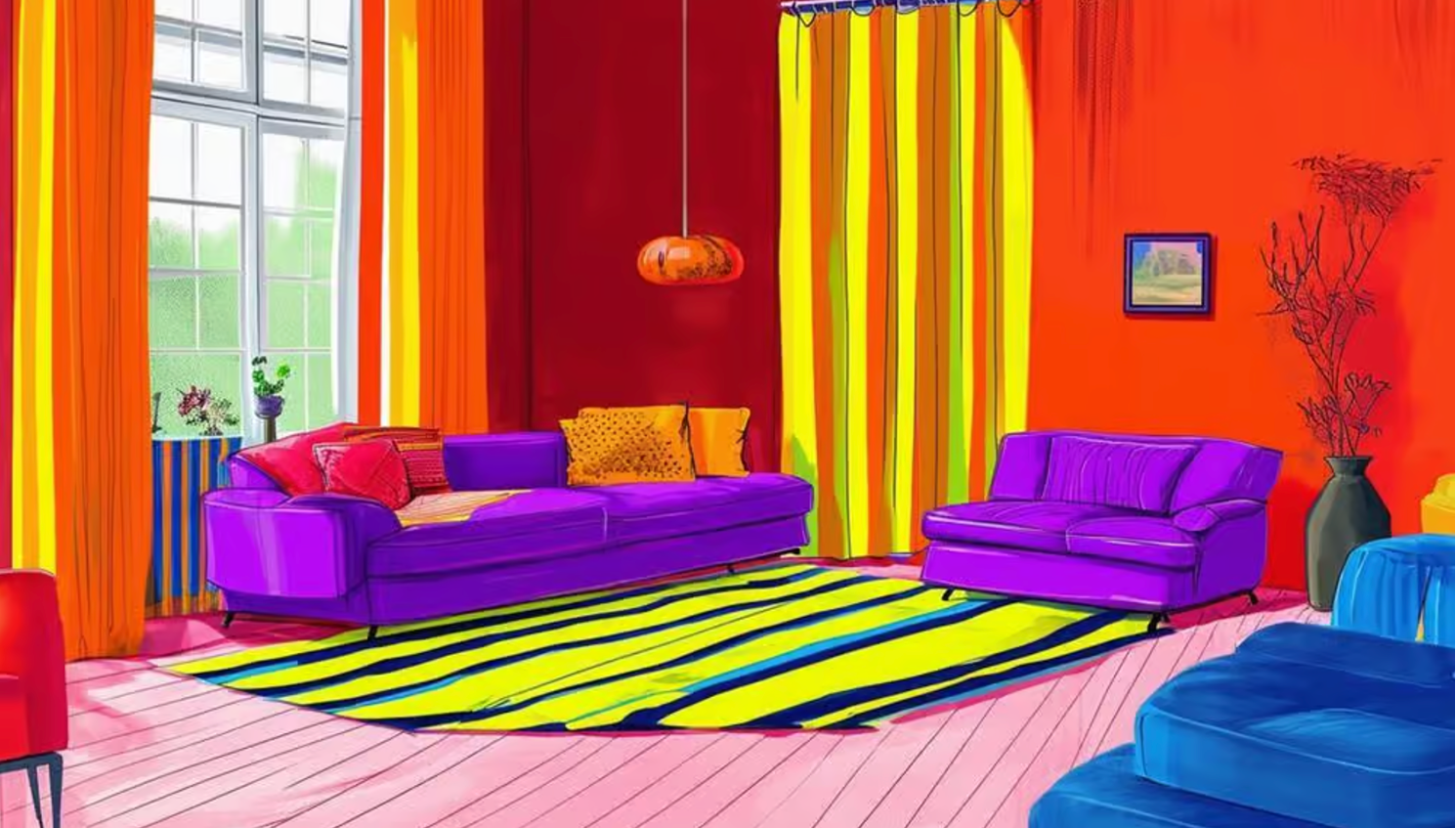
When too many bright colors are combined incorrectly, they can create visual chaos and ruin your whole home design.
Solution: Choose balanced colors and fully test them
Rather than choosing colors purely by instinct or blindly following trends, start with a proven, balanced palette. There's no shortage of beautiful, well-tested color combinations available in design books, mood boards, and online resources — use them as a starting point rather than starting from scratch every time.

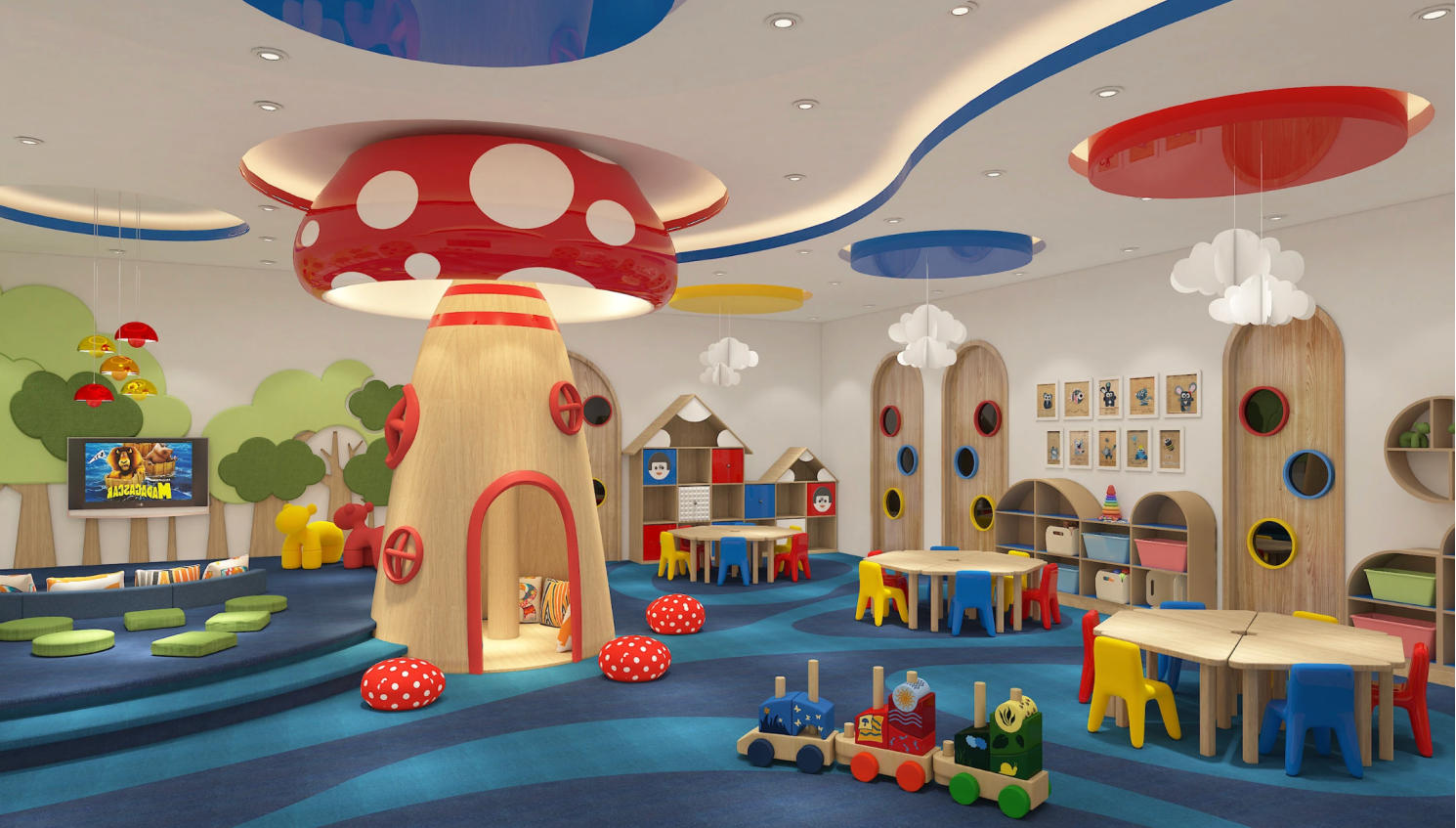
The kindergarten interior design from Tuyet Ngan Nguyen
Bright colors don’t always spell disaster. When chosen thoughtfully and balanced correctly, they can enhance your space beautifully, just as this kindergarten design shows .
Once you've landed on a palette that suits your room, don’t forget to test them before actually applying into your renovation. Simply sketch it out on paper, sample it on the wall, or use an AI home design tool like DecAI™, which allows you to test out your ideas with just a single room photo, before you spend a cent on paint.
Mistake 2: Lack of lighting
A small, plain room with poor lighting can also directly ruin the space. So, no matter how carefully you've chosen your colors, furniture, and décor, if the lighting isn't right, the room will never reach its full potential.
With too weak lightning, the space might feel heavy and unwelcoming, while with too bright lightning, it might also feel cold and clinical. Replying on a single overhead light source, often also the most common lightning mistake, flattens everything in the room, strips away texture, and leaves no sense of warmth or depth whatsoever.
So, when crafting your interior design, also be careful with the lightning.
Solution: Layer your lighting intentionally
Many professional designers recommend incorporating at least two or three additional light sources beyond the main overhead fixture.
That means that you can try to combine three types of lighting — ambient lighting for general illumination, task lighting for specific activities like reading or cooking, and accent lighting to highlight architectural features, artwork, or décor — to create a sense of depth, balance, and visual interest that a single ceiling light simply cannot achieve.
In this way, when the light is layered thoughtfully, along with natural light, your lighting enhances colors, highlights textures, and allows your furniture and décor to truly shine.
Anyway, plan your lighting as carefully as the rest of your design.

Different color light design example from kidz studio
even in the same space, different lighting can create entirely different atmospheres. So, never overlook lighting when designing your store or retail space.
Mistake 3: Overcrowd your room
Just feel your room too crowded, like too many patterns, textures, accessories, and furniture pieces all competing for attention at once? You're not alone.
Overcrowding is one of the most common interior design mistakes, and it usually doesn't happen all at once. Since you might usually build or design gradually, like one extra cushion here, one more decorative piece there, until the space starts to make you feel chaotic, cluttered, and exhausting to be in.
What makes this mistake particularly tricky is that each individual addition often seems harmless on its own. It's only when you step back and look at the room as a whole that the cumulative effect becomes clear.
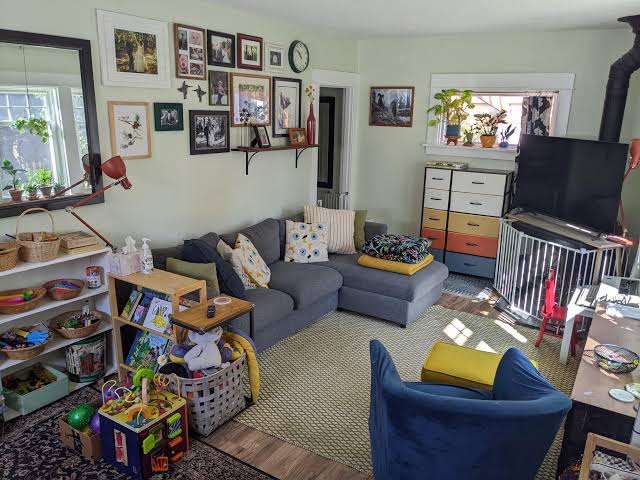
In this living room design example, too many random furnishings and miscellaneous decor crowd the entire area, creating a visually heavy, overwhelming atmosphere that drains comfort.
And, in actual room design cases, many homeowners mix up messy overcrowding with intentional maximalist design, which, also called curated abundant style, embraces rich layers, bold prints and plenty of decorations without creating a chaotic atmosphere. Well, if you do get a lot of furniture, accessories and more, you might need to follow the design rules of maximalism and try to better arrange your space to achieve abundant yet tidy aesthetics.
Solution: Less is more
You might try two ways to tackle this:
Way 1: Always add less from the start
Before bringing anything new into a room, always pause and ask yourself:
- Does genuinely belong there?
- Does it serve a purpose, functional or visual?
- Does it add something the space doesn't already have?
If the answer isn’t a clear yes, leave it out. Keeping the “Less is more” principle in mind throughout the design process will help you eliminate many unnecessary furniture, décor, and visual clutter before they take over your space.
Way 2: Add freely and remove unnecessary afterward
This way is simple: fill the room with pieces you love, then step back and remove anything that doesn’t truly earn its place.
In one sentence, always keep what truly matters, giving your room the space to breathe and feel balanced.
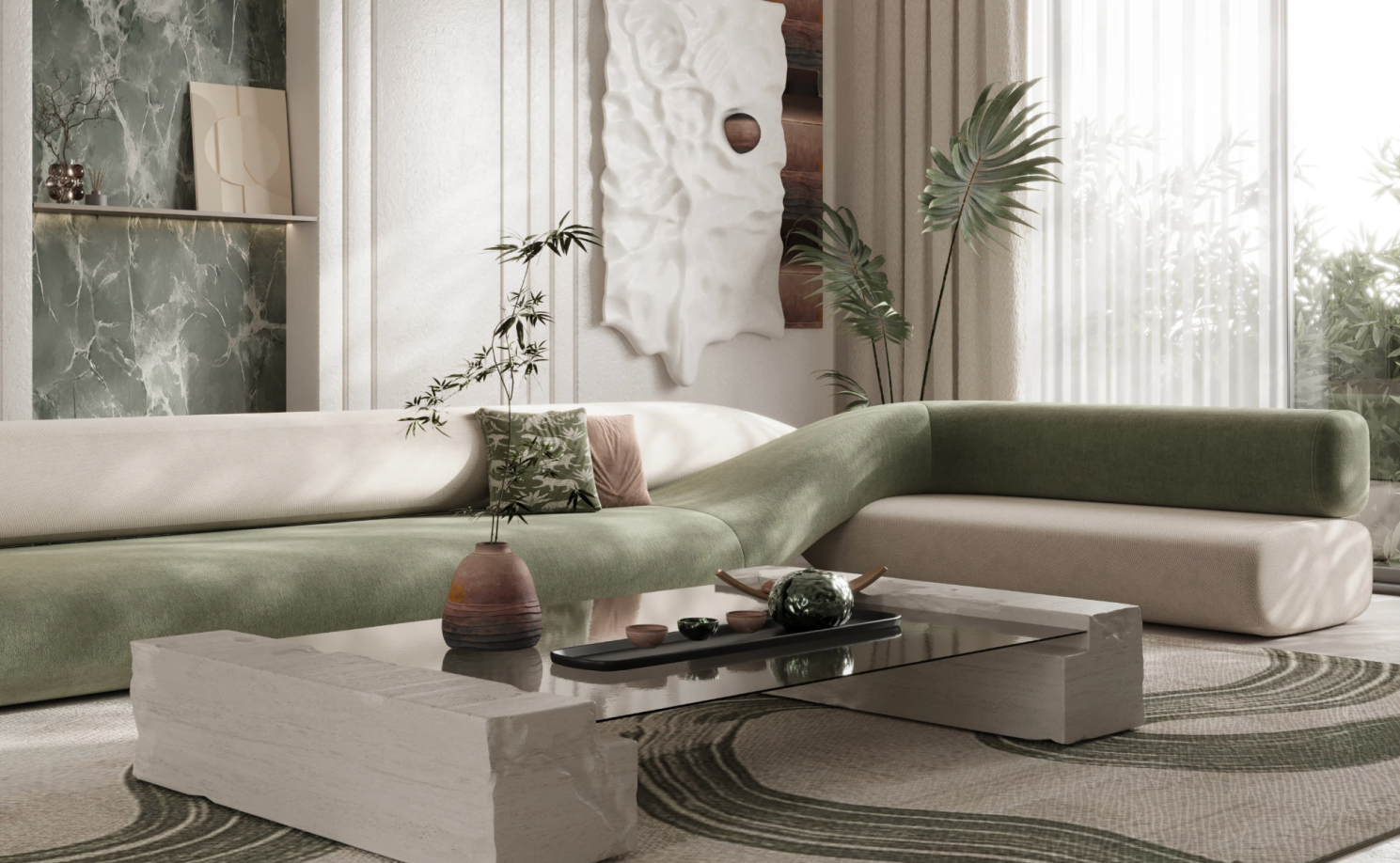
Minimal interior design example from Basmala Sayed
When designing your interiors, keep the principle of “less is more” in mind to avoid overcrowding.
Mistake 4: Ignore scale and proportion
Oversized sofa crowding your small living room? Artwork so small that it looks lost on the wall? Furniture in mismatched sizes throwing the whole room off balance? It sounds like that, all of your designs have not planned the scale and proportion as a cohesive whole in advance. This is a quite common mistake that most people would make.
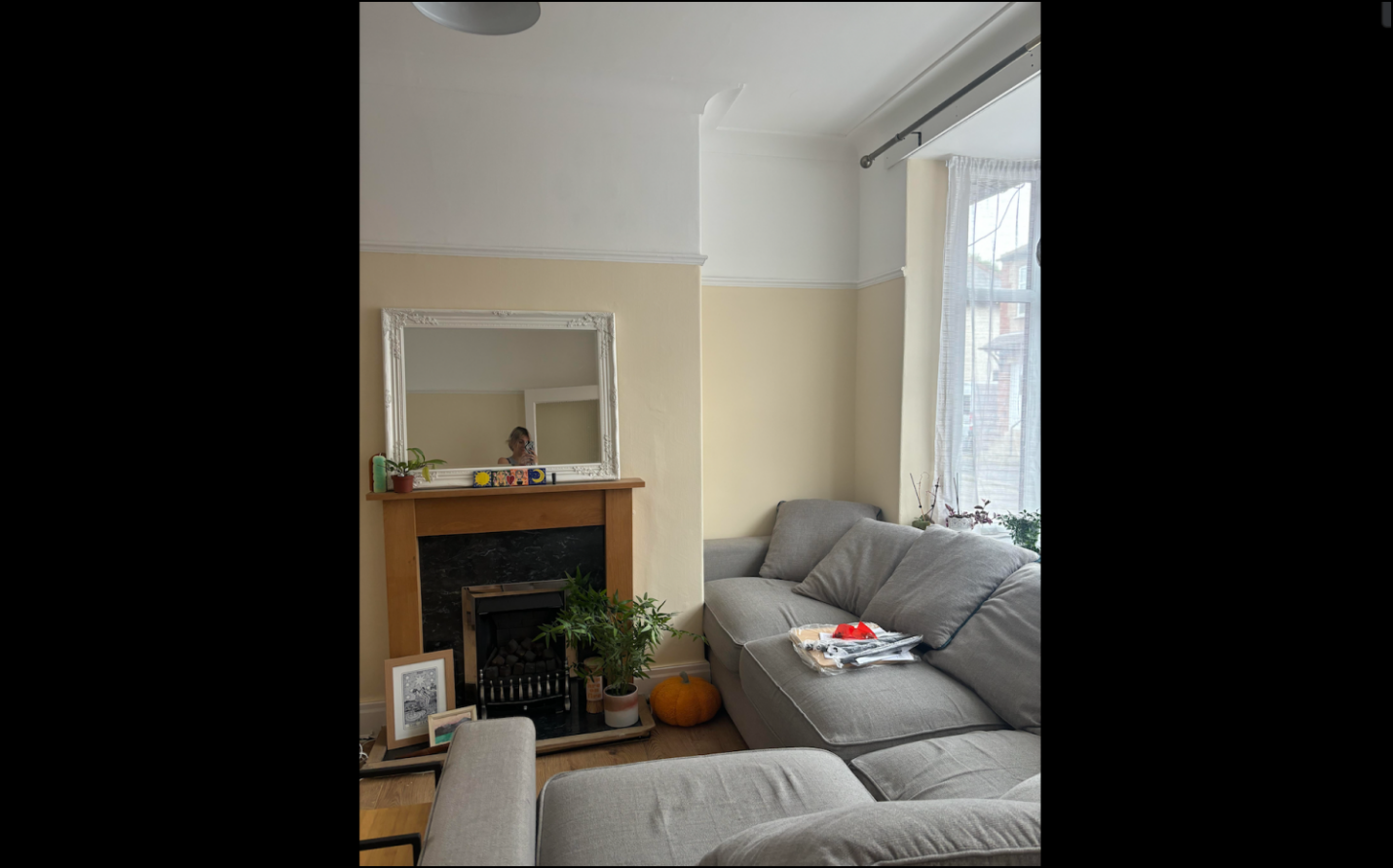
This living room design example from a Reddit user clearly shows that the oversized sofa not only blocks the flow of the room but also makes the entire space feel crowded.
When the sizes of your furniture, artwork, and accessories don't relate to the room or to each other, the space feels unsettled no matter how carefully everything else is designed.
Solution: Plan scale and proportion in advance
The simplest fix for this mistake is to measure first, plan and design later. This means three steps:
- Firstly, measure your space carefully, including the room’s dimensions, layout, ceiling height, window placement, and even awkward corners or architectural details. The more accurate your measurements, the better your decisions will be.
- Secondly, plan scale and proportion thoughtfully. You need to consider how large each furniture piece should be in relation to the room—and to the other items within it. Think about visual balance, walking space, and how the pieces will interact as a whole.
- Thirdly, add furniture, decor or design that truly fits. Only add pieces that complement the room’s size and proportions, ensuring everything feels balanced rather than overwhelming or undersized.
Only in this way, your space would naturally feel more harmonious, comfortable, and intentional.
Mistake 5: Put visual look before comfort and functions
Have you ever fallen in love with a stunning sofa, only to realize it’s uncomfortable to sit on? Or chosen a sleek coffee table that looks amazing—but constantly gets in the way?
Focusing too much on visual appeal while ignoring comfort and functionality is a common design mistake. A space may look beautiful in photos, but if it doesn’t support your daily activities and lifestyle, it quickly becomes frustrating to live in.
Design isn’t just about how a room looks—it’s about how it feels and works. If comfort and function are overlooked, even the most stylish space won’t truly satisfy you.
Solution: Design for real-life first
Before adding any piece, ask yourself:
- Is it comfortable enough for daily use?
- Does it support how I actually live and move in this space?
- Is it practical as well as attractive?
Always choose the furniture, decor or design that actually help to ease your life. When comfort and function come first, style naturally follows—and your space becomes both beautiful and livable.
Mistake 6: Hang artwork, decors or TVs too high
Artwork floating near the ceiling, a TV that has you craning your neck, wall décor that feels completely disconnected from everything below. Feel really bad with these designs, right?
All of them are commonly mistakes that new beginners might encounter.Hanging things too high or too low disrupts the visual balance of a room and creates an awkward disconnect between the walls and the furniture that makes the whole space feel bad.
So, while designing your interior design, also remember to think about the hanging height.
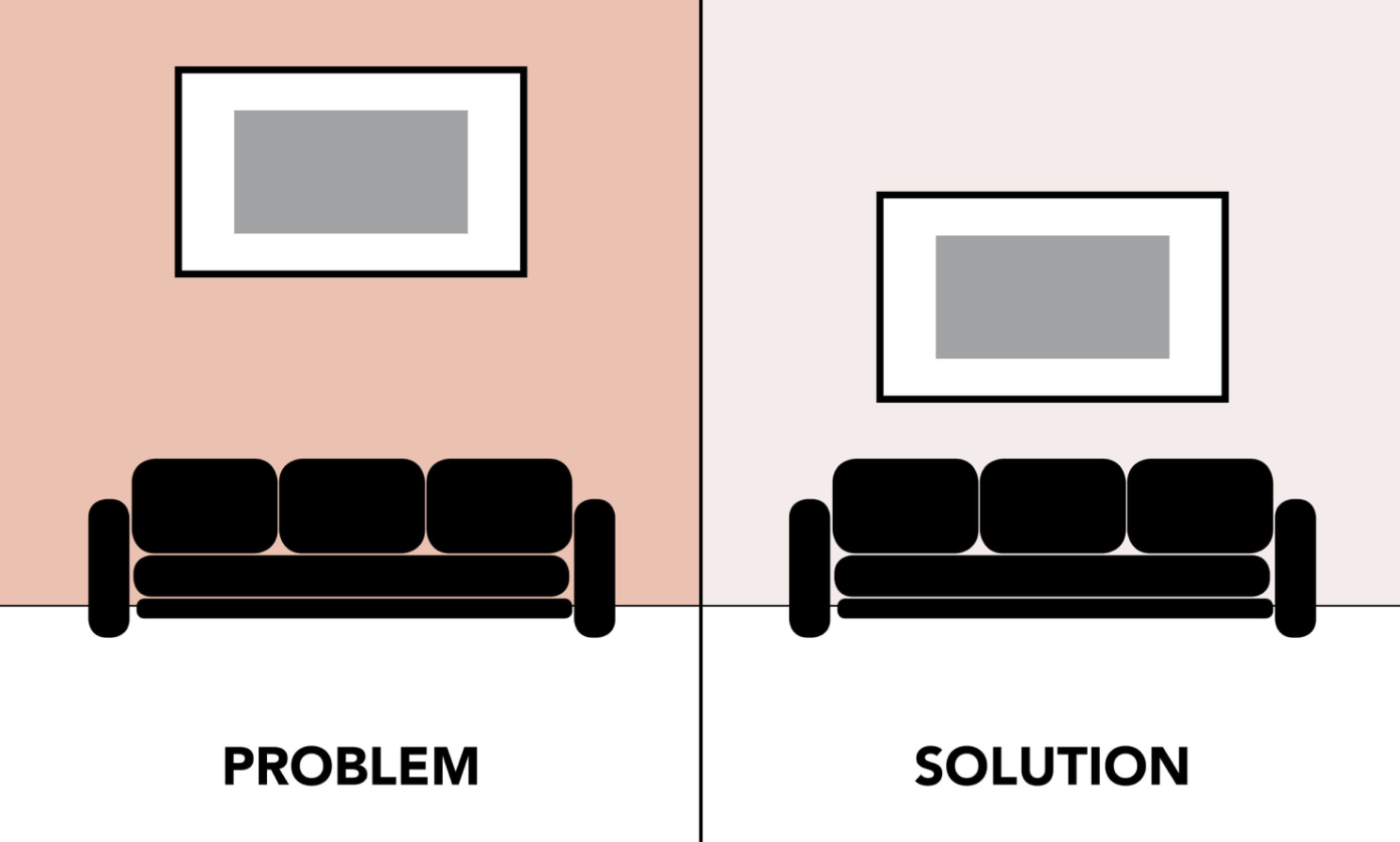
Solution: Hang everything at the right height
In general, you can might try the following hanging height:
- For artwork or decors, center the piece at around 145cm to 152cm from the floor, roughly the eye level for a standing adult. If they are above the furniture, like a table, bed or sofa, also keep the bottom of the frame 15cm to 20cm above the surface below it to maintain a clear visual connection.
- For TVs, sit down in your usual viewing position first, mark eye level on the wall, and mount the screen center there.
Anyway, the key is to ensure that everything on your walls feels visually connected to the room — to the furniture below it, the people in it, and the overall scale of the space.
Mistake 7: Overusing drop ceilings in low spaces
Design any room, shop or space with DecAI in less 30 seconds! It's free!
A drop ceiling isn't automatically a bad design choice. In fact, it can help conceal ductwork, integrate lighting, improve acoustics, and create a cleaner-looking ceiling when used appropriately.
The problem begins when drop ceilings are added without considering the room's proportions—especially in homes or rooms with limited ceiling height. Thick, multi-layered, or overly decorative ceiling designs can visually lower the ceiling, making the space feel darker, smaller, and more enclosed than it actually is.
Older-style tray ceilings with excessive detailing can also make otherwise modern interiors feel dated.
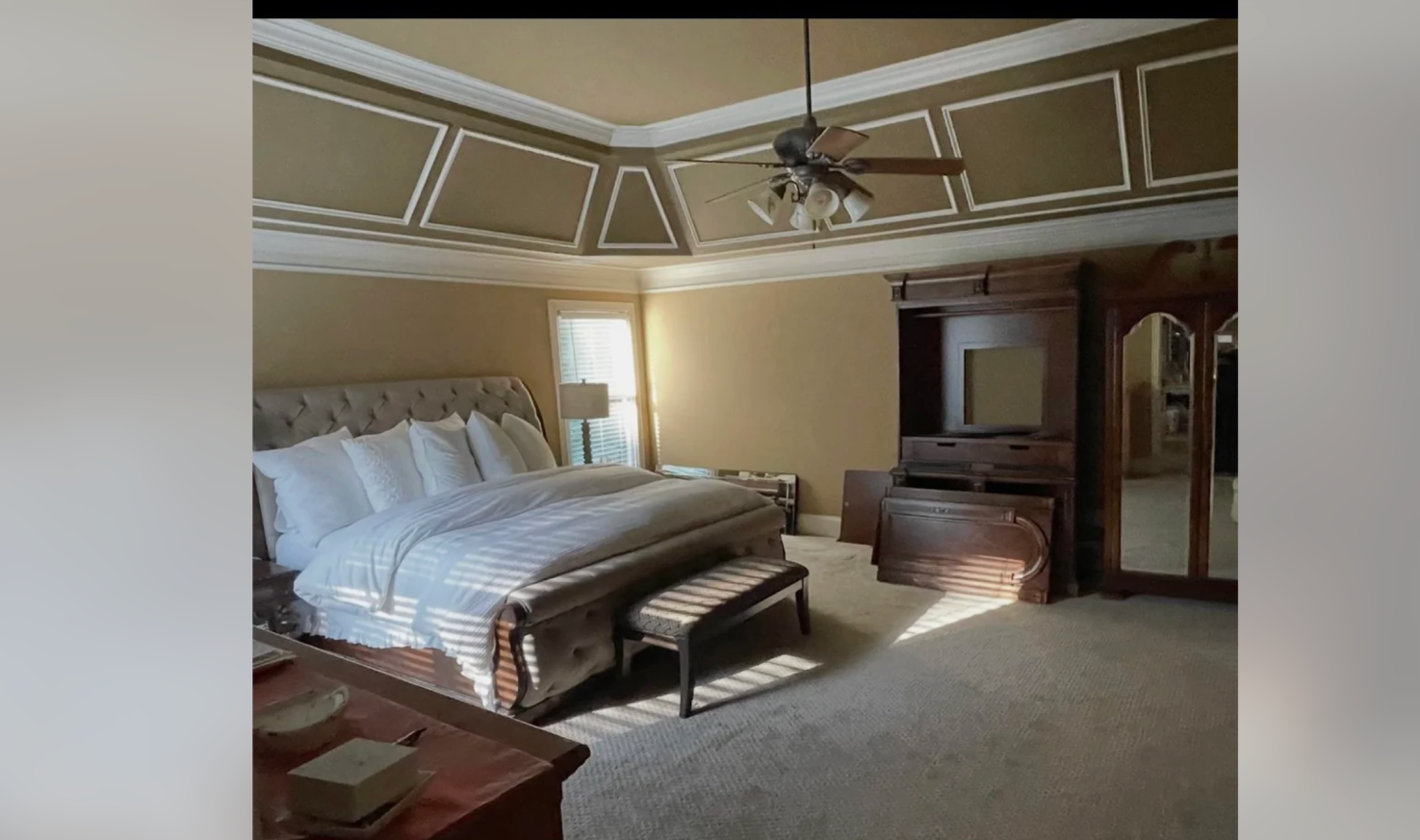
The overly thick drop ceiling visually compresses the room, making the already low ceiling feel even lower.
If a suspended ceiling is necessary for mechanical systems or lighting, designers generally recommend keeping the drop as shallow and simple as possible while maintaining clean lines and adequate ceiling height.
Solution: Choose ceiling designs that match your space
Rather than avoiding drop ceilings altogether, the goal is to choose a ceiling treatment that fits your room's height, function, and overall design style.
You might try the following four clues:
1.Keep the ceiling exposed when it suits the style
For lofts, studios, commercial spaces, or industrial interiors, an exposed ceiling can make a room feel taller and more open. Painting ducts and pipes in a single color helps create a clean, intentional appearance rather than visual clutter.
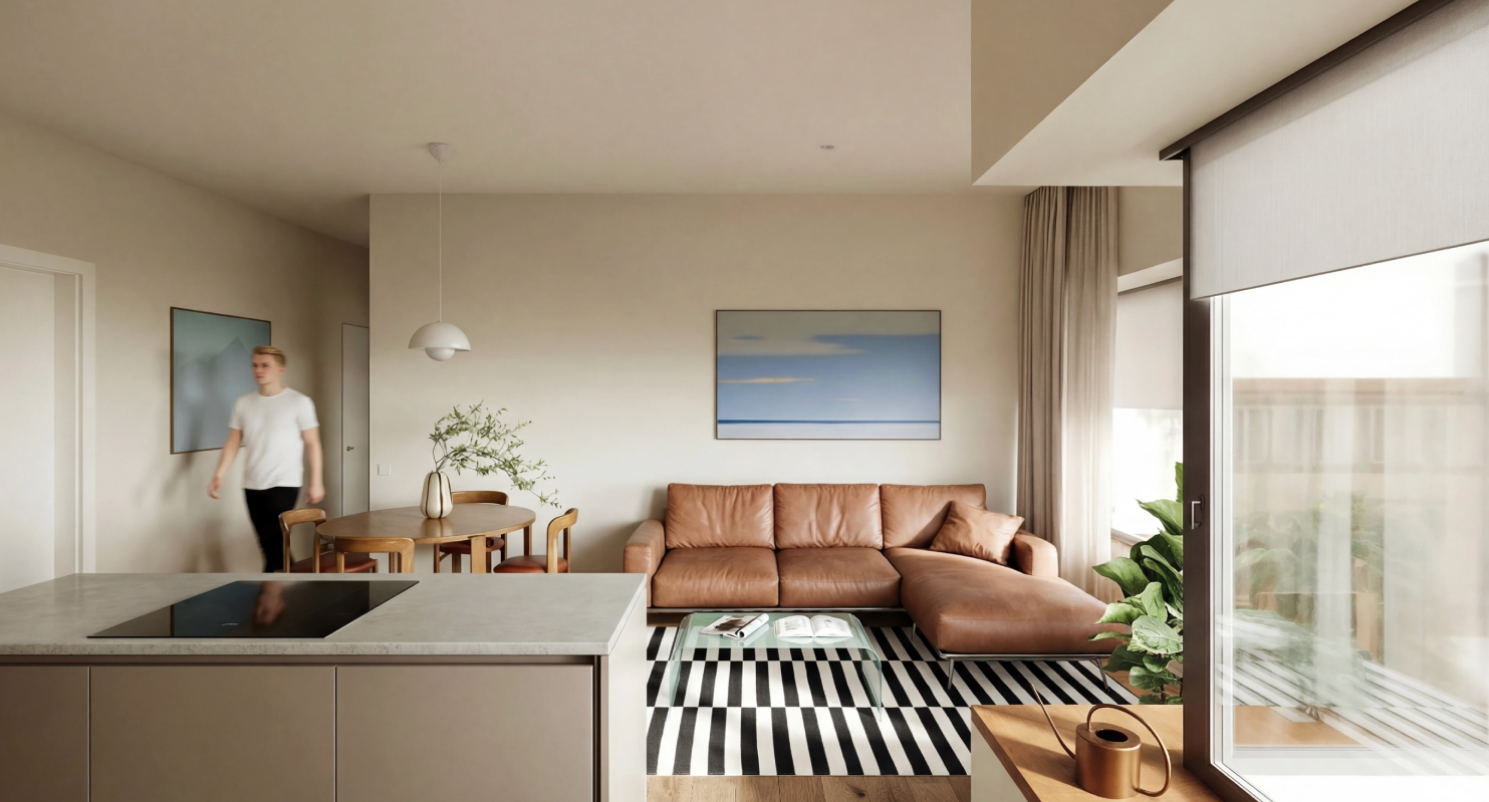
Exposed ceiling design example from Valeria Mosolova
The exposed ceiling design maximized the room's space.
2.Use a simple, minimal drop ceiling
If you need to hide lighting, air-conditioning ducts, or wiring, choose a thin, flat drop ceiling with recessed lighting instead of bulky multi-level designs.
Modern minimalist ceiling details provide the same functionality while preserving a spacious feeling.
3.Choose a standard drywall ceiling for a timeless look
If you don't need to hide large mechanical systems, a flat drywall ceiling remains one of the most versatile choices. It creates a clean, seamless appearance that works well with almost every interior style and helps maximize the perception of ceiling height.
4. Minimize the visual impact if a drop ceiling already exists
If your home already has a drop ceiling, you don't necessarily need to remove it.
Instead, reduce its visual weight by:
- Using light-colored finishes
- Installing recessed or indirect lighting
- Adding floor-to-ceiling curtains
- Incorporating tall shelving or vertical wall art
These vertical elements naturally draw the eye upward, helping the room feel taller and more balanced.
Mistake 8: Ignore flow and traffic paths
Have you ever entered a room and immediately felt like you had to navigate around furniture just to get from one side to the other? Or found yourself squeezing past a chair, bumping into a corner, or taking an awkward detour just to reach the door? That's what happens when flow and traffic paths are ignored during the design process. It’s a mistake that may not seem obvious on a floor plan, but you’ll feel it every single day when living in space.
Solution: Plan the invisible walkway in advance
The best fix for this is to take a moment to think about how people actually move through the space, before settling on any furniture arrangement. Where do they come in? Where do they need to get to? Where do they naturally pause, sit, or gather? Map those paths out, even roughly, and use them as the foundation for your layout decisions.
Here are some practical guidelines for you:
- Leave at least 60–90 cm for main walkways whenever possible
- Avoid placing large furniture pieces directly in natural traffic paths
- Make sure doors and drawers can fully open without hitting other items
- Allow 90cm to 100cm around dining tables for chairs to pull out freely
- Arrange seating so people can move comfortably without squeezing or sidestepping.
In this way, when these invisible walkways are intentionally planned, the room feels more natural and unobstructed, making it effortless for anyone—even first-time visitors—to move through the space.
Mistake 9: Forget personal touches
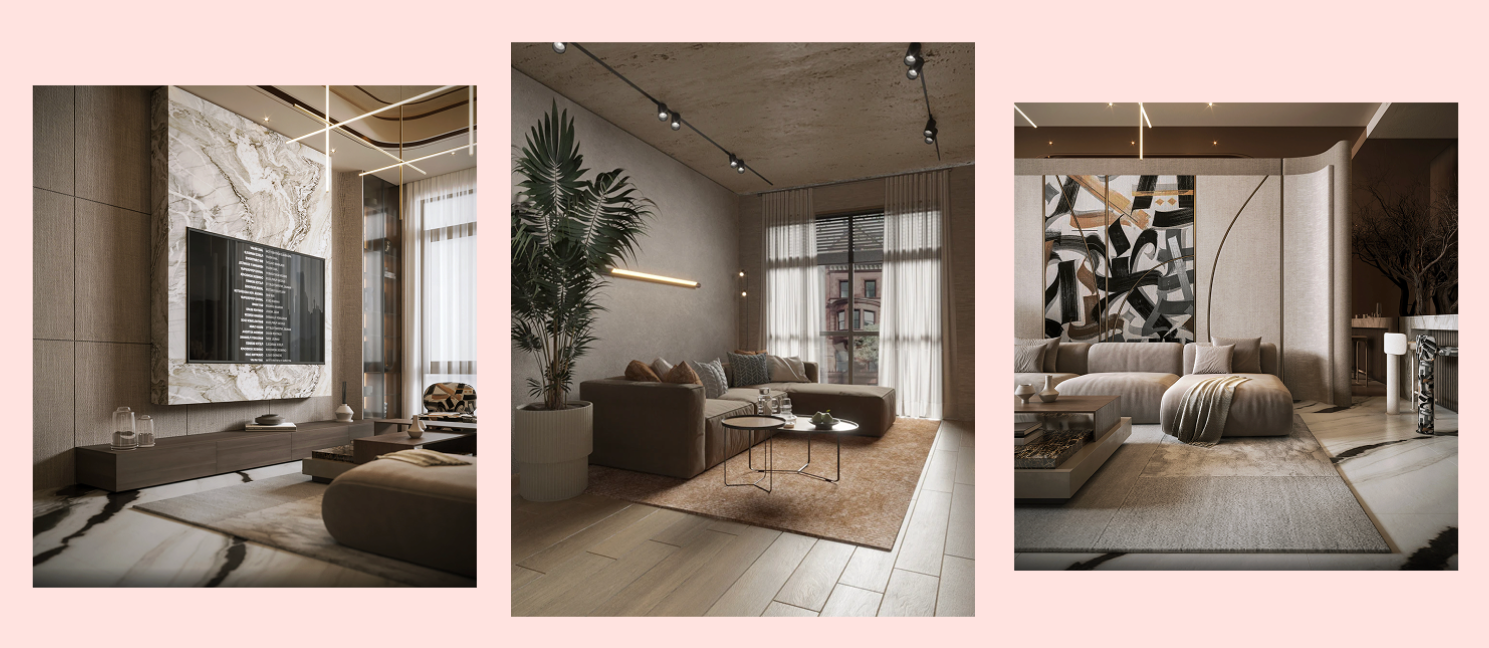
A space that truly reflects your taste and personality makes you feel relaxed and at home. Without personal touches, a room or store can feel like a piece of art that’s missing its soul, which is technically complete, but emotionally empty. It might look neat, coordinated, and well-styled, but it can still feel cold, impersonal, and uninviting, never really feeling like “yours.”
Solution: Let your space tell your story
Our recommendation is to start by adding something that reflects who you are, such as:
- Display some artwork or souvenirs with your taste
- Add some items related to your hobbies or lifestyles
- Combine textures, colors and accessories that reflect your taste
- Incorporate plants, flowers or natural elements
- Include some personal items you actually own or use, like a reading nook or coffee station.
Even small personal touches can transform a well-styled space into one that feels warm, welcoming, and unmistakably yours.
Mistake 10. Reply overly on design trends
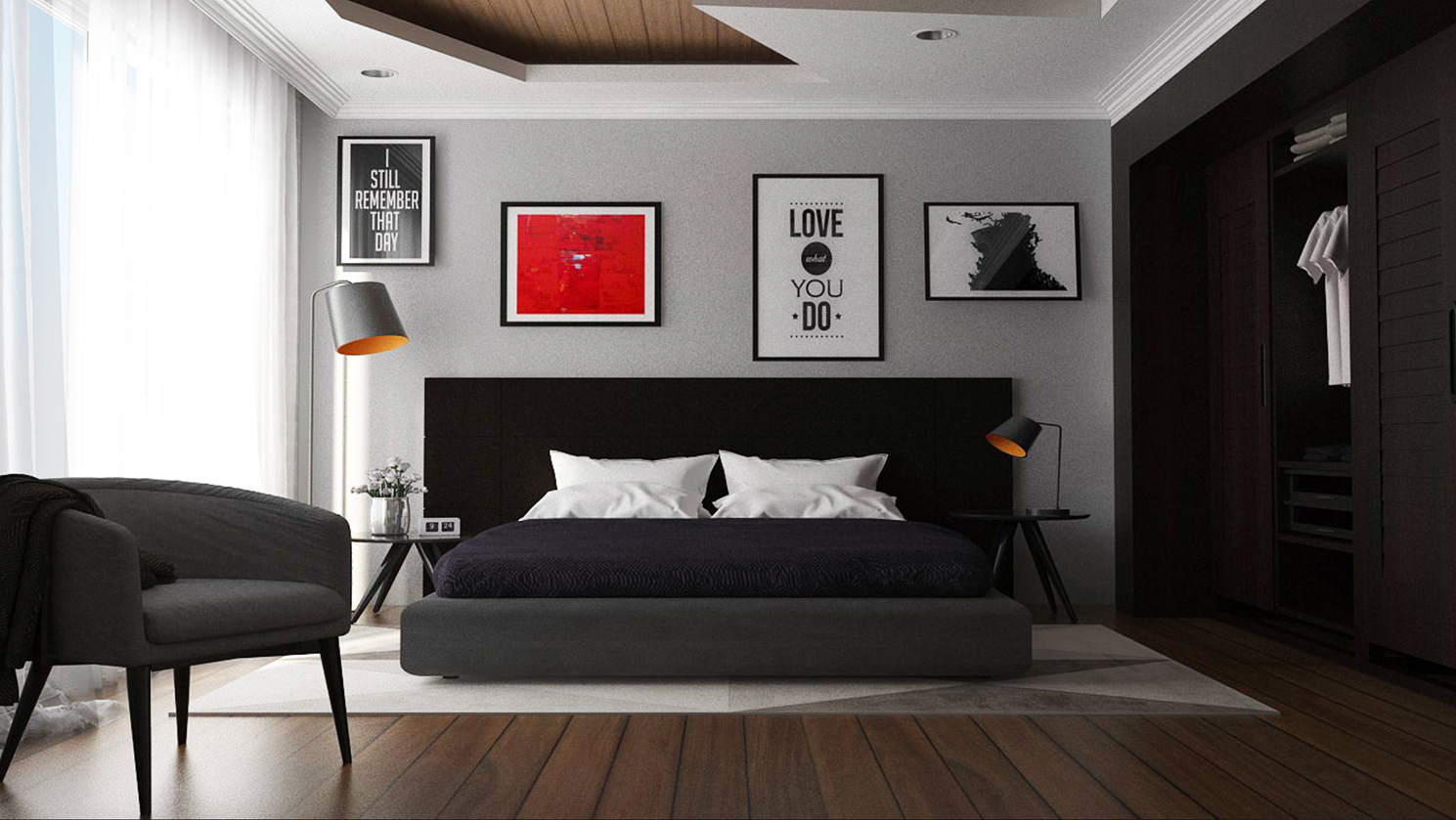
Following the latest trends is one of the most effective ways for designers to stay inspired and create better, fresher spaces. However, that doesn't mean blindly blending every current trend into your design, since design trends often change quickly, and what looks cutting-edge today may feel outdated or out of place tomorrow.
Over-relying on trends can make your space feel temporary, impersonal, or even chaotic if the pieces don’t suit your lifestyle or personality.
Solution: Balance trends with timeless design
We’re not saying you should avoid trends entirely.
In fact, checking out the latest styles, furniture, colors, or patterns is a great way to get design inspiration. Whether to incorporate them into your design also depends on your needs.
And the key is to balance trendy elements with timeless, classic design. You can try to let your core pieces, like furniture, layout, and foundational colors, remain classic and long-lasting, while trends can be added as accents through pillows, rugs, artwork, or small décor.
In one sentence, trends should inspire, not dominate. A well-balanced design feels both current and lasting, functional, and personal.
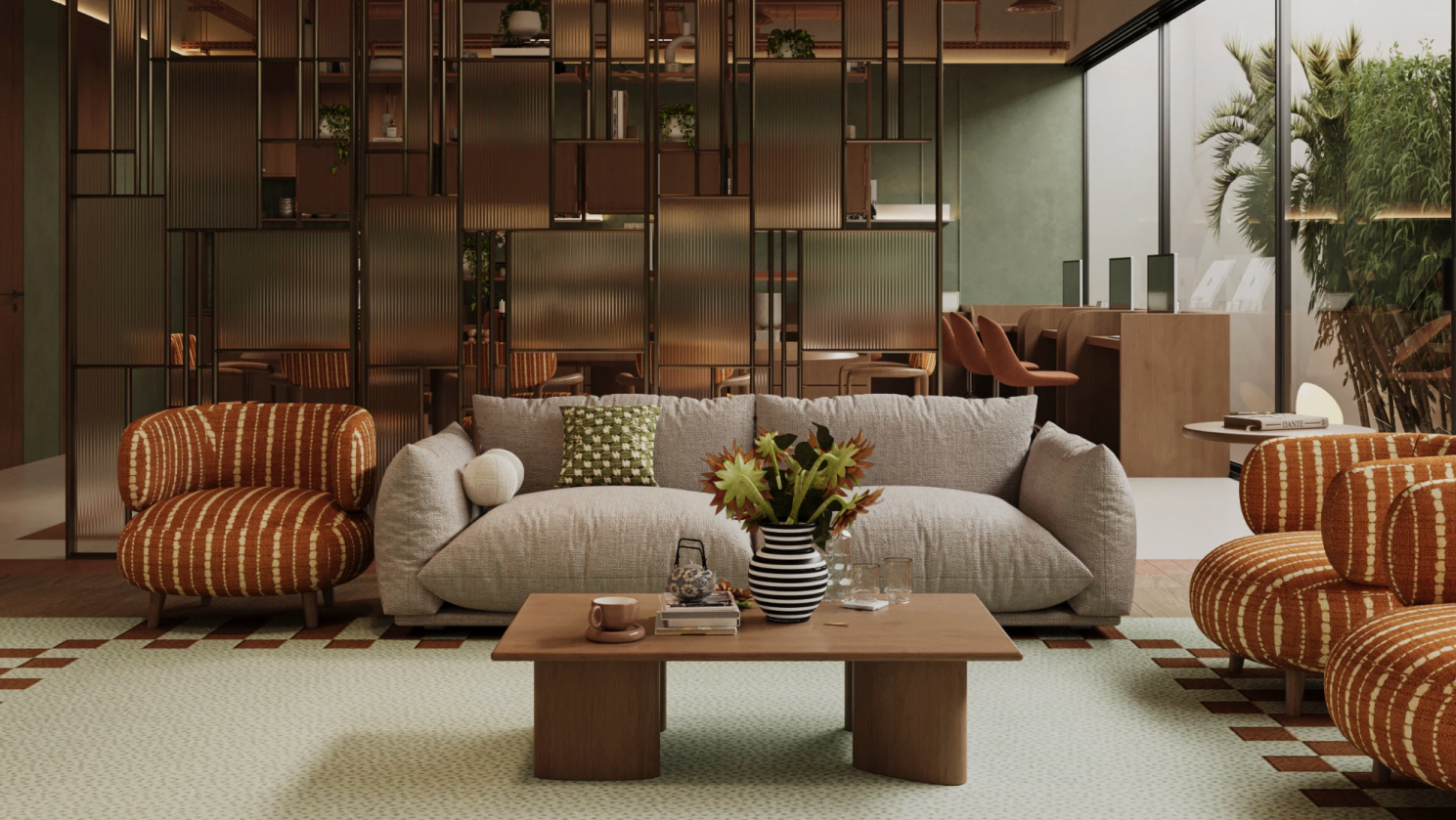
Mistake 11.Overuse matchy furniture sets
Buying a full matching furniture set might seem like the easiest way to design a room. Everything coordinates, nothing clashes, and the space instantly looks “put together.” But when every piece is identical in style, color, and material, the room can start to feel flat, predictable, and lacking personality. It will just be like a furniture showroom rather than a real home.
Solution: Wisely mix for a more layered look
Try combining different materials, styles, colors, and textures throughout your furniture and décor. However, too much mixing without intention can feel distracting or chaotic.
And the key is to take one type as the foundation, a dominant material, style, or color tone that anchors the room, and add others as supporting layers that complement rather than compete with it.
For example, a solid wood dining table can serve as the focal point, paired with upholstered chairs, a metal pendant light, and a woven rug. Each piece is different in material and texture, yet they work together because they follow the same overall visual direction.
Mistake 12: Push all furniture against the walls
It is nearly common sense that placing every piece of furniture against the walls will make a room look bigger. But most of the time, it actually does the opposite.
When all the furniture hugs the walls, the room can feel empty in the middle and disconnected around the edges. Seating areas end up too far apart, conversations feel less natural, and the space may look more like a waiting area than a comfortable home.
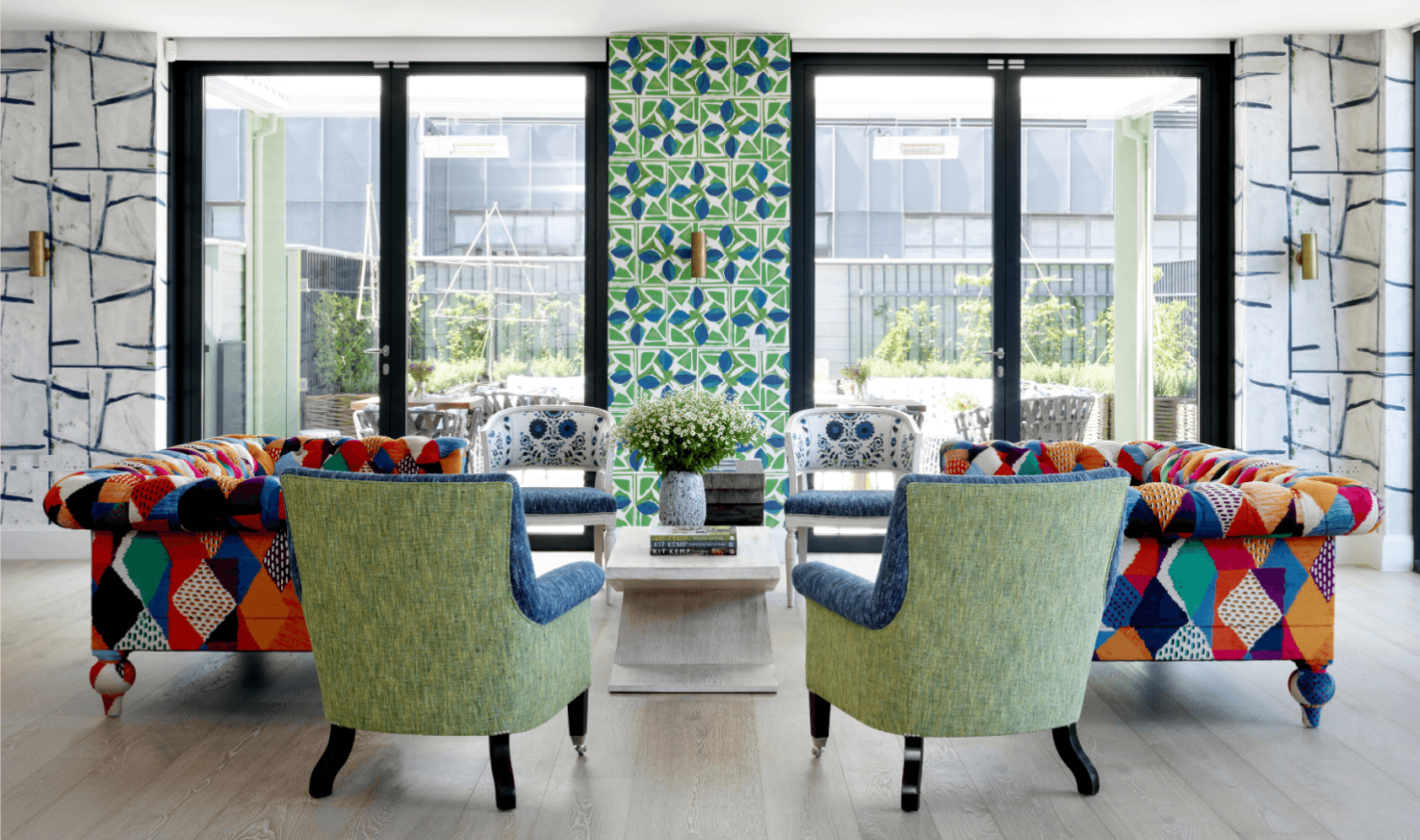
Solution: Put your furniture away from the wall
Instead of automatically placing everything against the walls, you should try:
- Pull larger pieces, like sofas, slightly inward to form a cozy conversation area
- Group chairs and tables together so they feel connected, not scattered
- Use rugs to anchor furniture and define the space
- Keep clear walkways, but don’t be afraid to use the center of the room
Anyway, even moving a sofa just a few inches away from the wall can completely change how the room feels.
These are all the common mistakes that you should keep in mind to avoid. In 2026, there are far more, such as forgetting to integrate smart home systems, overlooking multifunctional spaces, underestimating natural lighting, and neglecting health and wellness considerations, and more.
Staying aware of these trends and planning carefully will help you create a space that’s both stylish and functional.
FAQs:
1.How do I avoid making interior design mistakes as a beginner?
The best thing a beginner can do is slow down and plan before designing or buying anything for your home or store renovation. As the mistakes mentioned above show, most interior design errors don’t happen because of bad taste—they happen because decisions are rushed or made without a clear overall vision.
2.I’m on a budget, can I fix these design mistakes without spending a lot of money?
Yes. You can definitely choose cost-effective solutions to fix these mistakes, such as adding affordable lighting, shopping for budget-friendly décor, or simply rearranging furniture to reduce overcrowding. Start by focusing on small changes first.
3.If I live in a rental, what design mistakes should I avoid, and how can I fix them without damaging the space?
Well, for renters, you should avoid permanent changes, such as painting colors, instead, try on removable changes, such as adding removable wallpaper or peel-and-stick tiles, using area rugs to cover floors, and bringing in portable lighting and decor.
4.How do I know if my furniture scale is right for my room?
Firstly measure your room, like length, width and ceiling height, and write down the dimensions. When shopping for furniture, check the product dimensions and compare them to your room.
5.Can I mix different design styles without making a mistake?
Yes. Mixing styles (like modern + boho, vintage + contemporary) adds personality, but the key is to keep a cohesive color palette and balance the styles. For example, pair a modern sofa with vintage side tables and boho pillows — all in neutral tones with a pop of accent color. Avoid mixing too many styles (stick to 2–3) to prevent chaos.
Conclusion
Designing a room or store that is both functional and visually appealing is never easy. We hope this list of 12 common interior design mistakes, along with examples and practical fixes, helps you avoid unnecessary pitfalls and create a space that looks great, works well, and feels inviting quickly.
Redesign any home interior, exterior & garden in seconds
Share this Post:
'%3e%3cpath%20d='M17.9995%2035.999C17.0317%2035.999%2016.0619%2035.9219%2015.1161%2035.7696C10.9414%2035.0973%207.11524%2032.9513%204.34408%2029.7273C1.54287%2026.4683%200%2022.3035%200%2017.9995C0%208.07403%208.07503%200%2017.9995%200C27.924%200%2036%208.07503%2036%2017.9995C36%2022.3696%2034.4151%2026.5835%2031.5357%2029.8646C28.6844%2033.1156%2024.7671%2035.2326%2020.5052%2035.8267C19.6806%2035.9419%2018.8371%2036%2017.9995%2036V35.999ZM17.9995%201.20123C8.73726%201.20123%201.20224%208.73626%201.20224%2017.9985C1.20224%2026.2919%207.13427%2033.2659%2015.3075%2034.5814C16.9546%2034.8469%2018.6808%2034.8659%2020.3389%2034.6345C28.5812%2033.4863%2034.7968%2026.334%2034.7968%2017.9985C34.7968%208.73626%2027.2617%201.20123%2017.9985%201.20123H17.9995Z'%20fill='%23FF0209'/%3e%3cpath%20d='M29.0557%2014.3621C28.9184%2013.0276%2028.6208%2011.5539%2027.5268%2010.7784C26.6782%2010.1773%2025.5642%2010.1553%2024.5242%2010.1563C22.3251%2010.1583%2020.126%2010.1603%2017.9269%2010.1623C15.812%2010.1643%2013.6971%2010.1663%2011.5821%2010.1683C10.6985%2010.1683%209.8399%2010.1002%209.01937%2010.4819C8.31406%2010.8105%207.76303%2011.4347%207.43241%2012.1289C6.97156%2013.0957%206.87438%2014.1898%206.81927%2015.2588C6.71708%2017.2044%206.7281%2019.156%206.85133%2021.0996C6.9405%2022.5193%207.16792%2024.0872%208.26496%2024.9919C9.23777%2025.7934%2010.6103%2025.8325%2011.8707%2025.8335C15.8741%2025.8365%2019.8776%2025.8395%2023.881%2025.8435C24.394%2025.8435%2024.93%2025.8345%2025.453%2025.7774C26.4829%2025.6661%2027.4637%2025.3716%2028.1249%2024.6092C28.7922%2023.8407%2028.9635%2022.7698%2029.0657%2021.7569C29.3121%2019.3003%2029.3091%2016.8177%2029.0557%2014.3621ZM15.6116%2021.4453V14.5545L21.5797%2017.9999L15.6116%2021.4453Z'%20fill='%23FF0209'/%3e%3c/g%3e%3cdefs%3e%3cclipPath%20id='clip0_13816_41422'%3e%3crect%20width='36'%20height='36'%20fill='white'/%3e%3c/clipPath%3e%3c/defs%3e%3c/svg%3e)
'%3e%3cpath%20d='M17.9995%2036C17.0327%2036%2016.0619%2035.9229%2015.1161%2035.7696C10.9414%2035.0973%207.11524%2032.9513%204.34408%2029.7273C1.54287%2026.4683%200%2022.3035%200%2017.9995C0%208.07403%208.07503%200%2017.9995%200C27.924%200%2036%208.07503%2036%2017.9995C36%2022.3696%2034.4151%2026.5835%2031.5357%2029.8646C28.6844%2033.1156%2024.7671%2035.2326%2020.5052%2035.8267C19.6806%2035.9419%2018.8371%2036%2017.9995%2036ZM17.9995%201.20224C8.73726%201.20224%201.20224%208.73726%201.20224%2017.9995C1.20224%2026.2919%207.13427%2033.2669%2015.3075%2034.5824C16.9556%2034.8479%2018.6808%2034.8669%2020.3389%2034.6355C28.5812%2033.4873%2034.7968%2026.335%2034.7968%2017.9995C34.7968%208.73726%2027.2617%201.20224%2017.9985%201.20224H17.9995Z'%20fill='url(%23paint0_linear_13816_41436)'/%3e%3cpath%20d='M23.4463%207.55469H12.549C9.53841%207.55469%207.08984%2010.0032%207.08984%2013.0138V22.9834C7.08984%2025.994%209.53841%2028.4426%2012.549%2028.4426H23.4463C26.4569%2028.4426%2028.9054%2025.994%2028.9054%2022.9834V13.0138C28.9054%2010.0032%2026.4569%207.55469%2023.4463%207.55469ZM9.01543%2013.0138C9.01543%2011.0652%2010.6004%209.48027%2012.549%209.48027H23.4463C25.3949%209.48027%2026.9799%2011.0652%2026.9799%2013.0138V22.9834C26.9799%2024.932%2025.3949%2026.517%2023.4463%2026.517H12.549C10.6004%2026.517%209.01543%2024.932%209.01543%2022.9834V13.0138Z'%20fill='url(%23paint1_linear_13816_41436)'/%3e%3cpath%20d='M17.9964%2023.0749C20.7966%2023.0749%2023.0749%2020.7966%2023.0749%2017.9964C23.0749%2015.1962%2020.7966%2012.918%2017.9964%2012.918C15.1962%2012.918%2012.918%2015.1962%2012.918%2017.9964C12.918%2020.7966%2015.1962%2023.0749%2017.9964%2023.0749ZM17.9964%2014.8446C19.7346%2014.8446%2021.1483%2016.2582%2021.1483%2017.9964C21.1483%2019.7347%2019.7346%2021.1483%2017.9964%2021.1483C16.2582%2021.1483%2014.8446%2019.7347%2014.8446%2017.9964C14.8446%2016.2582%2016.2582%2014.8446%2017.9964%2014.8446Z'%20fill='url(%23paint2_linear_13816_41436)'/%3e%3cpath%20d='M23.5482%2013.741C24.3026%2013.741%2024.9168%2013.1269%2024.9168%2012.3725C24.9168%2011.618%2024.3026%2011.0039%2023.5482%2011.0039C22.7938%2011.0039%2022.1797%2011.618%2022.1797%2012.3725C22.1797%2013.1269%2022.7938%2013.741%2023.5482%2013.741Z'%20fill='url(%23paint3_linear_13816_41436)'/%3e%3c/g%3e%3cdefs%3e%3clinearGradient%20id='paint0_linear_13816_41436'%20x1='5.27482'%20y1='30.7312'%20x2='30.7242'%20y2='5.28083'%20gradientUnits='userSpaceOnUse'%3e%3cstop%20stop-color='%23FAAD4F'/%3e%3cstop%20offset='0.35'%20stop-color='%23DD2A7B'/%3e%3cstop%20offset='0.62'%20stop-color='%239537B0'/%3e%3cstop%20offset='1'%20stop-color='%23515BD4'/%3e%3c/linearGradient%3e%3clinearGradient%20id='paint1_linear_13816_41436'%20x1='8.92225'%20y1='27.074'%20x2='27.073'%20y2='8.92324'%20gradientUnits='userSpaceOnUse'%3e%3cstop%20stop-color='%23FAAD4F'/%3e%3cstop%20offset='0.35'%20stop-color='%23DD2A7B'/%3e%3cstop%20offset='0.62'%20stop-color='%239537B0'/%3e%3cstop%20offset='1'%20stop-color='%23515BD4'/%3e%3c/linearGradient%3e%3clinearGradient%20id='paint2_linear_13816_41436'%20x1='14.4077'%20y1='21.5861'%20x2='21.5861'%20y2='14.4077'%20gradientUnits='userSpaceOnUse'%3e%3cstop%20stop-color='%23FAAD4F'/%3e%3cstop%20offset='0.35'%20stop-color='%23DD2A7B'/%3e%3cstop%20offset='0.62'%20stop-color='%239537B0'/%3e%3cstop%20offset='1'%20stop-color='%23515BD4'/%3e%3c/linearGradient%3e%3clinearGradient%20id='paint3_linear_13816_41436'%20x1='22.5814'%20y1='13.3393'%20x2='24.515'%20y2='11.4057'%20gradientUnits='userSpaceOnUse'%3e%3cstop%20stop-color='%23FAAD4F'/%3e%3cstop%20offset='0.35'%20stop-color='%23DD2A7B'/%3e%3cstop%20offset='0.62'%20stop-color='%239537B0'/%3e%3cstop%20offset='1'%20stop-color='%23515BD4'/%3e%3c/linearGradient%3e%3cclipPath%20id='clip0_13816_41436'%3e%3crect%20width='36'%20height='36'%20fill='white'/%3e%3c/clipPath%3e%3c/defs%3e%3c/svg%3e)
'%3e%3cpath%20d='M17.9995%2035.999C17.0317%2035.999%2016.0619%2035.9219%2015.1161%2035.7696C10.9414%2035.0973%207.11524%2032.9513%204.34408%2029.7273C1.54287%2026.4683%200%2022.3035%200%2017.9995C0%208.07403%208.07502%200%2017.9995%200C27.924%200%2036%208.07503%2036%2017.9995C36%2022.3696%2034.415%2026.5835%2031.5357%2029.8646C28.6844%2033.1156%2024.7671%2035.2326%2020.5052%2035.8267C19.6806%2035.9419%2018.8371%2036%2017.9995%2036V35.999ZM17.9995%201.20123C8.73725%201.20123%201.20224%208.73626%201.20224%2017.9985C1.20224%2026.2919%207.13427%2033.2659%2015.3075%2034.5814C16.9545%2034.8469%2018.6808%2034.8659%2020.3388%2034.6345C28.5812%2033.4863%2034.7968%2026.334%2034.7968%2017.9985C34.7968%208.73626%2027.2617%201.20123%2017.9985%201.20123H17.9995Z'%20fill='%23007EBB'/%3e%3cpath%20d='M9.06639%2012.124C8.60253%2011.6932%208.37109%2011.1602%208.37109%2010.526C8.37109%209.89184%208.60253%209.33481%209.06639%208.90401C9.53026%208.47321%2010.1274%208.25781%2010.8587%208.25781C11.5901%208.25781%2012.1642%208.47321%2012.627%208.90401C13.0909%209.33481%2013.3223%209.87581%2013.3223%2010.526C13.3223%2011.1762%2013.0909%2011.6932%2012.627%2012.124C12.1631%2012.5548%2011.5741%2012.7702%2010.8587%2012.7702C10.1434%2012.7702%209.52926%2012.5548%209.06639%2012.124ZM12.9326%2014.5946V27.7962H8.76182V14.5946H12.9326Z'%20fill='%23007EBB'/%3e%3cpath%20d='M26.8196%2015.9006C27.7283%2016.8875%2028.1832%2018.243%2028.1832%2019.9682V27.5663H24.2208V20.5042C24.2208%2019.6346%2023.9954%2018.9583%2023.5445%2018.4764C23.0937%2017.9945%2022.4876%2017.7541%2021.7262%2017.7541C20.9647%2017.7541%2020.3586%2017.9955%2019.9078%2018.4764C19.4569%2018.9583%2019.2315%2019.6346%2019.2315%2020.5042V27.5663H15.2461V14.5611H19.2315V16.2863C19.6353%2015.7113%2020.1793%2015.2574%2020.8636%2014.9228C21.5468%2014.5892%2022.3163%2014.4219%2023.1708%2014.4219C24.6937%2014.4219%2025.9099%2014.9158%2026.8186%2015.9016L26.8196%2015.9006Z'%20fill='%23007EBB'/%3e%3c/g%3e%3cdefs%3e%3cclipPath%20id='clip0_13816_41425'%3e%3crect%20width='36'%20height='36'%20fill='white'/%3e%3c/clipPath%3e%3c/defs%3e%3c/svg%3e)
'%3e%3cpath%20d='M18%2035.999C17.0322%2035.999%2016.0623%2035.9219%2015.1166%2035.7696C10.9417%2035.0973%207.11544%2032.9513%204.3442%2029.7273C1.54291%2026.4683%200%2022.3035%200%2017.9995C0%208.07403%208.07526%200%2018%200C27.9248%200%2036%208.07503%2036%2017.9995C36%2022.3696%2034.415%2026.5835%2031.5356%2029.8646C28.6842%2033.1156%2024.7668%2035.2326%2020.5047%2035.8267C19.6802%2035.9419%2018.8366%2036%2017.999%2036L18%2035.999ZM18%201.20123C8.73751%201.20123%201.20227%208.73626%201.20227%2017.9985C1.20227%2026.2919%207.13448%2033.2659%2015.3079%2034.5814C16.955%2034.8469%2018.6813%2034.8659%2020.3394%2034.6345C28.582%2033.4863%2034.7977%2026.334%2034.7977%2017.9985C34.7977%208.73626%2027.2625%201.20123%2018%201.20123Z'%20fill='black'/%3e%3cpath%20d='M7%208.09163H13.5067L19.521%2016.1816L27.0073%207.90625L28.786%207.93715L20.4078%2017.3454L29%2028.901H22.4959L16.8193%2021.362L9.8847%2029.0864H8.13428L15.9583%2020.26L7%208.09163ZM12.8931%209.28633H9.45676L23.2048%2027.6754H26.5793L12.8931%209.28633Z'%20fill='black'/%3e%3c/g%3e%3cdefs%3e%3cclipPath%20id='clip0_13886_43848'%3e%3crect%20width='36'%20height='36'%20fill='white'/%3e%3c/clipPath%3e%3c/defs%3e%3c/svg%3e)
'%3e%3cpath%20d='M17.9995%2035.999C17.0327%2035.999%2016.0619%2035.9219%2015.1161%2035.7686C10.9414%2035.0963%207.11524%2032.9503%204.34408%2029.7263C1.54287%2026.4673%200%2022.3025%200%2017.9995C0%208.07403%208.07503%200%2017.9995%200C27.924%200%2036%208.07503%2036%2017.9995C36%2022.3696%2034.415%2026.5835%2031.5357%2029.8646C28.6844%2033.1156%2024.7671%2035.2326%2020.5052%2035.8267C19.6806%2035.9419%2018.8371%2036%2017.9995%2036V35.999ZM17.9995%201.20123C8.73726%201.20123%201.20224%208.73626%201.20224%2017.9985C1.20224%2026.2909%207.13428%2033.2659%2015.3075%2034.5814C16.9556%2034.8469%2018.6808%2034.8659%2020.3389%2034.6345C28.5812%2033.4863%2034.7968%2026.334%2034.7968%2017.9985C34.7968%208.73626%2027.2617%201.20123%2017.9985%201.20123H17.9995Z'%20fill='%231877F7'/%3e%3cpath%20d='M20.5337%2014.9635V18.7536H25.2225L24.4801%2023.8601H20.5337V35.624C19.7423%2035.7342%2018.9328%2035.7913%2018.1112%2035.7913C17.1625%2035.7913%2016.2317%2035.7151%2015.324%2035.5689V23.8601H11V18.7536H15.324V14.1169C15.324%2011.2396%2017.6564%208.90625%2020.5347%208.90625V8.90926C20.5428%208.90926%2020.5508%208.90625%2020.5588%208.90625H25.2235V13.3215H22.1758C21.2691%2013.3215%2020.5347%2014.0558%2020.5347%2014.9625L20.5337%2014.9635Z'%20fill='%231877F7'/%3e%3c/g%3e%3cdefs%3e%3cclipPath%20id='clip0_13816_41433'%3e%3crect%20width='36'%20height='36'%20fill='white'/%3e%3c/clipPath%3e%3c/defs%3e%3c/svg%3e)
'%3e%3cpath%20d='M17.9995%2035.999C17.0327%2035.999%2016.0619%2035.9219%2015.1161%2035.7686C10.9414%2035.0963%207.11524%2032.9503%204.34408%2029.7263C1.54287%2026.4673%200%2022.3025%200%2017.9995C0%208.07403%208.07503%200%2017.9995%200C27.924%200%2036%208.07503%2036%2017.9995C36%2022.3696%2034.415%2026.5835%2031.5357%2029.8646C28.6844%2033.1156%2024.7671%2035.2326%2020.5052%2035.8267C19.6806%2035.9419%2018.8371%2036%2017.9995%2036V35.999ZM17.9995%201.20123C8.73726%201.20123%201.20224%208.73626%201.20224%2017.9985C1.20224%2026.2909%207.13428%2033.2659%2015.3075%2034.5814C16.9556%2034.8469%2018.6808%2034.8659%2020.3389%2034.6345C28.5812%2033.4863%2034.7968%2026.334%2034.7968%2017.9985C34.7968%208.73626%2027.2617%201.20123%2017.9985%201.20123H17.9995Z'%20fill='%232A91F7'/%3e%3cg%20clip-path='url(%23clip1_13816_41442)'%3e%3cpath%20d='M16.3345%2018.834C16.6924%2019.3124%2017.149%2019.7083%2017.6733%2019.9947C18.1976%2020.2812%2018.7774%2020.4516%2019.3734%2020.4942C19.9693%2020.5369%2020.5675%2020.4509%2021.1273%2020.2421C21.6871%2020.0333%2022.1954%2019.7065%2022.6178%2019.284L25.1178%2016.784C25.8768%2015.9981%2026.2968%2014.9456%2026.2873%2013.8531C26.2778%2012.7606%2025.8396%2011.7156%2025.0671%2010.943C24.2946%2010.1705%2023.2495%209.73231%2022.157%209.72281C21.0645%209.71332%2020.012%2010.1333%2019.2262%2010.8923L17.7928%2012.3173M19.6678%2017.1673C19.3099%2016.6889%2018.8533%2016.293%2018.329%2016.0065C17.8047%2015.7201%2017.2249%2015.5497%2016.6289%2015.507C16.033%2015.4643%2015.4348%2015.5503%2014.875%2015.7592C14.3152%2015.968%2013.8069%2016.2947%2013.3845%2016.7173L10.8845%2019.2173C10.1255%2020.0031%209.70551%2021.0557%209.715%2022.1481C9.72449%2023.2406%2010.1627%2024.2857%2010.9352%2025.0582C11.7078%2025.8307%2012.7528%2026.269%2013.8453%2026.2784C14.9378%2026.2879%2015.9903%2025.868%2016.7761%2025.109L18.2011%2023.684'%20stroke='%232A91F7'%20stroke-width='1.66667'%20stroke-linecap='round'%20stroke-linejoin='round'/%3e%3c/g%3e%3c/g%3e%3cdefs%3e%3cclipPath%20id='clip0_13816_41442'%3e%3crect%20width='36'%20height='36'%20fill='white'/%3e%3c/clipPath%3e%3cclipPath%20id='clip1_13816_41442'%3e%3crect%20width='20'%20height='20'%20fill='white'%20transform='translate(8%208)'/%3e%3c/clipPath%3e%3c/defs%3e%3c/svg%3e)
Redesign any home interior, exterior & garden in seconds