
7 Elements of Interior Design in 2026 (with Examples & Tips)

Great interior design is rarely just the result of a single inspired idea, it's usually the combination of creativity and a thoughtful arrangement of core design elements.
However, as a professional designer or someone just starting out, which element should you focus on first when designing a living room, retail space, or home office? How many of these core elements should always be included in this design project? And how do you arrange them wisely to produce something that looks not just good, but genuinely professional and beautiful?
You come to the right place. This ultimate guide answers all of that. 7 basic elements of interior design are introduced with clear explanations, real-world examples, and practical tips for you to understand not just what each element is, but how to use them together to create interiors that truly stand out.
And our free AI interior design tool would also help you timely practice and test out what you learn here with ease.
Design any room, shop or space with DecAI in less 30 seconds! It's free!
What are the elements of interior design?
Interior design elements, simply put, are the fundamental building blocks that designers, homeowners, and design beginners use to create cohesive, functional, and visually appealing interiors. These elements include space, line, color, shape, texture, and more.
Among them, space is the foundation. It provides the framework that determines how every other element—such as line, color, form, light, texture, pattern, and furniture—works together to shape the look, feel, and functionality of a room.
They all serve as the basic ingredients of any great interior design. Just as a chef needs to understand flavor, texture, and technique before creating a memorable dish, designers and beginners alike need to understand these core elements before they can bring their interior design ideas to life.
Why to learn about the interior design elements?
If you're just starting out in interior design, learning these elements is your first and most important step, since it gives you the foundation to better understand, visualize, evaluate and improve any space design:
- It gives you a common language. Whether you're visualizing your own design ideas or drawing inspiration from others, understanding these elements helps you clearly identify what you like, articulate what you want, and communicate it with confidence.
- It helps you make better decisions faster. When you understand how light affects color, or how line shapes perception, you stop second-guessing every choice. You make decisions with purpose rather than impulse.
- It saves you time and money. Redesigning a room without a framework often leads to costly mistakes — buying furniture that doesn't fit the scale of the space, choosing colors that look nothing like you imagined once they're on the walls, or layering so many patterns that the room feels chaotic. The elements give you a reliable foundation to plan from.
- To grow faster as a designer. For students and beginners in particular, mastering these elements lets you quickly visualize and practice your design skills—whether on paper or using digital interior design tools, simple or advanced—helping you improve as efficiently as possible.
- It unlocks your creativity. Once you are familiar with all design elements and skills, you can quickly visualize and test them whenever they strike. You can intentionally break the rules in ways that feel fresh and deliberate rather than accidental.
Overall, the elements of interior design are not just academic concepts reserved for people with design degrees. They are practical tools that anyone can learn and apply.
Elements vs principles, what’s the difference?
Here are the differences between interior design elements and principles:
- Elements are the raw components of interior design, focusing on what you use, like light, texture, color, form, pattern, and more. They are the basic building blocks present in every space.
- Principles are the guidelines for how those elements should be used and arranged, such as balance, emphasis, rhythm, proportion, and harmony. They are all principles that shape the way elements come together in a well-designed space.
So while interior design elements and principles are different, they can also work together to help you create spaces that are both functional and visually harmonious.
7 basic elements of interior design that shapes every home space
The seven elements don't contribute equally throughout the design process. Designers almost always begin with space planning before refining the remaining elements. Once the space works well, elements such as line, color, form, light, texture, pattern, and furniture are introduced to enhance the overall experience.
Element 1: Space
Space is the foundation of every interior design project. Before choosing colors, furniture, lighting, or decorative details, designers always begin by understanding and shaping the space itself. In fact, every other design element discussed later in this guide exists to improve how a space looks, feels, and functions.
Space refers to the three-dimensional area you design and live in, including its size, layout, proportions, circulation, ceiling height, architectural features, and the relationship between occupied and empty areas. Whether you're decorating a compact apartment or planning an open-concept home, understanding space is the first step toward creating interiors that are both beautiful and functional.
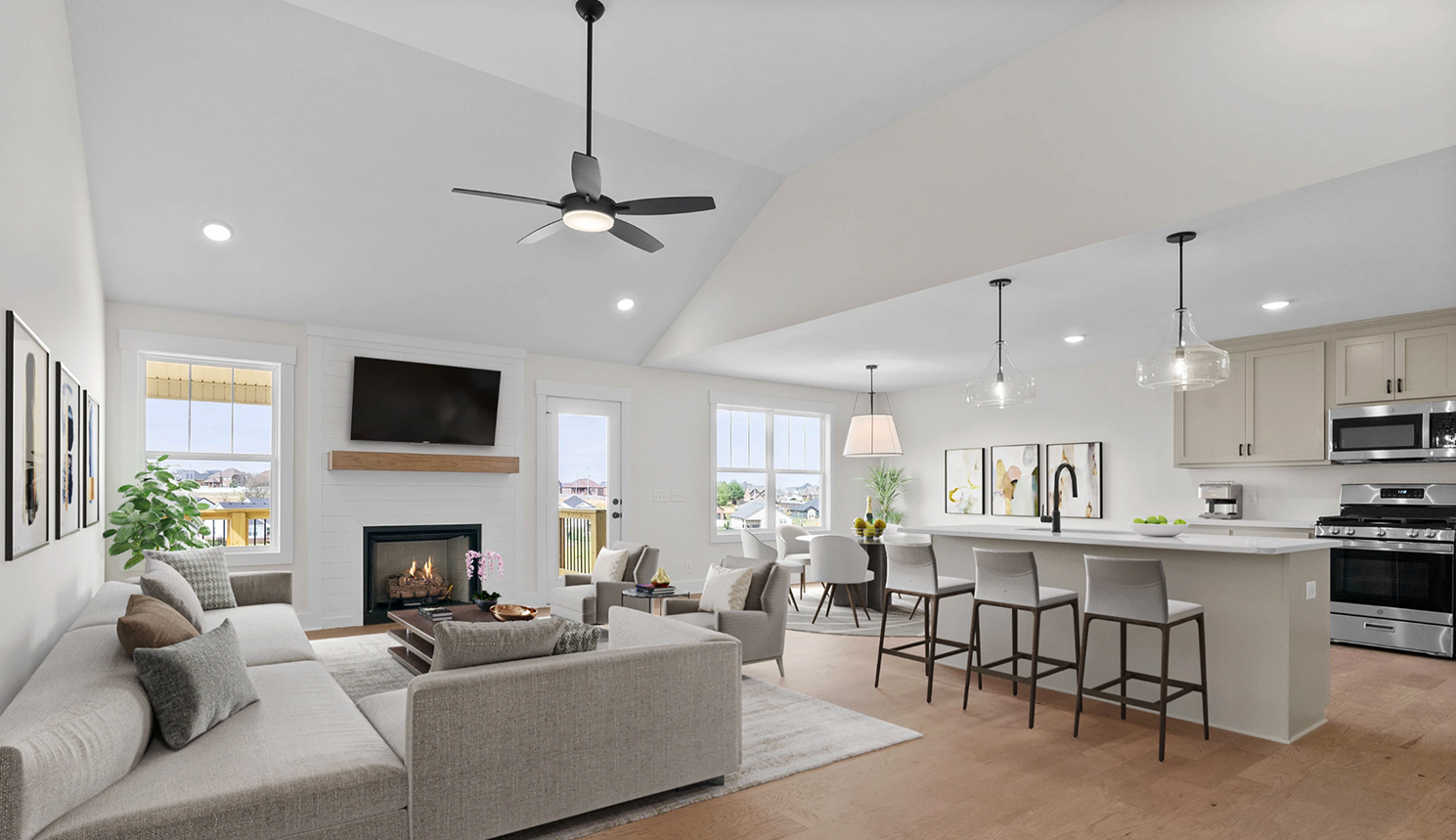
This is also why modern AI interior design tools like DecAI™ focus on the entire space instead of individual furniture pieces. By analyzing your room's layout, dimensions, lighting, and existing architectural features, AI can recommend layouts, styles, furniture arrangements, and color schemes that work together as one cohesive design rather than isolated changes.
Types of space
In interior design, two types of space are widely used: negative space and positive space:
- Positive space is the area occupied by furniture, décor, plants, and other physical elements. It gives a room its function, personality, and visual weight.
- Negative space, on the other hand, refers to the empty areas around and between those objects. Rather than being “wasted,” negative space is a powerful design tool that allows the eye to rest, prevents the room from feeling cluttered, and gives important elements room to stand out.
However, too much positive space can make a room feel crowded and overwhelming, while too much negative space can make it feel cold, sparse, or unfinished. So, you are recommended to wisely balance the negative and positive space in your interior design.
Why space matters
Space is often considered the most important element of interior design because it influences almost every aspect of a room, including:
- It determines how people move through a room.
- It affects comfort and functionality.
- It shapes the perceived size of a room.
- It influences furniture selection and placement.
- It provides the framework for all the other design elements.
Tips for using space:
1. Plan your layout before choosing furniture
Always decide how the room should function before buying furniture. Good space planning almost always leads to better design decisions later.
2. Keep circulation paths clear
Leave enough space for comfortable movement between furniture. A beautiful room that is difficult to walk through rarely feels successful.
3. Balance occupied and empty space
Avoid filling every corner. Empty space gives furniture room to breathe and makes the entire interior feel calmer and more sophisticated.
4. Design around the room, not individual objects
Instead of choosing furniture piece by piece, think about how every element works together within the overall space. This holistic approach creates a more cohesive interior.
5. Visualize the whole space before making changes
Rather than imagining individual paint colors or furniture pieces separately, visualize the entire room first. AI tools like DecAI™ allow you to redesign your whole space virtually, instantly testing different layouts, furniture arrangements, colors, lighting, and styles before spending money in the real world. This space-first workflow helps reduce costly mistakes and makes design decisions much easier for beginners.
Element 2: Line
Nearly every object and design in the world is defined by lines, and interior design is no exception.
Line is one of the most fundamental elements of interior design, it can be the natural line of walls and floors, or lines introduced by design through furniture, fixtures, and décor.
It is present in virtually every part of a room, from the edges of your furniture and the height of your walls to the pattern on your rug and the frame around your windows. Whether you notice it or not, line is constantly shaping how you perceive and experience a space.

Some people directly use a bunch of lines in their room design to create a distinctive design, just as this example from Francesca Rivera
Types of lines
In interior design, three types of lines are widely used:
- Horizontal lines are created by surfaces like floors, tables, and low-profile furniture, and deliver a sense of stability, calm, and width, making a room feel grounded and relaxed. They are particularly effective in spaces where you want to encourage rest and comfort.
- Vertical lines are found in elements like tall windows, columns, doorways, and floor-to-ceiling curtains. They draw the eye upward, creating a sense of height, strength, and formality. Using vertical lines strategically can make a low-ceilinged room feel significantly taller.
- Dynamic lines, which often refer to diagonal, zigzag, and curved lines, add energy, movement, and visual interest to a space. They are often found in staircases, arched doorways, and decorative patterns. When used thoughtfully, dynamic lines can make a space feel lively and creative. However, if overused, they may create visual tension and feel overwhelming.
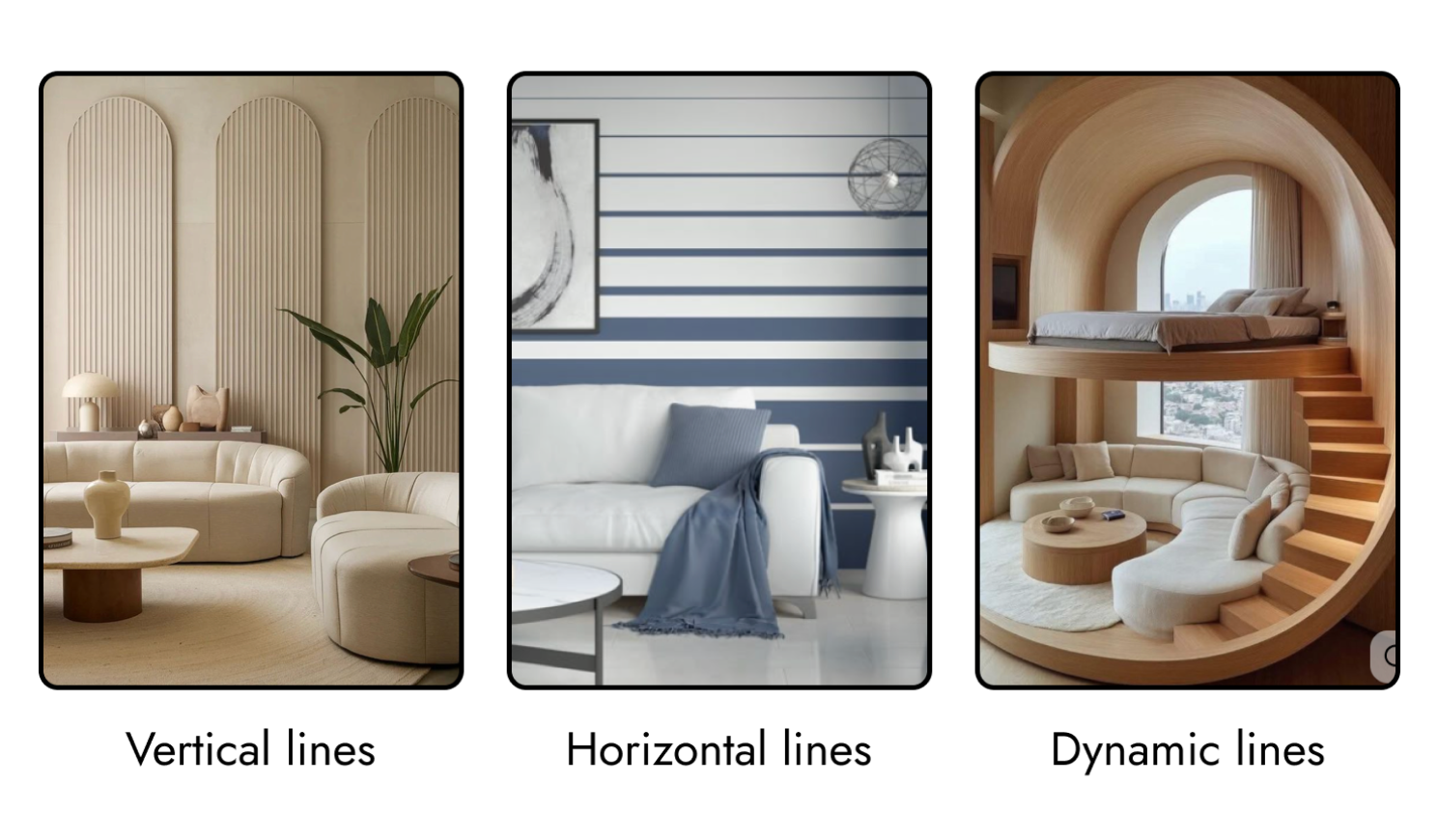
How these three types of lines shown in the interior design
Tips for using lines:
1.Use vertical lines to add height
Floor-to-ceiling curtains, tall bookcases, and vertical wall paneling all draw the eye upward, making a room with low ceilings feel noticeably taller and more spacious.
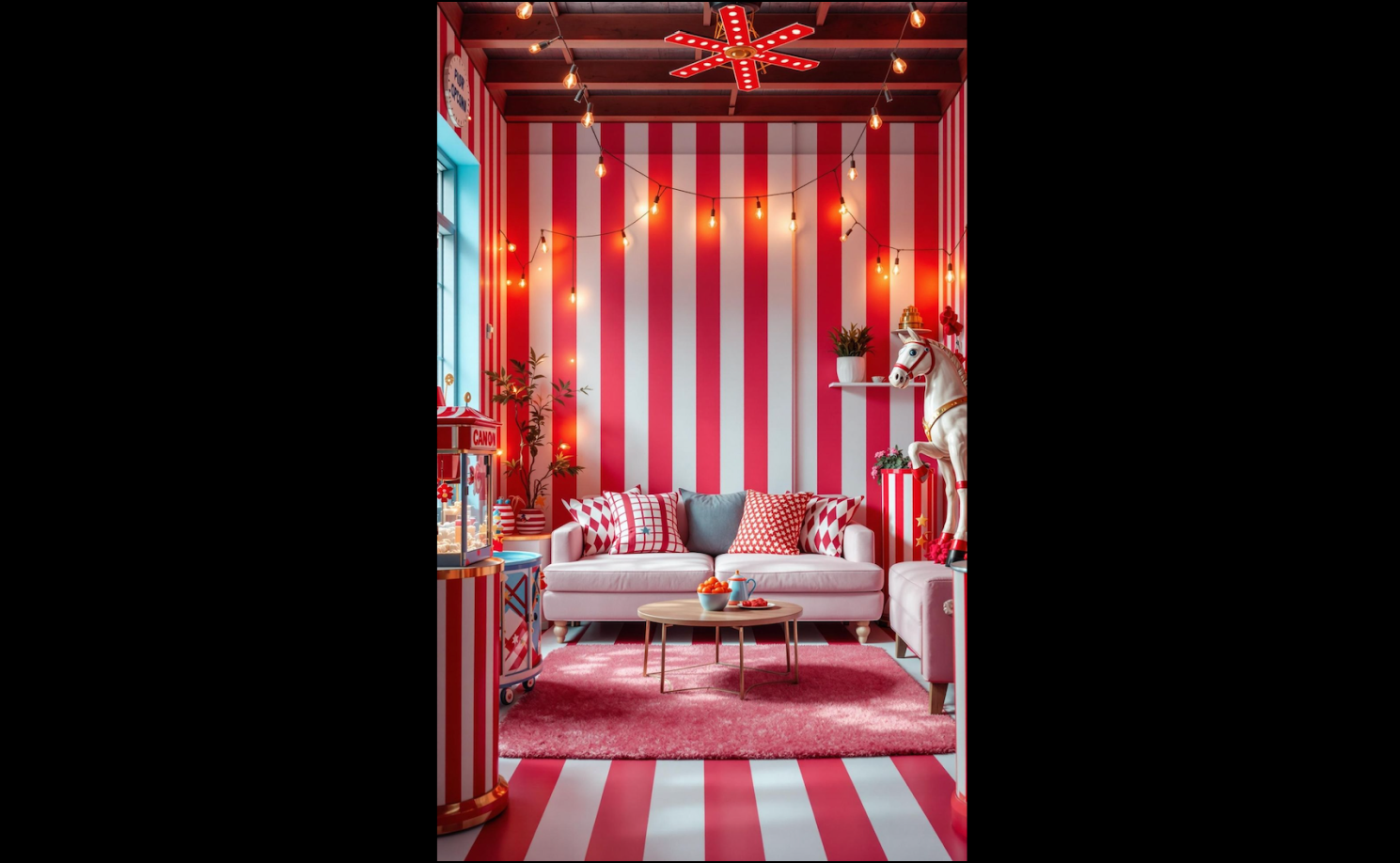
The floor-to-ceiling vertical lines in this living room design make the space feel taller and more harmonious—a great example of how you can use line elements effectively in your own design.
2.Use horizontal lines to make a room feel wider
Low-profile furniture, horizontal shelving, and wide rugs all emphasize the width of a space — a great trick for narrow rooms that feel too tight or cramped.
3.Use lines to direct the eye to a focal point
Lines can naturally direct attention. So, try to use them strategically to draw focus toward a fireplace, a statement wall, a beautiful view or anything else you want in your design.
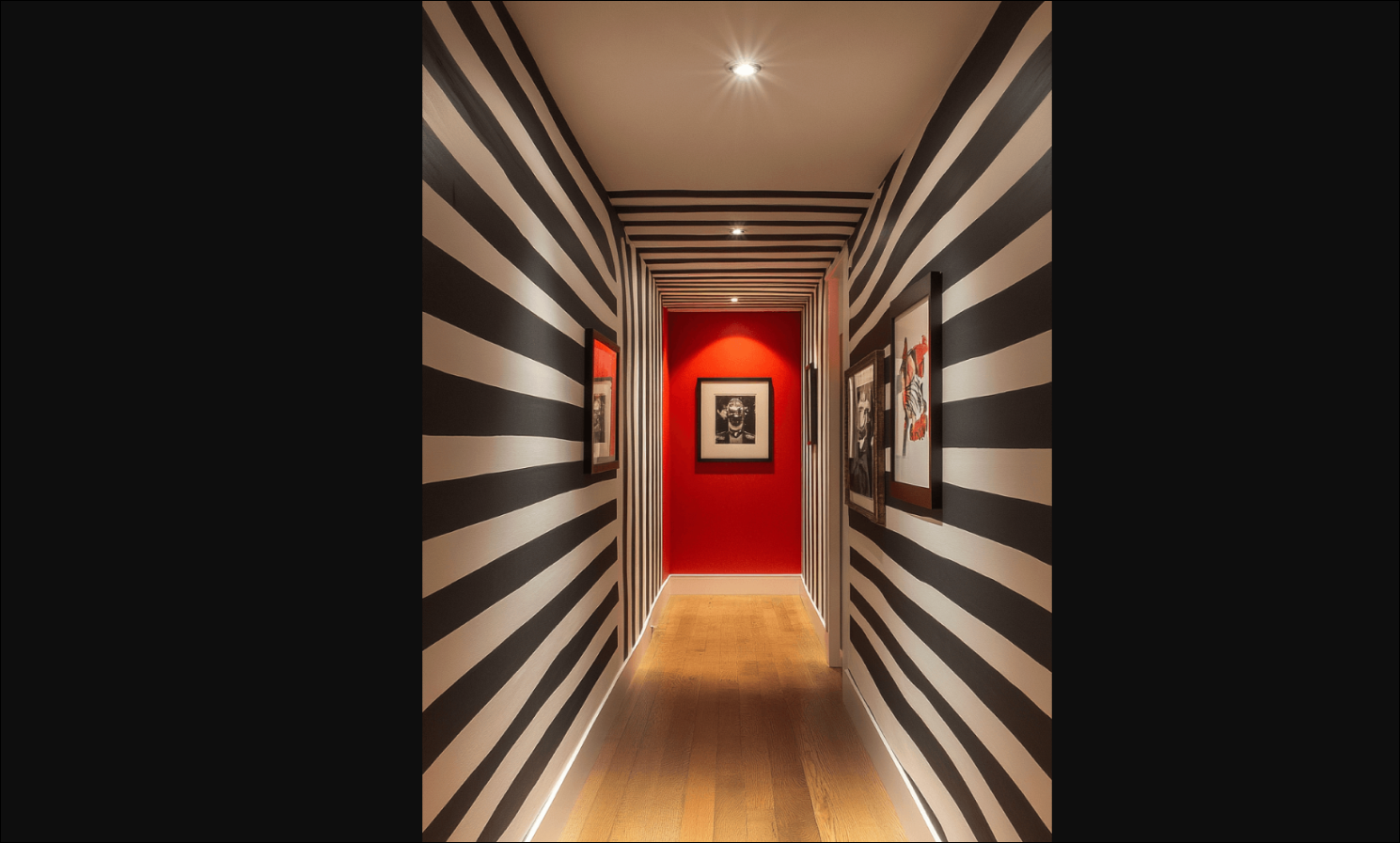
As we can see in the inner corridor design, the horizontal lines help guide the eye toward the end of the hallway and draw attention to the artwork there, making the walk feel less monotonous.
4.Use lines to divide functional areas
In actual design cases, lines are also widely-used as subtle boundaries to separate different zooms for your space, all without the need for walls or partitions.
For instance, a change in flooring direction, a linear rug, or a row of pendant lights can visually separate a dining area from a living space, making the overall layout feel organized, intentional, and easy to navigate.
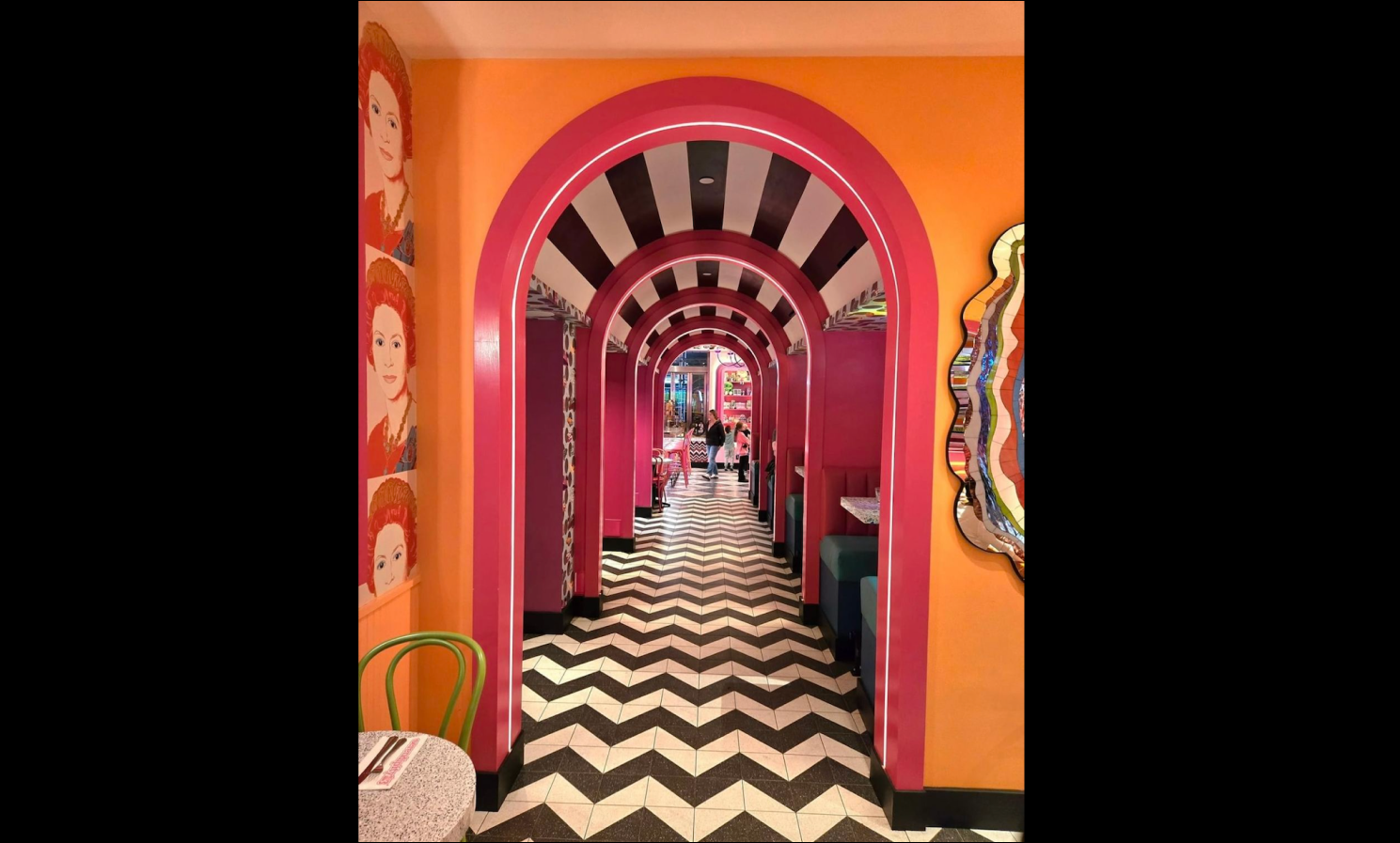
In this shop design example from Liz Hutto, the designer uses the wave-style lines for the floor, the horizontal lines for the ceiling and the arc lines for the doors, clearly defining and highlighting the different functional parts of the shop.
5.Use curved lines to soften a space
Rooms with too many straight, sharp lines can feel rigid and cold. Introducing curved lines through a round dining table, an arched mirror, or a curved sofa instantly adds warmth and approachability.

In this living room design example by РА "PIRANIA", we can see how curved lines, enhanced by lighting, help soften the entire space. So, this approach is widely used in living rooms, bedrooms, and similar spaces—especially in minimalist design styles.
6.Don't rely on just one type of lines
Different types of lines create different feelings. Horizontal lines feel calm and stable, vertical lines add height and strength, and dynamic lines bring movement and energy.
Relying solely on one type can make a room feel one-dimensional and emotionally flat. So, also try to mix two or three types thoughtfully to add depth and keep the room visually interesting.
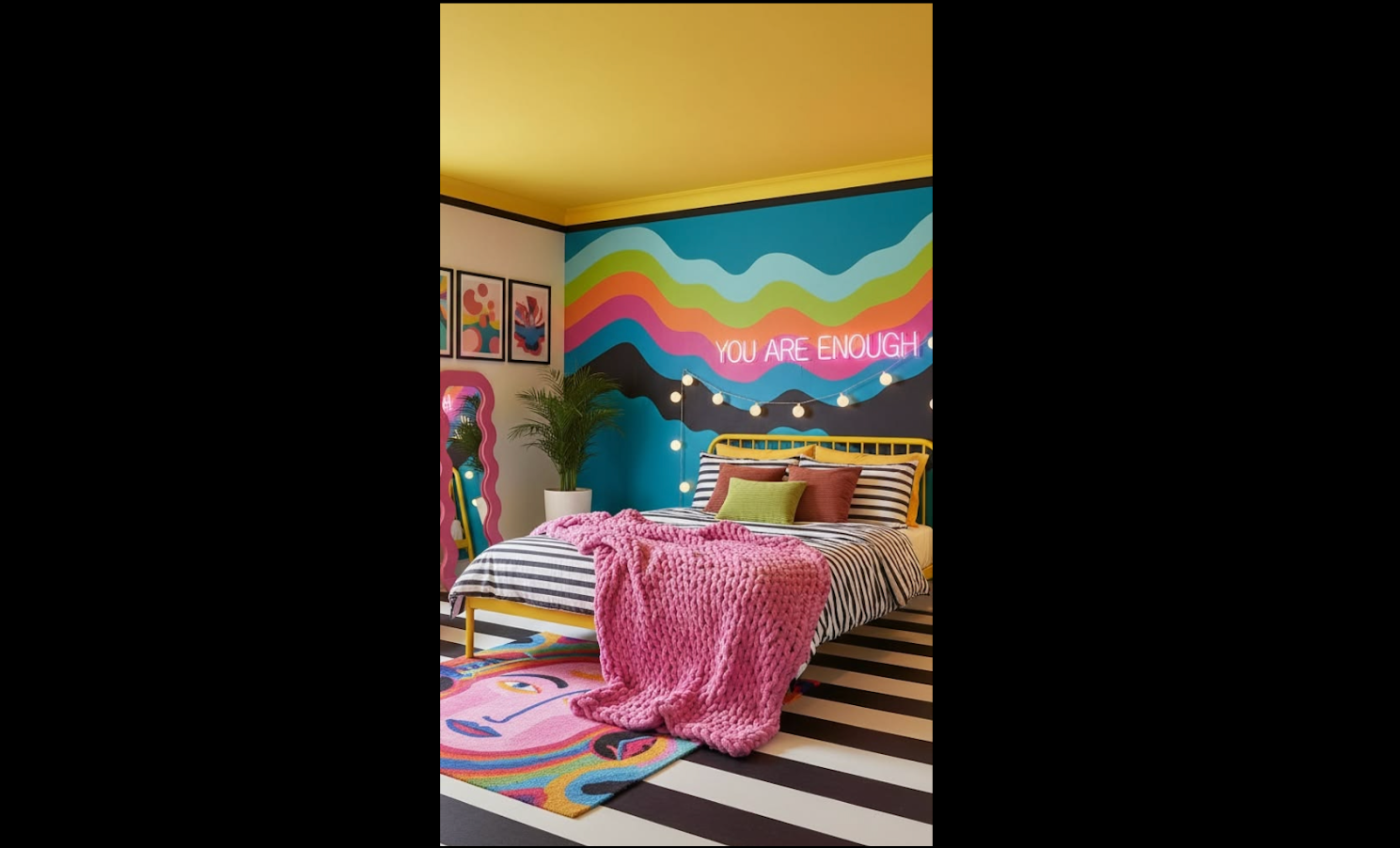
This living room interior design from Dopamine Decor wisely incorporates curved and horizontal lines, along with bright colors, to create a warm, modern, and inviting space.
Just be careful not to overdo it—too many competing lines can make a space feel busy and chaotic.
Element 3: Color
Color is often the most powerful and noticeable element in interior design. It's usually the first thing people react to when they walk into a room, before they pay attention to the furniture, the layout, or the lighting.
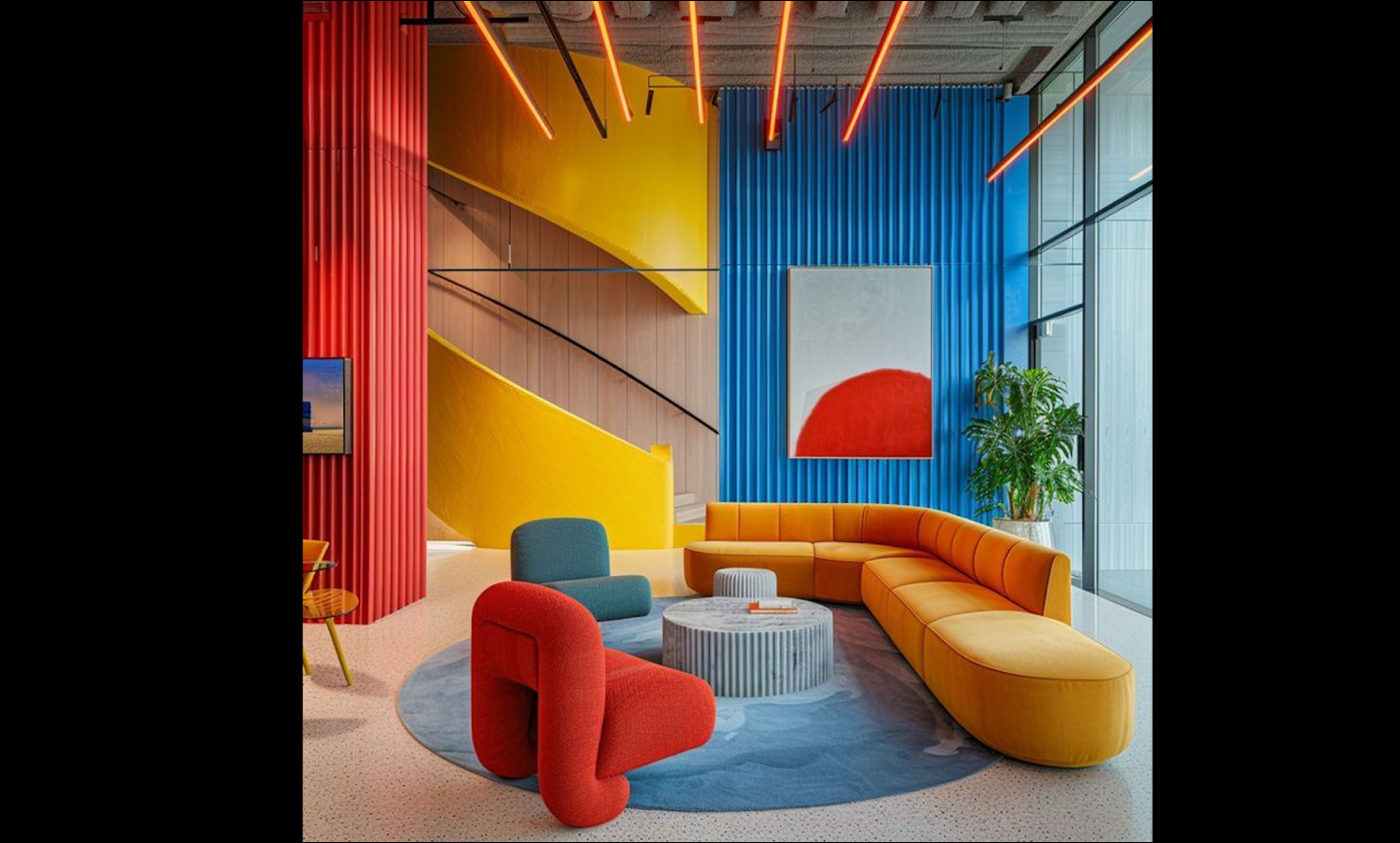
Color plays a vital role in enhancing the appeal of interior design, as seen in this living room example by Mary Ellen Jilek.
The colors you choose can shape how people feel about a space almost instantly. They can draw someone in or push them away. For designers, the right color palette can even influence how a client responds to the entire project.
That's why color should never be treated as an afterthought. When used well, it has the ability to completely transform a space, making it feel larger or smaller, warmer or cooler, energizing or deeply calming.
Tips for using colors:
1.Learn basic color concepts, like hue, saturation and values
To use color effectively, you should firstly learn a few foundational color concepts:
- Hue refers to the pure color itself, like red, blue, yellow, green, and so on. It is the most basic property of color and the starting point for any color decision.
- Saturation refers to the intensity or vividness of a color. A highly saturated color is bold and striking, while a desaturated color appears more muted and subtle.
- Value refers to how light or dark a color is. Lighter values open up a space and make it feel airy, while darker values create intimacy, depth, and drama.

Understanding these three properties gives you far greater control over how color behaves in your space, and helps you make choices that go beyond simply picking a shade you like.
2.Pay attention to the psychological effect of colors
Color doesn't just affect how a room looks, and also affects how you feel inside it. This is why color psychology is such an important consideration in interior design. You can firstly learn about the psychological effect of the following colors:
- Warm colors, like red, orange, and yellow, are energizing and stimulating. They make spaces feel lively, inviting, and cozy, but can feel overwhelming if overused.
- Cool colors, like blue, green, and purple, are calming and restorative. They work beautifully in bedrooms, bathrooms, and any space where relaxation is the goal.
- Neutral colors, like white, grey, beige, and taupe, are versatile and timeless. They create a clean backdrop that allows other elements like texture and form to take center stage.
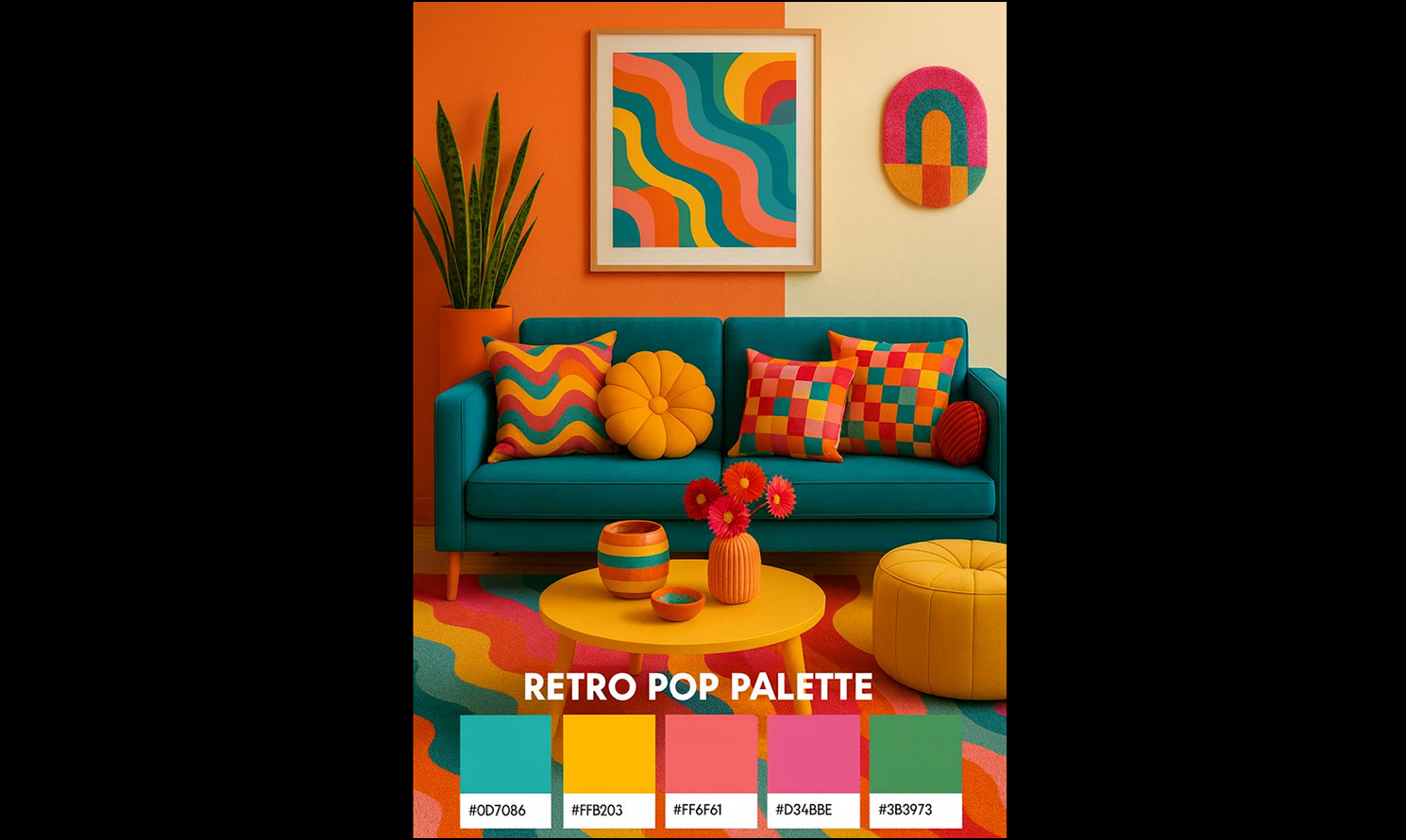
The sugar color palette by ColorHarmonyGlow—typically featuring yellow, red, blue, and green—helps to convey a bright, warm, and inviting feel.
3.Choose the right color palette
When working on a design project, designers usually start by selecting a dominant color to set the overall tone and mood of the space. Then, they choose one or two secondary colors to support it, along with accent colors to add contrast and interest. Together, this combination forms the color palette for the project.
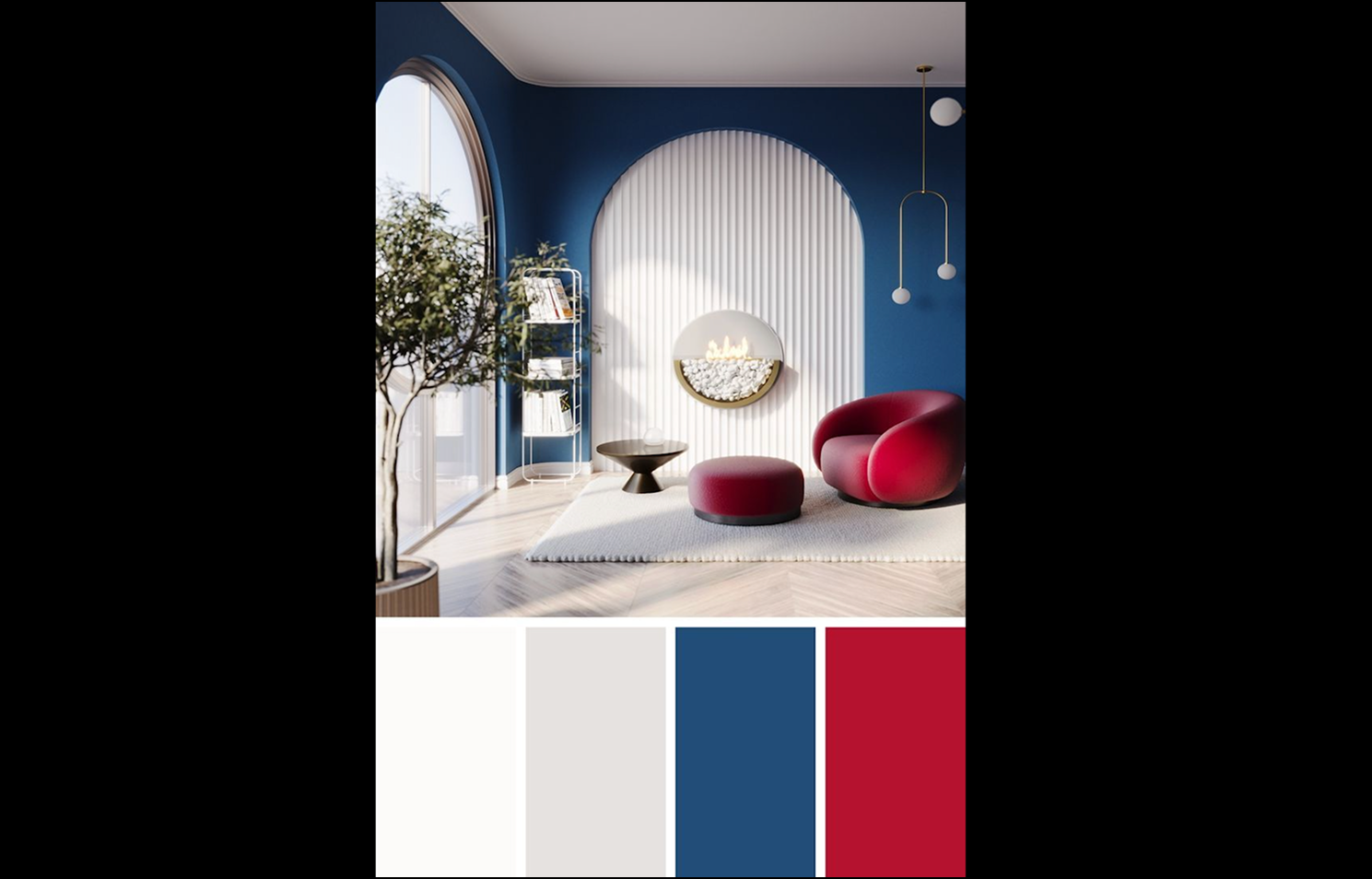
This red, white, and blue color palette creates a modern, minimalist look. As seen in this example by Mwiza Silozi, choosing the right palette can define the entire space—so always take the time to select your colors carefully.
For beginners, it’s best to keep things simple. Start with a limited palette—one main color, one supporting color, and one accent color. Using a color wheel can also be helpful when deciding on combinations, as it makes it easier to see which colors naturally work well together.
4.Wisely use color contrast
Pairing opposite or complementary colors can create strong contrast, helping key elements stand out instantly. This rule can be especially effective when you want to highlight a focal point, such as a feature wall, statement furniture, or a product display.
So,when designing a room or retail space, try incorporating color contrast intentionally rather than randomly.
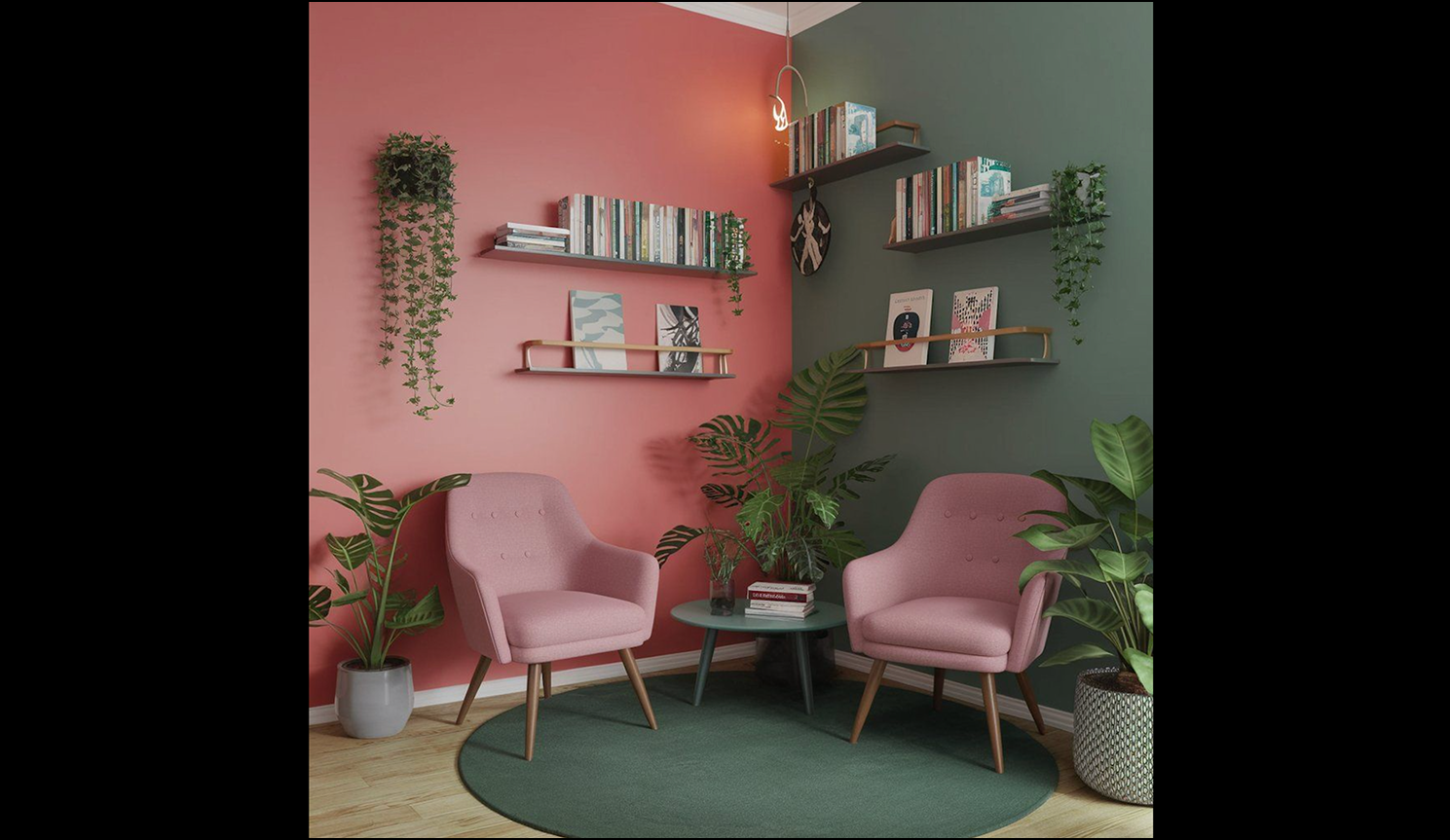
A study room corner design example with the pink and green color contrast, from NitiParekh.
Alt: Use color contrast
5.Wisely use colors to create clear visual hierarchy
Not every element in a room should compete for attention equally. Color is one of the most effective tools for establishing what the eye should notice first, second, and last.
Just simply use your boldest, most saturated colors on the elements you want to highlight — a feature wall, a statement piece of furniture, or a key architectural detail — and keep surrounding areas more neutral and subdued.
6.Use light colors to open up a space
Light, cool, and neutral tones reflect more light and make a room feel larger and more airy — a great trick for smaller or darker spaces.

Light pink and blue color palette example from Home decor
7.Use dark colors to create depth and intimacy
Deep, rich tones absorb light and make a space feel more enclosed and cozy. Used on a single accent wall or ceiling, they can add dramatic depth without overwhelming the room.
8.Use color to highlight focal points
A bold accent color on a fireplace wall, a doorframe, or a ceiling can draw the eye exactly where you want it and give the room a clear sense of focus.
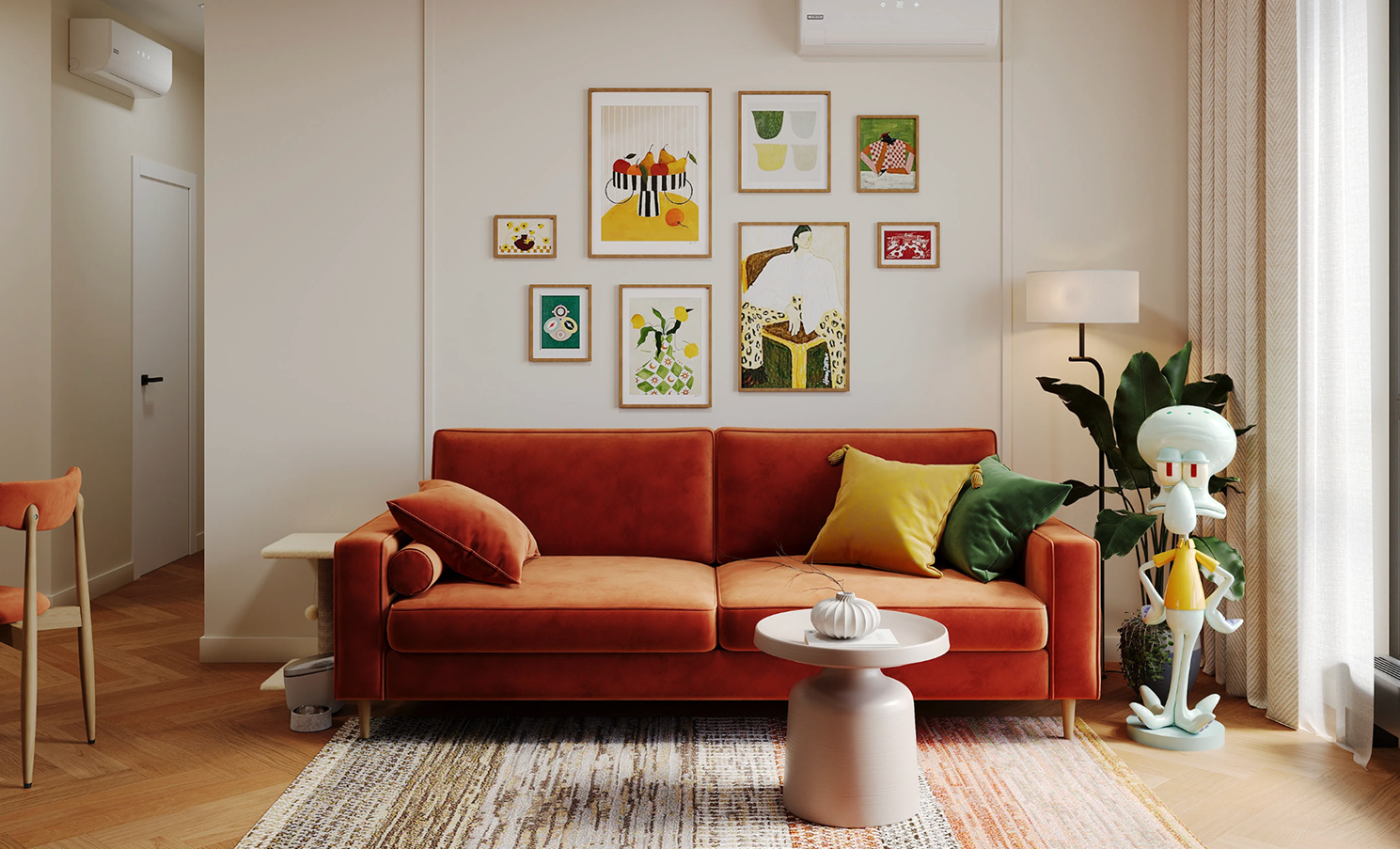
As this room design example from Madina Kazakova shows, the orange against the white walls and floor immediately draws attention to the sofa, making it the focal point of the space.
9.Test your color combinations in advance
The colors on the paper can look completely different once it’s on your walls. So, always test your chosen colors on your real room photo. Our free AI home design tool would exactly allow you to upload your real room photo to check on the color changes immediately. No more guesswork.
Element 4: Form
In interior design, form refers to the outer shapes and structures of objects within a space. It describes the physical contours and three-dimensional qualities of everything in a room, from your furniture and architectural features to your artwork and decorative accessories.

Some people may confuse form with line, but they are not the same. Lines define the edges and outlines of a design, while form gives those lines depth and physical presence. In other words, the line is two-dimensional, while form brings a space into three dimensions.
Types of forms
In interior design, forms are generally divided into two categories:
- Geometric forms talk about the sharp, structured and geometric shapes of the furniture or objects, such as the square coffee tables, rectangular bookshelves, and cubic storage units. With clear and sharp form, they often help to deliver a sense of order, precision, and modernity, and are commonly found in contemporary and minimalist interiors.
- Organic forms refer to the soft, irregular, and nature-inspired shapes and structures found in a space, such as curved sofas, rounded vases, and free-form sculptures. With a softer and more natural outer appearance, organic forms help to create a sense of warmth and approachability, making them ideal for spaces designed to feel relaxed, comfortable, and inviting, like bedrooms.
And you can use these two forms alone or both to deliver a completely different interior design.

Geometric form element design example from Lord Decor
Tips for using forms
1.Combine geometric and organic forms
Design any room, shop or space with DecAI in less 30 seconds! It's free!
A space filled entirely with geometric forms can feel cold and rigid, while a space dominated by organic forms can feel unstructured and chaotic. Using both together helps offset the weaknesses of each, creating a natural visual balance and harmony that makes a room feel both considered and comfortable.
2.Repeat forms to create cohesive design
Repeating a similar shape throughout a room, like circular mirrors, round cushions, and a curved rug, creates a subtle visual rhythm that ties everything together without feeling forced or overdone.
As a matter of fact, this idea of repetition isn’t limited to form. You can apply it to nearly all the design elements discussed here for creating a space that feels intentional, balanced, and cohesive.
3.Stand out one form each room
If you really have no idea of how to lighten up your interior design, try to stand out one truly distinctive form in each room, like a sculptural chair, an unusually shaped pendant light, or a bold architectural feature, and let it lead. And keep the forms around it simpler and more restrained. A nice way that you should try when you do not have any design inspiration.

4.Use form to soften or strengthen a room's mood
If a room feels too harsh or clinical, add more organic forms, such as a curved bench, a round mirror, or a free-form vase, to soften the atmosphere. If a room feels too loose and undefined, bring in stronger geometric forms to add structure and order.
Element 5: Light
Light works just like the filter of the design world. It has the power to shape the overall mood of a space, enhance or soften colors, and even define how the space functions. No matter how beautiful your furniture or layout may be, poor lighting can ruin the overall effect, just like a poorly lit photo can make a great subject look dull.
When working on an interior design project, you can use natural light from the sun, artificial lighting such as lamps and ceiling fixtures, or a combination of both. And in actual cases, most designers combine natural and artificial lighting to make a space feel balanced, comfortable, and visually pleasing throughout the day.
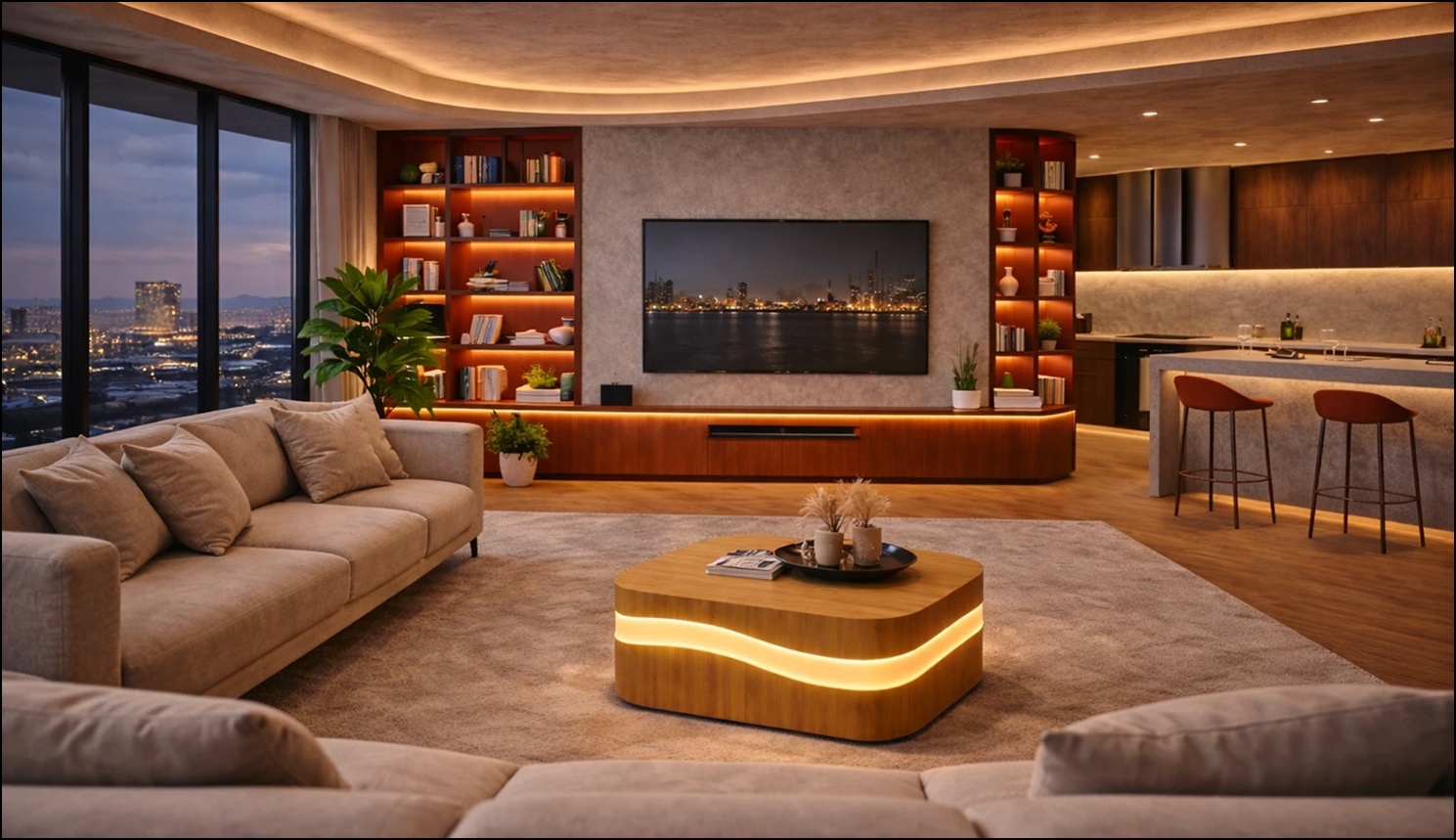
This living room example from Berfu Dursun uses artificial lighting to create a warm and comfortable atmosphere.
Types of light
In interior design, lighting generally falls into two main categories: natural light and artificial light:
1.Natural light
As the name suggests, natural light comes from the sun and can change throughout the day and across seasons. The direction a room faces, the size and placement of its windows, and the materials used on walls and floors all can affect how natural light behaves in a space. North-facing rooms tend to receive cooler, more diffused light, while south-facing rooms are bathed in warmer, more consistent sunlight throughout the day.
2.Artificial light
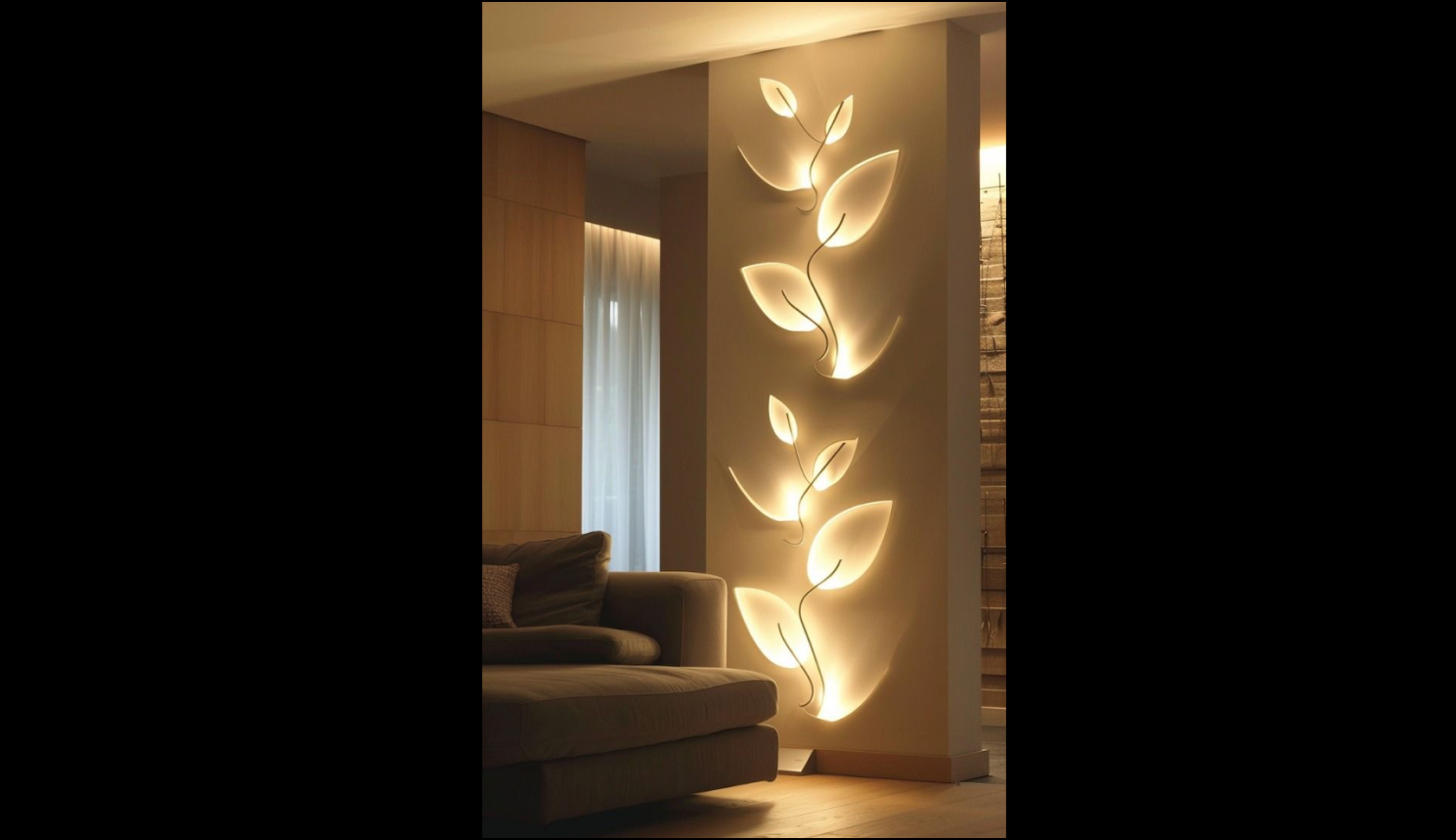
Artificial light interior design example from iramhameed
Artificial light is created by electric fixtures such as ceiling lights, lamps, and wall sconces. It gives you full control over the mood and functionality of a space, allowing you to adjust brightness and tone as needed.
In most designs, artificial lighting is also layered into three types:
- Ambient lighting is the primary source of light in a room, the general, overall illumination that allows you to see and move around comfortably. Ceiling fixtures, recessed lights, and chandeliers all serve as ambient light sources.
- Task lighting is focused, functional light designed to help you perform specific activities, reading, cooking, working, or applying makeup. Desk lamps, under-cabinet kitchen lights, and bedside reading lights are all examples of task lighting.
- Accent lighting is decorative and directional, used to highlight specific features in a room — a piece of artwork, an architectural detail, or a textured wall. It adds depth, drama, and visual interest to a space.
Of course, also use them together to create a flexible and dynamic lighting scheme that can be adjusted to suit different times of day and different moods.
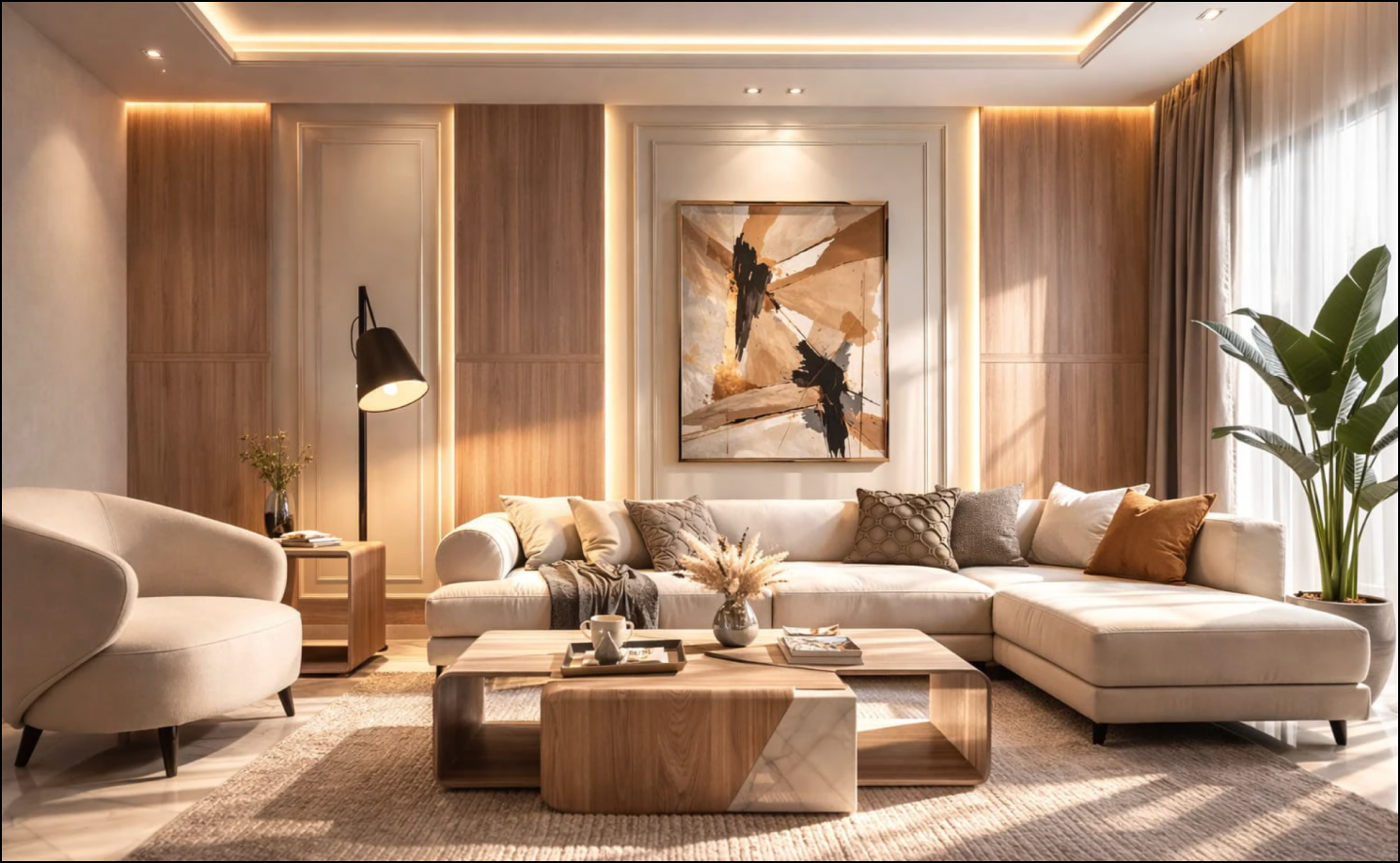

As this living room design example from Marina Atef shows, even the same room can create different visual effects and moods depending on whether natural or artificial lighting is used.
Tips for using lights
1.Always plan your lighting early
Lighting is one of the most overlooked elements in the design process. It’s often treated as an afterthought, added only after the layout, furniture, and colors have already been decided.
However, lighting directly affects how colors appear, how a space feels, and even how functional it is. Poor lighting choices can force you to rethink your paint colors, furniture placement, or overall mood.
So, consider the light element much earlier and plan your lighting scheme at the same time as your layout and color decisions, not after them.
2.Use mirrors to amplify light
A well-placed mirror can effectively double the amount of light in a room by reflecting both natural and artificial light sources. This is especially useful in smaller or darker spaces that lack sufficient windows.
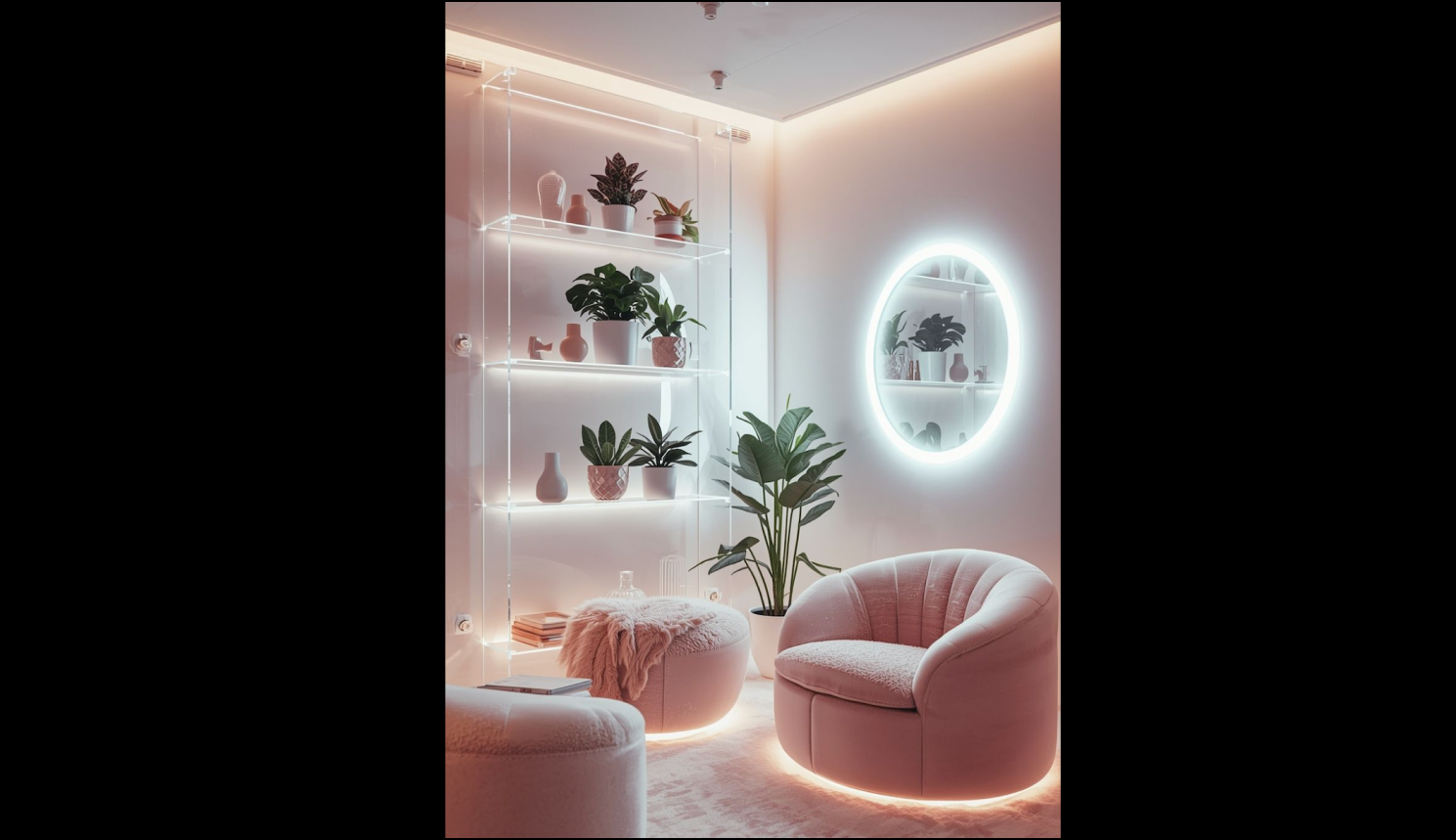
3.Consider light and color together
Natural and artificial lighting can dramatically change how colors look on walls and surfaces. A shade that feels warm and inviting in daylight may look completely different under artificial light at night.
That’s why lighting and color should always be planned together. Avoid making decisions about them separately—what works in theory may not work once the lights are on.

This interior design example thoughtfully combines color and lighting to create a balanced and visually appealing space.
Element 6: Texture
Texture, simply put, refers to the surface quality of the objects and materials within a space. It describes how something feels to the touch—or how it appears to feel visually.
In actual room design, some actual textures like velvet, leather, wood, grasscloth, metal, and ceramic are widely used to enrich the overall visual quality of a space. Even certain wallpapers and wall surface finishes are considered textures in their own right, adding a unique physical dimension to walls that paint alone cannot achieve.

Different wall texture examples in interior design
Types of texture
There are two types of textures: visual and tactile textures:
- Visual texture is texture that you perceive with your eyes rather than your hands. A photograph of a brick wall, a printed linen pattern, or a wood-grain finish all create the impression of texture without necessarily having a pronounced physical surface. It helps to add interest and depth to a space without adding physical complexity.
- Tactile texture is texture that you can physically feel, such as the roughness of a jute rug, the softness of a velvet cushion, the smoothness of a marble countertop, or the warmth of a chunky knit throw.

Whether you use visual texture, tactile texture, or a combination of both, incorporating texture thoughtfully can elevate your design and make a space feel richer and more layered.
Tips for using textures
1.Try multiple textures to enrich your space design
The key to using texture effectively is layering, combining smooth, rough, soft, and hard surfaces to create a space that feels rich and three-dimensional. A leather sofa paired with a chunky knit throw, a jute rug, and a sleek marble coffee table is a simple but effective example of texture layering done well.
2.Mix natural and man-made textures
Combining organic materials like wood, wool, and leather with smoother, more refined surfaces like glass, metal, and lacquer creates a dynamic contrast that feels both sophisticated and grounded.
3.Use the same texture in different zones or places to create cohesion
Repeating a texture in different areas of a room, such as the same natural linen on curtains, cushions, and a bedhead, creates a subtle visual thread that ties the space together and gives it a sense of harmony and intention.
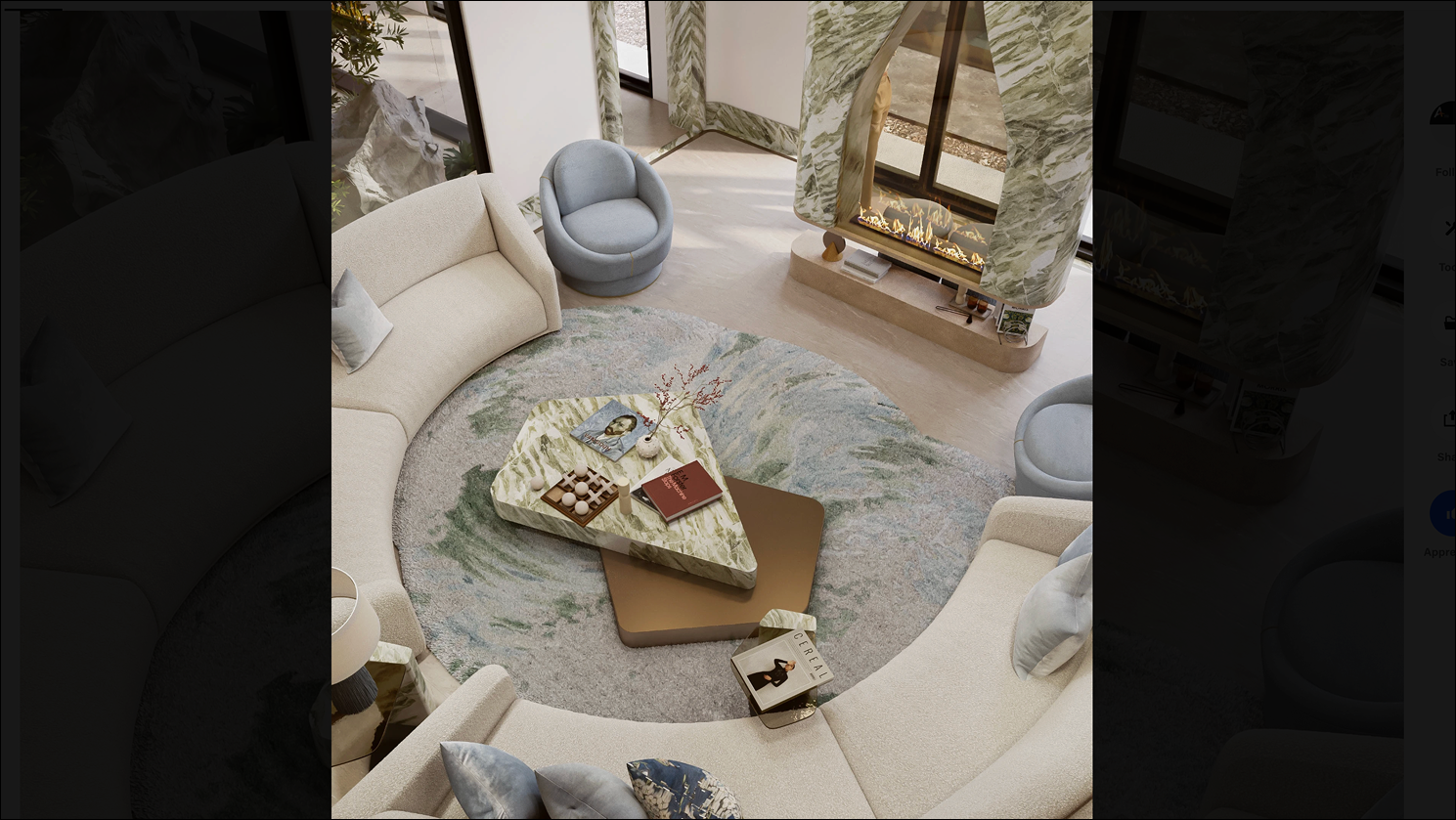
Interior design texture design example from A-Plus Studio
This living room uses the same green textures throughout the space, creating a clean and modern design that feels cohesive and soothing.
4.Also add textures to walls and ceilings
Texture doesn't have to be limited to furniture and accessories. Exposed brick, textured wallpaper, wood paneling, and limewash paint all introduce surface interest to walls and ceilings, adding depth and character to the entire room.
5.Consider textures and moods together
Different textures create different emotional responses, so it’s important to think about how they influence the overall feeling of a space.
For example, natural textures like wood, linen, rattan, and stone bring warmth and groundedness to neutral, minimal spaces. Soft textures like plush rugs, velvet cushions, and linen curtains create a sense of comfort and ease, making them ideal for bedrooms and living rooms designed for relaxation. Well, harder, more refined textures like polished marble, concrete, and brushed metal add a sense of sophistication and structure.
Element 7: Pattern
Pattern refers to the repetition of a shape, motif, color, form or design across a surface, and is a design element that brings personality, energy, and visual storytelling to a space. It can be found virtually everywhere in a room, from wallpaper and upholstery to rugs, curtains, cushions, and tiled floors.

When used well, pattern has the power to make a room feel lively, layered, and full of character. When used poorly, it can make a space feel chaotic, overwhelming, and visually exhausting. The key lies in choosing the right patterns, balancing their scale, and layering them with intention.
Tips for using patterns
1.Start with one dominant pattern
Before layering multiple patterns, establish one hero pattern that sets the tone for the entire room. You can try a bold wallpaper, a statement rug, or a richly patterned sofa, and everything else should support and complement this dominant pattern rather than compete with it.
2.Wisely mix pattern scales
One of the most effective ways to combine multiple patterns is to present them in different scales. Simply pair a large, bold pattern with a smaller, more subtle one to create visual contrast without causing the eye to feel overwhelmed. Avoid combining two patterns of the same scale, as they tend to clash rather than complement.
3.Use no more than 3 patterns to avoid visual chaos
As a general rule, working with three patterns in a single space, such as one large scale, one medium scale, and one small scale, keeps the design feeling layered and intentional without tipping over into chaos. So, use no more than 3 patterns at one time.
4.Use pattern to connect different areas of a room
Repeating a motif or color from one pattern in another part of the room — even in a very subtle way — creates a visual thread that ties the space together and makes the overall design feel considered and cohesive.
5.Use pattern as a way to express your personality
Of all the design elements, pattern is perhaps the most expressive. It is one of the easiest ways to inject character, culture, and individuality into a space. Don't be afraid to choose patterns that reflect your personal taste — whether that's bold geometric prints, delicate botanicals, or traditional motifs with a modern twist.

The wall’s painting design pattern reflects both cultural elements and personal style of the designer or home owner.
Tips for using these 7 elements together
People never use these elements individually. So, understanding each element individually is just a good start, and the real magic happens when you learn to use them all together.
Here are some practical tips to help you do that effectively:
1.Start with physical space
Before thinking about color, furniture, or decoration, always begin by understanding the space you're working with. Its physical size, shape, and layout will extremely affect every other decision you make. So, try to start with physical measuring with the sizes and space.
2.Let one element lead
Instead of giving equal weight to all seven elements at once, choose one element to be the dominant focus of your design, such as a bold color palette, a striking pattern, or a rich layering of textures, and let the remaining elements support and complement it.
Giving one element visual priority creates a clear direction for the room and prevents the design from feeling scattered or unfocused.
3.Use light to enhance every other element
Light affects how colors appear, how forms are perceived, how textures are felt, and how spacious a room feels. No matter how well you have handled the other elements, poor lighting will undermine all of it. So, you should always consider lighting in relation to every other design decision you make.
4.Repeat elements to create cohesion
Repeating a color, texture, or form throughout different areas of a room creates a visual thread that ties the space together. It helps the design feel connected rather than pieced together.
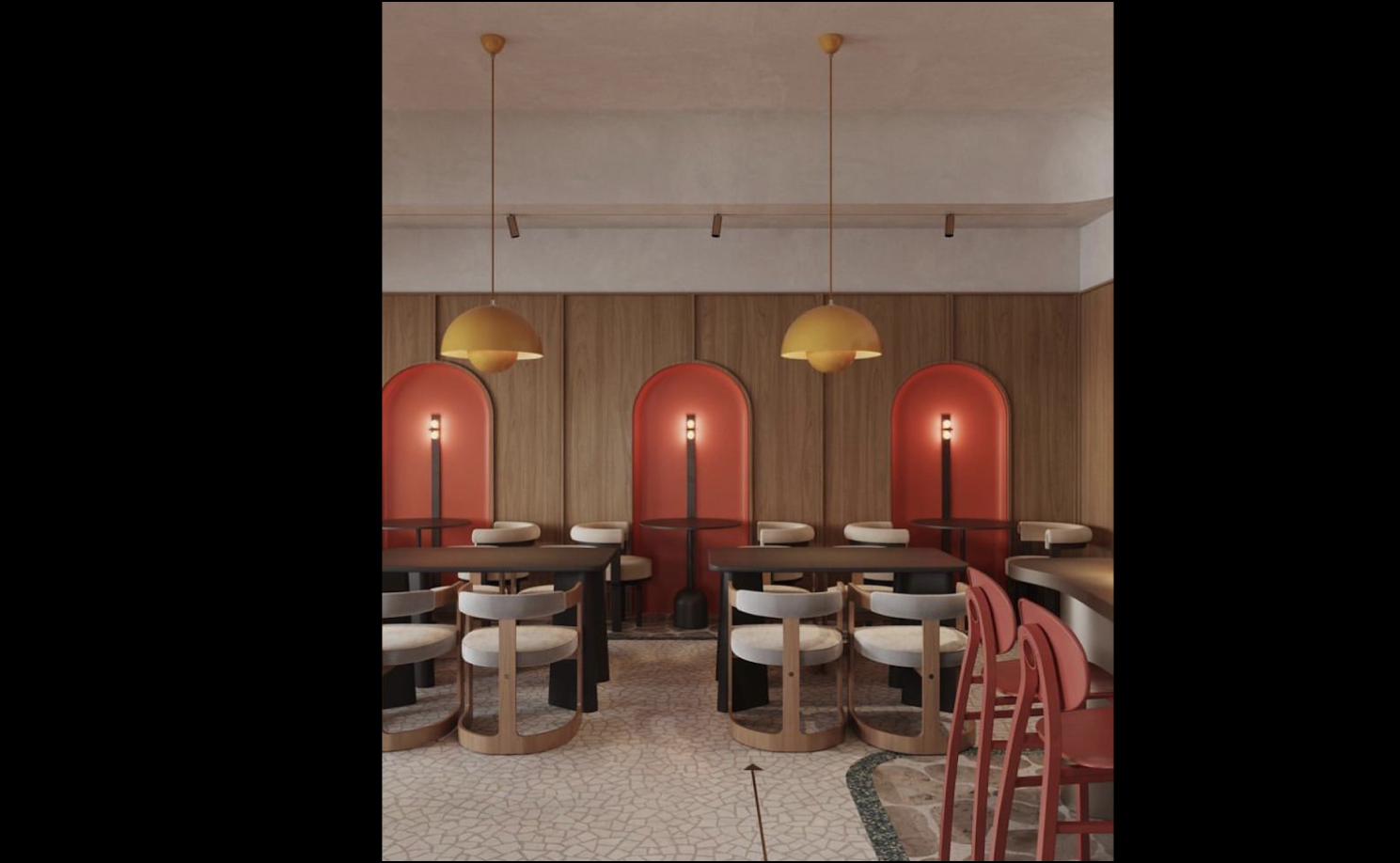
A cohesive interior design achieved through the use of repeating elements
5.Always evaluate as a whole
No individual elements would create a perfect room design alone. It’s the way all the elements work together that determines the success of a design. So, always step back and assess how they all work together for a better design. And also make this a habit throughout your design process, not just at the end.
6.Use elements and principles together
These 7 elements don't work in isolation. They also work best when guided by the core design principles. As you apply elements like color, texture, and light to your space, keep principles like balance, rhythm, and proportion in mind to ensure everything comes together in a way that feels cohesive, intentional, and harmonious.
Your best tools to work with these 7 design elements
Having the right tools makes it significantly easier to visualize, test, and apply the 7 elements of interior design before committing to any real-world changes.
Here are some of the best tools available in 2026:
- Canva — Best for creating design mood boards and testing design ideas
A surprisingly powerful tool for beginners, Canva makes it easy to build mood boards and experiment with color palettes, patterns, and texture combinations before applying them to a real space.
- Planner 5D - best for beginner-friendly 2D & 3D floor planning and design
A beginner-friendly room design tool that lets you create detailed 2D and 3D floor plans, experiment with furniture arrangement, and visualize how light and color interact within a space.
- DecAI™ - best for fast, AI-driven interior design ideas and visual inspiration
A free AI interior design tool that allows you to create perfect room or shopping store interior design in just less than 30 seconds. Simply upload a photo, choose a room type, color and style, the AI will give the best interior design tailored to your needs.
Over 23 million users and teams are using it to get their perfect interior designs and design inspiration fast with AI.

Modern interior design example generated with DecAI
FAQs:
1.What are the 5 elements of interior design?
While most people consider there are 7 basic elements for interior design, some others also simplify models by focusing on only five core elements: space, line, form, light, and color. Texture and pattern are sometimes grouped within form or color, depending on the teaching approach.
2.What is the most important element in interior design?
From my point of view, there is no such “most important” element, since all of these 7 or 10 basic elements of interior design work together to create a functional and visually appealing space—whether it’s a home, office, or retail store. It’s the art of how well these elements work together.
3.Are the 7 elements of interior design the same everywhere?
No. While the core elements—such as space, line, form, light, color, texture, and pattern—are widely recognized, the way they are categorized can vary depending on the school, country, or design philosophy. However, the terminology may differ slightly, but the foundational ideas are generally universal across interior design education and practice.
4.Which element of interior design is easiest to start with?
For most beginners, color and lightning is the easiest element to start with. It’s highly visible, easy to experiment with, and can dramatically change the mood of a space without requiring major structural changes.
5.Do interior designers always follow the 7 elements?
No. Whether designers strictly follow all seven elements depends on the specific goals and needs of a project.
In reality, the elements of interior design aren’t a rigid checklist that must be applied one by one. Instead, they serve as a flexible framework. Some projects may emphasize certain elements—like color and texture—while others focus more on space, light, or form.
What matters most is how effectively these elements are combined to create a functional and visually cohesive space, rather than whether all seven are consciously applied in every situation.
6.What element impacts a room’s mood the most?
Color and lighting are the elements that typically have the greatest impact on a room’s mood. Color sets the emotional tone of a space, while lighting affects how that color is perceived and can enhance the overall atmosphere. Together, they play a key role in creating a space that feels warm, calm, energetic, or inviting.
Wrap up
Interior design elements — like color, light, form, and pattern — work as the visual language of design, making it easier to visualize ideas, communicate your vision, and bring a space to life with intention and clarity.
We hope this guide to the 7 elements of interior design has given you a clearer understanding of what each element is, why it matters, and how to use them together to create spaces that are both beautiful and functional.
--------------------------------------
If you believe that any material on this site infringes your intellectual property rights, please contact the author at decaiwebteam@outlook.com with details of your claim.
Redesign any home interior, exterior & garden in seconds
Share this Post:
'%3e%3cpath%20d='M17.9995%2035.999C17.0317%2035.999%2016.0619%2035.9219%2015.1161%2035.7696C10.9414%2035.0973%207.11524%2032.9513%204.34408%2029.7273C1.54287%2026.4683%200%2022.3035%200%2017.9995C0%208.07403%208.07503%200%2017.9995%200C27.924%200%2036%208.07503%2036%2017.9995C36%2022.3696%2034.4151%2026.5835%2031.5357%2029.8646C28.6844%2033.1156%2024.7671%2035.2326%2020.5052%2035.8267C19.6806%2035.9419%2018.8371%2036%2017.9995%2036V35.999ZM17.9995%201.20123C8.73726%201.20123%201.20224%208.73626%201.20224%2017.9985C1.20224%2026.2919%207.13427%2033.2659%2015.3075%2034.5814C16.9546%2034.8469%2018.6808%2034.8659%2020.3389%2034.6345C28.5812%2033.4863%2034.7968%2026.334%2034.7968%2017.9985C34.7968%208.73626%2027.2617%201.20123%2017.9985%201.20123H17.9995Z'%20fill='%23FF0209'/%3e%3cpath%20d='M29.0557%2014.3621C28.9184%2013.0276%2028.6208%2011.5539%2027.5268%2010.7784C26.6782%2010.1773%2025.5642%2010.1553%2024.5242%2010.1563C22.3251%2010.1583%2020.126%2010.1603%2017.9269%2010.1623C15.812%2010.1643%2013.6971%2010.1663%2011.5821%2010.1683C10.6985%2010.1683%209.8399%2010.1002%209.01937%2010.4819C8.31406%2010.8105%207.76303%2011.4347%207.43241%2012.1289C6.97156%2013.0957%206.87438%2014.1898%206.81927%2015.2588C6.71708%2017.2044%206.7281%2019.156%206.85133%2021.0996C6.9405%2022.5193%207.16792%2024.0872%208.26496%2024.9919C9.23777%2025.7934%2010.6103%2025.8325%2011.8707%2025.8335C15.8741%2025.8365%2019.8776%2025.8395%2023.881%2025.8435C24.394%2025.8435%2024.93%2025.8345%2025.453%2025.7774C26.4829%2025.6661%2027.4637%2025.3716%2028.1249%2024.6092C28.7922%2023.8407%2028.9635%2022.7698%2029.0657%2021.7569C29.3121%2019.3003%2029.3091%2016.8177%2029.0557%2014.3621ZM15.6116%2021.4453V14.5545L21.5797%2017.9999L15.6116%2021.4453Z'%20fill='%23FF0209'/%3e%3c/g%3e%3cdefs%3e%3cclipPath%20id='clip0_13816_41422'%3e%3crect%20width='36'%20height='36'%20fill='white'/%3e%3c/clipPath%3e%3c/defs%3e%3c/svg%3e)
'%3e%3cpath%20d='M17.9995%2036C17.0327%2036%2016.0619%2035.9229%2015.1161%2035.7696C10.9414%2035.0973%207.11524%2032.9513%204.34408%2029.7273C1.54287%2026.4683%200%2022.3035%200%2017.9995C0%208.07403%208.07503%200%2017.9995%200C27.924%200%2036%208.07503%2036%2017.9995C36%2022.3696%2034.4151%2026.5835%2031.5357%2029.8646C28.6844%2033.1156%2024.7671%2035.2326%2020.5052%2035.8267C19.6806%2035.9419%2018.8371%2036%2017.9995%2036ZM17.9995%201.20224C8.73726%201.20224%201.20224%208.73726%201.20224%2017.9995C1.20224%2026.2919%207.13427%2033.2669%2015.3075%2034.5824C16.9556%2034.8479%2018.6808%2034.8669%2020.3389%2034.6355C28.5812%2033.4873%2034.7968%2026.335%2034.7968%2017.9995C34.7968%208.73726%2027.2617%201.20224%2017.9985%201.20224H17.9995Z'%20fill='url(%23paint0_linear_13816_41436)'/%3e%3cpath%20d='M23.4463%207.55469H12.549C9.53841%207.55469%207.08984%2010.0032%207.08984%2013.0138V22.9834C7.08984%2025.994%209.53841%2028.4426%2012.549%2028.4426H23.4463C26.4569%2028.4426%2028.9054%2025.994%2028.9054%2022.9834V13.0138C28.9054%2010.0032%2026.4569%207.55469%2023.4463%207.55469ZM9.01543%2013.0138C9.01543%2011.0652%2010.6004%209.48027%2012.549%209.48027H23.4463C25.3949%209.48027%2026.9799%2011.0652%2026.9799%2013.0138V22.9834C26.9799%2024.932%2025.3949%2026.517%2023.4463%2026.517H12.549C10.6004%2026.517%209.01543%2024.932%209.01543%2022.9834V13.0138Z'%20fill='url(%23paint1_linear_13816_41436)'/%3e%3cpath%20d='M17.9964%2023.0749C20.7966%2023.0749%2023.0749%2020.7966%2023.0749%2017.9964C23.0749%2015.1962%2020.7966%2012.918%2017.9964%2012.918C15.1962%2012.918%2012.918%2015.1962%2012.918%2017.9964C12.918%2020.7966%2015.1962%2023.0749%2017.9964%2023.0749ZM17.9964%2014.8446C19.7346%2014.8446%2021.1483%2016.2582%2021.1483%2017.9964C21.1483%2019.7347%2019.7346%2021.1483%2017.9964%2021.1483C16.2582%2021.1483%2014.8446%2019.7347%2014.8446%2017.9964C14.8446%2016.2582%2016.2582%2014.8446%2017.9964%2014.8446Z'%20fill='url(%23paint2_linear_13816_41436)'/%3e%3cpath%20d='M23.5482%2013.741C24.3026%2013.741%2024.9168%2013.1269%2024.9168%2012.3725C24.9168%2011.618%2024.3026%2011.0039%2023.5482%2011.0039C22.7938%2011.0039%2022.1797%2011.618%2022.1797%2012.3725C22.1797%2013.1269%2022.7938%2013.741%2023.5482%2013.741Z'%20fill='url(%23paint3_linear_13816_41436)'/%3e%3c/g%3e%3cdefs%3e%3clinearGradient%20id='paint0_linear_13816_41436'%20x1='5.27482'%20y1='30.7312'%20x2='30.7242'%20y2='5.28083'%20gradientUnits='userSpaceOnUse'%3e%3cstop%20stop-color='%23FAAD4F'/%3e%3cstop%20offset='0.35'%20stop-color='%23DD2A7B'/%3e%3cstop%20offset='0.62'%20stop-color='%239537B0'/%3e%3cstop%20offset='1'%20stop-color='%23515BD4'/%3e%3c/linearGradient%3e%3clinearGradient%20id='paint1_linear_13816_41436'%20x1='8.92225'%20y1='27.074'%20x2='27.073'%20y2='8.92324'%20gradientUnits='userSpaceOnUse'%3e%3cstop%20stop-color='%23FAAD4F'/%3e%3cstop%20offset='0.35'%20stop-color='%23DD2A7B'/%3e%3cstop%20offset='0.62'%20stop-color='%239537B0'/%3e%3cstop%20offset='1'%20stop-color='%23515BD4'/%3e%3c/linearGradient%3e%3clinearGradient%20id='paint2_linear_13816_41436'%20x1='14.4077'%20y1='21.5861'%20x2='21.5861'%20y2='14.4077'%20gradientUnits='userSpaceOnUse'%3e%3cstop%20stop-color='%23FAAD4F'/%3e%3cstop%20offset='0.35'%20stop-color='%23DD2A7B'/%3e%3cstop%20offset='0.62'%20stop-color='%239537B0'/%3e%3cstop%20offset='1'%20stop-color='%23515BD4'/%3e%3c/linearGradient%3e%3clinearGradient%20id='paint3_linear_13816_41436'%20x1='22.5814'%20y1='13.3393'%20x2='24.515'%20y2='11.4057'%20gradientUnits='userSpaceOnUse'%3e%3cstop%20stop-color='%23FAAD4F'/%3e%3cstop%20offset='0.35'%20stop-color='%23DD2A7B'/%3e%3cstop%20offset='0.62'%20stop-color='%239537B0'/%3e%3cstop%20offset='1'%20stop-color='%23515BD4'/%3e%3c/linearGradient%3e%3cclipPath%20id='clip0_13816_41436'%3e%3crect%20width='36'%20height='36'%20fill='white'/%3e%3c/clipPath%3e%3c/defs%3e%3c/svg%3e)
'%3e%3cpath%20d='M17.9995%2035.999C17.0317%2035.999%2016.0619%2035.9219%2015.1161%2035.7696C10.9414%2035.0973%207.11524%2032.9513%204.34408%2029.7273C1.54287%2026.4683%200%2022.3035%200%2017.9995C0%208.07403%208.07502%200%2017.9995%200C27.924%200%2036%208.07503%2036%2017.9995C36%2022.3696%2034.415%2026.5835%2031.5357%2029.8646C28.6844%2033.1156%2024.7671%2035.2326%2020.5052%2035.8267C19.6806%2035.9419%2018.8371%2036%2017.9995%2036V35.999ZM17.9995%201.20123C8.73725%201.20123%201.20224%208.73626%201.20224%2017.9985C1.20224%2026.2919%207.13427%2033.2659%2015.3075%2034.5814C16.9545%2034.8469%2018.6808%2034.8659%2020.3388%2034.6345C28.5812%2033.4863%2034.7968%2026.334%2034.7968%2017.9985C34.7968%208.73626%2027.2617%201.20123%2017.9985%201.20123H17.9995Z'%20fill='%23007EBB'/%3e%3cpath%20d='M9.06639%2012.124C8.60253%2011.6932%208.37109%2011.1602%208.37109%2010.526C8.37109%209.89184%208.60253%209.33481%209.06639%208.90401C9.53026%208.47321%2010.1274%208.25781%2010.8587%208.25781C11.5901%208.25781%2012.1642%208.47321%2012.627%208.90401C13.0909%209.33481%2013.3223%209.87581%2013.3223%2010.526C13.3223%2011.1762%2013.0909%2011.6932%2012.627%2012.124C12.1631%2012.5548%2011.5741%2012.7702%2010.8587%2012.7702C10.1434%2012.7702%209.52926%2012.5548%209.06639%2012.124ZM12.9326%2014.5946V27.7962H8.76182V14.5946H12.9326Z'%20fill='%23007EBB'/%3e%3cpath%20d='M26.8196%2015.9006C27.7283%2016.8875%2028.1832%2018.243%2028.1832%2019.9682V27.5663H24.2208V20.5042C24.2208%2019.6346%2023.9954%2018.9583%2023.5445%2018.4764C23.0937%2017.9945%2022.4876%2017.7541%2021.7262%2017.7541C20.9647%2017.7541%2020.3586%2017.9955%2019.9078%2018.4764C19.4569%2018.9583%2019.2315%2019.6346%2019.2315%2020.5042V27.5663H15.2461V14.5611H19.2315V16.2863C19.6353%2015.7113%2020.1793%2015.2574%2020.8636%2014.9228C21.5468%2014.5892%2022.3163%2014.4219%2023.1708%2014.4219C24.6937%2014.4219%2025.9099%2014.9158%2026.8186%2015.9016L26.8196%2015.9006Z'%20fill='%23007EBB'/%3e%3c/g%3e%3cdefs%3e%3cclipPath%20id='clip0_13816_41425'%3e%3crect%20width='36'%20height='36'%20fill='white'/%3e%3c/clipPath%3e%3c/defs%3e%3c/svg%3e)
'%3e%3cpath%20d='M18%2035.999C17.0322%2035.999%2016.0623%2035.9219%2015.1166%2035.7696C10.9417%2035.0973%207.11544%2032.9513%204.3442%2029.7273C1.54291%2026.4683%200%2022.3035%200%2017.9995C0%208.07403%208.07526%200%2018%200C27.9248%200%2036%208.07503%2036%2017.9995C36%2022.3696%2034.415%2026.5835%2031.5356%2029.8646C28.6842%2033.1156%2024.7668%2035.2326%2020.5047%2035.8267C19.6802%2035.9419%2018.8366%2036%2017.999%2036L18%2035.999ZM18%201.20123C8.73751%201.20123%201.20227%208.73626%201.20227%2017.9985C1.20227%2026.2919%207.13448%2033.2659%2015.3079%2034.5814C16.955%2034.8469%2018.6813%2034.8659%2020.3394%2034.6345C28.582%2033.4863%2034.7977%2026.334%2034.7977%2017.9985C34.7977%208.73626%2027.2625%201.20123%2018%201.20123Z'%20fill='black'/%3e%3cpath%20d='M7%208.09163H13.5067L19.521%2016.1816L27.0073%207.90625L28.786%207.93715L20.4078%2017.3454L29%2028.901H22.4959L16.8193%2021.362L9.8847%2029.0864H8.13428L15.9583%2020.26L7%208.09163ZM12.8931%209.28633H9.45676L23.2048%2027.6754H26.5793L12.8931%209.28633Z'%20fill='black'/%3e%3c/g%3e%3cdefs%3e%3cclipPath%20id='clip0_13886_43848'%3e%3crect%20width='36'%20height='36'%20fill='white'/%3e%3c/clipPath%3e%3c/defs%3e%3c/svg%3e)
'%3e%3cpath%20d='M17.9995%2035.999C17.0327%2035.999%2016.0619%2035.9219%2015.1161%2035.7686C10.9414%2035.0963%207.11524%2032.9503%204.34408%2029.7263C1.54287%2026.4673%200%2022.3025%200%2017.9995C0%208.07403%208.07503%200%2017.9995%200C27.924%200%2036%208.07503%2036%2017.9995C36%2022.3696%2034.415%2026.5835%2031.5357%2029.8646C28.6844%2033.1156%2024.7671%2035.2326%2020.5052%2035.8267C19.6806%2035.9419%2018.8371%2036%2017.9995%2036V35.999ZM17.9995%201.20123C8.73726%201.20123%201.20224%208.73626%201.20224%2017.9985C1.20224%2026.2909%207.13428%2033.2659%2015.3075%2034.5814C16.9556%2034.8469%2018.6808%2034.8659%2020.3389%2034.6345C28.5812%2033.4863%2034.7968%2026.334%2034.7968%2017.9985C34.7968%208.73626%2027.2617%201.20123%2017.9985%201.20123H17.9995Z'%20fill='%231877F7'/%3e%3cpath%20d='M20.5337%2014.9635V18.7536H25.2225L24.4801%2023.8601H20.5337V35.624C19.7423%2035.7342%2018.9328%2035.7913%2018.1112%2035.7913C17.1625%2035.7913%2016.2317%2035.7151%2015.324%2035.5689V23.8601H11V18.7536H15.324V14.1169C15.324%2011.2396%2017.6564%208.90625%2020.5347%208.90625V8.90926C20.5428%208.90926%2020.5508%208.90625%2020.5588%208.90625H25.2235V13.3215H22.1758C21.2691%2013.3215%2020.5347%2014.0558%2020.5347%2014.9625L20.5337%2014.9635Z'%20fill='%231877F7'/%3e%3c/g%3e%3cdefs%3e%3cclipPath%20id='clip0_13816_41433'%3e%3crect%20width='36'%20height='36'%20fill='white'/%3e%3c/clipPath%3e%3c/defs%3e%3c/svg%3e)
'%3e%3cpath%20d='M17.9995%2035.999C17.0327%2035.999%2016.0619%2035.9219%2015.1161%2035.7686C10.9414%2035.0963%207.11524%2032.9503%204.34408%2029.7263C1.54287%2026.4673%200%2022.3025%200%2017.9995C0%208.07403%208.07503%200%2017.9995%200C27.924%200%2036%208.07503%2036%2017.9995C36%2022.3696%2034.415%2026.5835%2031.5357%2029.8646C28.6844%2033.1156%2024.7671%2035.2326%2020.5052%2035.8267C19.6806%2035.9419%2018.8371%2036%2017.9995%2036V35.999ZM17.9995%201.20123C8.73726%201.20123%201.20224%208.73626%201.20224%2017.9985C1.20224%2026.2909%207.13428%2033.2659%2015.3075%2034.5814C16.9556%2034.8469%2018.6808%2034.8659%2020.3389%2034.6345C28.5812%2033.4863%2034.7968%2026.334%2034.7968%2017.9985C34.7968%208.73626%2027.2617%201.20123%2017.9985%201.20123H17.9995Z'%20fill='%232A91F7'/%3e%3cg%20clip-path='url(%23clip1_13816_41442)'%3e%3cpath%20d='M16.3345%2018.834C16.6924%2019.3124%2017.149%2019.7083%2017.6733%2019.9947C18.1976%2020.2812%2018.7774%2020.4516%2019.3734%2020.4942C19.9693%2020.5369%2020.5675%2020.4509%2021.1273%2020.2421C21.6871%2020.0333%2022.1954%2019.7065%2022.6178%2019.284L25.1178%2016.784C25.8768%2015.9981%2026.2968%2014.9456%2026.2873%2013.8531C26.2778%2012.7606%2025.8396%2011.7156%2025.0671%2010.943C24.2946%2010.1705%2023.2495%209.73231%2022.157%209.72281C21.0645%209.71332%2020.012%2010.1333%2019.2262%2010.8923L17.7928%2012.3173M19.6678%2017.1673C19.3099%2016.6889%2018.8533%2016.293%2018.329%2016.0065C17.8047%2015.7201%2017.2249%2015.5497%2016.6289%2015.507C16.033%2015.4643%2015.4348%2015.5503%2014.875%2015.7592C14.3152%2015.968%2013.8069%2016.2947%2013.3845%2016.7173L10.8845%2019.2173C10.1255%2020.0031%209.70551%2021.0557%209.715%2022.1481C9.72449%2023.2406%2010.1627%2024.2857%2010.9352%2025.0582C11.7078%2025.8307%2012.7528%2026.269%2013.8453%2026.2784C14.9378%2026.2879%2015.9903%2025.868%2016.7761%2025.109L18.2011%2023.684'%20stroke='%232A91F7'%20stroke-width='1.66667'%20stroke-linecap='round'%20stroke-linejoin='round'/%3e%3c/g%3e%3c/g%3e%3cdefs%3e%3cclipPath%20id='clip0_13816_41442'%3e%3crect%20width='36'%20height='36'%20fill='white'/%3e%3c/clipPath%3e%3cclipPath%20id='clip1_13816_41442'%3e%3crect%20width='20'%20height='20'%20fill='white'%20transform='translate(8%208)'/%3e%3c/clipPath%3e%3c/defs%3e%3c/svg%3e)
Redesign any home interior, exterior & garden in seconds